
Teatro Piccolo, also called the Odeon, is the smaller ancient theatre beside Pompeii’s Teatro Grande. Built around 80 BC, it was a covered venue for music, poetry, singing and mime. Its semicircular seating and surviving stage details give a close view of how performances were staged in the city. You cannot enter the theatre, but you can look in from an entrance and take in its compact layout. Allow time to notice the details and picture a performance in this intimate setting.
A theatre for music and poetry
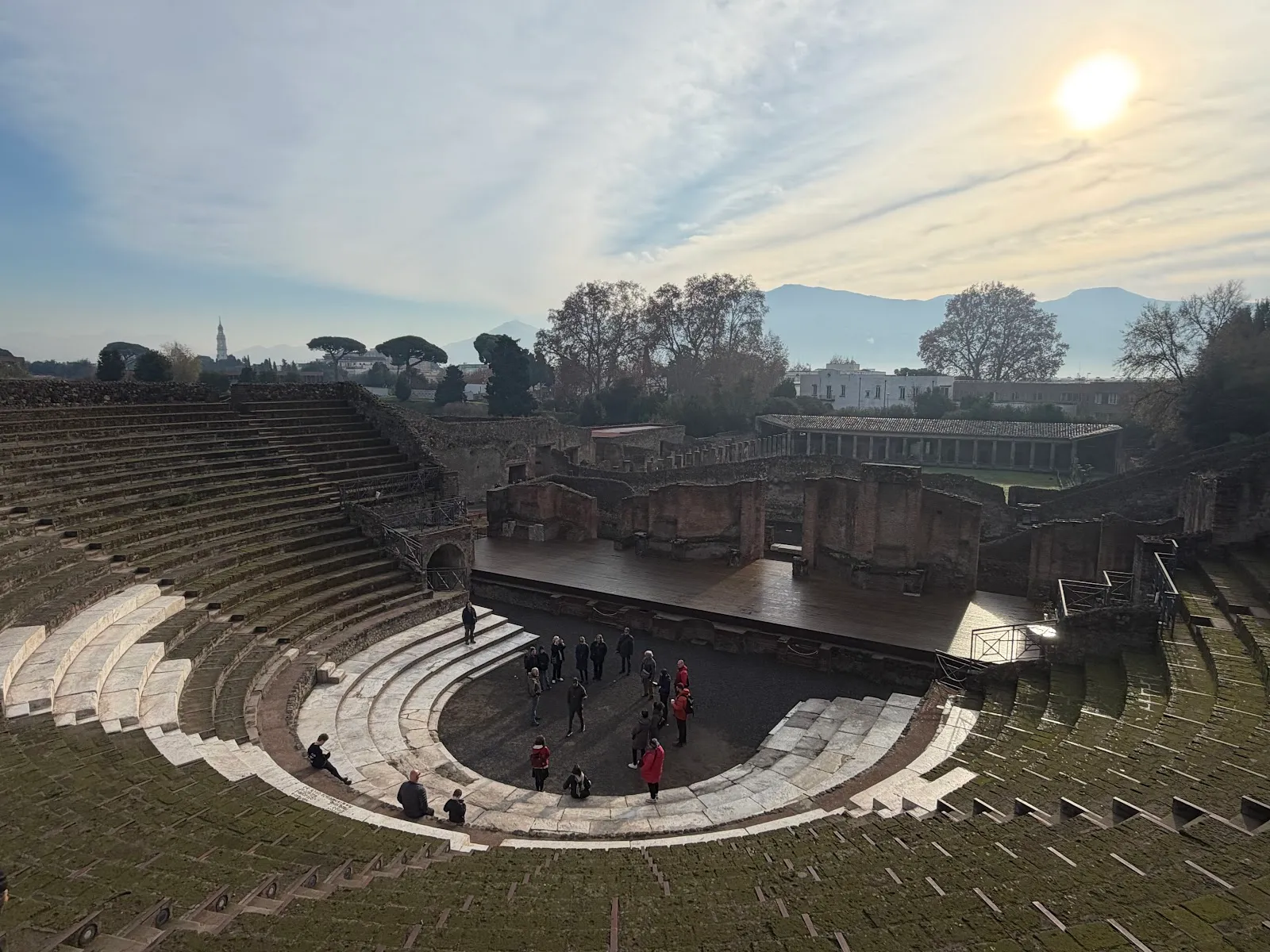
Teatro Piccolo, or the Odeon, was built around 80 BC beside Pompeii’s larger theatre. Its covered design suited performances of music, poetry, singing and mime. The venue could hold around 1,300 people.
The theatre’s role differed from that of the Teatro Grande next door. The smaller space was used for performances intended for a more intimate audience, while the larger theatre accommodated other forms of drama.
Reading the theatre’s layout
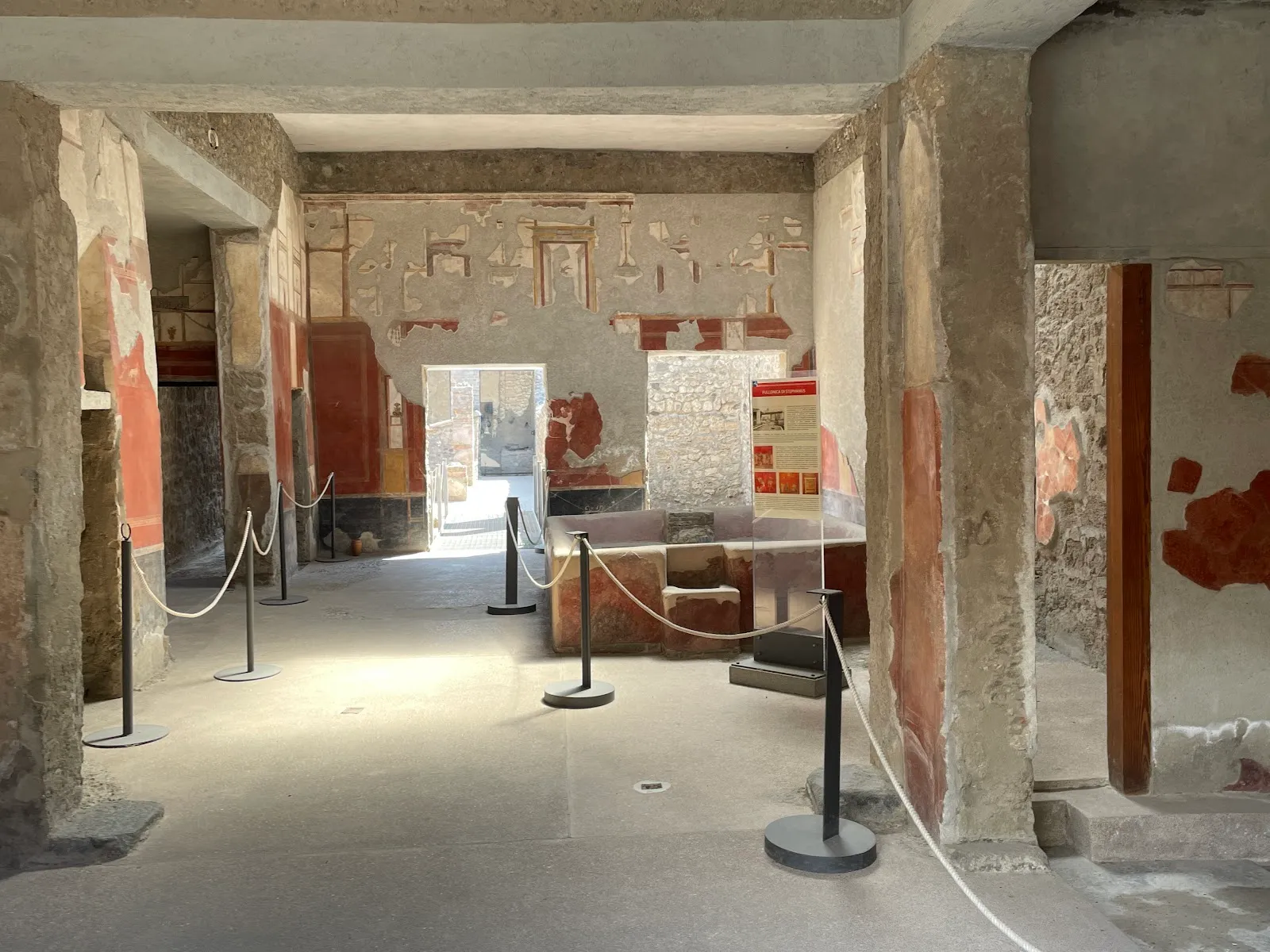
The semicircular seating, known as the cavea, is divided into two parts. From an entrance, look across the seating and towards the remains of the stage decorations. The compact arrangement helps show how closely the audience was positioned around the performance space.
The entrances are closed to visitors, so the theatre can be viewed from outside rather than explored among the seats. Take your time at the available viewpoints to notice the structure and imagine the music or poetry once performed here.
The theatres beside each other
Teatro Piccolo sits next to Teatro Grande, making it easy to see two different performance spaces during the same part of a visit to Pompeii. The larger theatre dates to the second century BC and could hold about 5,000 spectators. Its stone seating was arranged in numbered rows.
Nearby, the Quadriportico dei Teatri served as a foyer for the Teatro Grande. After the earthquake of 62 AD, it was converted into a training ground for gladiators. Together, these structures give a sense of the varied uses of the theatre district.
Häufige Fragen
Can you go inside Teatro Piccolo?
No. The entrances are closed, so you can look into the theatre from an entrance.
What was Teatro Piccolo used for?
The covered theatre hosted music, poetry, singing and mime performances.
When was Teatro Piccolo built?
It was built around 80 BC.
How many people could Teatro Piccolo hold?
The theatre could accommodate around 1,300 people.


