
The Tower of Pisa is the freestanding bell tower of Pisa Cathedral, in Piazza del Duomo, also called Piazza dei Miracoli. Work began in 1173 in white marble and Romanesque style, and the ground beneath soon began to give way. You can walk around the base and see the tilt against the Cathedral and Baptistery, or climb the 294-step spiral staircase to the open belfry for views over the square and city. The square is a UNESCO World Heritage Site. Most visitors spend about an hour outside, longer if they climb.
Why the tower leans
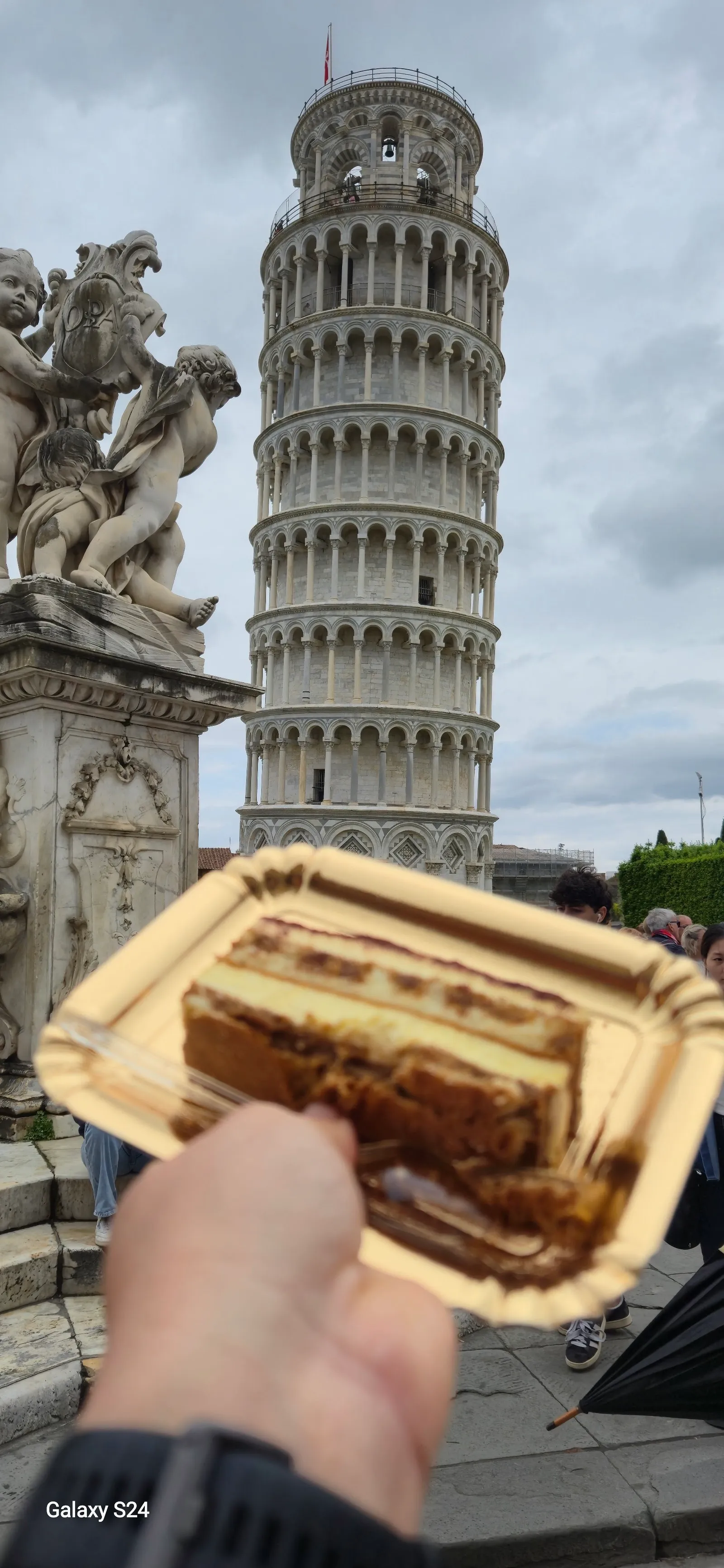
The tower was begun in 1173 as the campanile of the neighbouring Cathedral. The ground beneath it is soft, sandy subsoil, which could not carry a building this heavy. Once the third floor went up in 1178, the tower had already shifted about 5 cm to the southeast, and building stopped.
The pause lasted about a century, partly because of wars. Engineers now say the delay helped, because the soil had time to compress under the load. Without it, the tower would almost certainly have fallen. When work resumed, the builders adjusted the upper floors to compensate for the tilt. The top section is built straight, which gives the tower a very slight curve.
The tower was finished in the 14th century, after about two centuries of interrupted work. Its marble front has rows of small open galleries, six of them, echoing the design of the Cathedral.
The stabilisation work of the 1990s
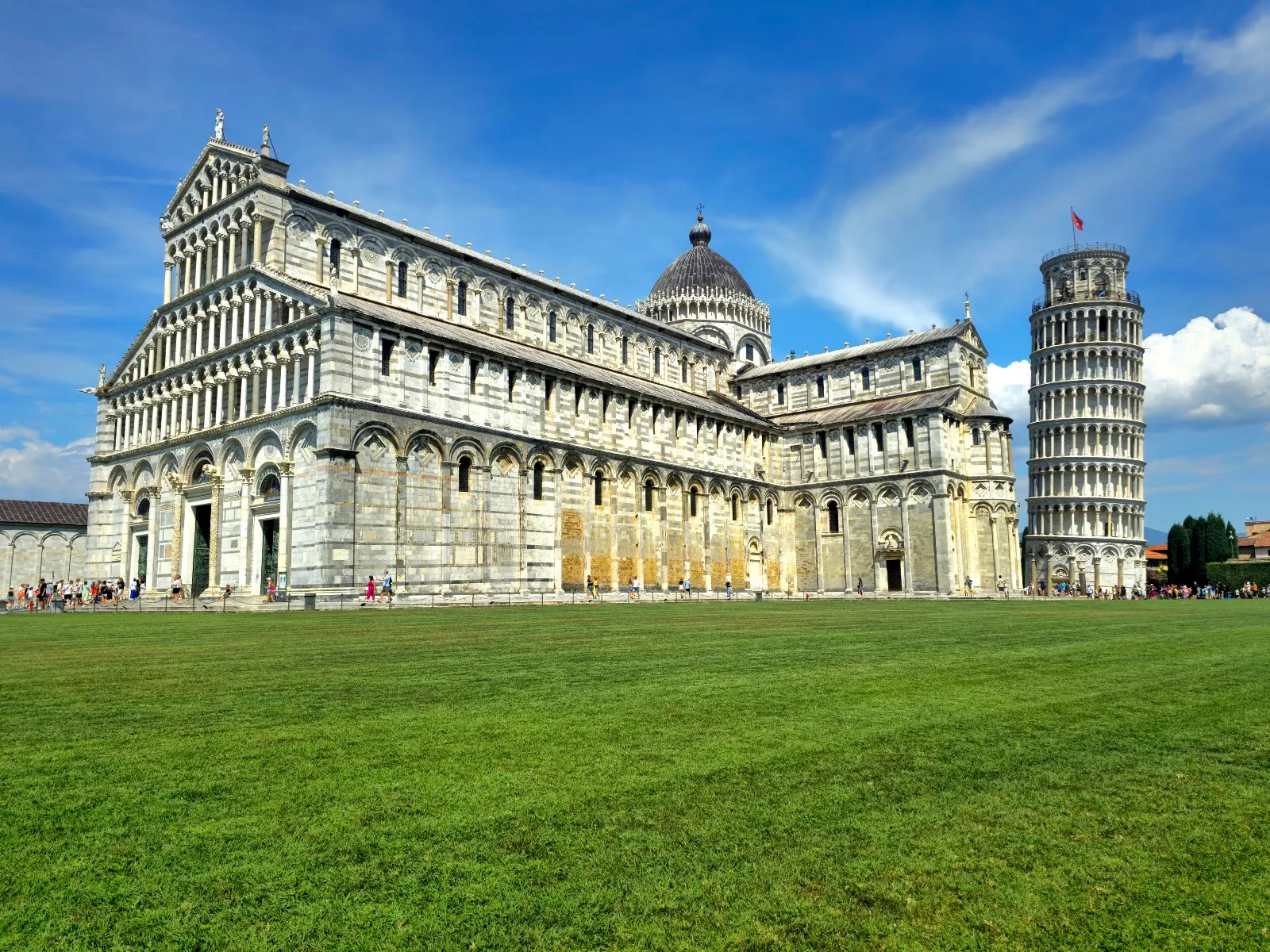
By the late 20th century the lean had reached about 5.5 degrees, roughly 4.5 metres off vertical, and the tower was still sinking by around a millimetre a year. There were real fears that it could collapse.
A major stabilisation project in the 1990s stopped the movement. The foundations were strengthened with injected cement grout and bracing, and the lean was reduced to just under 4 degrees. The tower was not straightened fully. The aim was to make it safe and keep the shape that people come to see.
The seven bells in the bell chamber have not been rung since 1993, to avoid further stress on the structure.
Climbing the tower
The visit is a climb of 294 steps up a spiral staircase inside the walls. Because the tower leans, the stairs pull you toward one side as you go, and the stone steps are worn and slippery. Your legs will notice it.
The staircase ends at the open belfry, at about 55 metres. From there you look down over Piazza dei Miracoli and across to the Cathedral and Baptistery, with the city beyond. The tower stays open in rain.
Safety rules apply. Children under 8 may not climb, and minors from 8 to 18 must go with an adult. Large bags and luggage are not allowed inside, and a free cloakroom in the square holds them until you come back down. Entry is by ticket, and the number of people allowed in is controlled, so booking ahead avoids a long wait at the ticket office.
The square around the tower
The tower is the last of the three great buildings in the square to be built. The Cathedral and the Baptistery came first, and the campanile followed as the third. Pisa paid for the complex with money from its wars in Sicily, planning a walled square that would set it apart from rival cities. The Camposanto Monumentale, the monumental cemetery, is part of the same group. UNESCO listed the whole square as a World Heritage Site in 1987.
The square was once simply Piazza del Duomo. The writer Gabriele d'Annunzio popularised the name Piazza dei Miracoli in 1910.
If you want to see more than the tower, a combination ticket also covers the Baptistery, the Camposanto, the Opera del Duomo Museum and the Sinopie Museum. The museum next to the tower has views of the square with fewer people around.
Getting there and moving around
Pisa is about an hour from Florence by train. From Pisa's main station, the walk to the square takes around 20 minutes. Many visitors come as a day trip from other Tuscan towns, and a visit to the tower and square takes a few hours at most.
If you drive, there are several car parks near the square. They can be full at busy times, but cars come and go often. Pisa has limited traffic zones, known as ZTL, that are not always clearly signed. Watch the signs and use metered parking, because fines can arrive months after you get home.
In the square, the grassy lawns have safety barriers and fines for walking on them. The cafes and shops around the tower are priced above the town average, so you may prefer to eat in the streets beyond. In August the heat is strong and there is little shade, so bring water and sun protection.
Häufige Fragen
Is there an entry fee for the Tower of Pisa?
Seeing the tower from outside is free. Climbing it needs a paid ticket, and prices vary with the season and demand. Check the official site for the current price.
How many steps are there to the top?
There are 294 steps on a spiral staircase. They lead to the open belfry, which has views over the square and the city.
Can children climb the Tower of Pisa?
Children under 8 may not climb. Minors aged 8 to 18 must be accompanied by an adult.
How long do you need at the Tower of Pisa?
If you are not climbing or visiting the museums, less than an hour is enough to walk around and take photos. With the climb and other monuments, plan on up to half a day.
Can you take a bag up the tower?
Large bags, luggage and big containers are not allowed. Leave them in the free cloakroom in the square before your entry time.
How do you get to the Tower of Pisa from Florence?
Pisa is about an hour from Florence by train. From the main station, it is a walk of around 20 minutes to the square.


