
Fontana Pretoria fills the centre of Piazza Pretoria in Palermo’s historic district, close to Quattro Canti and the town hall. This monumental Renaissance fountain was made in Florence in the 16th century and later brought to Palermo. Its three circular basins are crowded with marble figures of gods, nymphs, mythological creatures and animals. Walk around it to take in the sculpted details and the surrounding church and palace facades. The statues are nude, which gave the fountain its traditional nickname, the Fountain of Shame.
A fountain made for Florence
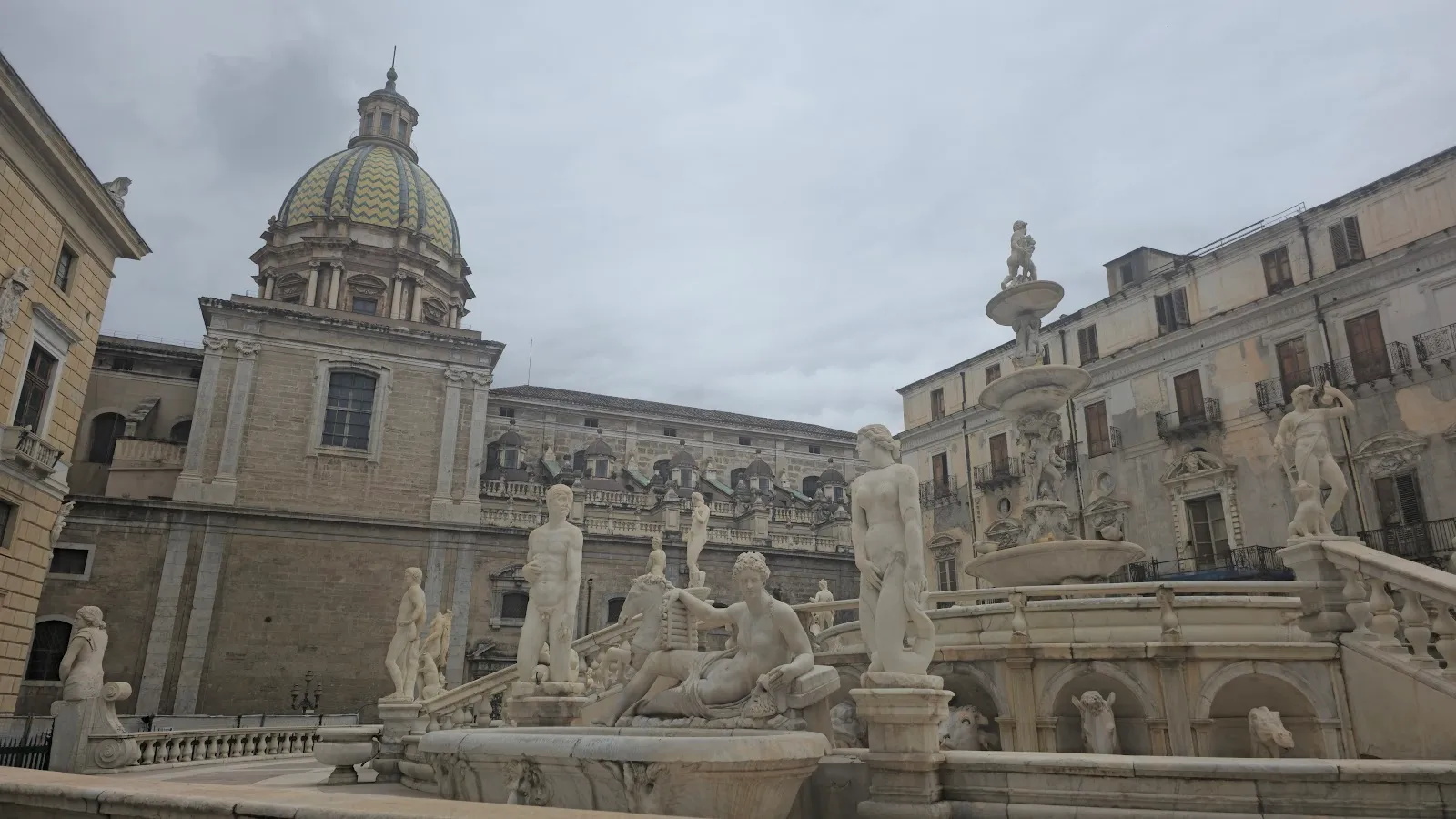
Fontana Pretoria was created in Florence in the mid-16th century for a private setting. Its sculptor was Francesco Camilliani, and the commission came from Don Luigi di Toledo. The fountain was later transported to Palermo and placed in Piazza Pretoria, where its scale and Renaissance design contrast with the surrounding architecture.
The fountain’s Florentine origins are visible in its sculptural focus and carefully arranged tiers. It was designed as a large ensemble, with figures and basins working together rather than as a single statue. Today it occupies a public square in Palermo’s historic centre, framed by churches and other imposing buildings.
Figures around the basins
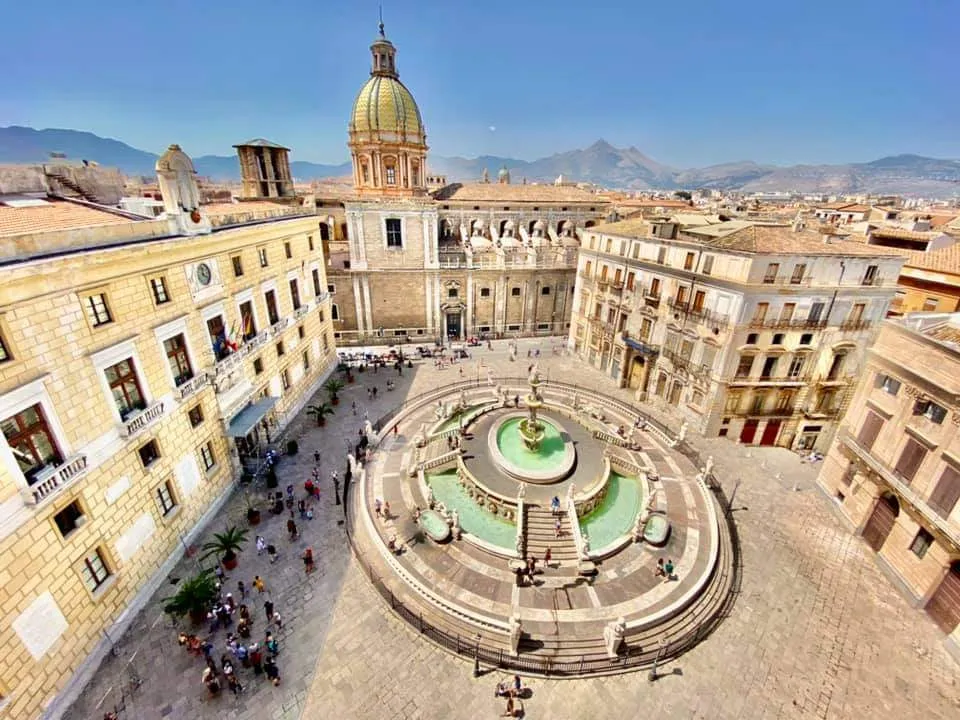
Three circular basins rise through the centre of the composition, with stairways and sculpted figures arranged around them. Marble forms include Greek gods, nymphs, river gods, tritons, animals and other mythological creatures. The abundance of figures rewards a slow circuit of the fountain: details can be easy to miss when viewed from just one side.
The Fountain of Shame is a familiar alternative name for Fontana Pretoria. It refers to the nude figures, which caused controversy when the fountain was unveiled. The nickname has endured, but the sculptures are also central to the fountain’s design and its place among Palermo’s Renaissance landmarks.
Finding it in Palermo
The fountain stands in Piazza Pretoria, a short walk from Quattro Canti, the intersection of Via Maqueda and Corso Vittorio Emanuele. The square is surrounded by historic buildings, including the town hall and churches. It fits naturally into a walk through the old centre alongside nearby landmarks such as Santa Caterina and San Giuseppe dei Teatini.
The open square gives you room to view the fountain from different angles. In daylight, the carved surfaces and individual figures are easier to examine. After dark, illumination changes the look of the ensemble. The fountain can be fenced off for protection, and construction or crowds may affect the view, so a return visit can be worthwhile if the first stop is obstructed.
Häufige Fragen
Where is Fontana Pretoria?
It stands in Piazza Pretoria in Palermo’s historic centre, close to Quattro Canti and the town hall.
Why is Fontana Pretoria called the Fountain of Shame?
The nickname refers to the fountain’s nude marble figures, which caused controversy when it was unveiled.
What can you see at Fontana Pretoria?
The fountain has three circular basins surrounded by marble figures of gods, nymphs, river gods, animals and other mythological creatures.
When is the best time to see Fontana Pretoria?
Visit in daylight to examine the sculptural details, or in the evening to see the fountain illuminated. Early morning and later evening can be quieter.


