
At Piazza Monteoliveto in Naples, this church and former monastic complex brings together Renaissance and Baroque art. Inside, look for detailed wood inlay, striking allegorical sculptures and the chapel painted by Giorgio Vasari. The crypt has a quieter, more solemn atmosphere, with imagery tied to life, death and Neapolitan traditions. The exterior gives little indication of the art inside, so allow time to explore beyond the entrance.
A church shaped by two periods
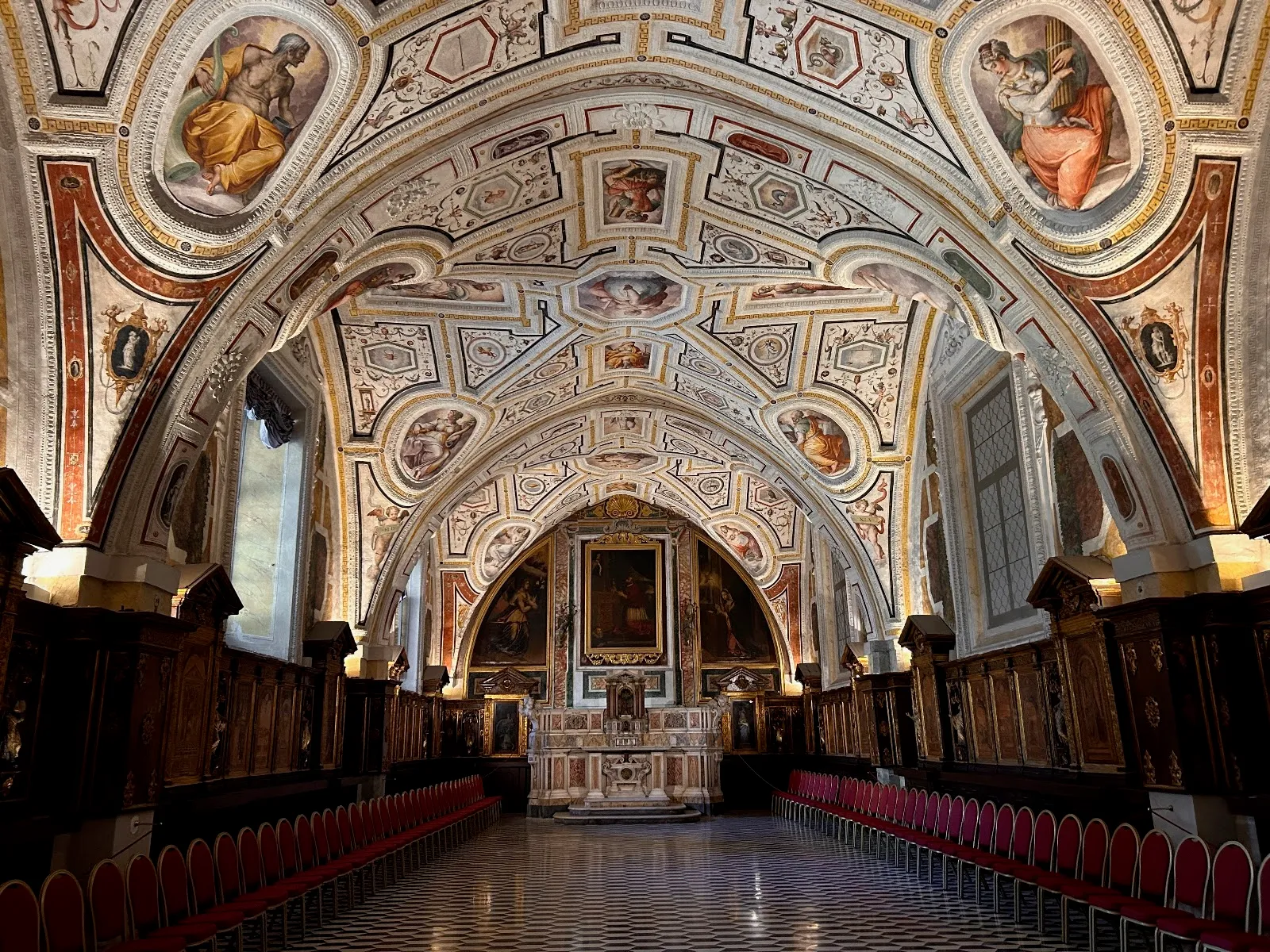
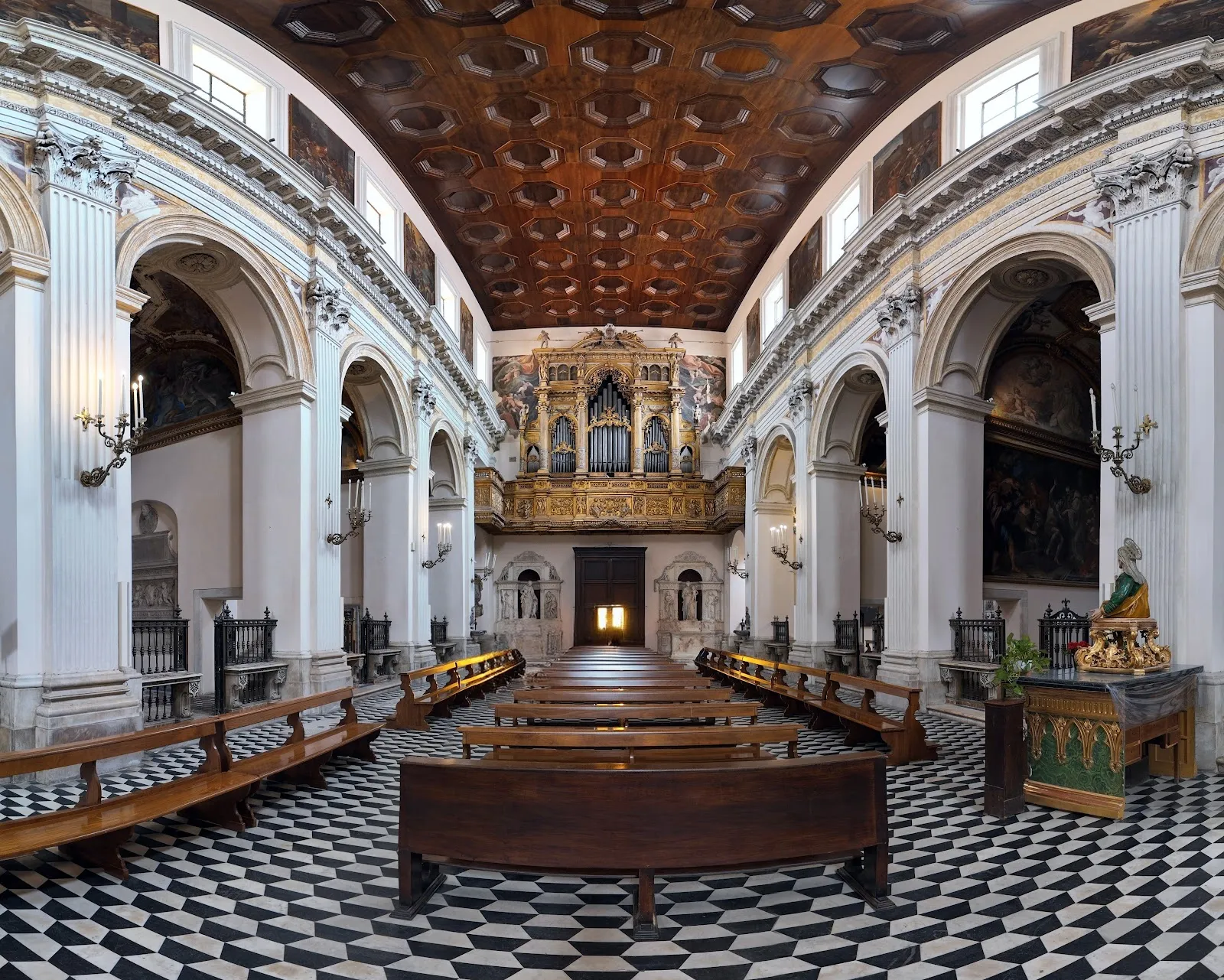
The church dates to the 14th century and was once part of one of Naples’ largest monastic complexes. Its appearance and decoration changed in two major phases: a Renaissance makeover in the 16th century, followed by Baroque work in the 17th.
The exterior is comparatively restrained. Inside, the white naves draw attention to sculptures and painted details, including allegorical figures whose meaning can take time to read.
Art in the chapels and sacristy
Look closely at the wood inlay, known as tarsia lignea or marquetry. The works combine carefully fitted pieces of wood into detailed images. The complex also contains a chapel by Giorgio Vasari, noted for its painted decoration.
The sacristy is another area to include in a visit. An audio guide or a knowledgeable guide can help explain the symbolism, including the figure of Caution, represented with a mirror and a man’s face on her head.
The crypt
The crypt has a subdued atmosphere and imagery connected with life and death. Its symbolism is closely tied to Neapolitan traditions, giving this part of the visit a different character from the decorated spaces above.
Access to the crypt may depend on a time slot. Check arrangements before your visit, and ask whether any areas are closed for restoration.
Häufige Fragen
What should I look for inside Saint Anne of the Lombards?
Look for the wood inlay, the allegory of Caution, the chapel painted by Giorgio Vasari and the crypt.
Does the complex have a crypt?
Yes. The crypt has life-and-death symbolism connected with Neapolitan traditions. Access may require a time slot.
Is an audio guide useful?
An audio guide can help explain the artworks and their symbolism.
What is the history of the church?
The church dates to the 14th century. It underwent major Renaissance changes in the 16th century and Baroque changes in the 17th.


