
At Herculaneum, the House of the Wooden Sacellum preserves details of a Roman home whose layout dates to the 2nd century BCE. Its name comes from a small wooden shrine cabinet, found charred in a ground-floor room. Look for the surviving sliding wooden doors, the marble table and the geometric pattern in the tablinum floor. The rooms follow a traditional sequence from entrance to atrium and reception room, while traces of an upper loggia hint at the house’s original form.
A Roman house with a wooden shrine
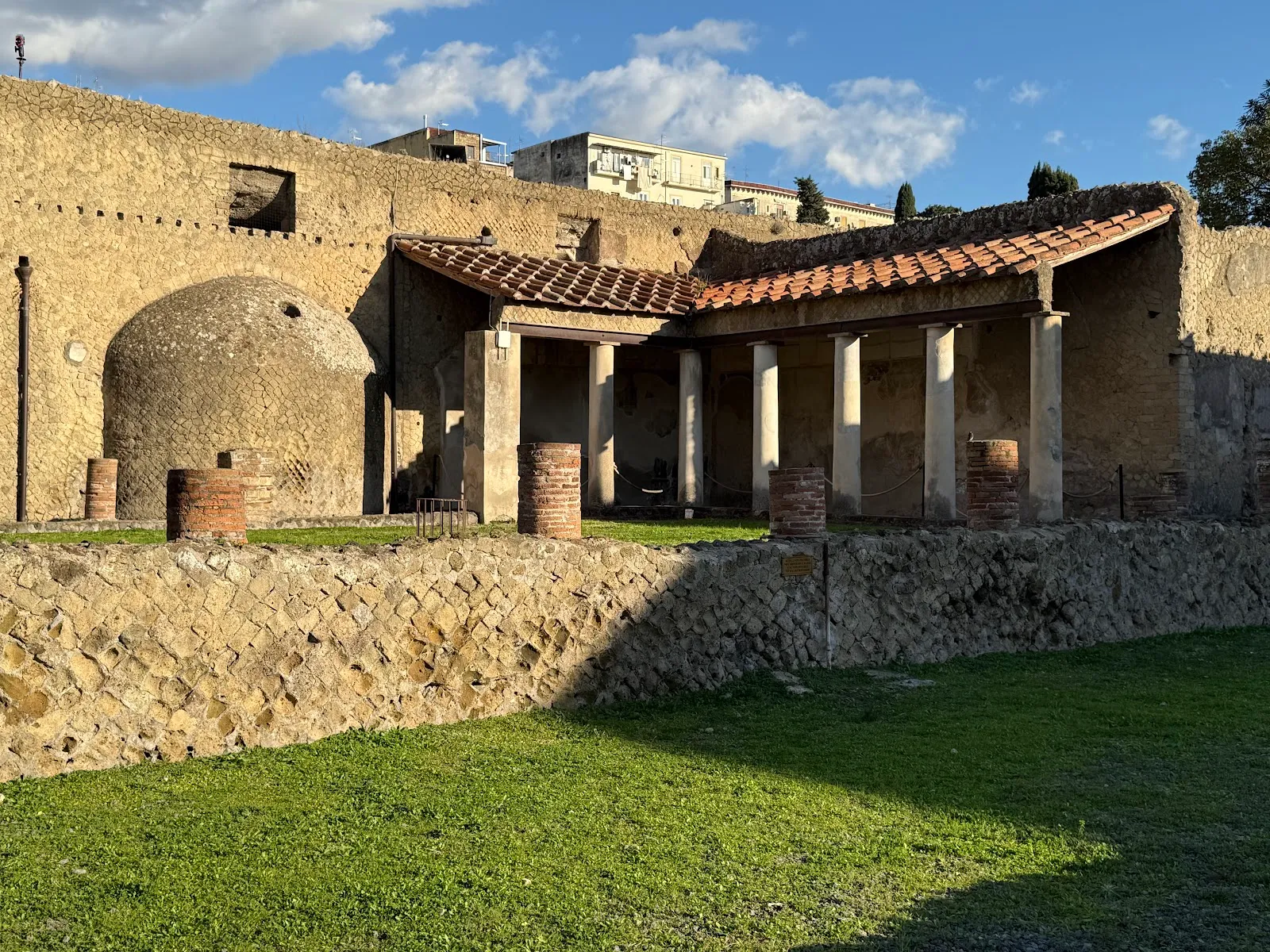
The house takes its name from a wooden lararium, a small shrine cabinet shaped like a temple. It was found charred in a ground-floor room to the right of the entrance. The cabinet held a statuette of Hercules and a seal bearing the name of Lucius Autronius Euthimion, identified as the home’s last owner.
Although the dwelling changed over time, its final phase retained a layout characteristic of Herculaneum homes dating to the 2nd century BCE. The rooms followed a sequence from entrance passage to atrium and tablinum, the principal reception room.
Floors, doors and traces of an upper level
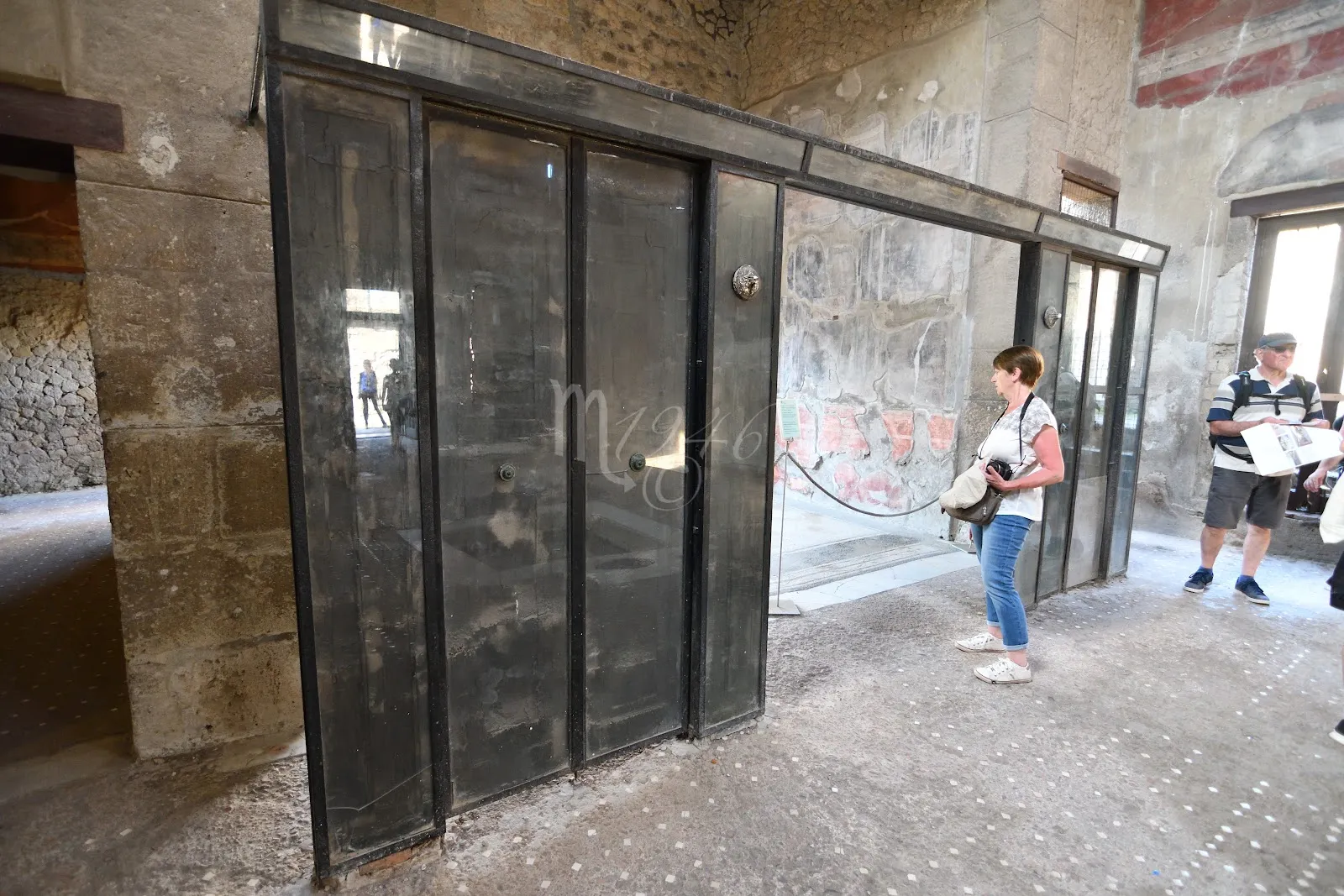
The tablinum floor is made of cocciopesto, a Roman flooring material, with geometric designs formed by inserting white tesserae. It dates to between the 2nd and 1st centuries BCE. The house also preserves sliding wooden doors, a rare survival of a material that usually decays.
Traces in the atrium indicate that an upper loggia, or cenaculum, once extended above the tablinum and rooms facing the V Cardo. The remains of decoration are limited, but the surviving floor and architectural details give a sense of the home’s former finish. Evidence of a rainwater storage system also points to practical arrangements for the household.
Häufige Fragen
Why is it called the House of the Wooden Sacellum?
It is named for a charred wooden lararium cabinet found inside. The shrine was shaped like a small temple.
What should I look for inside the house?
Look for the sliding wooden doors, marble table, geometric tablinum floor and traces of the upper loggia.
When is a good time to visit?
Go early in the day for fewer crowds and better light on the details.


