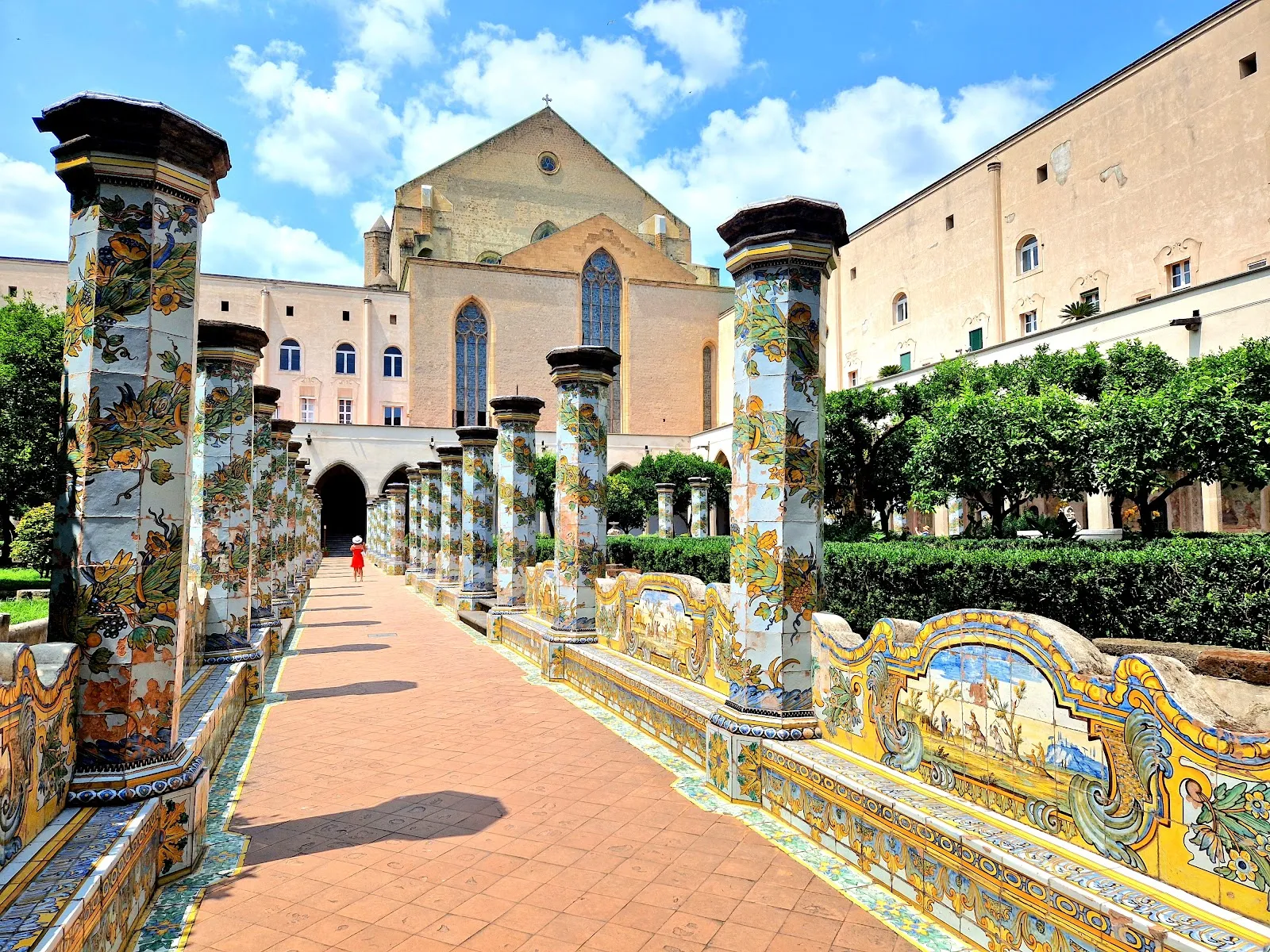
The Complesso Monumentale di Santa Chiara is a 14th-century religious complex on Via Santa Chiara in Naples, with a Gothic basilica, monastery, museum and cloister garden. Its most distinctive stop is the cloister, where hand-painted majolica covers columns and benches with plants, fruit and rural scenes. Inside the complex, you can also see frescoes, historic objects and an archaeological area with remains of Roman baths. Come for the art and architecture, or take a quiet pause from the busy streets of the historic centre.
A religious complex from the 14th century
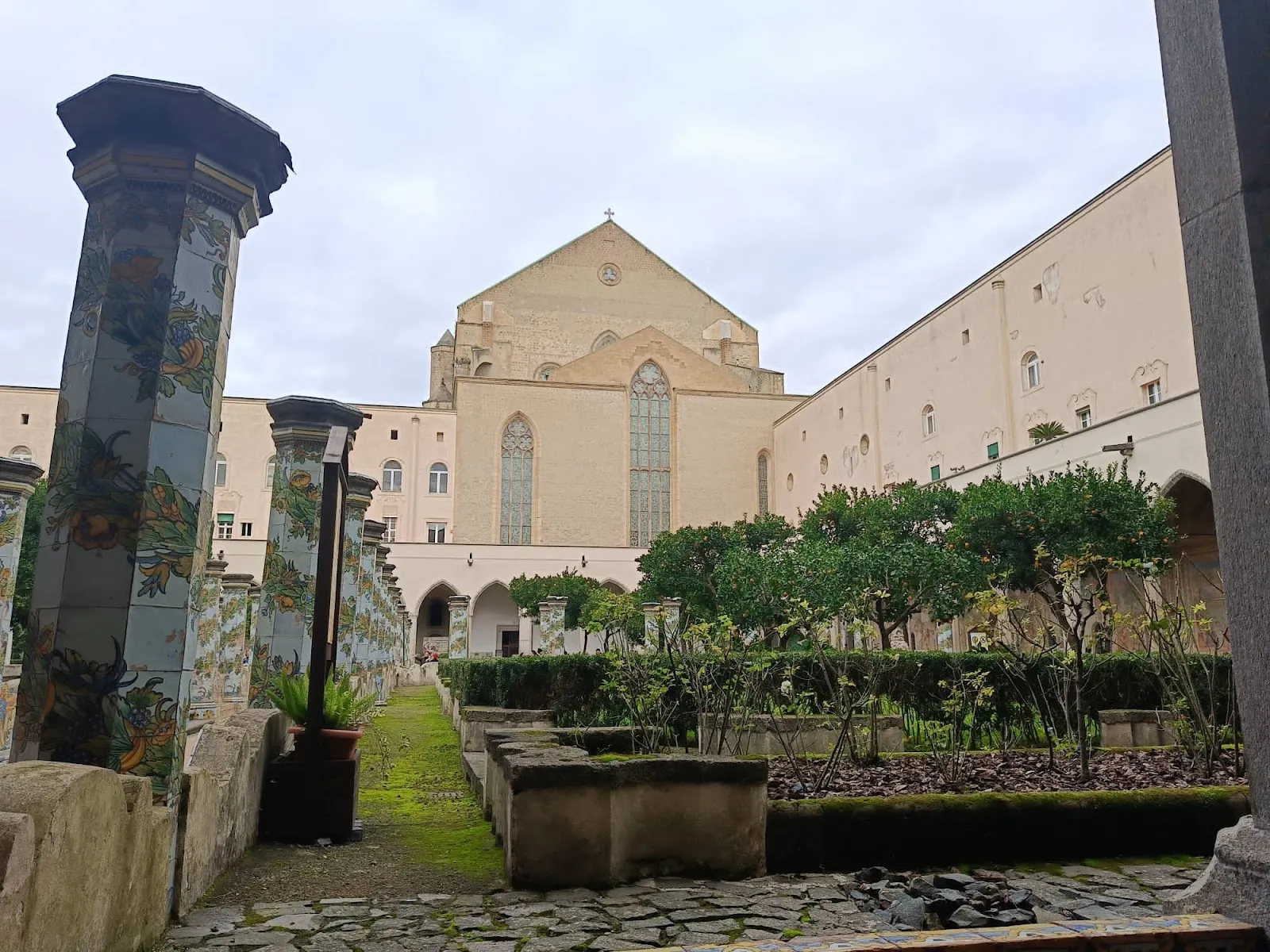
Santa Chiara is a large religious complex in Naples’ historic centre. Its main elements include the basilica, the monastery, a museum and an archaeological area. The complex was established in the early 14th century under King Robert of Anjou and Queen Sancha of Mallorca. The basilica was built in the Gothic style and is among the largest Gothic churches in the city.
The church’s exterior is restrained, with a rose window and decorative stonework. Inside, the scale of the building is striking. Medieval details and painted scenes sit within a church that has undergone major change over time. The complex was badly damaged by bombing during the Second World War, and the basilica was later restored to its earlier Gothic appearance. Some of its artworks and frescoes were lost in the destruction.
The cloister and its ceramic decoration
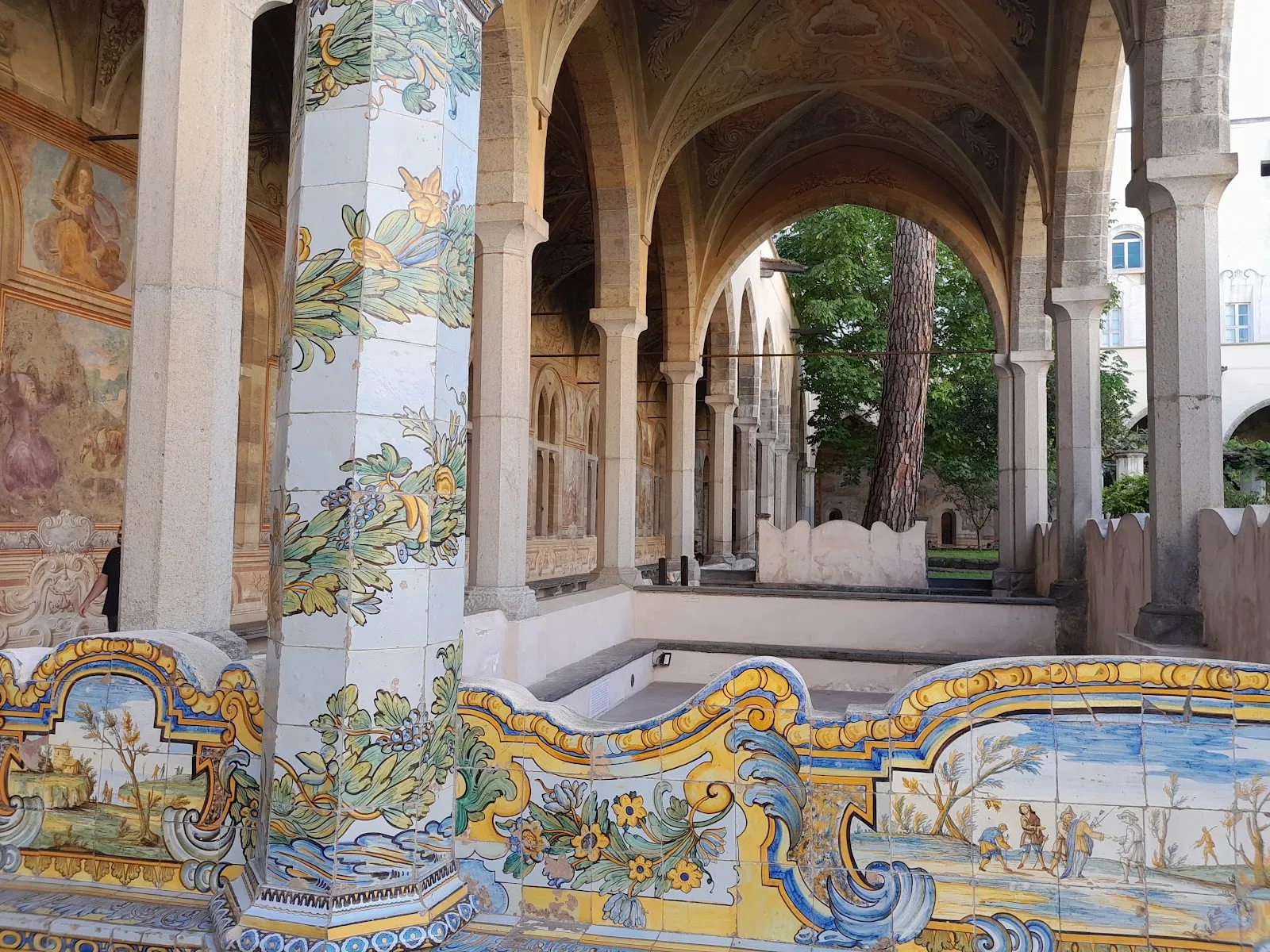
The cloister is the complex’s most distinctive space. Its columns and benches are covered with hand-painted majolica, with designs of flowers, vines, fruit and rural life. The bright ceramics make a vivid contrast with the surrounding architecture. Take a slow circuit to see the different scenes, then look at the frescoed walls along the covered walkways.
The courtyard garden has citrus trees and flowering plants, with places to sit. It provides a quieter setting than the streets outside. The cloister’s present arrangement reflects changes made over several centuries, including a major redesign in the 18th century. The decorated seating and columns turn the courtyard into a place to pause as well as a work of art.
Museum and archaeological area
The museum and archaeological area add historical context to the church and cloister. The archaeological displays include the remains of Roman baths dating to the first century AD. The site also contains a museum collection of historic objects and works connected with the complex. Together, these spaces show layers of use and restoration that are not visible from the garden alone.
Set aside time to see the church and the adjoining areas rather than limiting your visit to the cloister. The amount of time you spend depends on how closely you explore the displays and whether you take a break in the garden. The complex is on Via Santa Chiara, in Naples’ historic centre.
Häufige Fragen
What can you see at the Complesso Monumentale di Santa Chiara?
The complex includes a Gothic basilica, a majolica-decorated cloister and garden, a museum, and an archaeological area with Roman bath remains.
How long should you spend at Santa Chiara?
Plan for about 40 minutes to 2 hours. A longer visit gives you time to explore the museum and archaeological area and sit in the garden.
When is a good time to visit Santa Chiara?
Early morning or late afternoon can be quieter than busier parts of the day.
Is there a garden at the Santa Chiara complex?
Yes. The cloister garden has majolica-covered columns and benches, citrus trees and flowering plants.


