
Mount Vesuvius is the active volcano that rises above the Bay of Naples in Campania, southern Italy. A local bus or shuttle takes you most of the way up, and a signed walk of about 30 to 40 minutes leads to the crater rim. From the top you look out over Naples and the bay, while sulphur smoke drifts from the vast crater below. The eruption of 79 CE buried Pompeii and Herculaneum, so the volcano pairs naturally with those sites in a single day.
The eruption of 79 CE
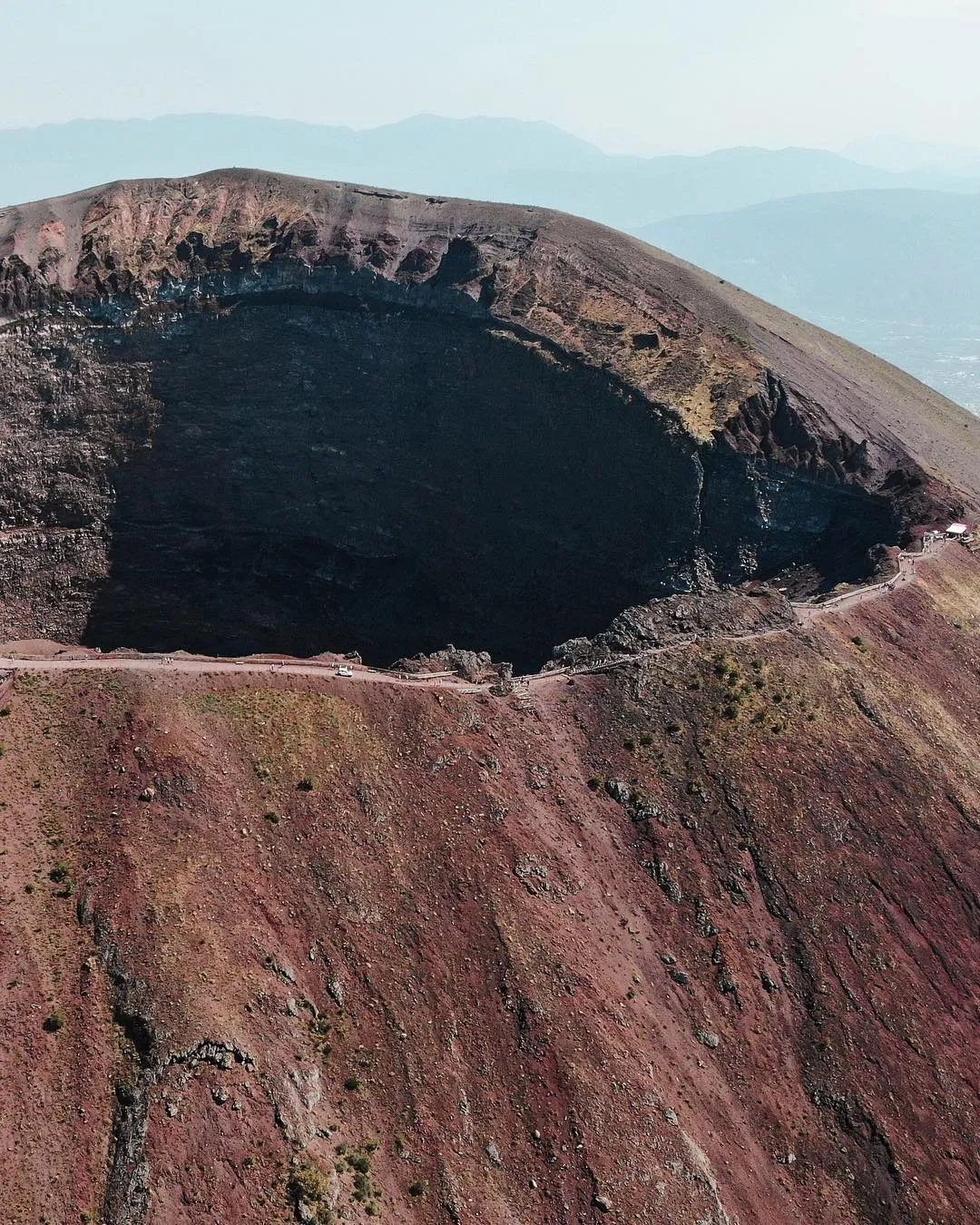
Vesuvius is not the highest or the most dangerous volcano in the world. Its eruption in 79 CE is the reason it is so well known. The ash and debris from that eruption buried Pompeii and Herculaneum, two Roman cities at the foot of the mountain. Careful excavations from the mid 18th century onward have given a detailed picture of daily life in those towns at the moment of the disaster.
Both sites are UNESCO World Heritage sites, and the volcano is part of the UNESCO World Network of Biosphere Reserves. Vesuvius is one of the few active volcanoes in mainland Europe, and it is among the most closely monitored volcanoes in the world. Another eruption on the scale of 79 CE would be catastrophic for the surrounding region.
Getting up to the crater
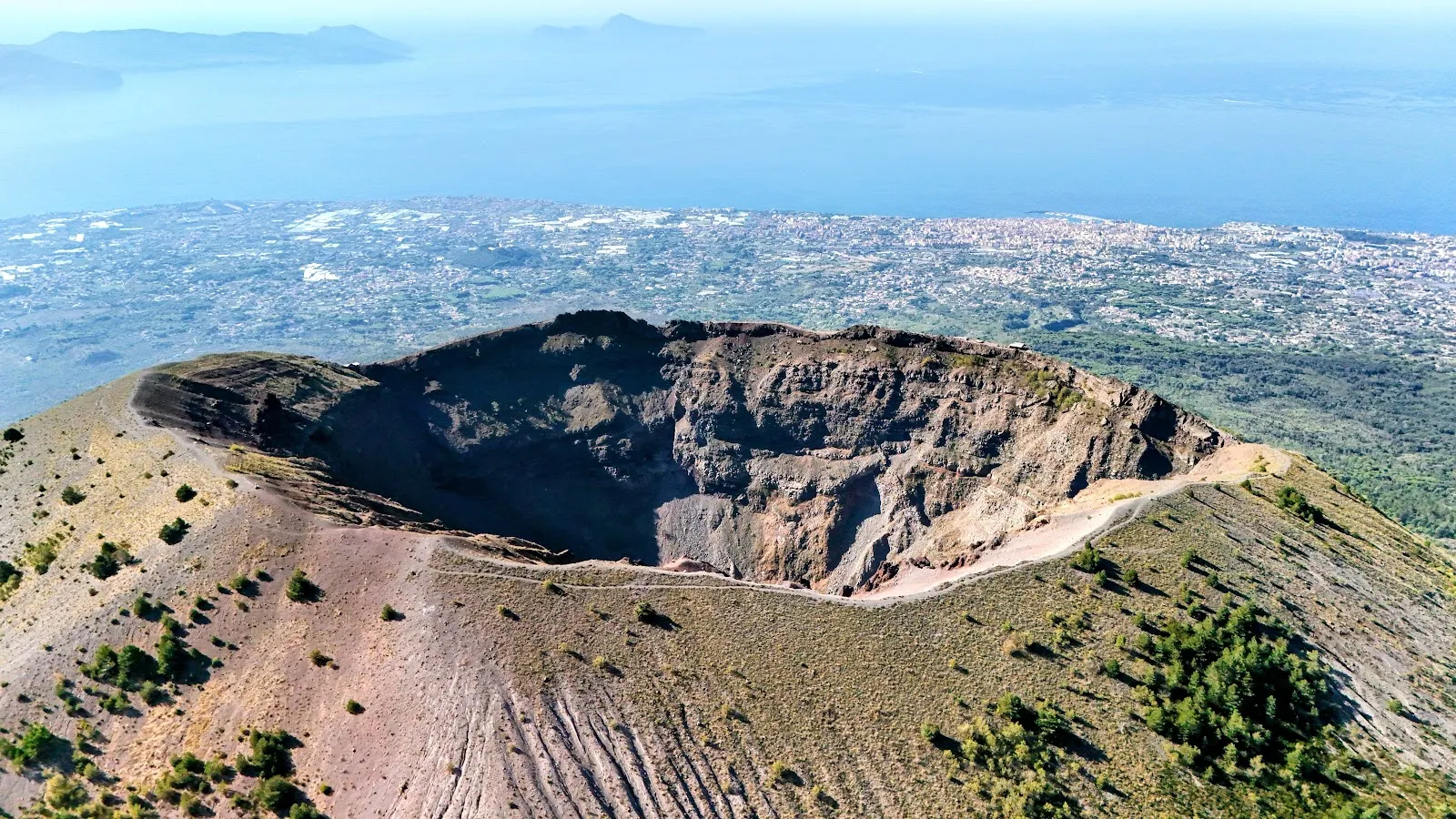
The local bus is the easy way up. A shuttle bus carries visitors most of the way to the mountain, for about 3 euros round trip.
From the shuttle stop, signs direct you up a steep trail of roughly 2 km. The walk takes about 30 to 40 minutes. It is moderately challenging for anyone not used to uphill walking, and wind can make the last stretch harder. Plants grow thickly in the volcanic soil along the way, and lizards, geckos and whipsnakes (harmless) are common sights.
The trail ends at the crater rim. The crater is wide and otherworldly, and the smoke rising from it makes the edge feel very close to an active volcano.
Food and wine on the mountain
A small restaurant partway up the mountain serves wood-fired pizza, which makes a good break before the summit.
At the top, a wine is served that is grown from grapes on the volcano's slopes. It is called Lachryma Christi, which means tears of Christ. Some tours combine the volcano with a vineyard visit on the slopes, followed by lunch and a wine tasting.
Around the volcano
Pompeii and Herculaneum are the obvious companions for a visit, and both are close enough to fit into one day. Oplontis and Boscoreale, two Roman sites, are also worth a stop.
The soil on the mountain's flanks is fertile. Tomatoes, figs, beans, lemons and artichokes grow in the area, and San Marzano tomatoes grow in the volcanic soils south of the mountain.
Häufige Fragen
Do you need a ticket to visit Mount Vesuvius?
Yes, tickets are required. Buy them online before you go, since sales at the entrance depend on the local Wi-Fi network.
How do you get to the top without a car?
The local bus is the easy option. A shuttle bus takes you most of the way up, and the walk from the shuttle stop takes about 30 to 40 minutes.
Are there toilets on the trail?
No. There are no toilets along the trail, so plan a stop before you start the climb.
Can you visit Pompeii on the same day?
Yes. Pompeii is nearby, and a full day can include both the volcano and the ruins.