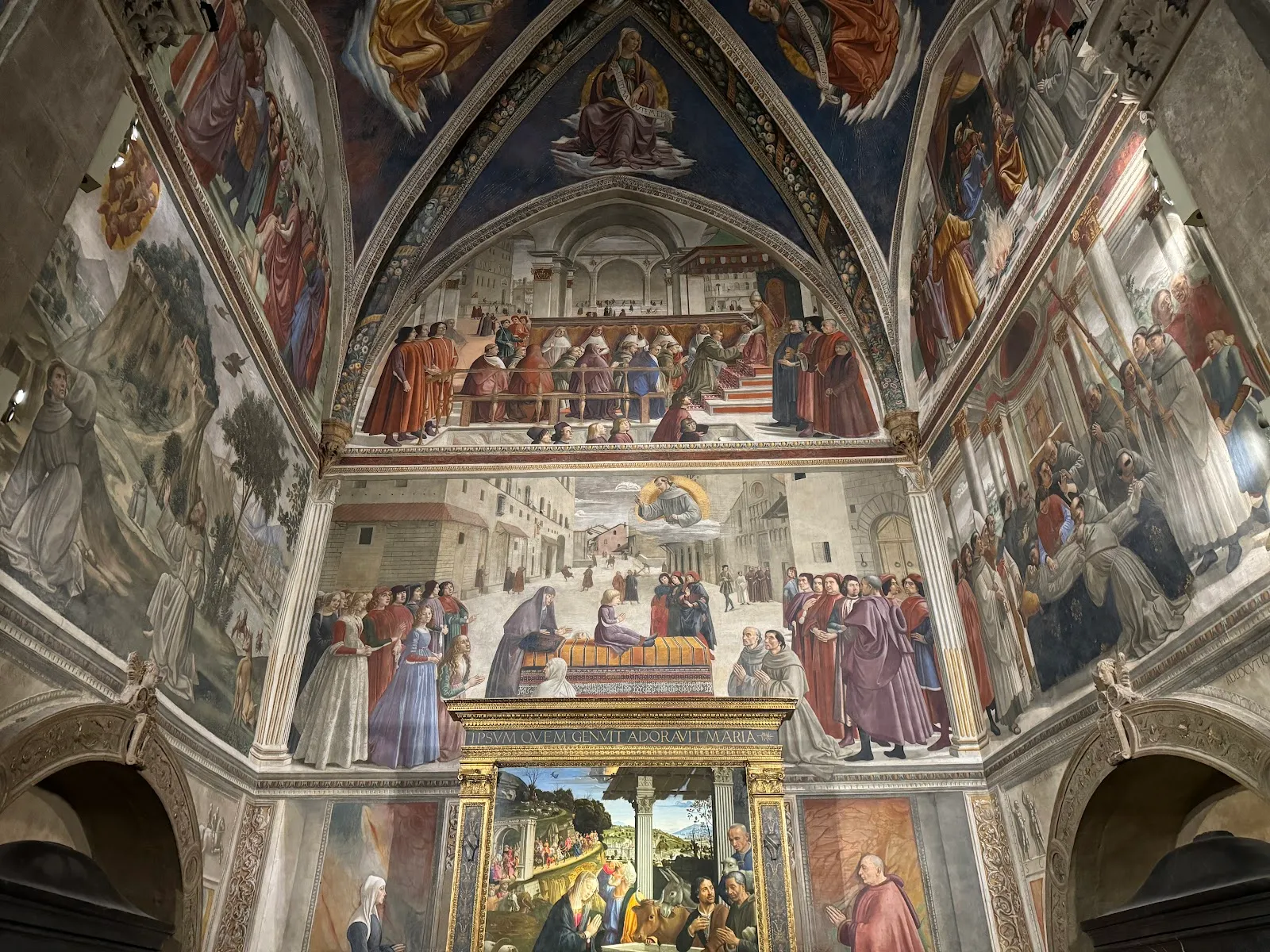
At Piazza San Marco in Florence, this former Dominican convent is now a museum devoted largely to Fra Angelico, the painter and friar who lived and worked here. Its quiet corridors lead to monks’ cells decorated with his frescoes, including the celebrated Annunciation, while the historic library preserves illuminated religious texts. Michelozzo redesigned the complex in the 15th century with Medici patronage. Come for the art, but allow time for the convent itself: its cloisters, refectories and cells show how the paintings belonged to a place of prayer and study.
A Dominican convent shaped by the Medici
Museo di San Marco occupies a former Dominican convent in Piazza San Marco. The complex has medieval origins, and its major 15th-century rebuilding was commissioned by Cosimo de’ Medici and designed by Michelozzo. The convent’s corridors, cloisters and communal rooms still give the collection a strong connection to the life of the religious community that once lived here.
Fra Angelico was a Dominican friar as well as a painter. He worked at San Marco during the 15th century, creating images for the convent’s religious spaces. Girolamo Savonarola also lived here; from San Marco, he prayed, wrote and preached before becoming a force in Florence’s political and religious life. The museum’s setting brings these histories together without separating the paintings from the place for which many were made.
Frescoes in the monks’ cells
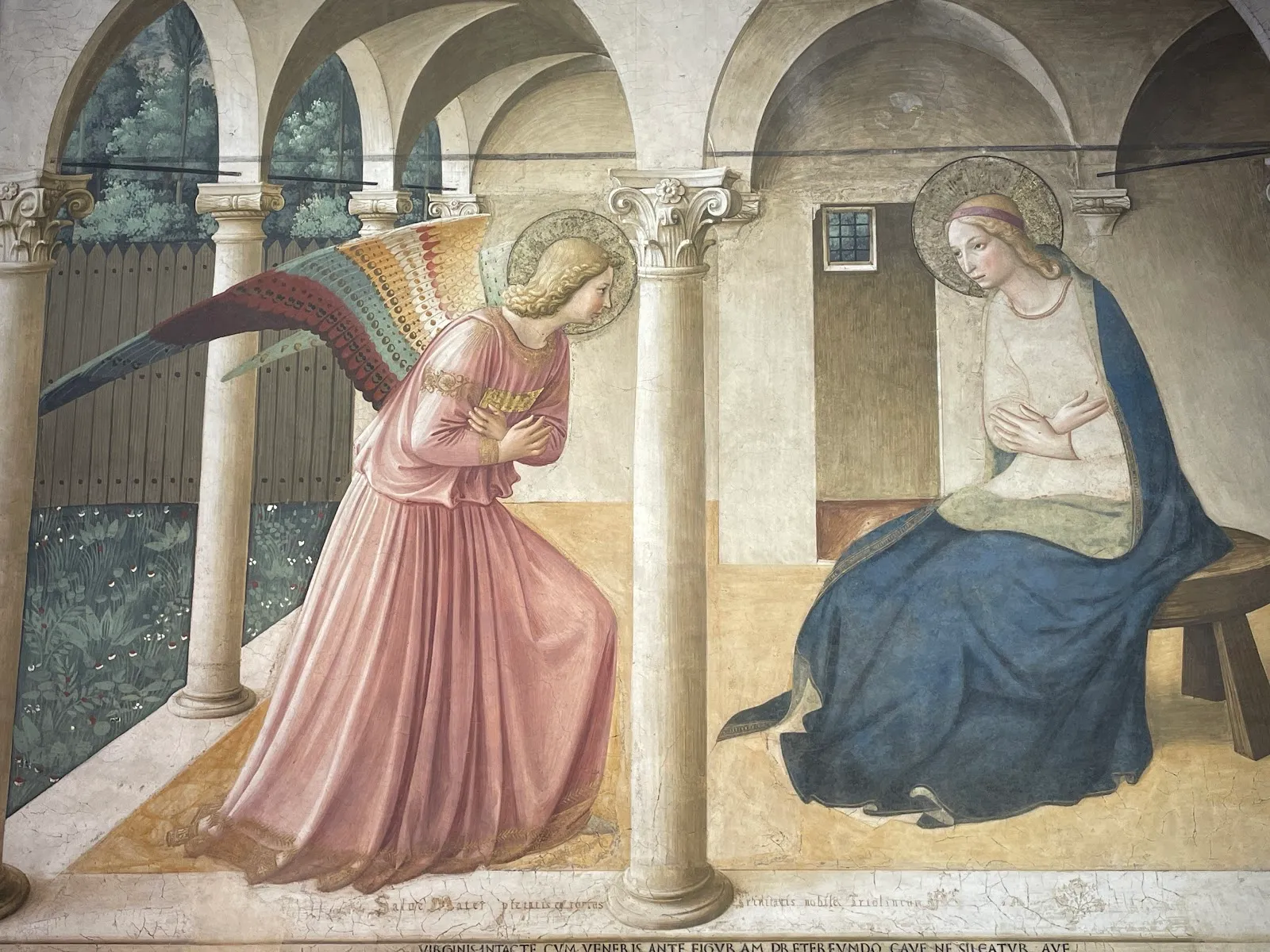
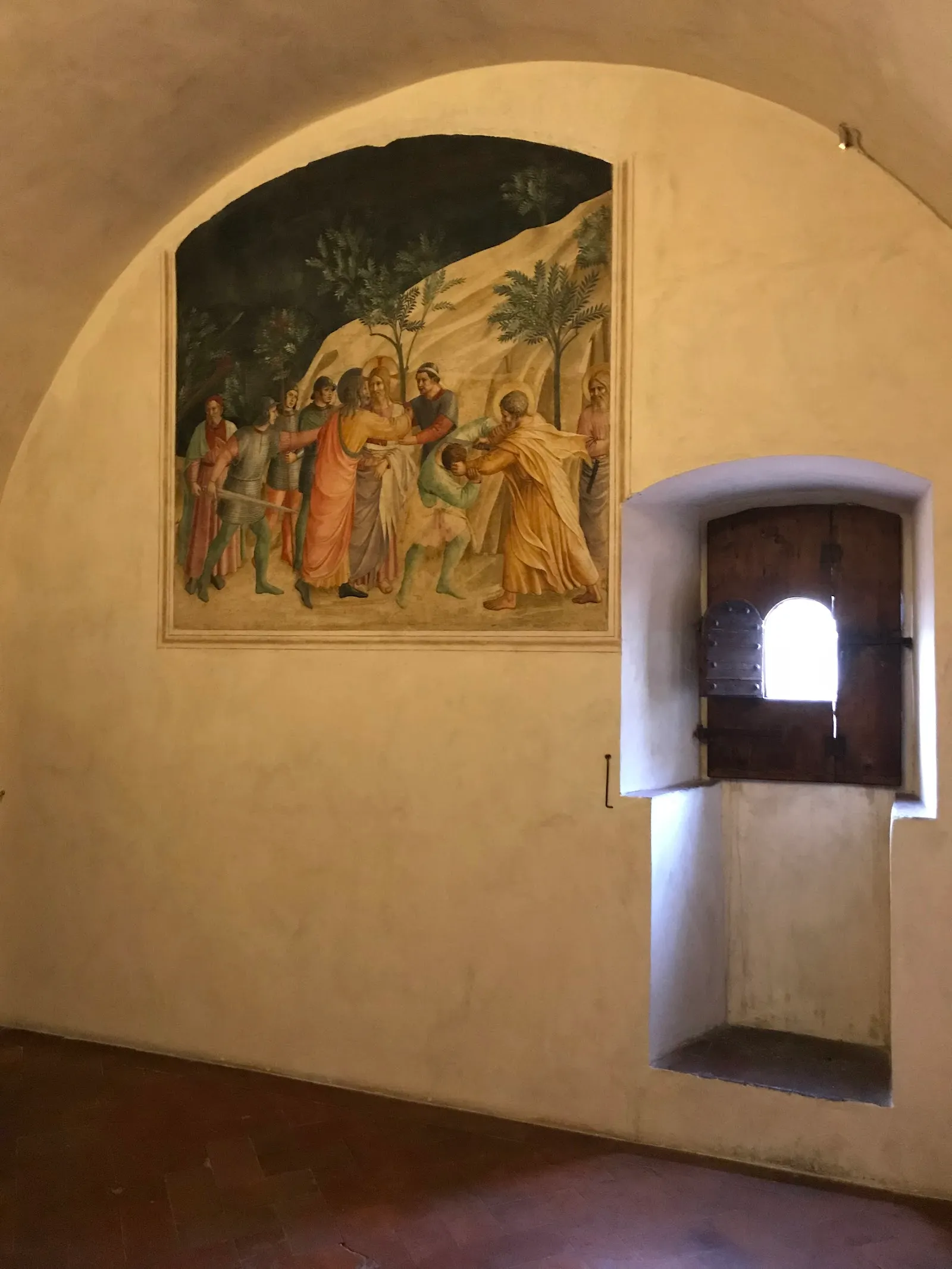
The cells on the upper floor are central to a visit. Fra Angelico painted scenes from the life of Christ for the monks’ private rooms, where the images could support prayer and contemplation. The works differ in mood and subject, and the small scale of the cells makes the relationship between painting and monastic life especially clear. The Annunciation is among the most famous frescoes; it is often associated with the top of the staircase leading to the upper floor.
Take your time along the corridor and look into each room rather than treating the cells as a single gallery. The frescoes were made for a religious community, so their original setting matters: these were images for quiet reflection, not decoration intended for a crowded public hall. Other paintings and panels by Fra Angelico are also part of the collection.
Library, cloisters and communal rooms
The Biblioteca di Michelozzo is one of the complex’s notable spaces. It was created as a library for manuscripts connected with the Medici collection and is known as an early public library. Its rows of columns and low arches shape a long, ordered interior designed to admit natural light for reading. Illuminated psalms and other religious texts add another dimension to the museum’s record of learning and devotion.
The cloister and refectories reveal how the convent’s shared spaces differed from the private cells. In the refectory, a large Crucifixion scene is paired with an image of Dominican friars receiving food from angels. The subject linked the meal with religious teaching. The museum also displays works by other artists, including Ghirlandaio’s Last Supper. Together, these rooms make it possible to move from individual prayer to communal life and study within the same convent.
Häufige Fragen
What is Museo di San Marco known for?
The museum is best known for Fra Angelico’s paintings and frescoes, especially the works in the former monks’ cells and the Annunciation.
Where is Museo di San Marco?
It is at Piazza San Marco, 3, in Florence.
How long should I allow for a visit?
Plan on about two hours to see the convent and its collection.
When is Museo di San Marco open?
The listed hours are 8:30 a.m. to 1:50 p.m. Tuesday through Sunday. It is closed on Monday.