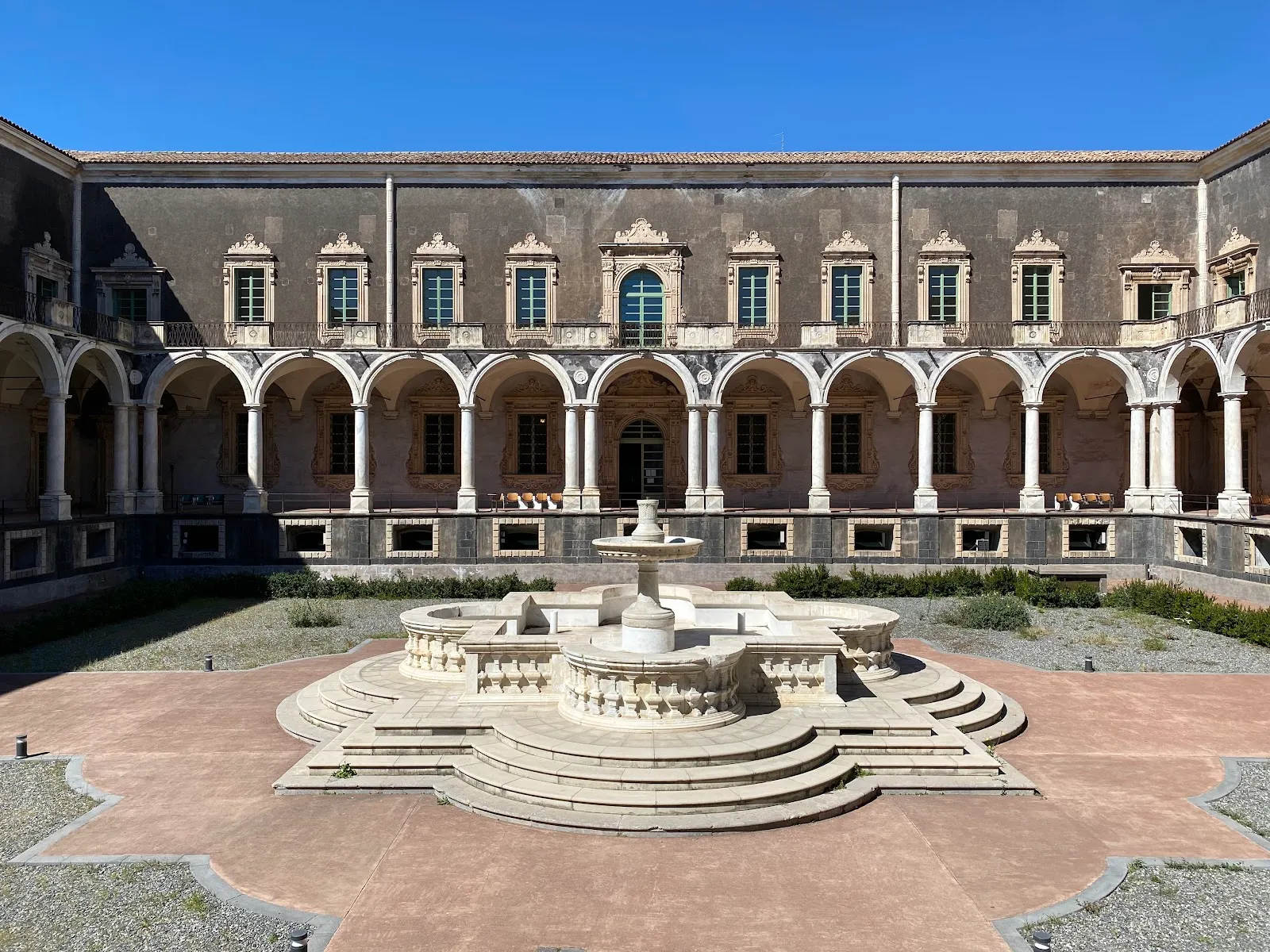
Basilica Cattedrale di Sant'Agata is Catania’s cathedral, on Piazza del Duomo in the old town. Its pale stone and dark lava façade frames the square, while the building’s Norman and Baroque features trace centuries of rebuilding after earthquakes and eruptions. Inside, look for the Chapel of Saint Agatha, the saint’s relics, ornate chapels and the tomb of composer Vincenzo Bellini. The cathedral is a good stop for both architecture and Catania’s religious history; allow time to notice the artwork and details in the side chapels.
Built over Roman baths
The cathedral was established in the 11th century over the remains of Roman baths, identified in the material as the Achilliane Thermae. Its dedication is to Saint Agatha, Catania’s patron saint. The building has been repeatedly damaged and rebuilt after earthquakes and eruptions from Mount Etna, with the 1693 earthquake marking a major rebuilding phase.
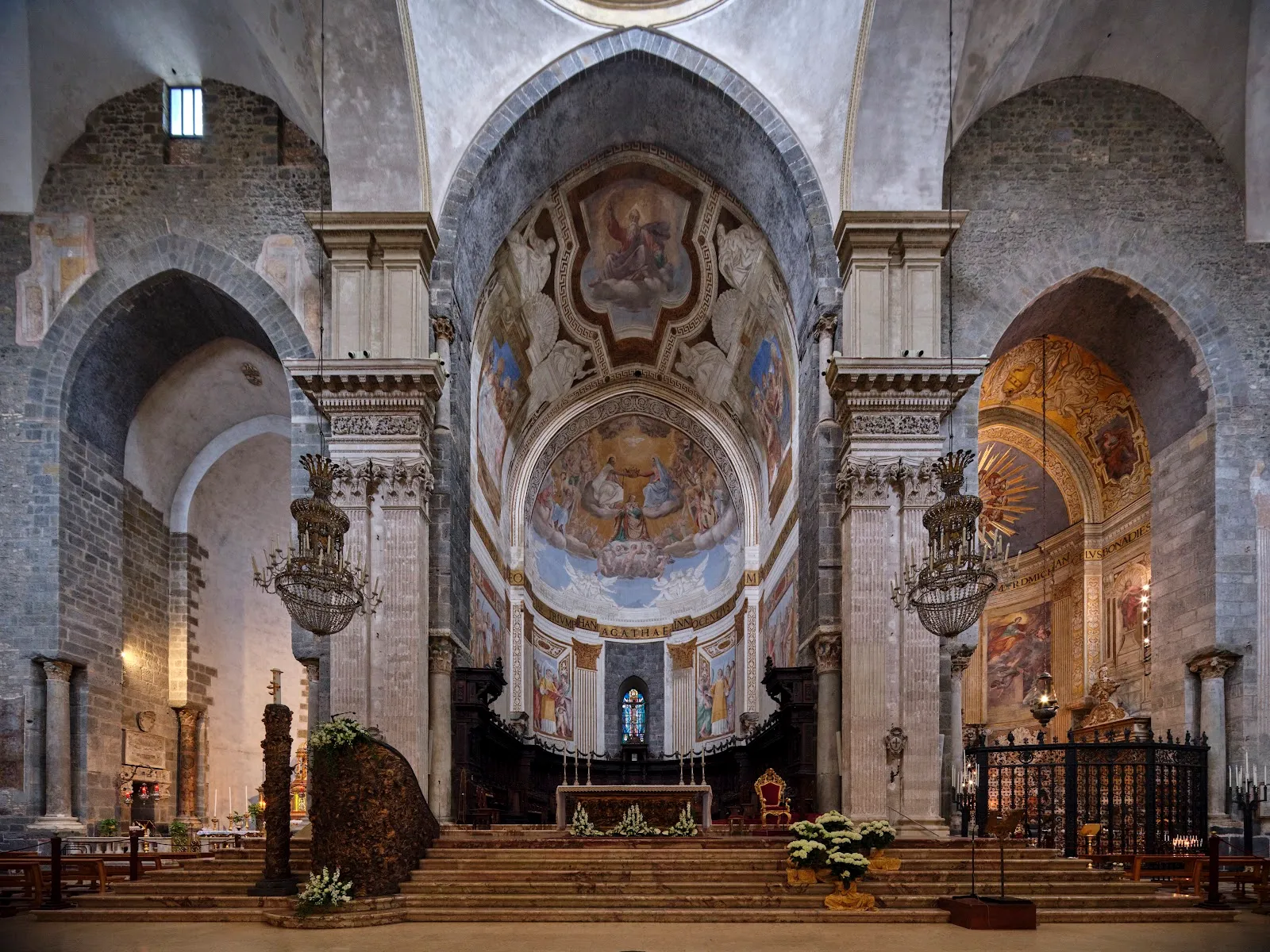
That history is visible in the layers of the structure. Three lava-stone apses survive from the earlier Norman building, while the cathedral’s later appearance includes Baroque elements. Roman columns taken from the old amphitheatre are also incorporated into the church.
A façade of pale stone and lava
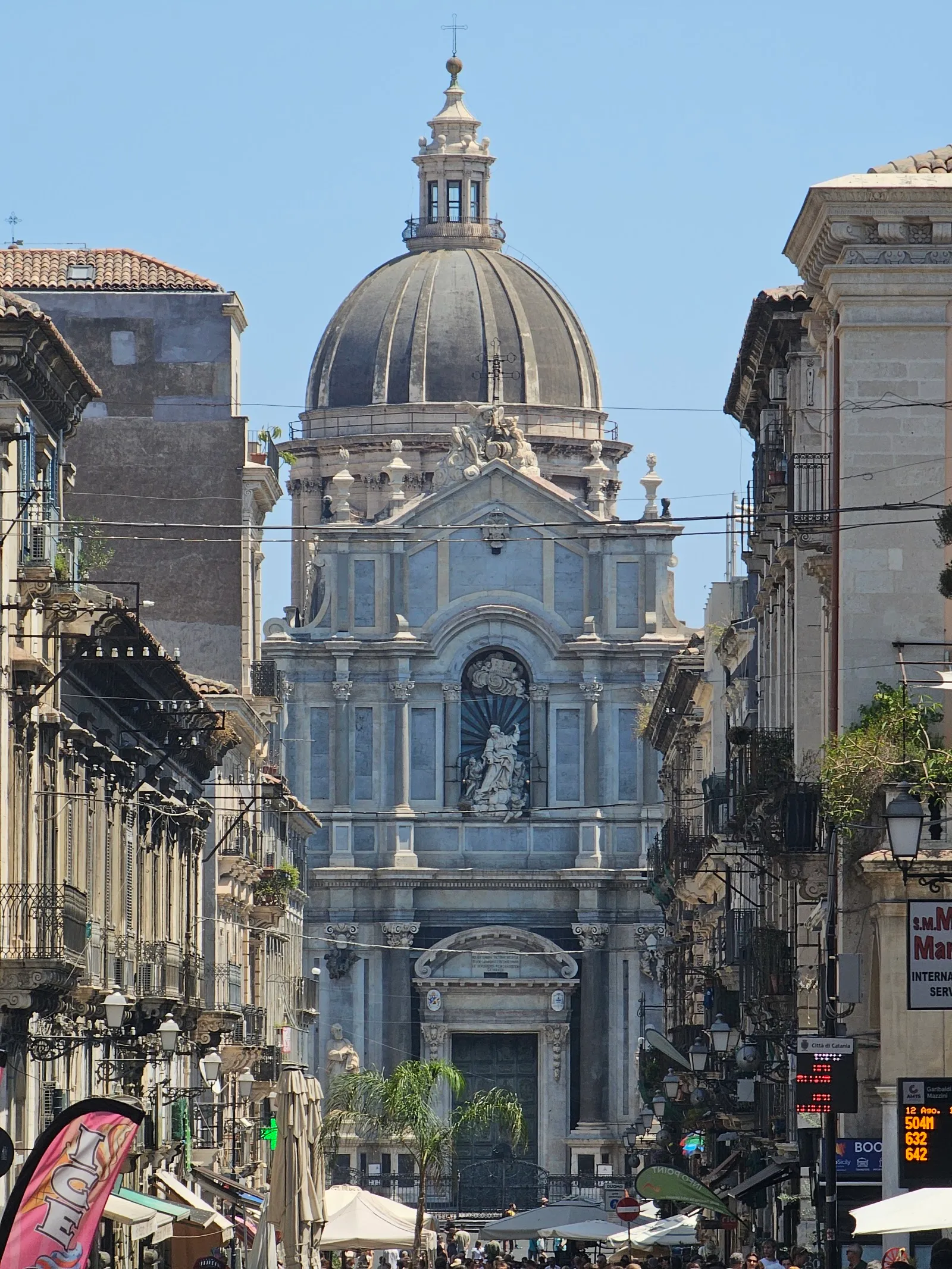
The cathedral dominates Piazza del Duomo. Giovanni Battista Vaccarini designed its contrasting façade, where pale limestone and marble meet dark lava stone. Ornamental columns and religious statues add detail to the exterior. The unusual colour contrast gives the building a distinct presence against the square and recalls the materials associated with Catania’s volcanic setting.
The church’s changing forms are part of its appeal for visitors interested in architecture. Norman remains sit alongside Baroque work, the result of repeated rebuilding rather than a single, unchanged design. Inside, the plan follows a Latin cross, with chapels and altars arranged through the church.
The chapel and the people remembered here
The Chapel of Saint Agatha is a central place to pause. The saint’s relics are kept there, and panels tell her story. The cathedral’s dedication connects the building to the city’s annual celebration of its patron saint: on February 5, her relics are paraded through Catania by devotees as crowds gather in the streets.
The cathedral also contains the tomb of composer Vincenzo Bellini, one of Catania’s best-known sons. Look beyond the main altar to the chapels, frescoes and other artwork. A fresco in the sacristy, dated 1675, depicts Catania’s submission to an eruption of Mount Etna. Together, these works connect the church’s religious role with the city’s history of volcanic activity and rebuilding.
Häufige Fragen
Who is Sant'Agata Cathedral dedicated to?
It is dedicated to Saint Agatha, Catania’s patron saint.
What can you see inside Sant'Agata Cathedral?
The cathedral has the Chapel of Saint Agatha and her relics, ornate chapels, artwork and the tomb of composer Vincenzo Bellini.
Does the cathedral have Norman features?
Yes. Three lava-stone apses survive from its earlier Norman structure, alongside later Baroque elements.
Can you take an English-language guided tour?
English-language guided tours are available by advance reservation. Check availability and reserve ahead.