
Castello di Brescia sits on Cidneo Hill, close to the historic centre, in a fortress complex of about 75,000 square meters. Known as the Falcon of Italy, it has a keep, ramparts, drawbridges, moats, gardens and towers, and the grounds are free to enter. Walk the walls for views over Brescia and the land around it, then add the museums: the Luigi Marzoli arms collection and the Risorgimento museum. The castle is lit in the evening, and a coffee in the piazza outside is a calm way to end the visit.
A hill with many layers
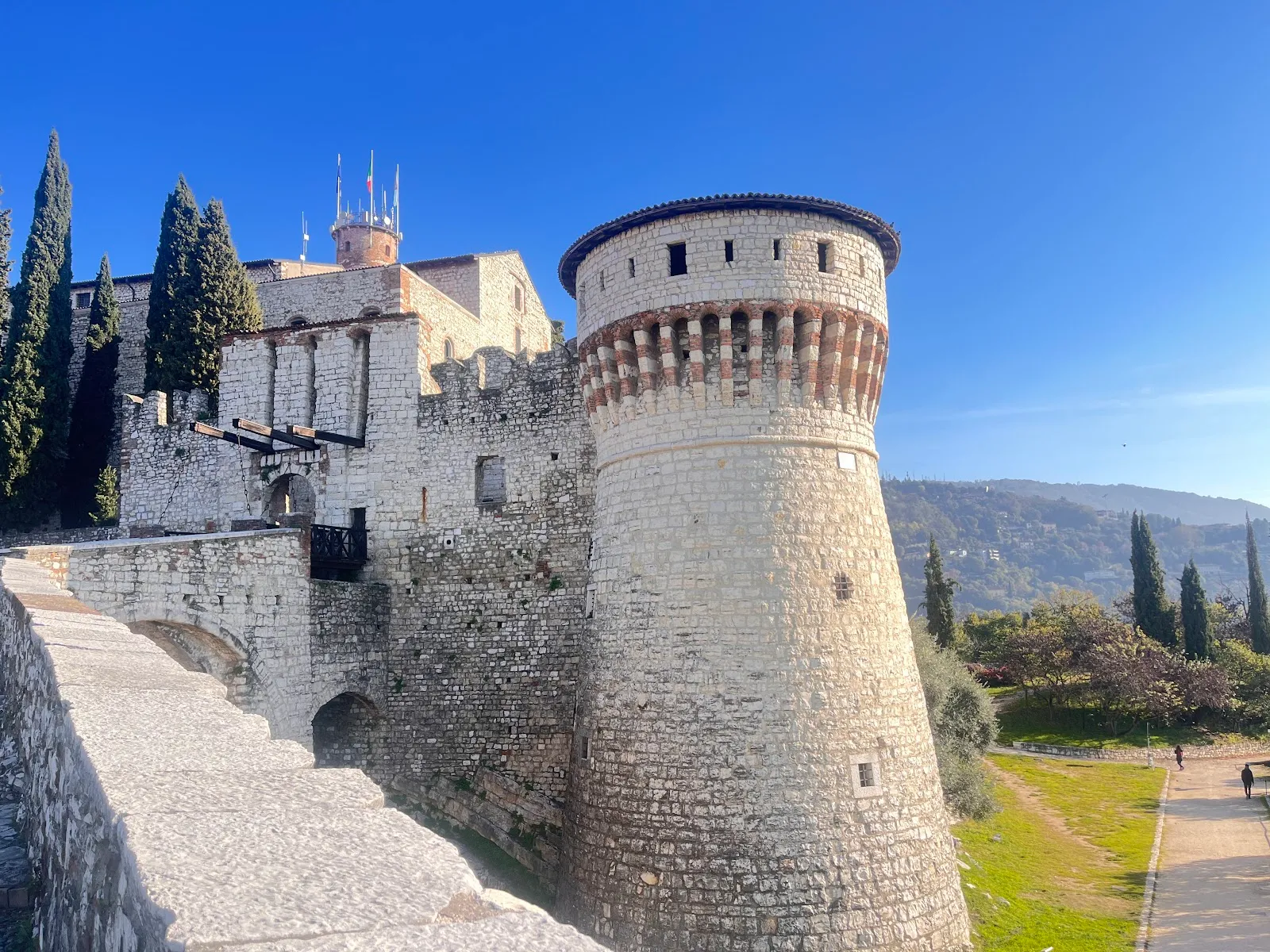
Cidneo Hill has been occupied for a very long time. The wooded park around the castle was originally a Bronze Age settlement, and the fortress itself is built on Roman foundations, on the site of a Roman temple. The hill has been fortified more and more since the Middle Ages.
The castle took shape between the 13th and 16th centuries, with the Visconti family among its builders. The Torre Mirabella came first, followed by the Mastio Visconteo, the Visconti keep, in the 13th century, and then the bastions. The outer walls date from the sixteenth century. Their bastions, ramparts and sloped walls were designed to resist cannon fire. Later rulers, including the Venetians, French and Austrians, also left their mark on the complex.
The nickname Falcon of Italy refers to the position on the summit, from which the castle can be seen for miles around.
Walking the grounds
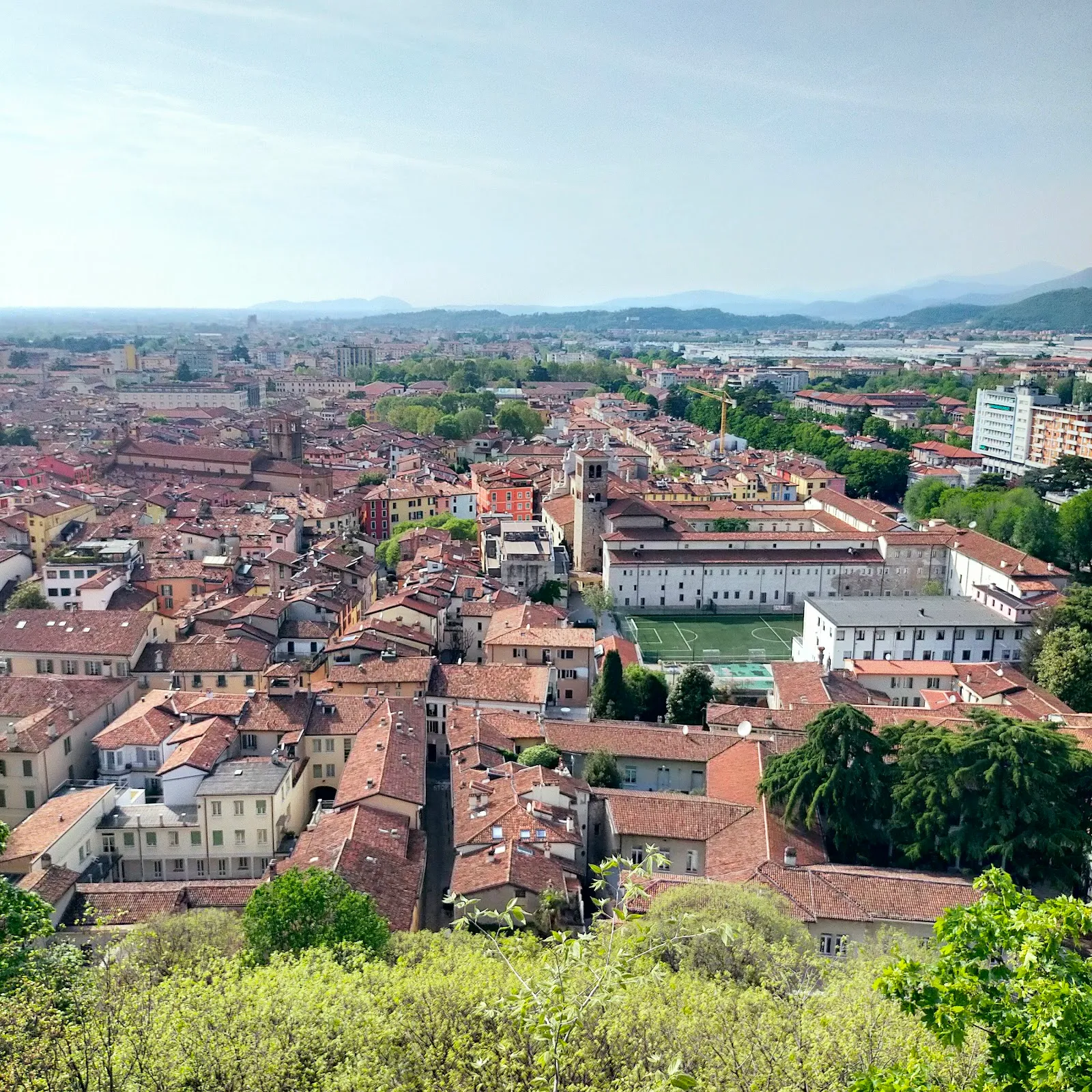
Entry to the grounds is free, and the site is open during the day. Beyond the entrance gate you come to the keep, ramparts, ramps, drawbridges and moats, along with large gardens and several towers. The towers and walls are the best viewpoints, with the city below and the mountains beyond.
The passages and ramparts reward slow walking, and the large open spaces make this an easy outing with children. Paths also lead up from the old town through winding lanes with shops, so you can climb on foot instead of driving. The castle is near many of Brescia's other historic sites, which makes it simple to combine with a day in the centre.
The entrance is wheelchair accessible. There is no Wi-Fi in the area, but the grounds are well maintained.
The museums inside
The Museo delle Armi Luigi Marzoli is the main draw indoors. Its collection of fifteenth-century weapons and armour is one of the most extensive in Europe. Staff in the galleries explain how the different weapons and armour were used, so it is worth asking questions.
A second museum covers the Risorgimento, the unification of Italy. One of the museum spaces occupies a former barn. It has relatively few displays, and on-demand videos fill in the history.
The museums are covered by a combined ticket, which a visitor paid 19 euros for, so check the current price on arrival. Entry to the grounds themselves does not need a ticket.
Planning around the light
The castle is lit in the evening, and late afternoon is a good time to be on the walls for the sunset over the city. The drawbridge looks especially good at that hour. Since the paths can be dark after sunset, plan to do the museums earlier in the day.
There is free parking at the base of the castle. Some visitors use the castle as a stop between Franciacorta and Lake Garda. For a short break, take a coffee in the piazza outside the castle.
Häufige Fragen
Is there an entry fee for Castello di Brescia?
The castle grounds are free to enter. The museums inside need a ticket, and a combined ticket covers the museums on site.
How long do you need at Castello di Brescia?
About two hours covers the grounds and the views. Allow 3 to 4 hours if you also go through the museums.
Is there parking at the castle?
There is free parking at the base of the castle. When the main driveway is closed, such as on some Sundays, the nearest option is paid street parking.
What is inside the castle?
The Museo delle Armi Luigi Marzoli, with fifteenth-century weapons and armour, and a museum on the Risorgimento. The grounds have a keep, ramparts, drawbridges, moats, gardens and towers.
Is Castello di Brescia good for children?
Yes. The grounds are free and have wide open spaces, old towers and ramparts to explore.
Is the castle open on Mondays?
No, it is closed on Mondays. It is open on the other days of the week.


