
At Piazza Museo in Naples, the National Archaeological Museum brings together Greek and Roman sculpture with paintings, mosaics and objects from Pompeii and Herculaneum. Look for the Farnese collection, including the Farnese Hercules, and the detailed Alexander Mosaic. Egyptian and Etruscan antiquities, mummies and the Secret Cabinet add very different perspectives on the past. The collection is large enough to fill several hours, so choose a few priorities or use an English audio guide to help you navigate.
A palace built around antiquities
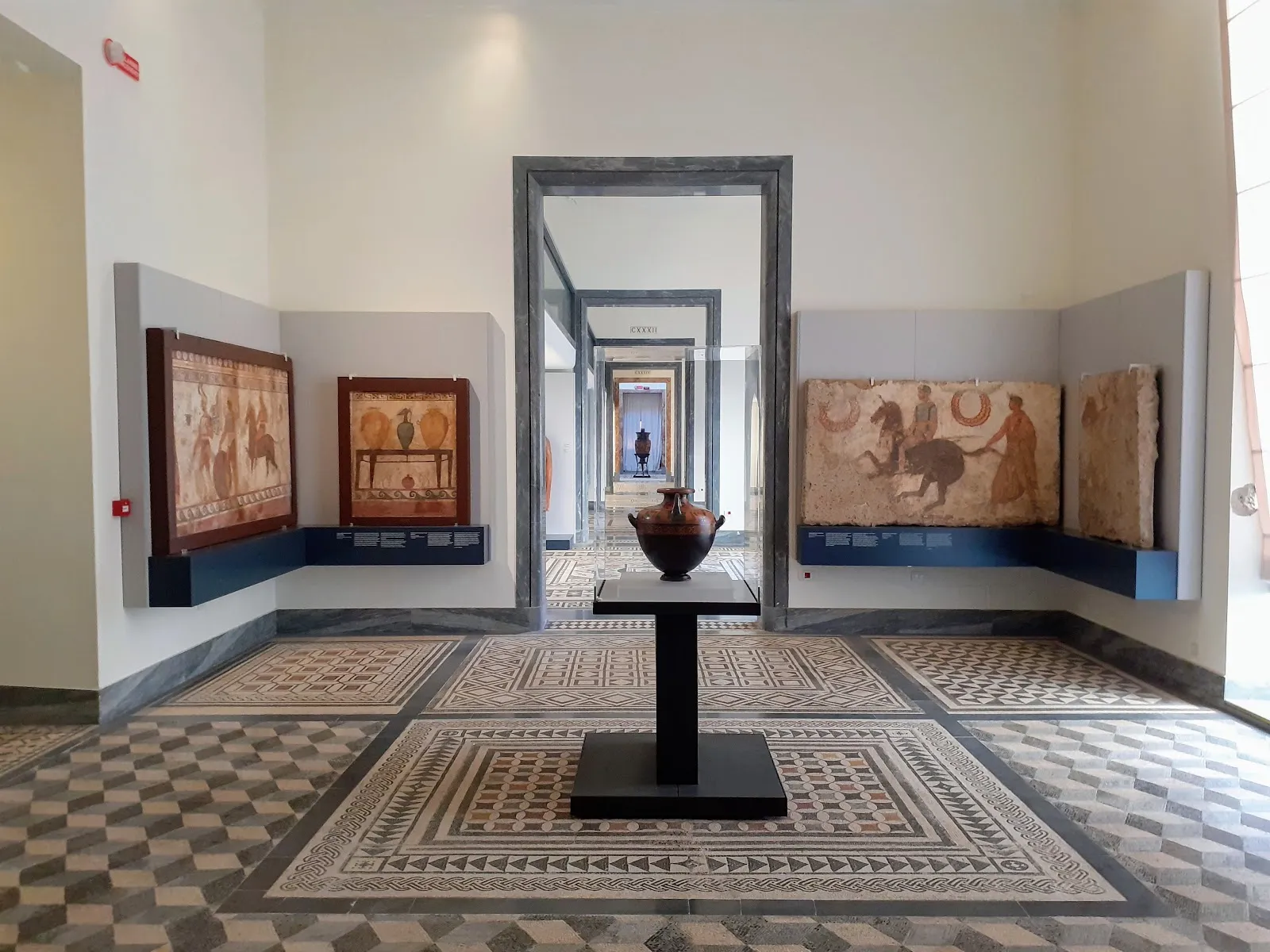
The National Archaeological Museum occupies Palazzo degli Studi, a 16th-century building in Naples. Its collections bring together Greek and Roman sculpture, ancient Egyptian and Etruscan objects, and finds from Pompeii, Herculaneum and other sites. Much of the material from the Vesuvian towns was removed from the excavations and placed here for preservation.
The museum’s holdings grew through collections assembled by prominent families, including the Farnese, and through archaeological discoveries. The Farnese collection includes sculpture, paintings and engraved gems. Together, these works give the museum a broad reach, from monumental statues to small objects made for personal use.
Pompeii and Herculaneum in the galleries

Painted frescoes and mosaics from Pompeii and Herculaneum are among the museum’s central draws. Their subjects include sea life, woodland hunts, vines and grapes. Look closely at the details: the mosaics range from large scenes to carefully worked images such as a Roman memento mori. The Alexander Mosaic is another notable work in the collection.
Other objects from the Vesuvian cities show the range of everyday and decorative arts. The displays include silverware from Pompeian homes, arms and gladiators’ helmets, as well as carved gems and cameos. A detailed model of Pompeii offers another way to take in the ancient city’s layout.
Sculpture, Egypt and the Secret Cabinet
The classical sculpture collection includes the imposing Farnese Hercules and the Farnese Bull. These works reward time spent looking at their scale and detail. The museum also holds Egyptian and Etruscan antiquities, including mummies. In the Egyptian collection, the Magic Statue is a black stone torso marked with hieroglyphs.
The Secret Cabinet contains erotic objects from Pompeii, including sculptures and mosaics. It is a distinct part of the collection, and its subject matter may not suit every group. The galleries also include jewels associated with prominent families, offering a smaller-scale counterpoint to the monumental sculpture.
Planning your visit
The collection is extensive, so set aside at least three hours and decide which sections matter most to you. An English audio guide or a guidebook can help you follow the displays without trying to cover every room. Online tickets are recommended in advance, particularly at busy times.
Some rooms may close at short notice, so check what is open when you arrive. The museum has a café and inner courtyards where you can pause during a longer visit. Tuesday is the weekly closing day; check the museum’s official website for current visitor information before setting out.
Häufige Fragen
How long should I spend at the National Archaeological Museum of Naples?
Allow at least three hours to explore the collection. An English audio guide or guidebook can help you focus your visit.
What are the museum’s highlights?
Look for the Farnese Hercules, the Alexander Mosaic, and frescoes and mosaics from Pompeii and Herculaneum. The Egyptian collection and Secret Cabinet are also notable.
Should I buy tickets in advance?
Advance online tickets are recommended, especially during busy periods, to reduce time spent queuing.
Is the museum open every day?
It is closed on Tuesdays. Check the museum’s official website for current visitor information before your visit.


