The Famine Memorial stands on Custom House Quay beside the River Liffey in Dublin. Rowan Gillespie’s bronze figures depict men, women and children in worn clothing, carrying belongings as they leave Ireland during the Great Famine of 1845 to 1852. Their detailed expressions give the memorial its quiet force and invite a pause to consider the suffering and emigration of that period. The riverside location makes it easy to include on a walk past the Custom House and Jeanie Johnston tall ship.
The figures on Custom House Quay
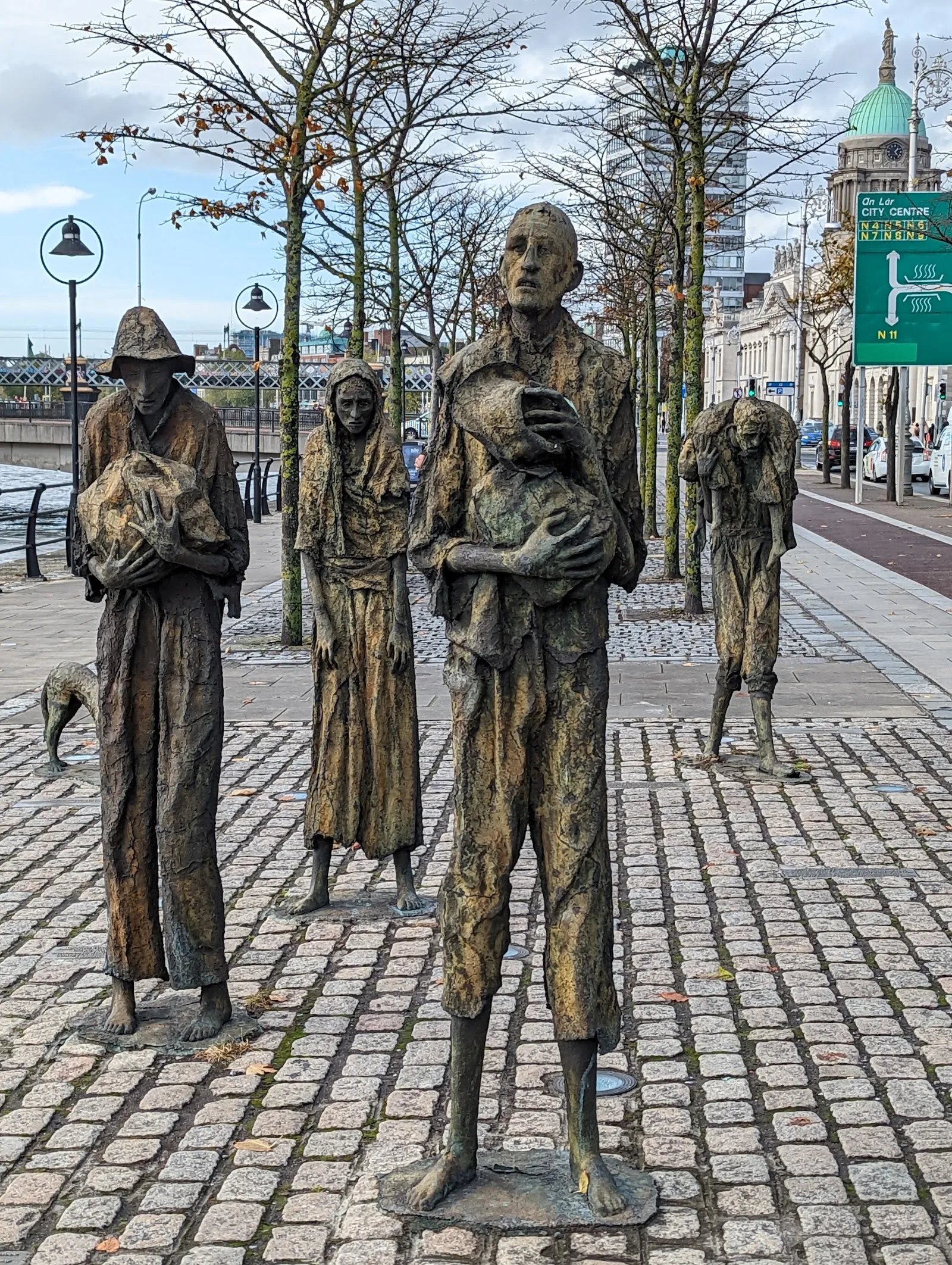
The memorial stands beside the River Liffey, close to the Custom House. Sculptor Rowan Gillespie created the bronze figures as emaciated people in tattered clothing, carrying what few belongings they have. Men, women and children are represented among those walking towards emigration.
The figures’ lifelike appearance and carefully rendered expressions make the group arresting at close range. Take time to observe each one rather than treating the memorial as a quick photo stop.
Remembering the Great Famine
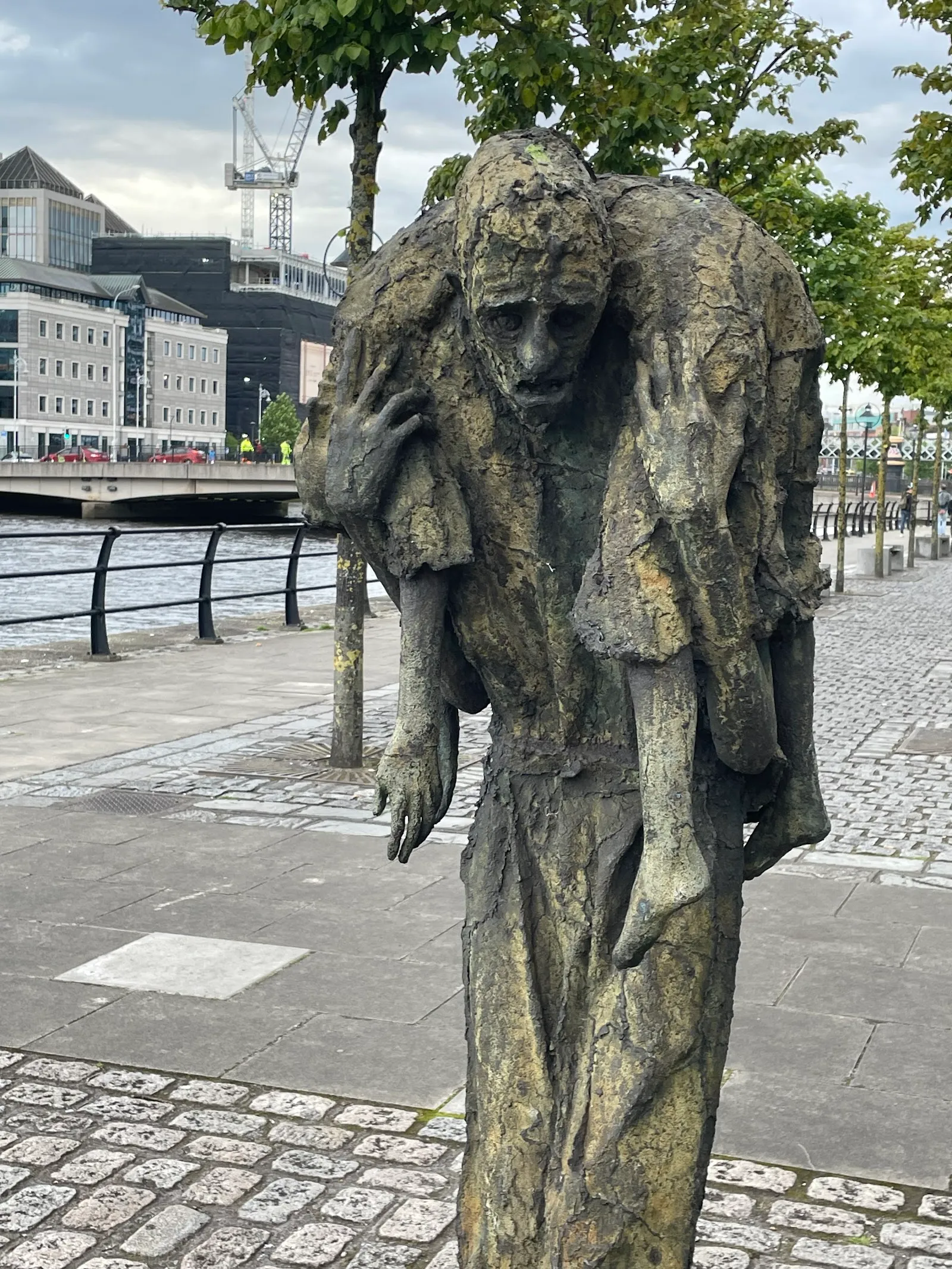
The figures commemorate the Great Famine of 1845 to 1852, a period of profound loss and emigration in Irish history. An estimated one million people died, while the population of Ireland fell by at least 20% through deaths and emigration, according to the historical account provided for the memorial.
The memorial is an outdoor place for remembrance. It is wheelchair accessible at the entrance and open around the clock. The Jeanie Johnston tall ship and the Custom House are nearby, along with the Science Gallery.
Häufige Fragen
Where is the Famine Memorial in Dublin?
It is on Custom House Quay beside the River Liffey, near the Custom House and Jeanie Johnston tall ship.
Is the Famine Memorial free to visit?
Yes. The outdoor memorial is free to access.
Can you visit the Famine Memorial at any time?
It is open 24 hours a day.
Is the Famine Memorial wheelchair accessible?
Yes, the entrance is wheelchair accessible.