Goa Gajah, or Elephant Cave, is a Hindu temple and archaeological site in Bedulu, about 6 km from Ubud. Its rock-cut entrance, carved with a large open-mouthed face, leads into a small T-shaped cave with Hindu statues, including Ganesha. Outside, paths connect the cave to bathing pools, gardens and Buddhist remains in a valley setting. The complex brings Hindu and Buddhist elements together, so allow time to explore beyond the cave itself. A visit can fit into less than an hour.
The carved cave entrance
Goa Gajah is an archaeological and religious site in Bedulu, around 6 km from Ubud. Its name means “Elephant Cave,” though the complex is known for its carvings and religious remains rather than elephants. The cave’s entrance is cut into rock and framed by a large face with its mouth open. Carved motifs surround the face, creating a dramatic threshold into the hillside.
The site is believed to date to the 9th century and is associated with prayer and meditation. The cave is small, with a T-shaped interior and Hindu statues, including an image of Ganesha. Its limited size means the main cave visit is brief; the wider grounds hold more to explore.
Hindu and Buddhist remains
Goa Gajah brings Hindu and Buddhist elements together in one complex. Hindu relics include a lingga-yoni, associated with Shiva, and a figure of Ganesha. Buddhist remains are also present around the site. The different religious traces give the grounds an archaeological interest beyond the cave façade.
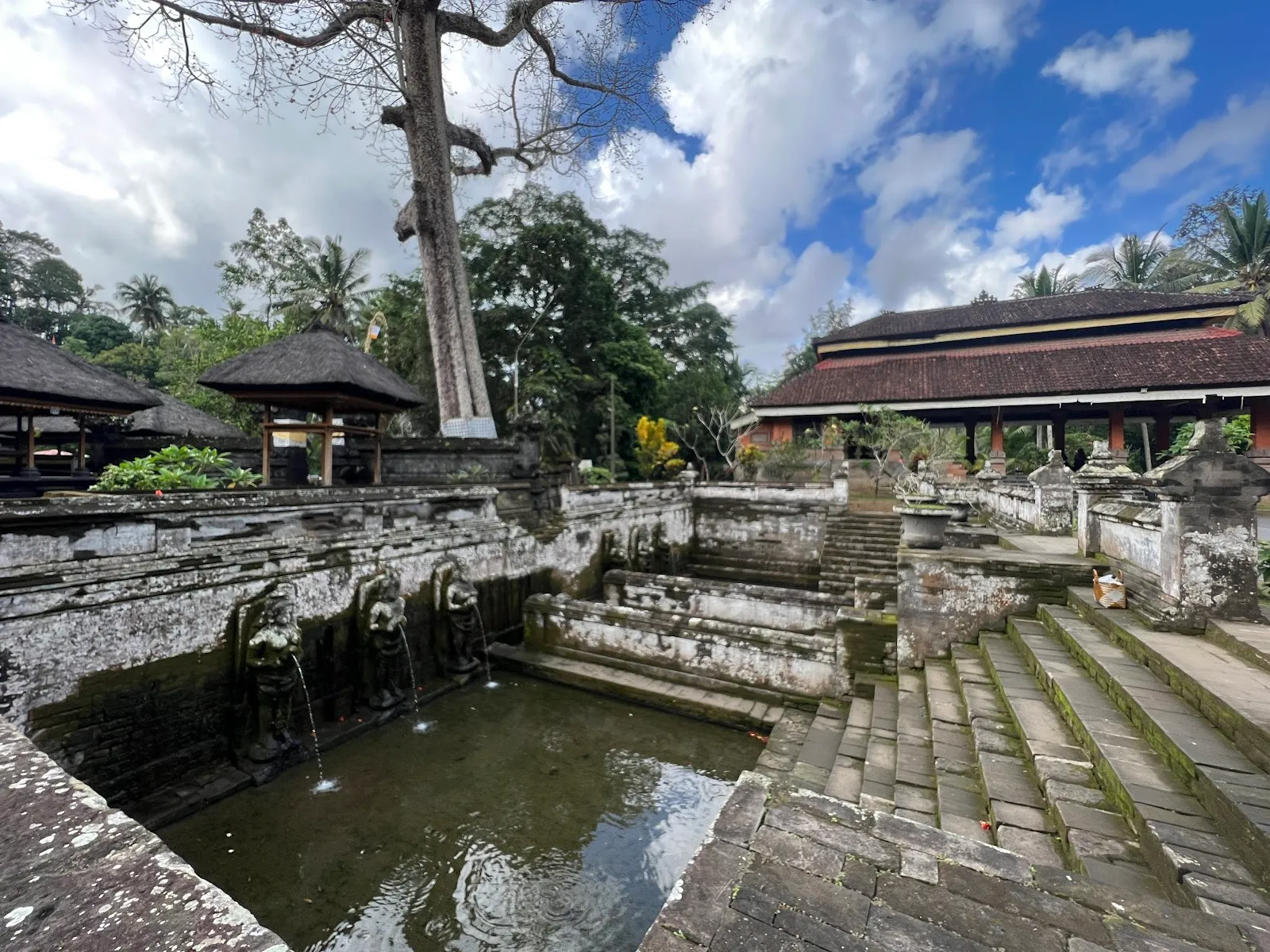
Walk through the outdoor areas to see the bathing pools, fountains, stonework and remains beyond the main cave. The complex sits in a valley, with paths leading through gardens and toward nearby Buddhist ruins. The grounds are part of the visit, not just a route to the entrance, so leave time to look around after seeing the cave.
Planning a respectful visit
Goa Gajah remains a sacred place as well as a historic attraction. Wear the sarong and sash required for entry; these are provided or can be rented at the entrance. Dress and behave with care around the religious features and bathing areas.
An early visit can make for a quieter walk through the grounds. The cave and outdoor complex can be explored in less than an hour. People near the entrance or parking area may offer sarongs or guiding services. Sarongs are available inside, and if you choose a guide, settle the price before the tour begins. Guided tours do not require advance reservation.
Häufige Fragen
Where is Goa Gajah?
Goa Gajah is in Bedulu, about 6 km from Ubud.
What can you see at Goa Gajah?
The complex has a carved cave entrance, a small cave with Hindu statues, bathing pools, gardens and Buddhist remains.
What should you wear to Goa Gajah?
A sarong and sash are required. They are provided or available to rent at the entrance.
How long do you need at Goa Gajah?
Allow less than an hour to see the cave and grounds, including the valley paths.