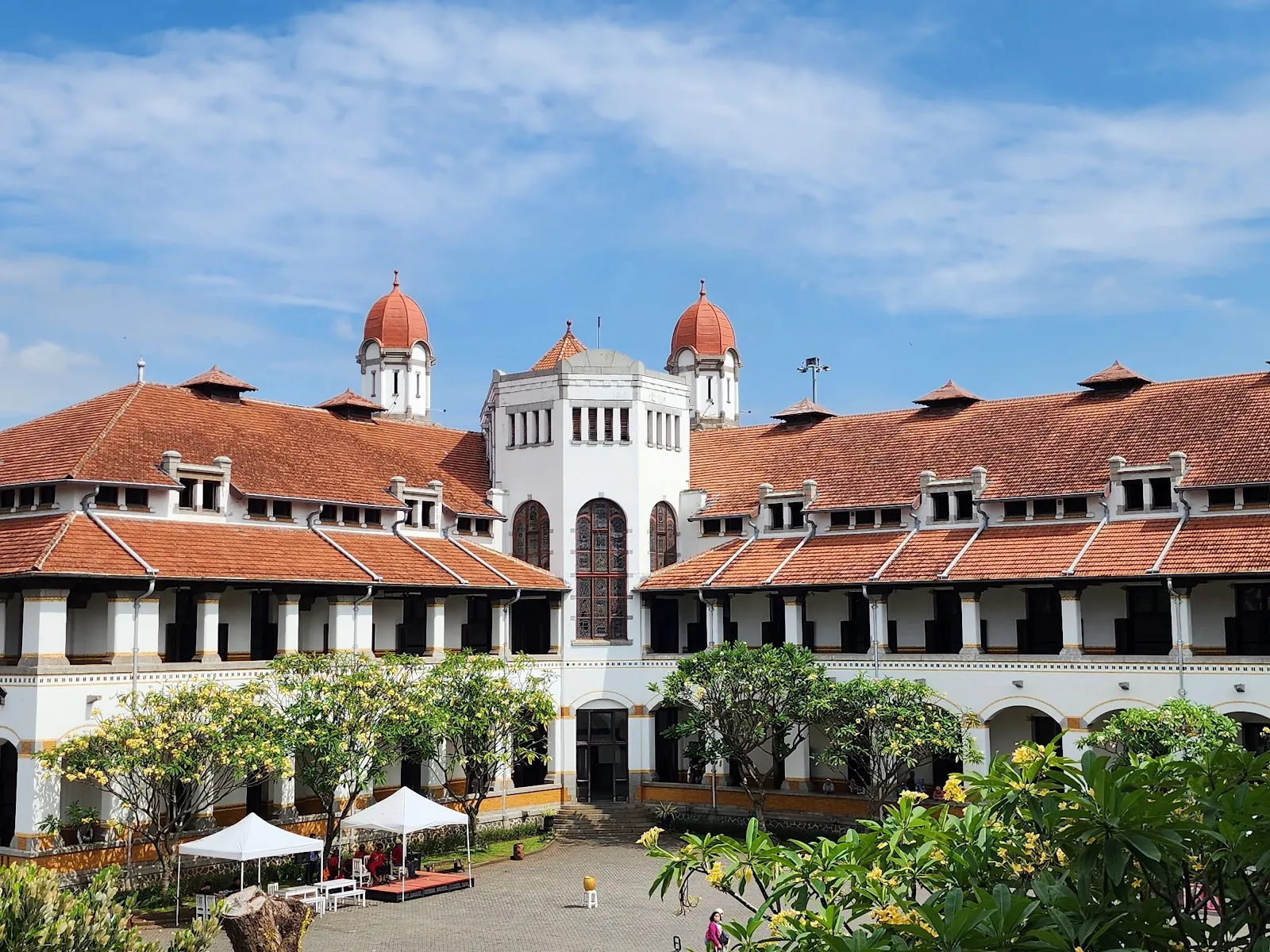
Lawang Sewu is a Dutch colonial building at the Tugu Muda roundabout in central Semarang. Its name means "Thousand Doors" in Javanese. It was built as the head office of the Dutch East Indies Railway Company, and its long corridors, arched windows and many doors are still the main sight. Inside, a museum shows railway objects such as old tickets and ticket printing machines. You can add a guide for a small fee to hear the building's history, including its role in the Second World War. The grounds are good for photographs.
A railway company's head office
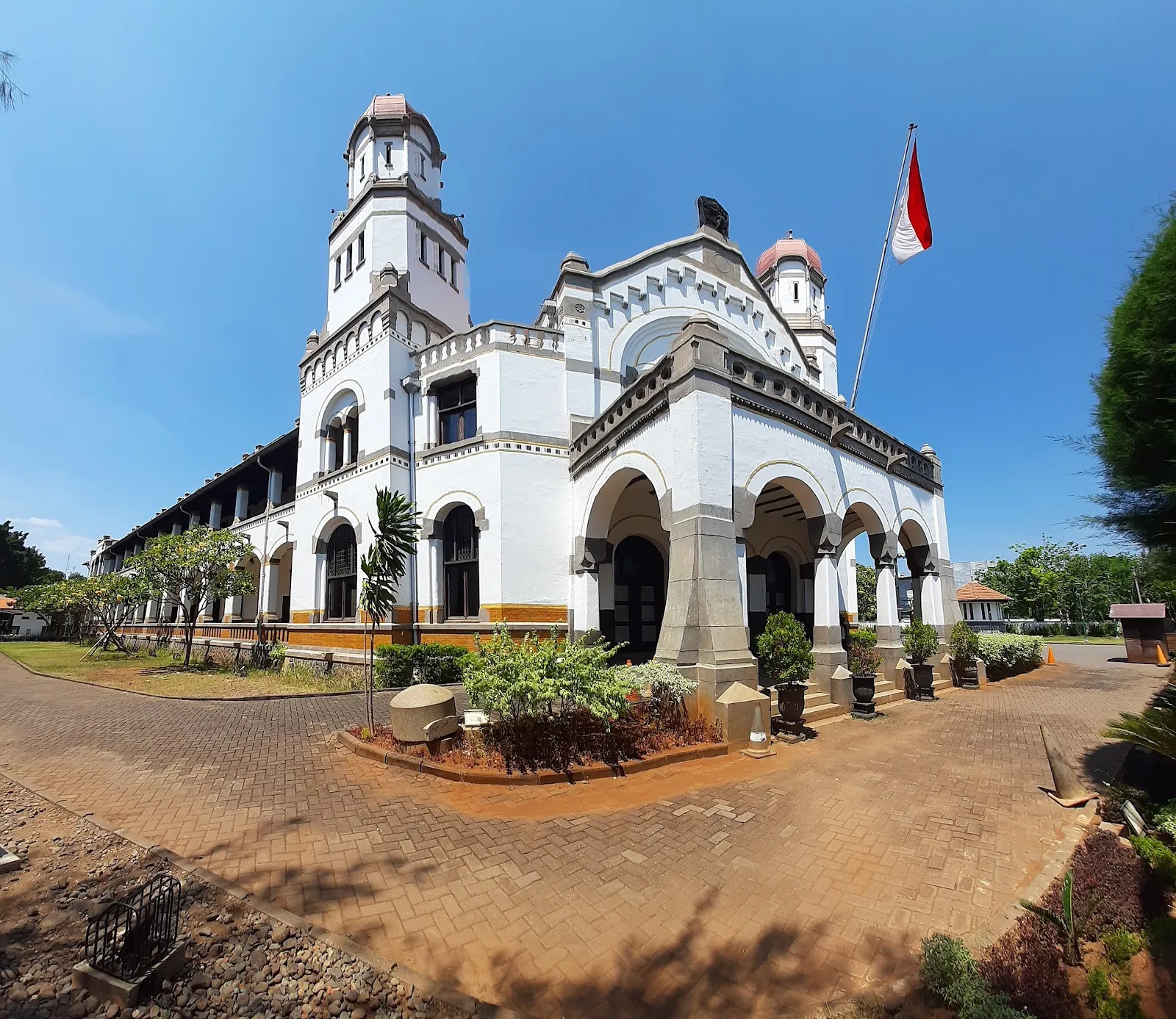
Lawang Sewu was built for the Nederlandsch-Indische Spoorweg Maatschappij, the private Dutch railway company that ran lines in Java. The complex went up in stages on a site of 18,232 square meters. Work on the main building began on 27 February 1904 and finished in July 1907. The company used it as its head office until 1942.
The building has two stories and a vast interior. Its name comes from Javanese: lawang means door and sewu means a thousand. The name refers to the many doors and large windows, though the real count falls short of a thousand. The building stands at the Tugu Muda roundabout, where Jalan Pemuda meets Jalan Pandanaran.
The war years and after
During the Second World War the Japanese military used the building as its headquarters. In 1945 it became a battleground in the Battle of Semarang. Accounts of the period say that prisoners of war were held in the basement and that some were tortured and killed there. This part of the history is the reason the building is so closely tied to ghost stories in Indonesia.
After independence the building became the office of the Djawatan Kereta Api Republik Indonesia. Today it belongs to PT Kereta Api Indonesia, the national railway company.
What you see inside
The restored building now houses a museum with a section on railways. The collection includes staff uniforms, communication equipment, ticket cabinets, tickets from earlier eras and ticket printing machines. Photographs and exhibits also cover the building's own past and its place in the history of Semarang. Your ticket includes an informational video.
A guide for a small fee adds the stories behind the rooms. Many guides also know the best spots for photographs. The courtyard and the corridors are the usual places to take pictures, with long lines of doors and windows. Cats and pigeons move freely around the grounds.
On site you will also find food stalls run by small local businesses, gift shops and, at times, live music.
The basement and evening visits
The basement was closed to the public for about ten years. It reopened to visitors on 3 December 2024. Local stories link it to the wartime period, and it is the part of the building most associated with legends of hauntings.
Evening tours lean on those stories. The building is also lit after dark, which changes how the facade and corridors look. If you prefer the history without the folklore, daytime on a weekday is calmer.
Häufige Fragen
What does Lawang Sewu mean?
It means "Thousand Doors" in Javanese. The name refers to the many doors and large windows of the building, which in fact number fewer than a thousand.
What was Lawang Sewu originally used for?
It was the head office of the Dutch East Indies Railway Company, built between 1904 and 1907. The company used it until 1942.
Is the basement open to visitors?
Yes. The basement was closed for about ten years and reopened to visitors on 3 December 2024.
Where is Lawang Sewu?
It is at Jalan Pemuda No. 160 in central Semarang, at the Tugu Muda roundabout where Jalan Pemuda meets Jalan Pandanaran.
Is Lawang Sewu accessible for wheelchair users?
The entrance and restrooms are wheelchair accessible. Buying tickets in advance is recommended.