Istiqlal Mosque stands in central Jakarta, near Merdeka Square, and is the largest mosque in Southeast Asia. It opened in 1978 and was built to mark Indonesia's independence, and its name is Arabic for independence. The prayer hall sits under a dome 45 metres across, with marble throughout and a calm, cool interior. Free guided tours in English are offered, and a tunnel links the mosque with Jakarta Cathedral across the road. Dress modestly and remove your shoes before entering the prayer areas.
From independence to a national mosque
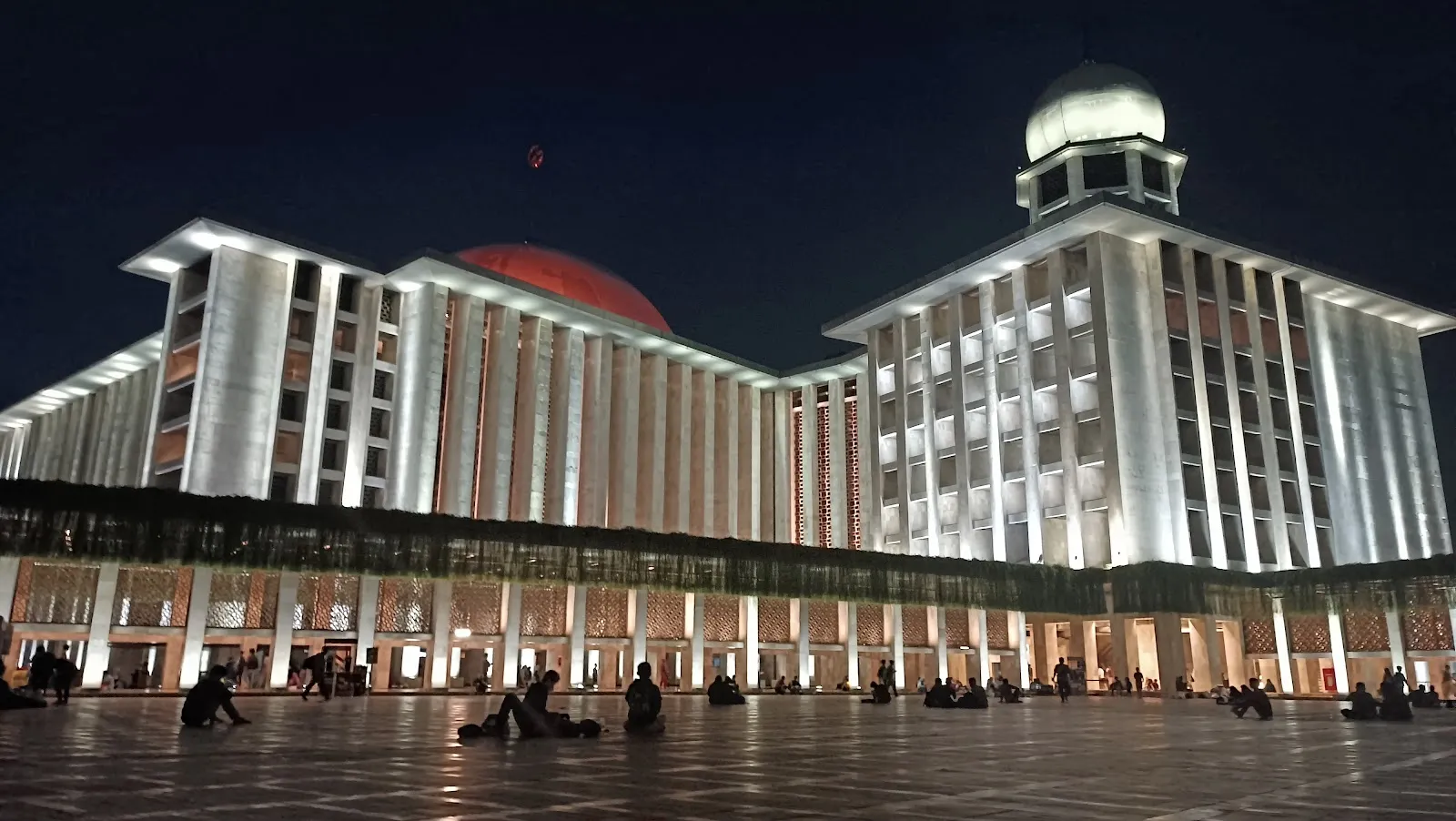
The mosque's name is the Arabic word for independence, and it was built to commemorate Indonesia's independence. Construction took 17 years. The first president, Sukarno, oversaw the work and opened the mosque in 1978.
Indonesia has the largest Muslim population in the world, and the government wanted a national mosque to match. It remains the largest mosque in Southeast Asia. Presidents and senior officials pray here during the major Islamic festivals, and the mosque fills up for Eid prayers.
The design and the prayer hall
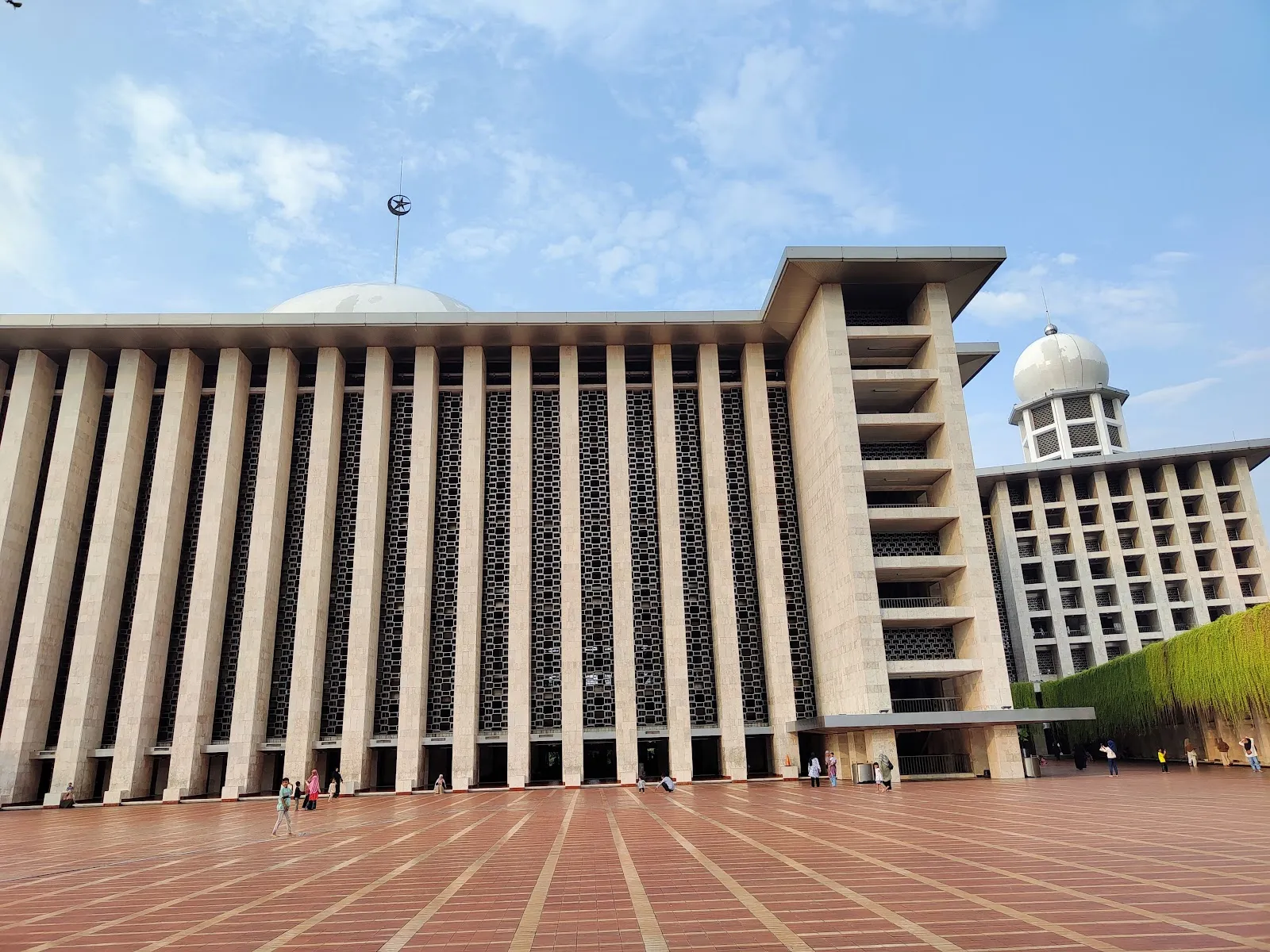
The building was designed by Friedrich Silaban, a Christian architect, and its plain, modern design sets it apart from many mosques. The main prayer hall sits under a central dome 45 metres across. Twelve large columns carry the dome, and balconies run around the hall on the upper levels, so you can look down on the prayer space.
Marble is used throughout the interior, and the windows carry geometric patterns that colour the light inside. The scale is easier to grasp once you stand inside the hall.
How a visit works
Non-Muslim visitors enter after a short briefing from a guide and follow the dress rules. Staff can lend robes to those who need them. Free guided tours in English are available, and you can book one at the tour desk on site. The tour covers the history of the building and the Islamic traditions behind it.
Shoes come off before you enter the prayer areas. Plan at least an hour for the mosque and its grounds, and allow more time if you want to take the guided tour.
The Tunnel of Friendship and Jakarta Cathedral
A tunnel, called the Tunnel of Friendship, links the mosque with Jakarta Cathedral, which stands across the road. The link is a deliberate sign of interfaith ties in the city. Both buildings are free to enter, and the two can be seen in one visit.
Merdeka Square and the National Monument are a short distance away, and the Pasar Baru market is within walking distance.
Häufige Fragen
Is there an entry fee?
Entry to the mosque is free, and so is entry to Jakarta Cathedral across the road.
How long do you need?
Plan at least an hour for the mosque and its grounds. A guided tour adds time to the visit.
What should I wear?
Dress modestly, with covered arms and legs. Women need a headscarf, and robes are available on site if you need them.
Can non-Muslims visit the mosque?
Yes. Non-Muslim visitors are allowed in after a briefing from a guide and by following simple rules, such as proper dress.