
Shree Neelkanth Mahadev Temple is a Shiva shrine in the forested hills above Rishikesh, built where tradition says Shiva drank the Halahala poison during the churning of the ocean and his throat turned blue. Colourful shikhara sculptures show that story, and devotees offer milk, water, bel leaves and flowers to the self-manifested Shivling inside. The road up passes mountain views and waterfalls, and the temple itself is calm, with the aarti led by priests. You can drive, take a jeep or walk the forest trail from Rishikesh.
The legend behind the name
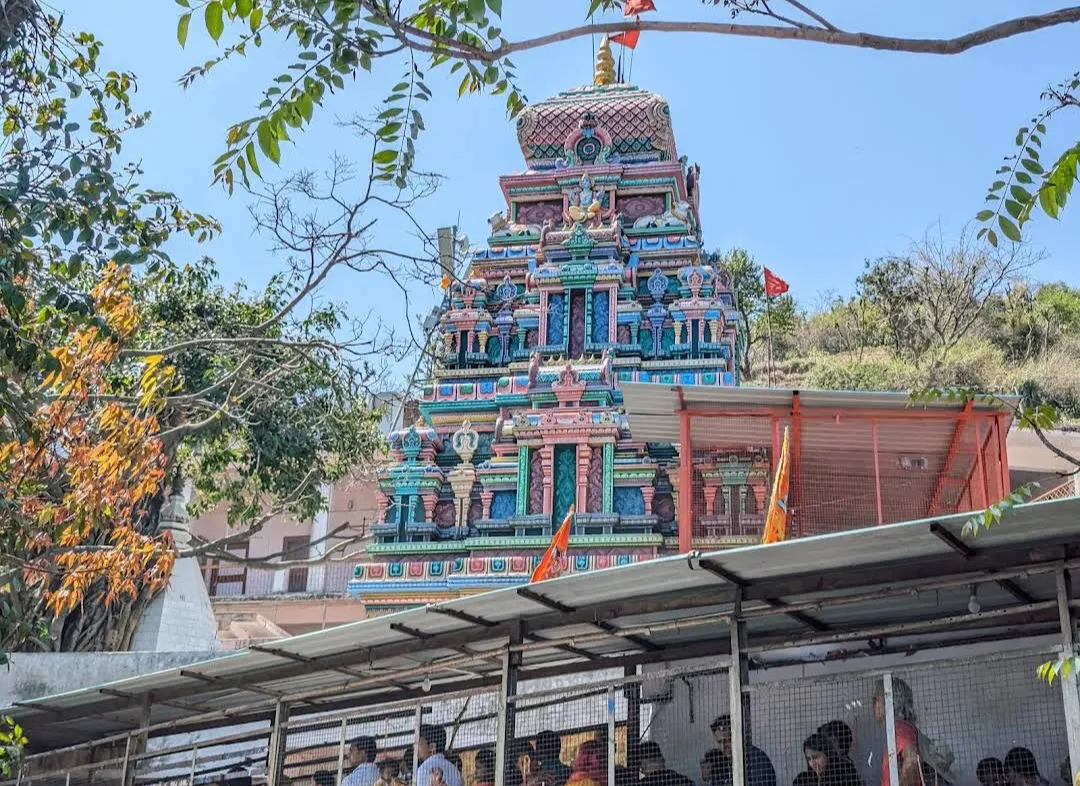
The temple is dedicated to Shiva in his Neelkanth form. In Hindu tradition, the gods and demons churned the ocean to obtain amrita, the elixir of life, and a deadly poison called Halahala rose from the water. To save the world, Shiva drank it and held it in his throat, which turned blue. Neelkanth means the blue-throated one.
The temple is believed to stand on the very spot where this happened. A temple priest explains that Shiva held the poison in his palm and used his power to keep it from going below the neck. The story is why pilgrims treat the site as one of the most significant Shiva shrines in the Rishikesh area.
Inside the temple
The architecture shows Dravidian influence. The colourful shikhara carries sculptures that depict the Samudra Manthan, so the legend can be read in the carving before you enter. The main deity is a Swayambhu Shivling, a form believed to have appeared on its own rather than been made.
Devotees bring milk, water, bel leaves, dhoop and flowers as offerings. A natural spring and a pond near the temple are used for a holy dip before entering. Priests perform the aarti with devotion, and the atmosphere is quiet, with few bells. The grounds are well kept, restrooms and drinking water are clean, and volunteers help visitors find their way. Queues are short on weekdays and longer in peak seasons.
The temple closes from 10 to 11 AM for the morning aarti. Shoes are left at shops on the approach, and the closer the shop is to the temple, the shorter the walk back barefoot.
Getting there by road or on foot
You can reach the temple in your own vehicle, by jeep or by taxi. The road is narrow, which is why daytime driving is advised. Private parking for two and four wheelers is available nearby and fills up at festival times. Public transport runs from Rishikesh near Janki Jhula and Laxman Jhula.
Many pilgrims walk. The trail from Ram Jhula is about 8.2 km, graded hard, with roughly 800 m of climbing, and takes four to six hours. The route from Janki Setu is about 9 km of moderate to steep uphill, and one walker reached the top in around 2.5 hours. Another trail starts at Garudachatti and enters Rajaji National Park, which lies at the northern limit of the Asiatic elephant's range. A forest path of about 7 km, around three hours on foot, is taken by pilgrims as a mark of reverence.
On the trail, langurs live along the way, so some walkers bring bananas for them. Carry plenty of water.
When to go
The temple is open all year. October to March has the most pleasant weather. Shravan, in July and August, is considered highly auspicious and draws large crowds. Maha Shivratri is the main festival and brings many worshippers.
Starting early helps in every season. Mornings are quieter and often misty in the hills, and an early start avoids the afternoon crowd.
Food, shopping and one more shrine
Small eateries and street-snack stalls operate outside the temple area. Local shops sell rudraksha beads, and sitafal (custard apple) is a local fruit to try on the way.
Uphill from the main temple is Maa Bhuvaneshwari Devi Temple, a shrine many visitors do not know about. It is a short extension if you have time and energy after darshan.
Häufige Fragen
What is Neelkanth Mahadev Temple known for?
It is a Shiva temple at the place where tradition says Shiva drank the Halahala poison during the Samudra Manthan. His throat turned blue, which gave the temple its name.
How do you get to Neelkanth Mahadev Temple from Rishikesh?
You can go by your own vehicle, a jeep or a taxi. Public transport runs near Janki Jhula and Laxman Jhula. Walking trails also lead up from Rishikesh.
How long is the trek to the temple?
The route from Janki Setu is about 9 km and took one walker around 2.5 hours. The trail from Ram Jhula is about 8.2 km, graded hard, and takes four to six hours.
What is the best time to visit?
October to March has pleasant weather, and early mornings on weekdays are the quietest. Shravan in July and August and Maha Shivratri are crowded.
Is there parking at the temple?
Yes, private parking for two and four wheelers is nearby. It can get busy during festivals.
