Jaisalmer Fort, also called Sonar Quila or the Golden Fort, rises on a hill above the desert town of Jaisalmer. Its yellow sandstone walls turn gold in low light, and its lanes wind between havelis, temples and shops. Thousands of people still live inside the walls, so the fort works like a small town. Plan time for the Jain temples, the palace museum and a walk along the ramparts, and stay for sunset.
Built by Rawal Jaisal in 1156
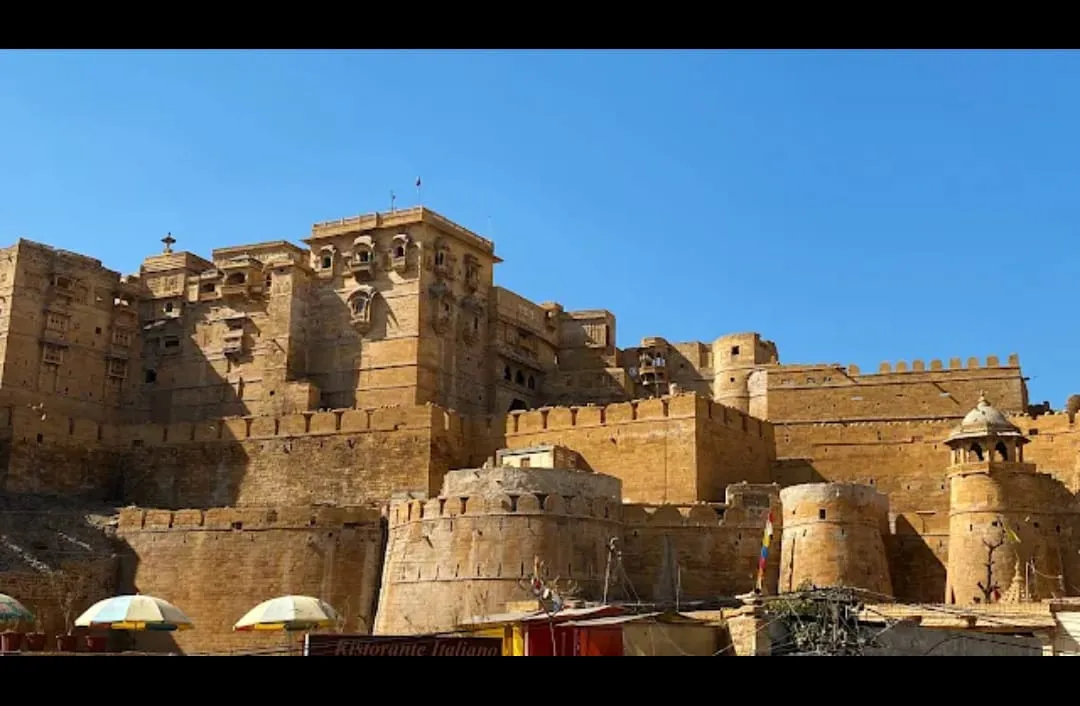
Rawal Jaisal, a Rajput ruler, began the fort in 1156, and the city takes its name from him. The story goes that he was the eldest heir of the Rawal of Deoraj, but the throne of Lodurva went to a younger half-brother. Looking for a new capital, he followed the guidance of a sage named Eesul, whose prophecy said a descendant of Krishna would found a kingdom on this ground. The first structure was a mud fort, and it became the base for the new kingdom.
A fort where people still live
Thousands of people live inside the walls, in houses that line the lanes. Families, hotels, guesthouses, restaurants and shops share the same streets, so the daily routine of a town continues within the fort. Rooftop cafes look over the lanes and the city below.
Visitors who walk slowly will see laundry hung out to dry, children playing and shopkeepers at work beside carved doorways.
Gates, lanes and the walls
Four gates give access to the fort: Ganesh Pol, Suraj Pol, Bhoot Pol and Hawa Pol. Hawa Pol leads to Dussehra Chowk, a large courtyard. Beyond it, the lanes narrow and bend between carved golden facades.
The fort has 99 bastions and turrets, and it rises above the town on Trikuta Hill. Shops inside the walls sell handicrafts, textiles, jewellery and souvenirs, so compare prices with the market in town before you buy.
Manak Chowk, the market area beside the fort, is known for leather goods, silver jewellery and antiques.
The Jain temples
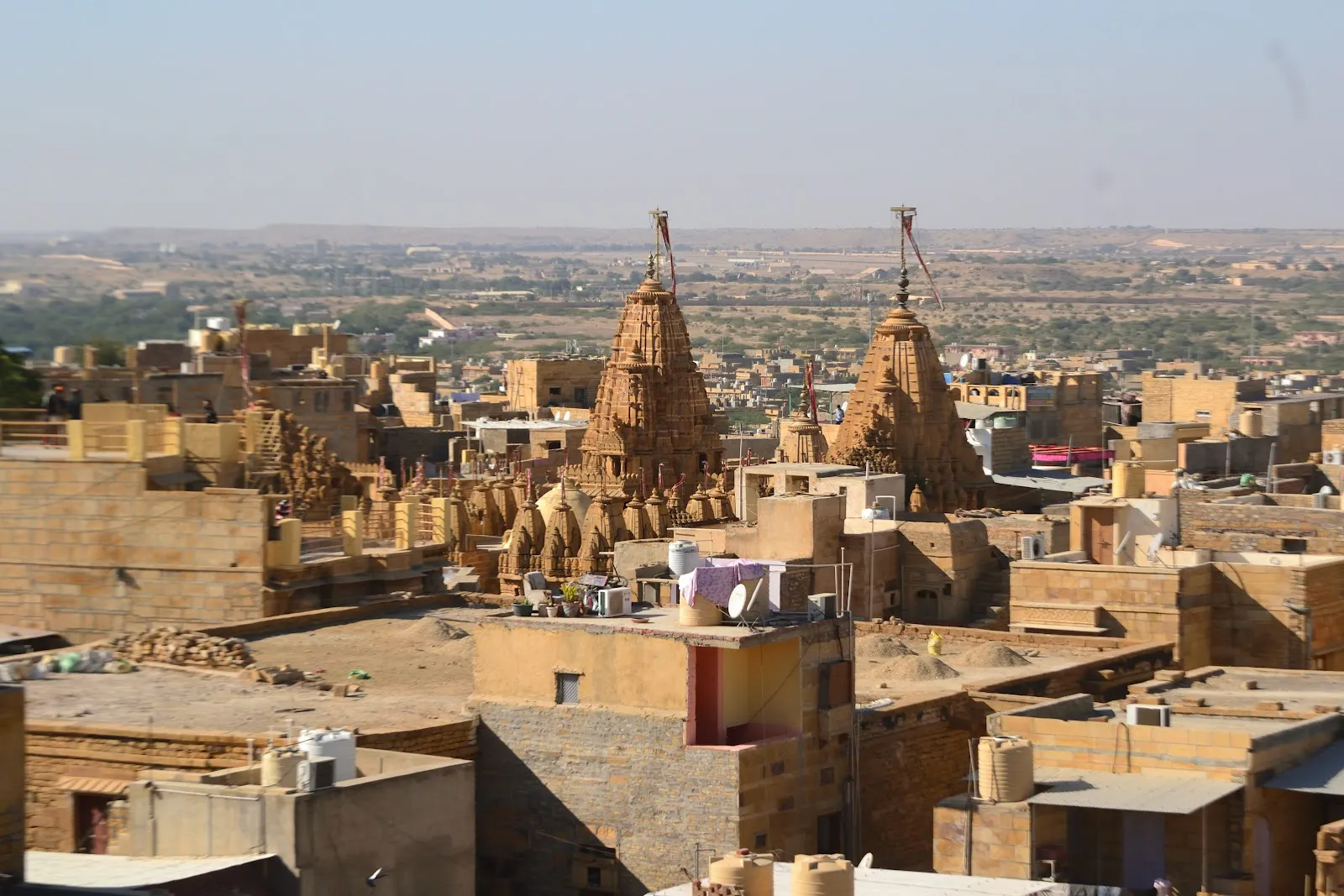
Seven interconnected Jain temples stand inside the walls. They date from the 12th to the 15th centuries and are carved from sandstone. Among them is the Mulnayak Chintamani Parshwanath temple.
The detail in the carving rivals the marble Jain temple complex at Ranakpur. The temples are places of worship, so visitors should follow the rules at the entrance and leave shoes and leather items outside.
Fort Palace Museum
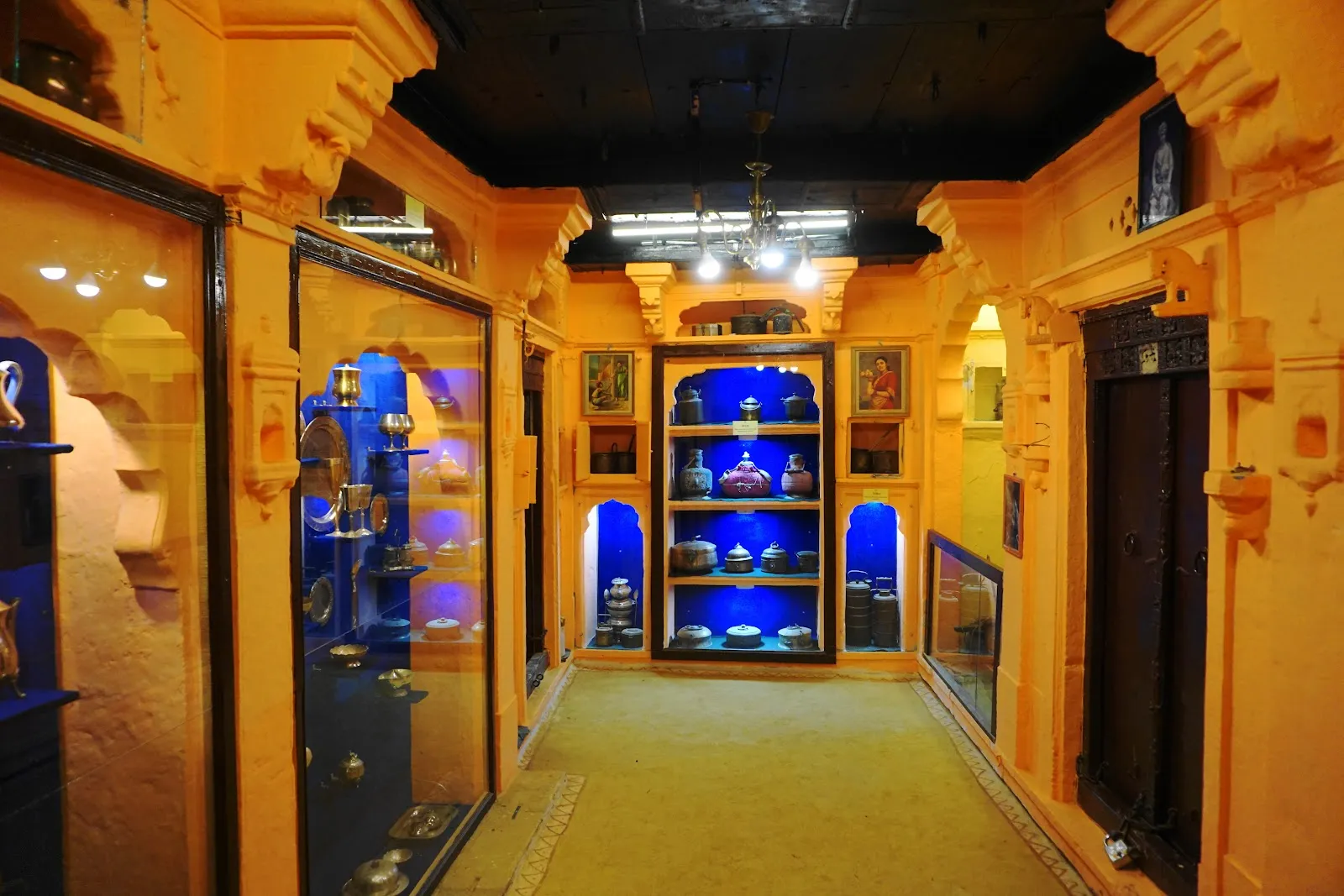
The Fort Palace Museum occupies the Raj Mahal, the former royal palace. Its rooms hold a silver throne, paintings, weapons, ceremonial costumes, sculptures, and old stamps and banknotes. The museum has a separate entry ticket, and the terrace gives a wide view of the city. Photography is allowed.
Some parts of the palace are under restoration, and not every room is open to the public. Nearby, the Rang Mahal has mirrored and painted walls. It was once the bedroom of the 18th-century ruler Mularaja II.
Desert Festival procession
Each year the Desert Festival of Rajasthan opens with an early morning procession that starts at the fort and heads to the Shahid Poonam Singh Stadium. The festival runs for three days of music, dance and local events.
Häufige Fragen
Do people still live inside Jaisalmer Fort?
Yes. Families live inside the walls, alongside hotels, guesthouses, restaurants and shops selling handicrafts.
How long do you need at Jaisalmer Fort?
Allow about one hour for the lanes. Add time for the Jain temples and the Fort Palace Museum.
Do I need to remove my shoes?
Yes, at the Jain temples. Remove your shoes and any leather items before you go in.
Which gates lead into the fort?
The four gates are Ganesh Pol, Suraj Pol, Bhoot Pol and Hawa Pol. Hawa Pol leads to Dussehra Chowk, a large courtyard.