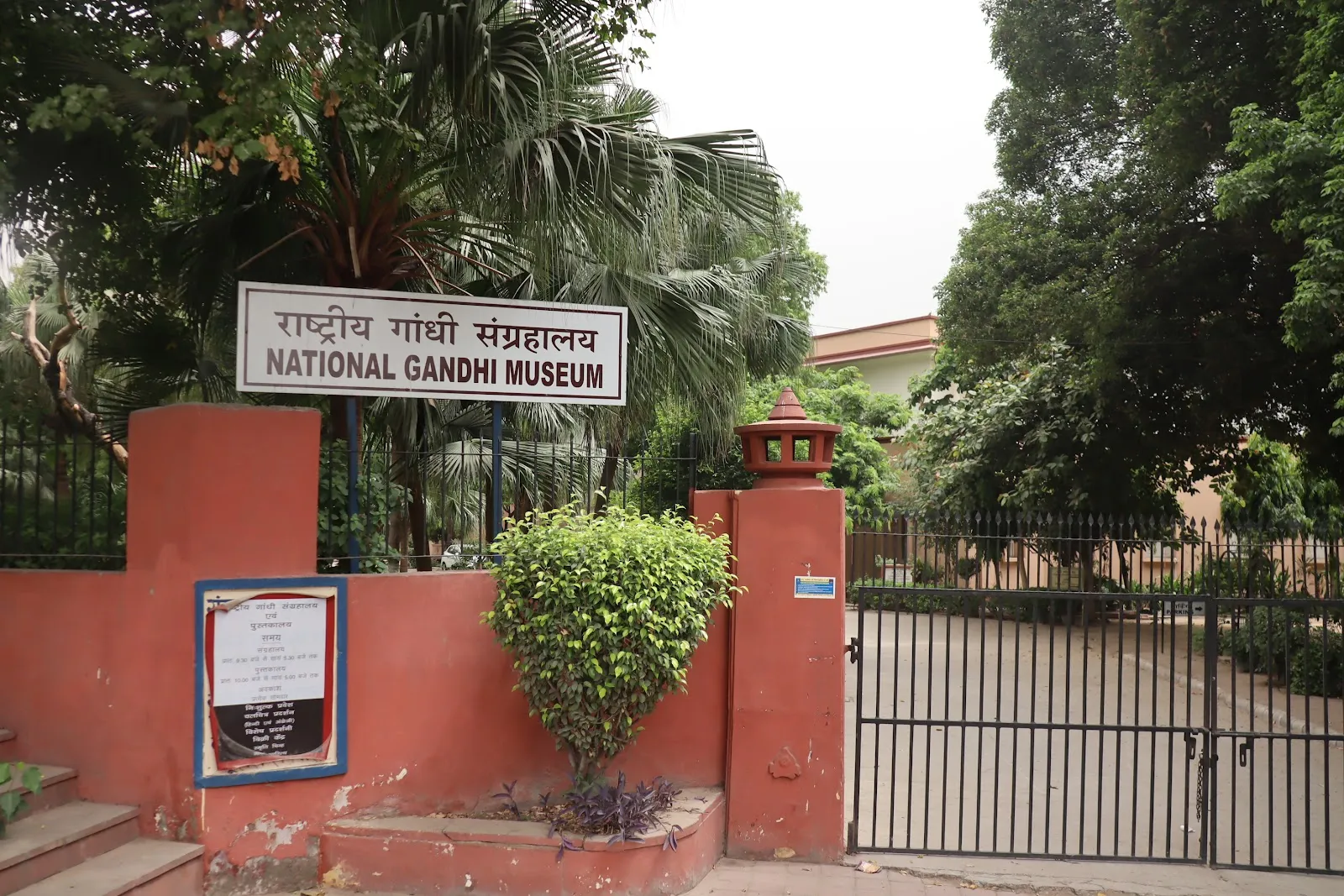
The National Gandhi Museum on Jawaharlal Nehru Marg, opposite Raj Ghat, traces Mahatma Gandhi’s life, work and role in India’s freedom struggle. Its galleries bring together photographs, letters, personal belongings and objects connected with his assassination. Look for the spinning wheels, which relate to Gandhi’s campaign for self-sufficiency, and a replica of his modest home at Sabarmati Ashram. The exhibits also cover key events in the independence movement, giving you a thoughtful companion visit to the nearby memorial.
Objects from Gandhi’s life
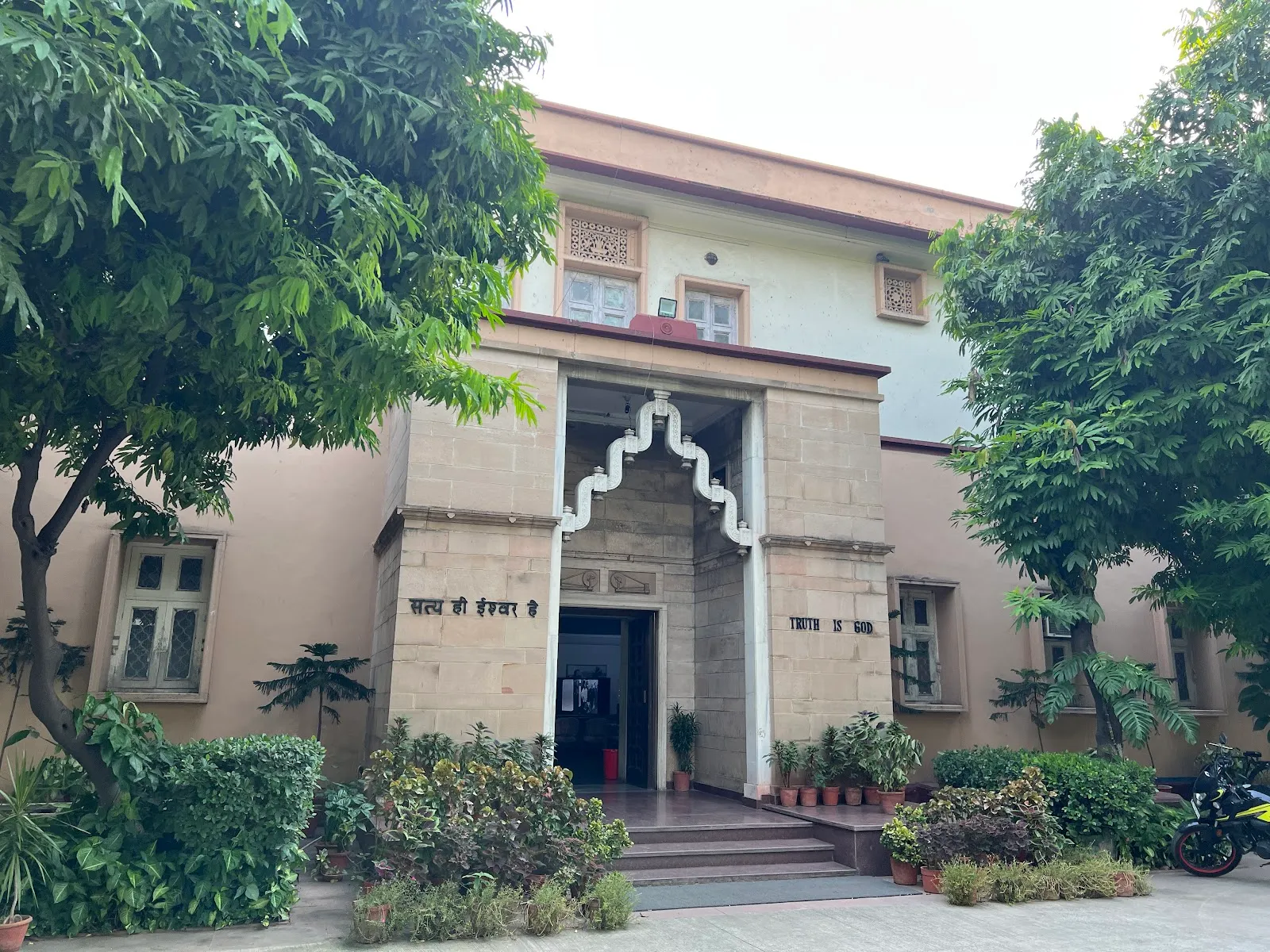
The collection brings together photographs, letters, manuscripts, journals and personal effects associated with Mahatma Gandhi. Among the objects noted in the galleries are his walking stick and garments, including the dhoti he was wearing when he was assassinated. The museum also displays one of the bullets that killed him. These items place the events of his life and death alongside the wider story of India’s independence movement.
The Martyrdom Gallery focuses on Gandhi’s assassination and its aftermath. It includes the clothes he wore and one of the bullets used to kill him, as well as urns that carried his ashes for immersion. The material is solemn; take time with it and give other visitors space to reflect.
Spinning wheels and the Ashram gallery
The spinning wheels on display connect Gandhi’s use of khadi, or homespun cotton, with his emphasis on self-sufficiency. The collection includes different kinds of charkhas, from traditional forms to portable models. Together, they give context to the role of spinning in Gandhi’s public work and ideas.
A replica of his modest home at Sabarmati Ashram offers another view of the principles he followed. The museum also has models of cottages where Gandhi lived, alongside photographs, sculptures and artwork. Quotes and excerpts from his writing help connect these objects with his philosophy.
Books, photographs and research
The museum’s displays follow different stages of Gandhi’s life through photographs and historical material. Exhibits also cover significant events in the freedom struggle, so the collection can be useful for visitors who want to understand both his personal story and his contribution to the movement.
A library on the ground floor holds books and magazines on peace and religions. The museum has a small bookshop for further reading. Its exhibits are arranged for visitors to explore independently, with explanatory information alongside the objects. If you are visiting with children, the photographs, documents and personal belongings provide concrete starting points for discussing Gandhi’s life and work.
Häufige Fragen
Is entry to the National Gandhi Museum free?
Yes. Admission is free.
How long should I spend at the museum?
Allow about 50 to 60 minutes for a visit. Add time if you want to study the exhibits in detail.
Is the National Gandhi Museum open on Mondays?
No. It is closed on Mondays.
Where is the National Gandhi Museum?
It is on Jawaharlal Nehru Marg, opposite Raj Ghat in Delhi.