Bengaluru Fort is a compact historic site near KR Market, with stone walls, bastions and the Delhi Gate surviving from a much larger fort. Kempe Gowda I built the original mud fort in 1537; it was later rebuilt in stone under Hyder Ali and Tipu Sultan. Inside, look for the Ganapathi temple and details in the fortifications. The grounds offer a quiet pause amid the busy city, and the short visit pairs easily with Tipu Sultan’s Summer Palace nearby.
From mud fort to stone walls
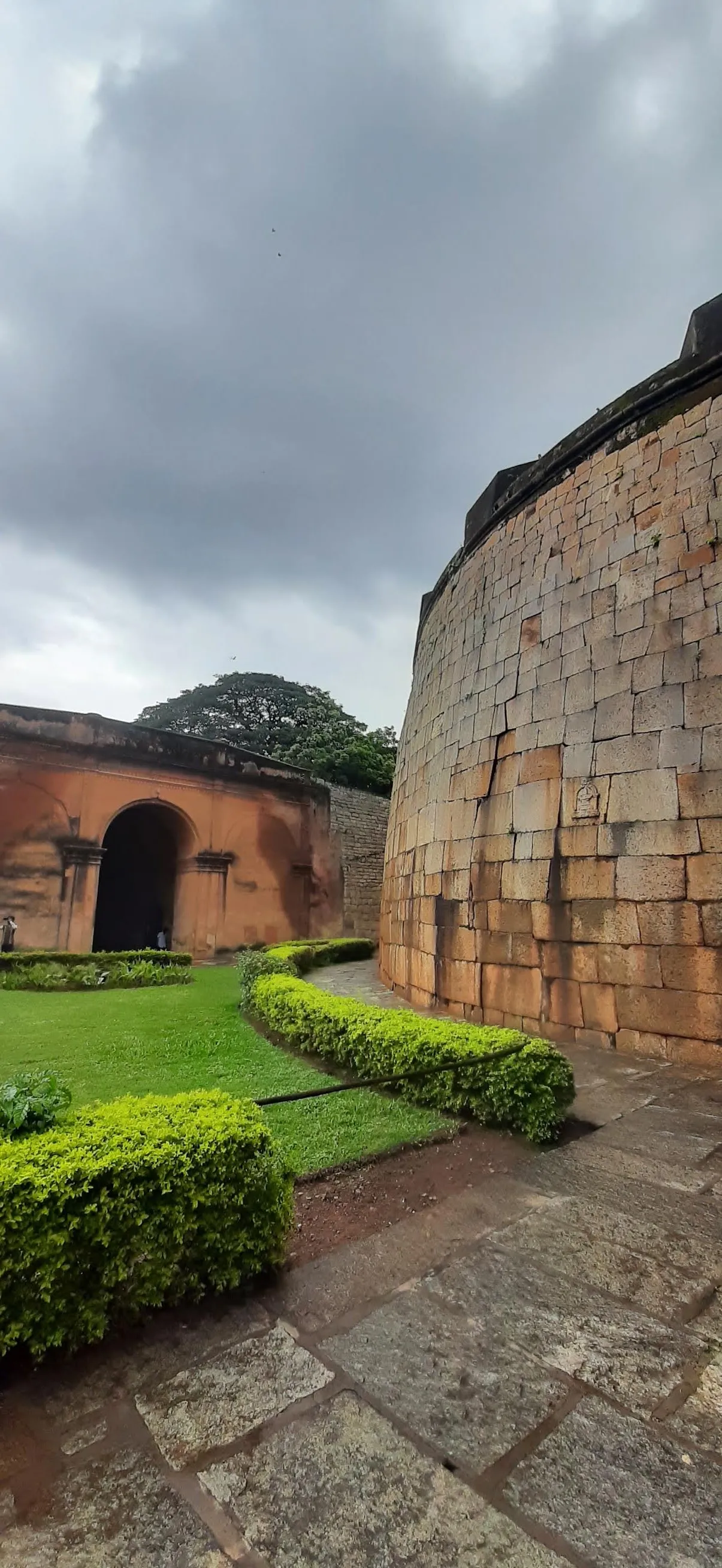
Kempe Gowda I, the founder of Bengaluru, built the fort in 1537 as a mud stronghold. It marked the centre of his capital. In the 18th century, Hyder Ali began rebuilding it in stone, and Tipu Sultan completed the work.
The fort once covered a much larger area than the remains visitors see today. Most of its original structures have disappeared, leaving sections of the fortifications and a few features that hint at its former scale. The surviving walls and bastions are a reminder of the site’s military purpose and its place in the city’s early history.
The Delhi Gate and the fortifications
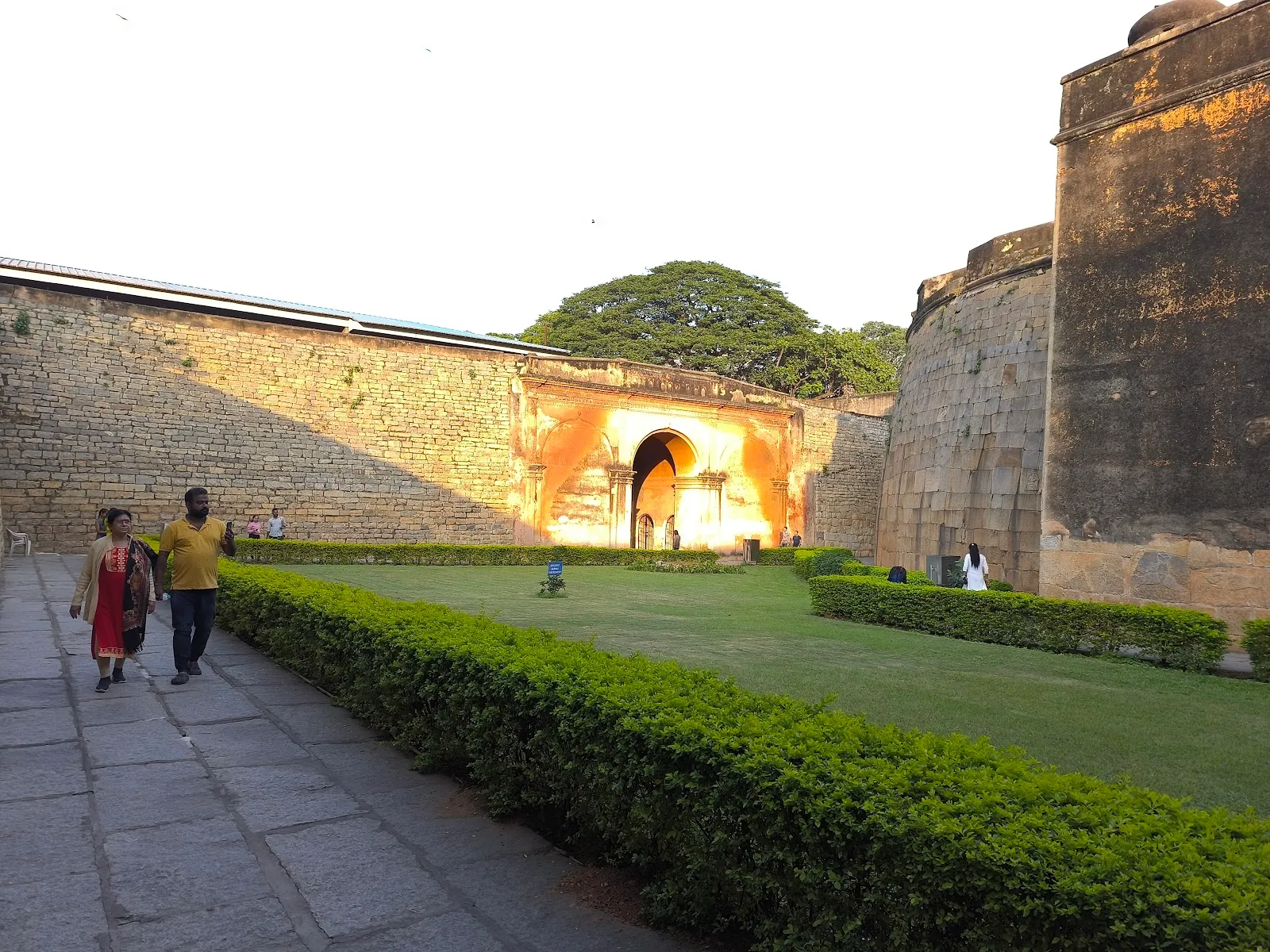
The Delhi Gate is among the most recognisable surviving parts of the fort. Its arched entrance and heavy stonework give a sense of the construction that protected the stronghold. Look closely at the walls for carved details, including bas-relief work along the fortifications.
Only a small part of the original fort is accessible, so a visit is brief. Information boards on site help explain the monument’s history and its role during the Anglo-Mysore Wars. Take time to look at the stonework rather than expecting a large complex of intact buildings.
Temples within the grounds
A Ganapathi temple stands within the fort grounds and is associated with Tipu Sultan’s period. Its presence adds a place of worship to a site best known for its military architecture. The fort’s history also includes a temple built in memory of Lakshmamma Devi, though the remains and details described for visitors centre on the accessible sections of the fort.
Treat the temple and the grounds with respect. The maintained, green surroundings offer a quieter contrast to the busy streets outside, and the surviving structures make the site a useful stop for understanding Bengaluru’s beginnings.
Pairing the fort with the Summer Palace
Bengaluru Fort is close to Tipu Sultan’s Summer Palace, so the two sites can be visited in one outing. The fort gives context to the city’s early history and military architecture; the nearby palace adds another place associated with Tipu Sultan. Since the fort takes around 20 to 30 minutes to explore, it works well as a brief stop rather than a half-day visit on its own.
Häufige Fragen
Is Bengaluru Fort free to enter?
Yes. Entry is free.
How long does a visit to Bengaluru Fort take?
Allow around 20 to 30 minutes. Only a small part of the original fort remains.
What can you see at Bengaluru Fort?
The accessible remains include the Delhi Gate, stone walls and bastions, carved details and a Ganapathi temple.
Can you visit Bengaluru Fort and Tipu Sultan’s Summer Palace together?
Yes. The Summer Palace is nearby, so you can pair the two sites in one outing.