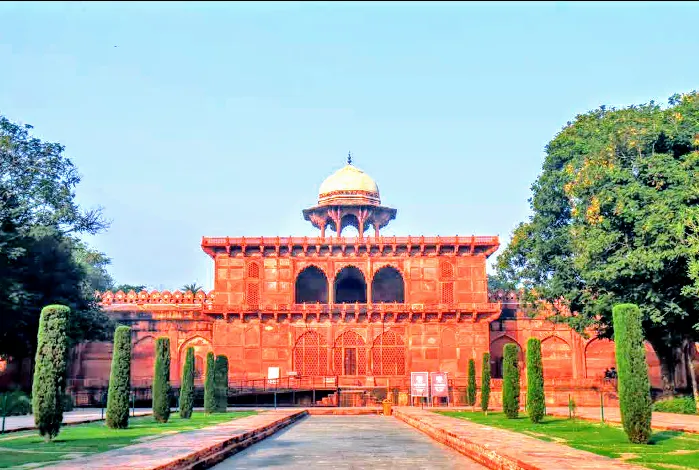
Inside the Taj Mahal complex in Agra, the Taj Museum adds context to the monument through Mughal-era objects and records. Its displays include original plans and drawings, manuscripts, miniature paintings, coins, royal decrees, weapons and utensils. Look closely at the site plans to see how carefully the mausoleum was laid out, and at the objects connected with Shah Jahan and Mumtaz Mahal. The museum is a compact stop after the gardens and tomb, especially for anyone who wants to understand the design and making of the Taj Mahal as well as admire it.
A museum within the Taj Mahal complex
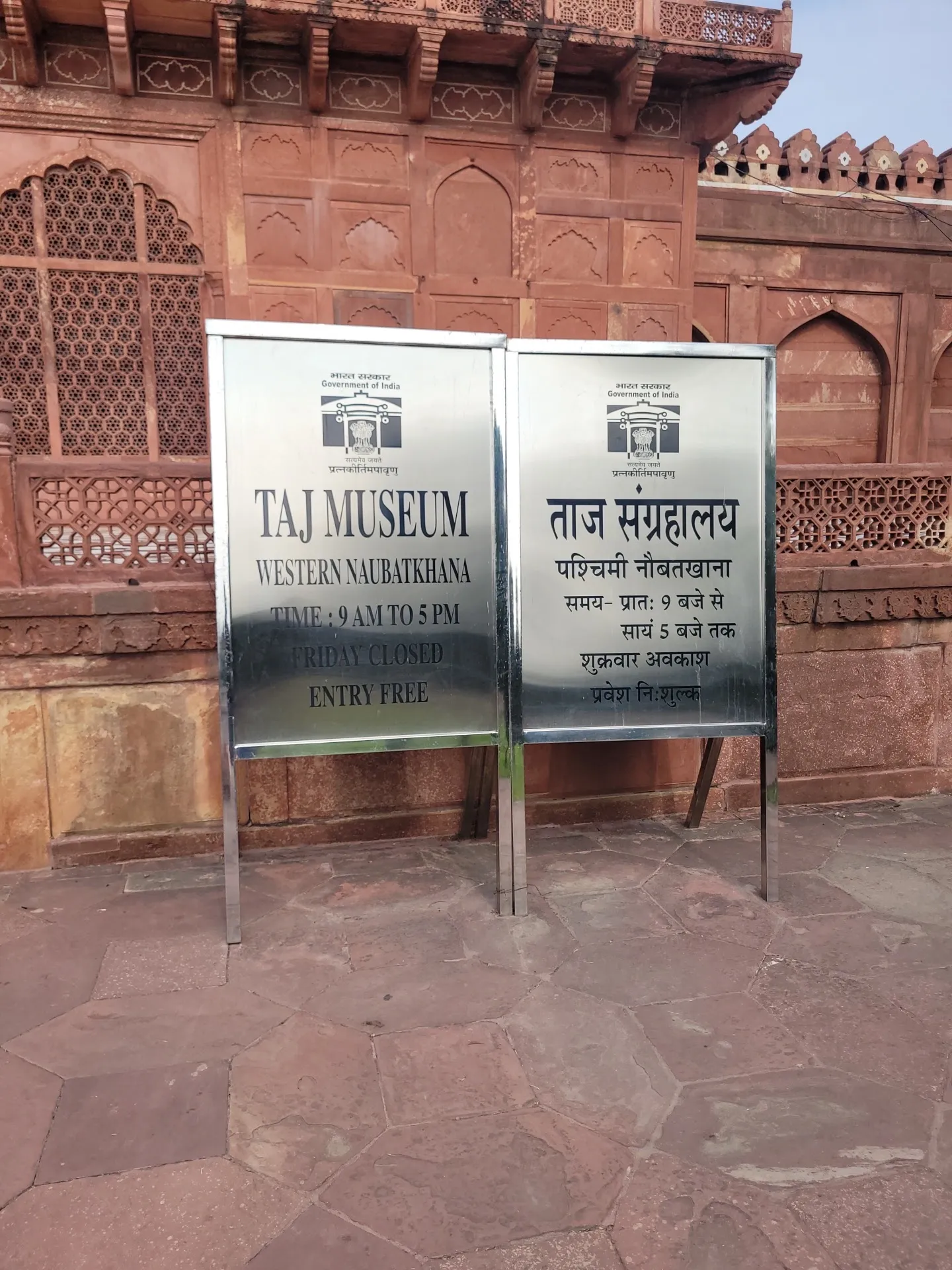
The Taj Museum is inside the Taj Mahal grounds, on the western side of the gardens, in a building also known as the Jal Mahal or Western Naubat Khana. The museum occupies a two-storey structure with galleries and a main hall. Its subject is the Taj Mahal and the Mughal world connected with its creation, so a visit can help put the monument’s architecture and decoration into historical context.
The museum was established in 1982. Its institutional history reaches back further: an earlier museum was set up in 1906 at the suggestion of Lord Curzon, then Viceroy of India. That first collection was housed in two hexagonal rooms near the main entrance gateway. The present museum’s location within the complex keeps its displays close to the monument they document.
Plans, drawings and records
The architectural material is among the most useful displays for visitors curious about how the Taj Mahal was planned. Original drawings and site plans show the monument’s layout; engineering drawings offer another way to study its design beyond the view from the gardens. Other displays include sketches, maps and records connected with construction. Samples of stone and decorative materials provide a closer look at the elements used in the building.
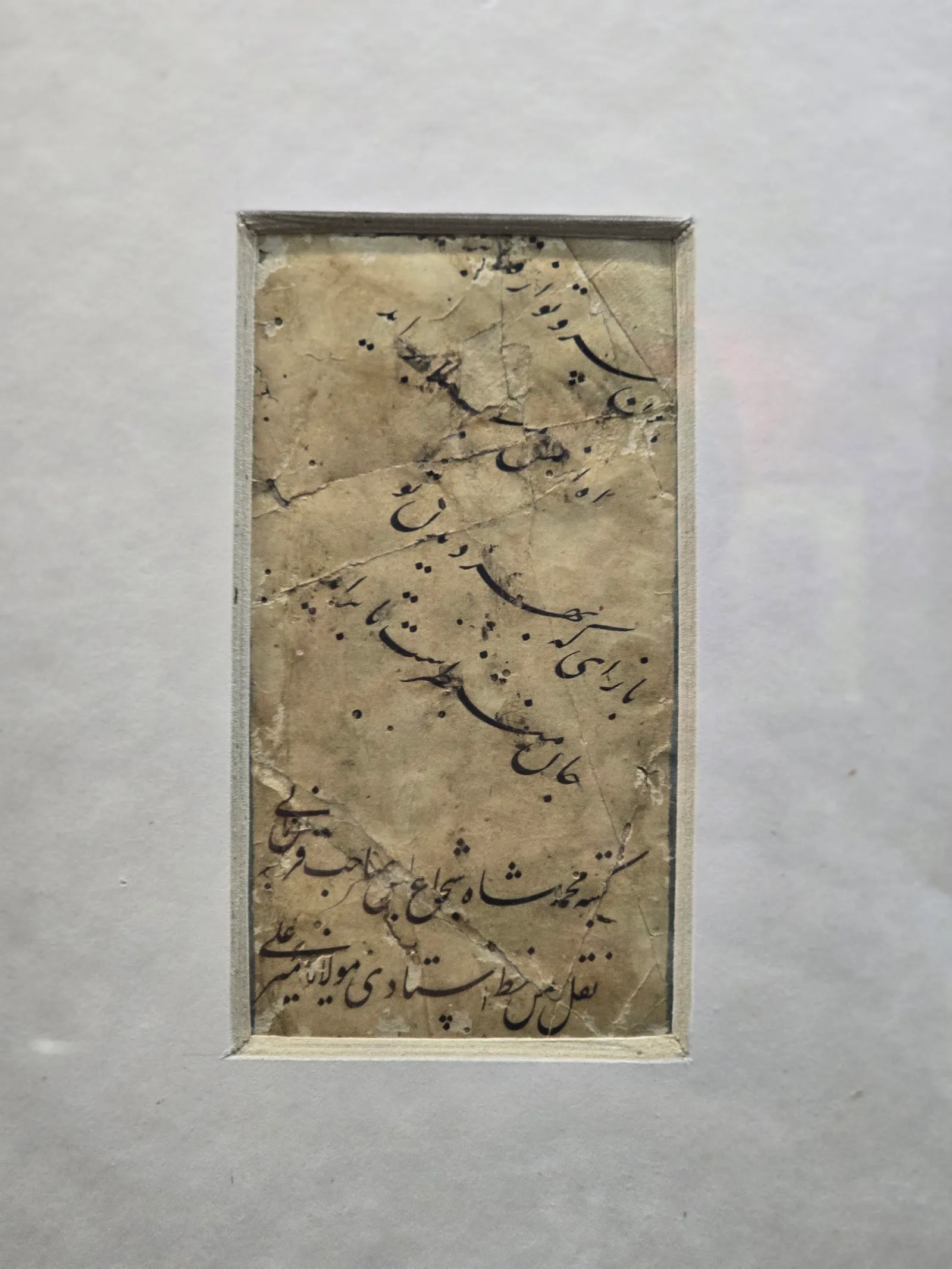
The galleries also contain royal farmans, or decrees, along with manuscripts and calligraphic works. These documents sit alongside paintings and photographs, giving the museum more than one way to tell the story of the monument. The material offers a change of pace from viewing the Taj Mahal itself: here, the focus is on plans, objects and records rather than the experience of the building at a distance.
Mughal objects and portraits
Mughal miniature paintings, coins and portraits form another part of the collection. The main hall has paintings of Shah Jahan and Mumtaz Mahal, and the museum includes a pair of ivory portraits of the couple. Gold and silver coins from the Mughal period are also on display.
Everyday and courtly objects help broaden the picture. The collection includes weapons, armour, utensils, bowls, vases and decorative pieces, as well as jade objects and marble elements. One notable object is a celadon plate associated with the historical belief that it would crack or change colour if food placed on it contained poison. Treat that account as an association attached to the object, not as proof of how it was used.
A short stop here can give the monument’s details a clearer context: the plans show its design, while the documents, artworks and objects connect it to Mughal court life. The museum is a useful addition for visitors who want to look beyond the Taj Mahal’s exterior and learn about the people, materials and planning tied to its creation.
Häufige Fragen
Where is the Taj Museum?
It is inside the Taj Mahal complex in Agra, on the western side of the gardens, in the building also known as the Jal Mahal.
Is the museum ticket included with Taj Mahal entry?
The information available states that access to the museum is included with a standard Taj Mahal entry ticket.
What can you see at the Taj Museum?
Displays include architectural drawings and plans, Mughal manuscripts, miniature paintings, coins, royal decrees, portraits, weapons and utensils.
Can you take photographs inside the Taj Museum?
Photography is prohibited inside the museum.


