The Hungarian Jewish Museum and Archives is beside the Dohány Street Synagogue in Budapest’s Jewish Quarter. Its collection brings together Judaica, historical documents and objects connected with Jewish life and customs in Hungary. A visit also takes in parts of the synagogue complex, including the cemetery garden and memorials, linking the exhibits with the history of the community. Allow time to look beyond the display cases: the site addresses both everyday culture and the impact of the Holocaust in Hungary.
A collection rooted in Hungarian Jewish life
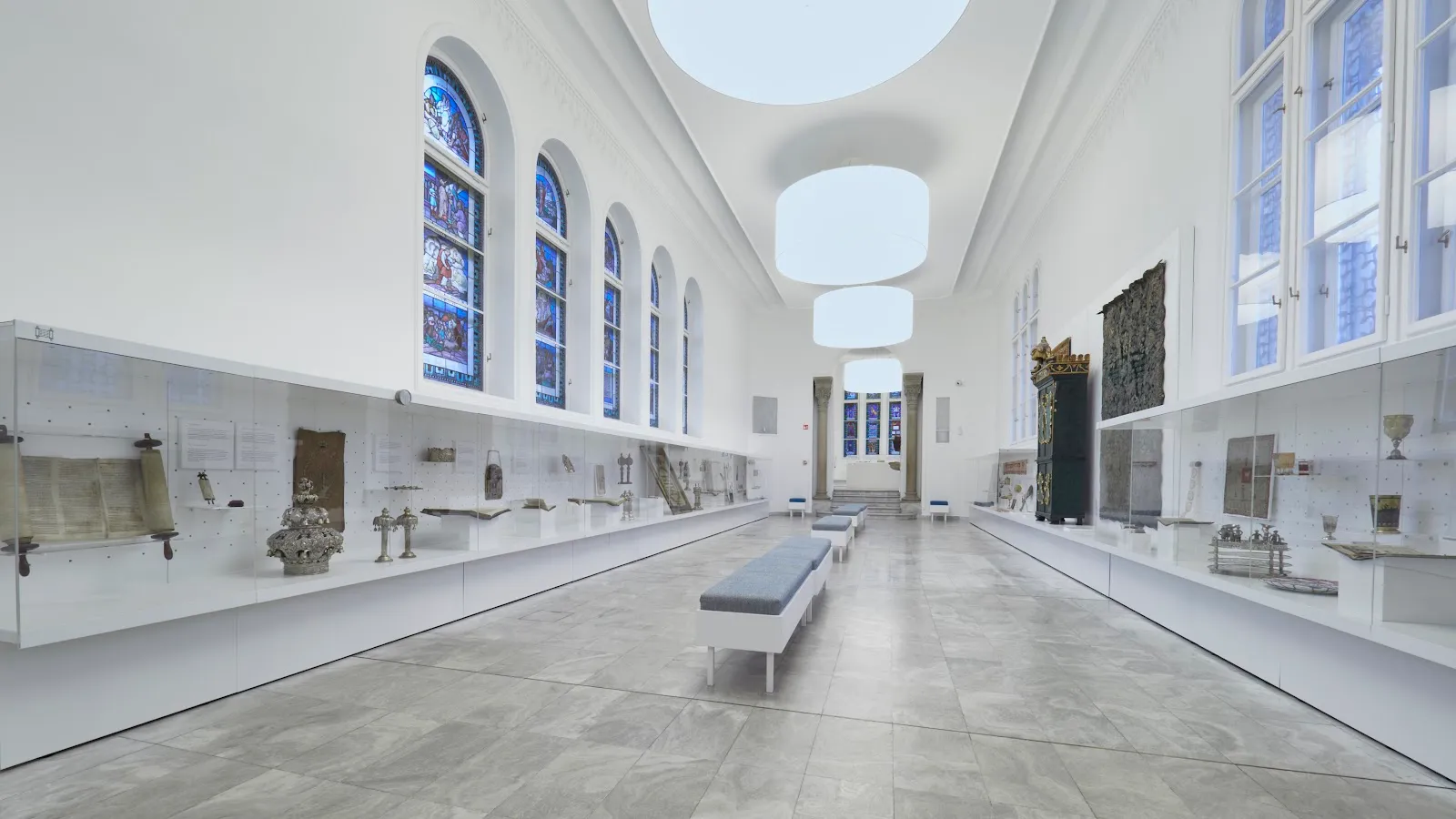
The museum opened in 1916 and holds Jewish artefacts gathered from across Hungary. Its displays cover religious and cultural life, as well as the history of the community. Judaica objects sit alongside historical documents, photographs and handwritten books, giving the collection a range of forms beyond ceremonial objects.
Some items relate to everyday life; others help explain religious practice and the customs surrounding Jewish holidays. Together, they offer a way to understand how Jewish life in Hungary changed over time. The collection also includes a Roman-era gravestone, an object that reaches further back than the museum’s modern history.
Part of the Dohány Street complex
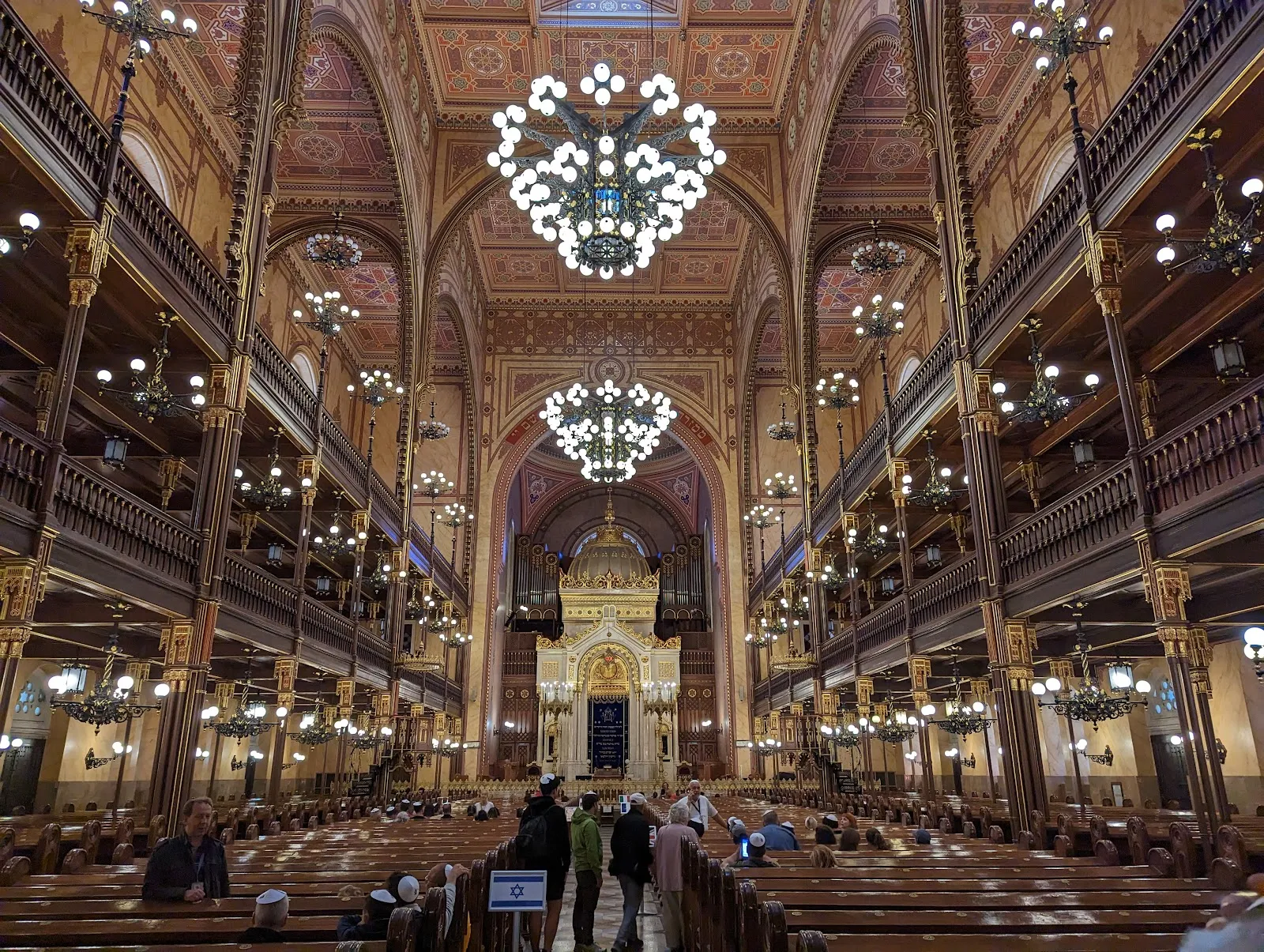
The museum stands within the complex beside the Dohány Street Synagogue. Admission information describes access to the synagogue and museum as part of the same visit, along with the cemetery and a guided tour. The complex also includes the Heroes’ Synagogue and a memorial to Jewish soldiers who died in the First World War.
The cemetery garden is a distinct part of the visit. The memorial tree, a metal sculpture shaped like a weeping willow, bears the names of Jews killed during the Holocaust. Taking time to see these spaces adds context to the museum’s historical material and the synagogue’s role in the community.
History, memory and a guided visit
The museum’s story began with a collection formed in the early 20th century, first housed in an apartment in central Budapest. It survived Nazi rule in Hungary and reopened in 1947. The objects and records now on display connect that institutional history with the lives, traditions and losses of Hungarian Jews.
A guided tour is included with admission in the visit information, and the complex can be explored with a guide as well as independently. The museum is relatively small, so a quick walk through may not give the exhibits much attention. If you want a fuller understanding, take time with the objects and the memorial areas rather than treating the museum as a brief stop between other sights.
Häufige Fragen
Where is the Hungarian Jewish Museum and Archives?
It is at Dohány Street 2 in Budapest, beside the Dohány Street Synagogue in the Jewish Quarter.
What can you see at the museum?
The collection includes Judaica, historical objects, documents, photographs and handwritten books connected with Jewish life and history in Hungary.
Does admission include the synagogue?
Available visit information says admission includes the synagogue, museum, cemetery and a guided tour. Check the museum’s current ticket details before visiting.
Is there a memorial at the site?
Yes. The complex includes a memorial tree shaped like a weeping willow, with the names of Jews killed during the Holocaust.