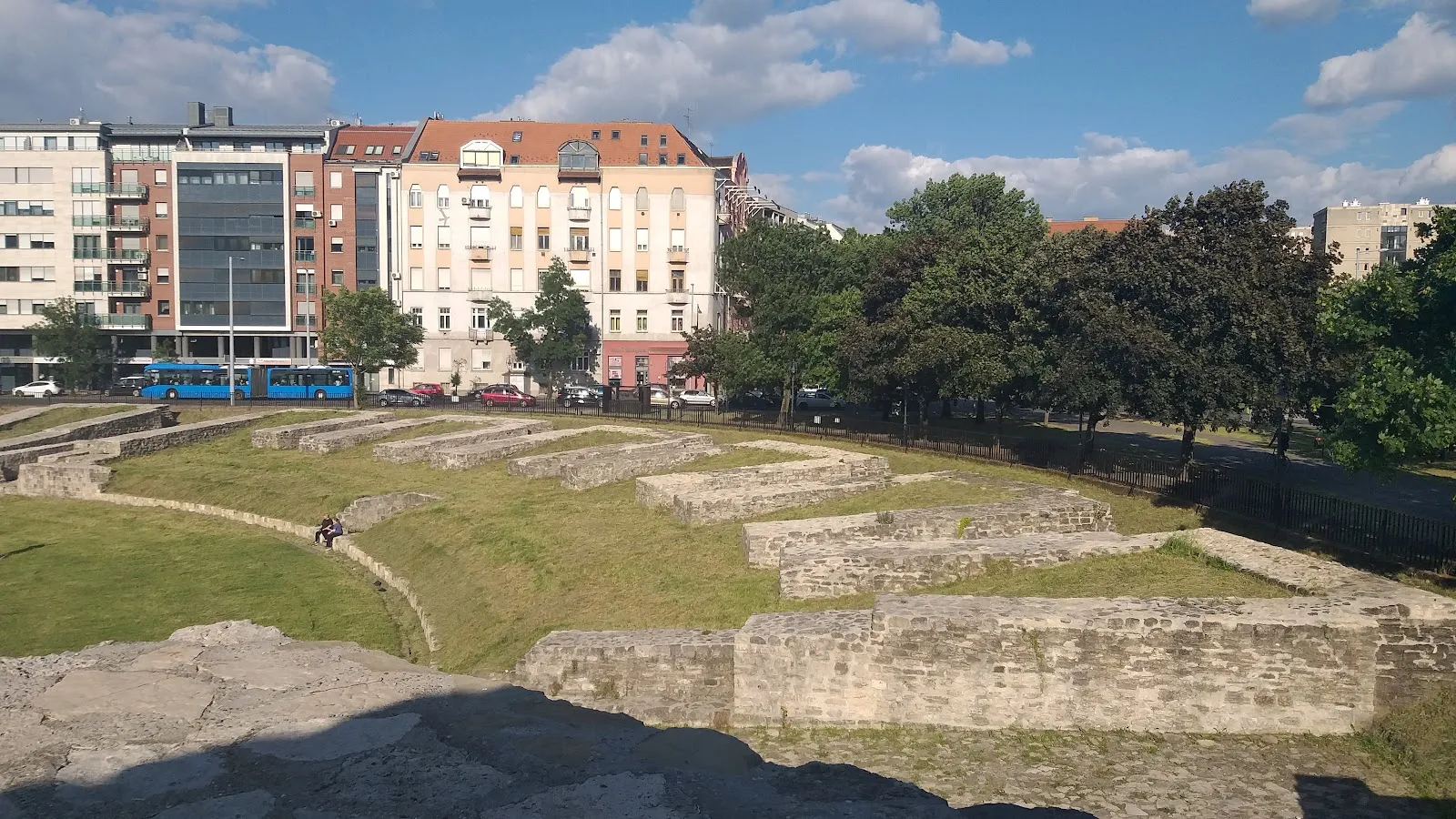
Buda Castle is a historic palace complex on Castle Hill, on the Buda side of the Danube in Budapest. Walk its courtyards and terraces for wide views of the river, bridges and Parliament across in Pest. The former Royal Palace now houses the Hungarian National Gallery, the Budapest History Museum and the National Széchényi Library. You can reach the hill on foot or by the Castle Hill Funicular, then choose whether to focus on the grounds, the museums or both. The exterior and grounds are free to visit.
A palace rebuilt across centuries
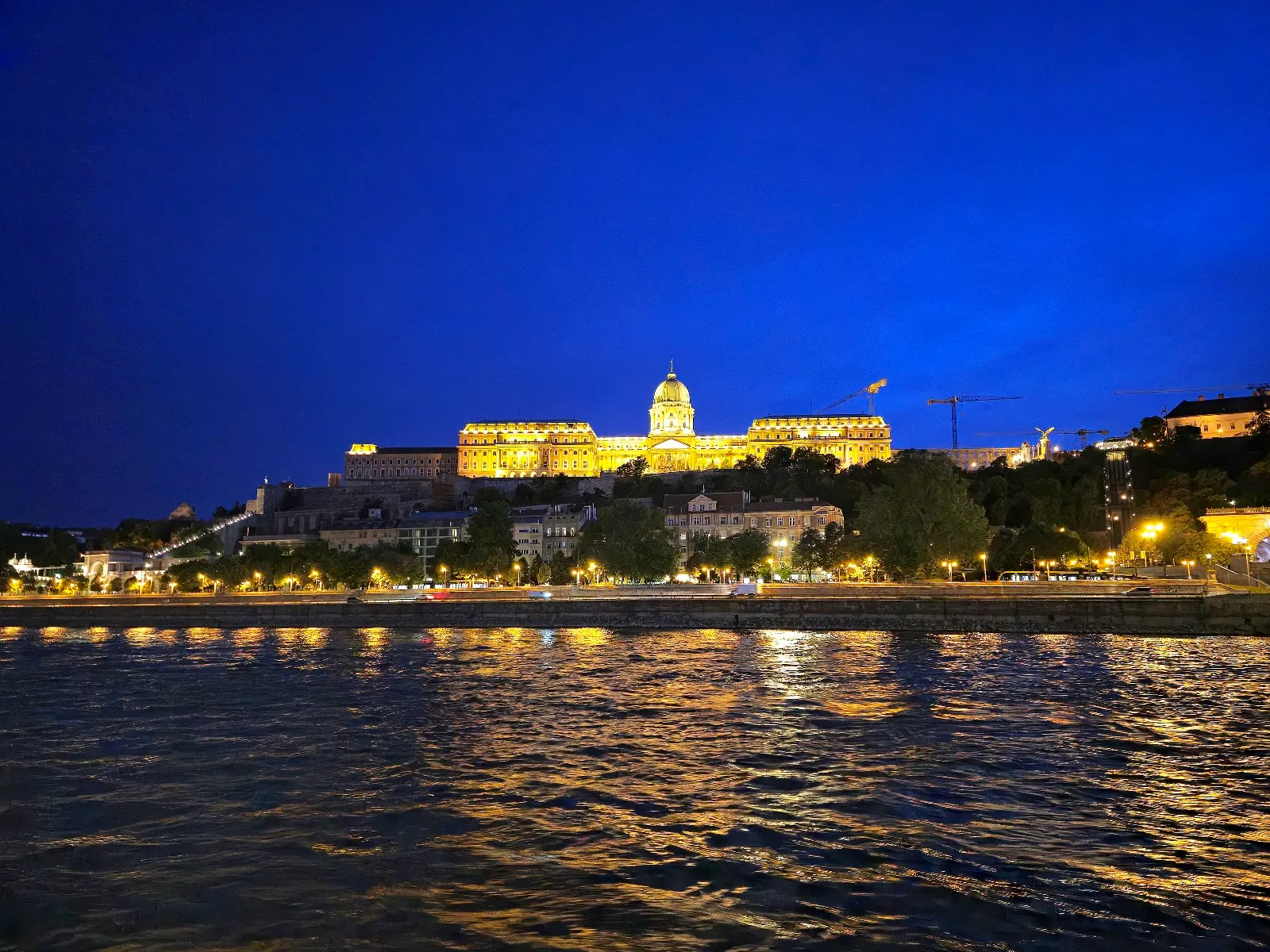
Buda Castle stands at the southern end of Castle Hill, above the Danube on the Buda side of Budapest. A royal residence was established here in the mid-13th century, and successive rulers expanded the complex. The palace was destroyed during the 1686 battle to drive out Ottoman forces. The Habsburgs rebuilt it, and the large Baroque palace that defines much of the site today was constructed in the 18th century.
The complex has been damaged and rebuilt more than once. Its present appearance brings together different periods and architectural styles, including Baroque elements. The palace’s green cupola is a prominent feature of the hilltop outline when seen from across the river. The wider Castle District also includes historic streets and residential buildings, so the visit extends beyond the palace itself.
Museums inside the former Royal Palace
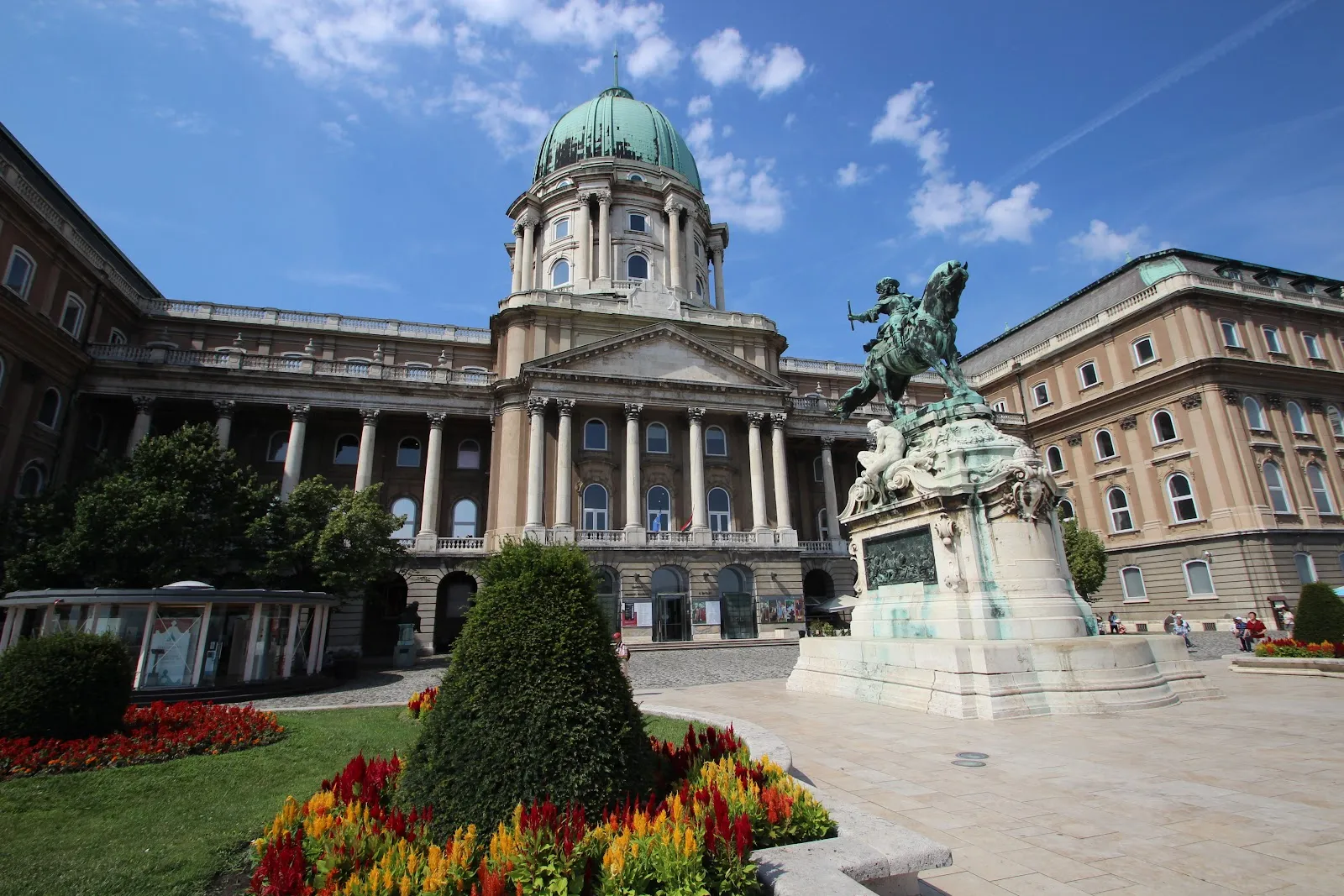
The former Royal Palace houses the Hungarian National Gallery, the Budapest History Museum and the National Széchényi Library. The National Gallery’s collection includes Hungarian painters such as Mihály Munkácsy, Károly Lotz, Tivadar Csontváry Kosztka and József Rippl-Rónai. Its holdings also cover international art, with works associated with movements including Romanticism, Impressionism and modern art.
The Budapest History Museum gives the complex a closer connection to the city’s past. Museum visits require more time than a walk around the courtyards, and admission arrangements differ among attractions within the complex. Check the details for the museum you plan to visit before setting out.
Courtyards, monuments and city views
You can explore the castle grounds without entering a museum. Walk through the courtyards and along the terraces, where views open across the Danube to Pest. Parliament, the bridges and other landmarks appear across the water; the panorama changes as you move around the hill.
Look for the Matthias Well, the Lion Courtyard and statues in the palace grounds. The surrounding Castle District has more to explore, including Matthias Church and Fisherman’s Bastion, though these are separate sights. From the western side of the district, the view also takes in the Buda Hills.
Getting up Castle Hill
The Castle Hill Funicular connects the area near the western end of Chain Bridge with the hilltop. Its short ride gives you views over the city as it climbs. You can also walk up, using the stairs and routes that lead to the castle grounds. Elevators are available in the area, which can help if stairs are difficult, but the complex still involves walking.
For a broad visit, leave time to explore the grounds as well as the palace museums. The open courtyards and terraces are a practical choice if you have less time or prefer to focus on the architecture and views. Early morning and dusk are good times to walk the hill, when the light changes across the river and the castle is illuminated after dark.
Häufige Fragen
Is Buda Castle free to visit?
The castle grounds are free to enter. Museums and other attractions inside the complex may charge admission.
How long should I spend at Buda Castle?
Allow at least half a day to explore the grounds and museums at a comfortable pace.
How do you get to Buda Castle?
Walk up Castle Hill or take the Castle Hill Funicular from near Chain Bridge.
What can you see inside Buda Castle?
The former Royal Palace houses the Hungarian National Gallery, the Budapest History Museum and the National Széchényi Library.