On the northern edge of Patras, the Archaeological Museum traces the history of the city and the surrounding Achaea region through objects from prehistoric times to the Roman era. Its spacious modern building holds three permanent galleries on private life, public life and burial customs. Look for Roman floor mosaics, household objects, glassware, sculptures and finds from cemeteries. Reconstructions of Roman homes help put everyday objects in context. The displays include English translations, and a café and shop are on site.
Three galleries on life and death
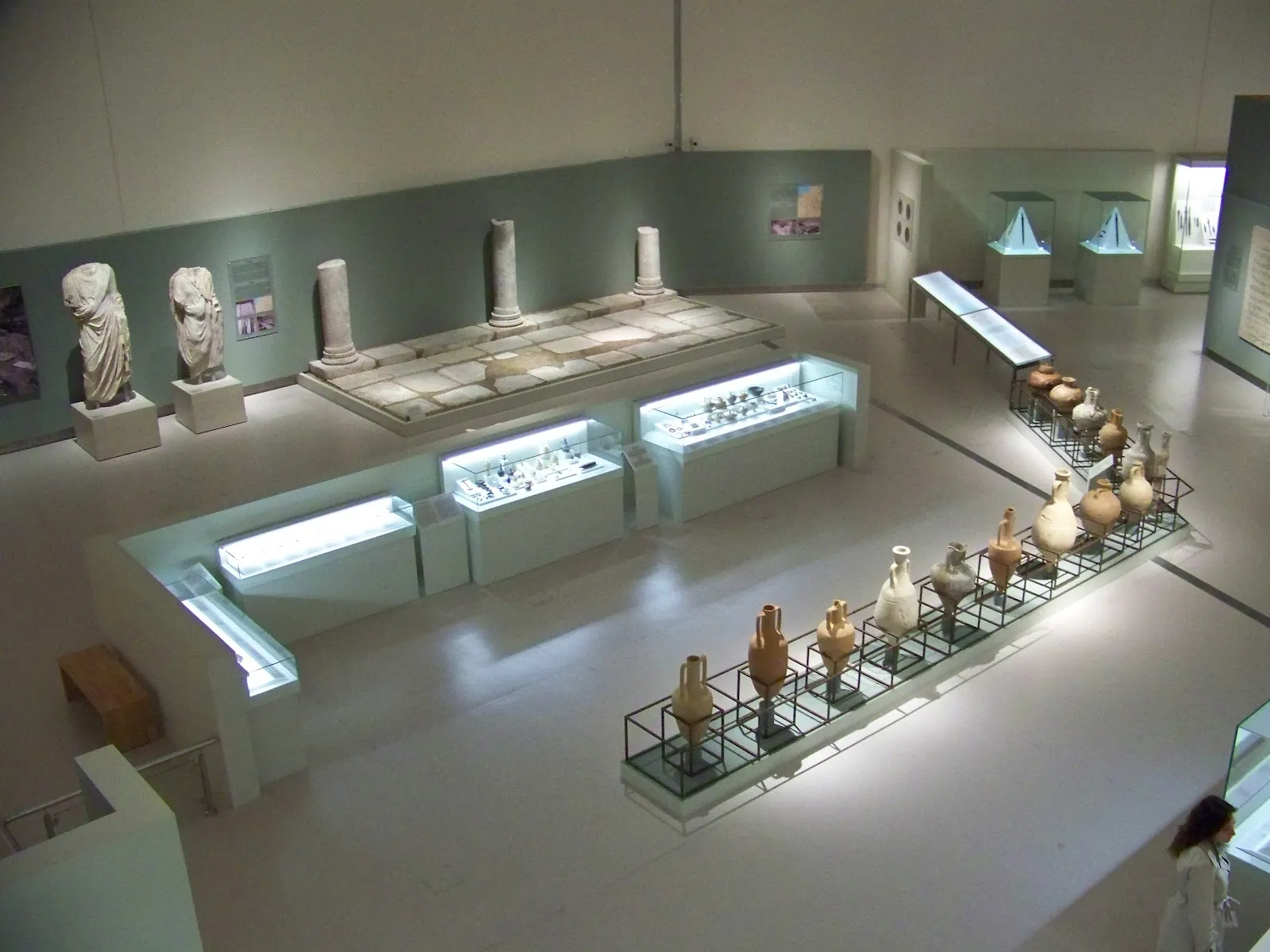
The museum’s permanent collection is arranged around three themes: Private Life, Public Life and the Necropolis. Together, they follow the history of Patras and the wider Achaea region from prehistoric times through the Roman period. Objects from different eras sit within themed displays, giving you a way to compare how people lived, worked and buried their dead.
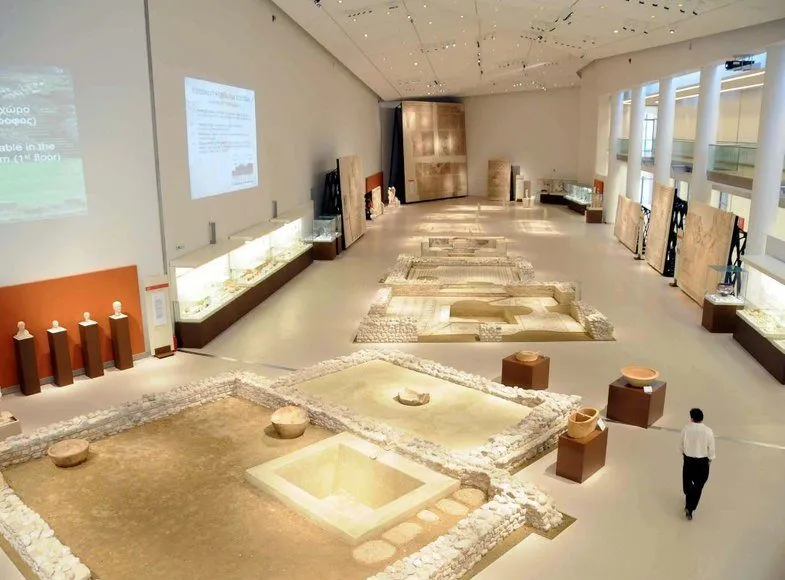
The Private Life gallery brings household finds together with mosaics and statues. Partial reconstructions of Roman homes, including a farmhouse and an urban villa, show how objects and decorative floors belonged in a domestic setting. The mosaics were discovered in residential buildings around Patras; some date to the second and third centuries AD.
Mosaics and everyday objects
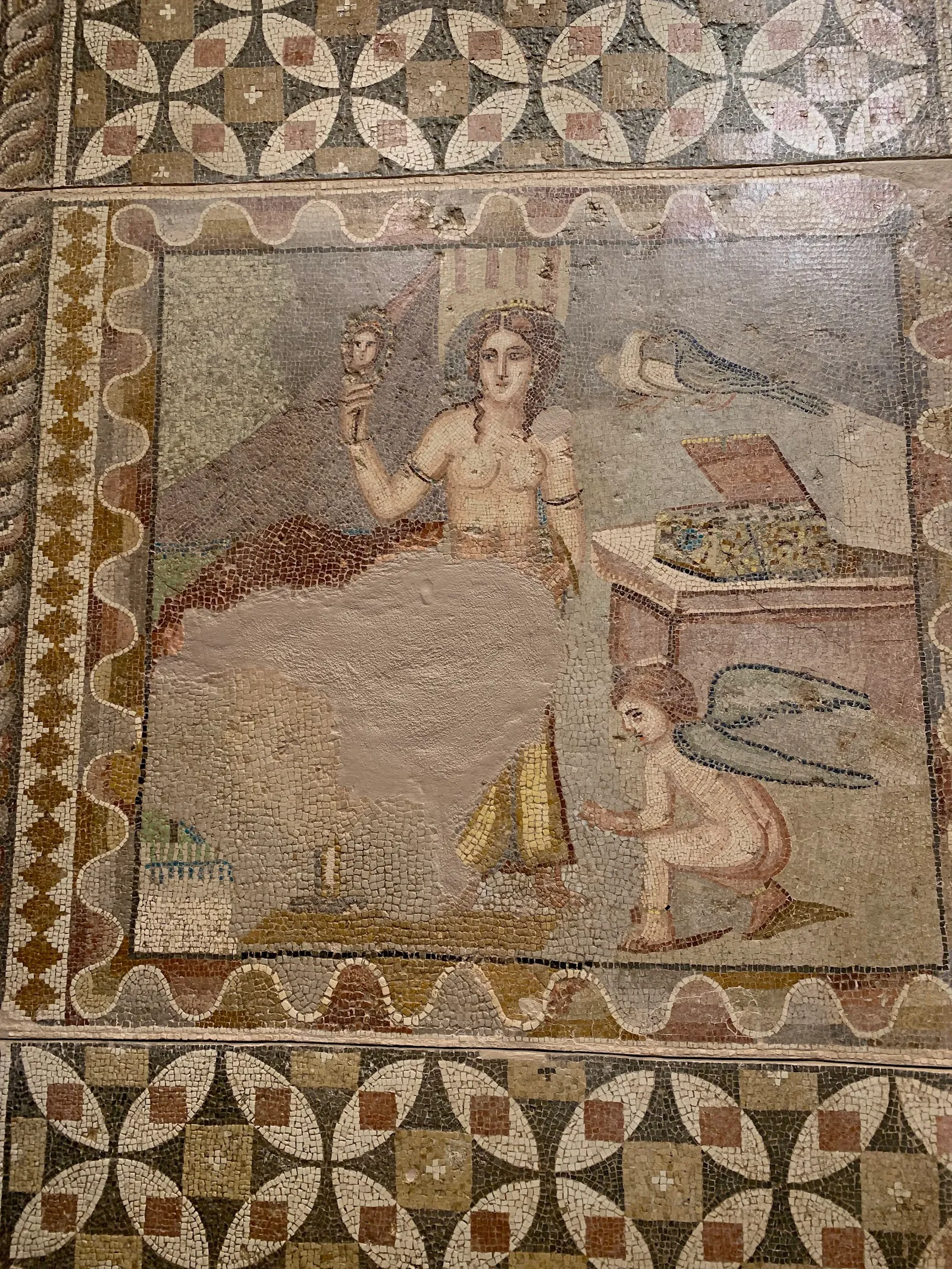
The floor mosaics are among the collection’s central works. One depicts Theseus and the Minotaur; another shows Ariadne and Dionysus. Their size and placement give you room to take in the images as floors, not just as individual objects behind a display. Other exhibits include vases, coins, weapons, jewellery, glass items and sculptures.
Household objects offer a closer look at daily life across the periods represented. The range includes pottery and vessels as well as oil lamps and other domestic items. In the glass collection, colourful pieces stand out from the stone and ceramic objects nearby. The displays bring varied materials together without losing sight of the settings they came from.
Burial finds and the museum building
The Necropolis gallery presents finds from cemeteries in Patras and the surrounding area, spanning the Mycenaean to Roman eras. Burial objects and human remains provide a different perspective from the homes and everyday equipment elsewhere in the museum. Together, the galleries cover both private and public life as well as burial practices.
The museum opened in 2009 in a purpose-built building on the New National Road between Patras and Athens. Its contemporary design includes a prominent metallic dome, with an artificial pond at the entrance. Inside, broad, bright galleries give space to large exhibits and reconstructions. English translations accompany the displays. A café, shop and parking are also available on site.
Häufige Fragen
How long do you need at the Archaeological Museum of Patras?
Allow about 1 to 1.5 hours to explore the galleries at a comfortable pace.
What can you see at the museum?
The collection covers prehistoric times to the Roman era, with mosaics, household objects, glassware, sculptures and finds from cemeteries. It is arranged in galleries on private life, public life and burial customs.
Is there an admission fee?
Admission is charged. Entry is reported to be free on the first Sunday of the month.
Are there English translations?
Yes. English translations are provided with the exhibits.
Is parking available at the museum?
Yes. Parking is available on site.