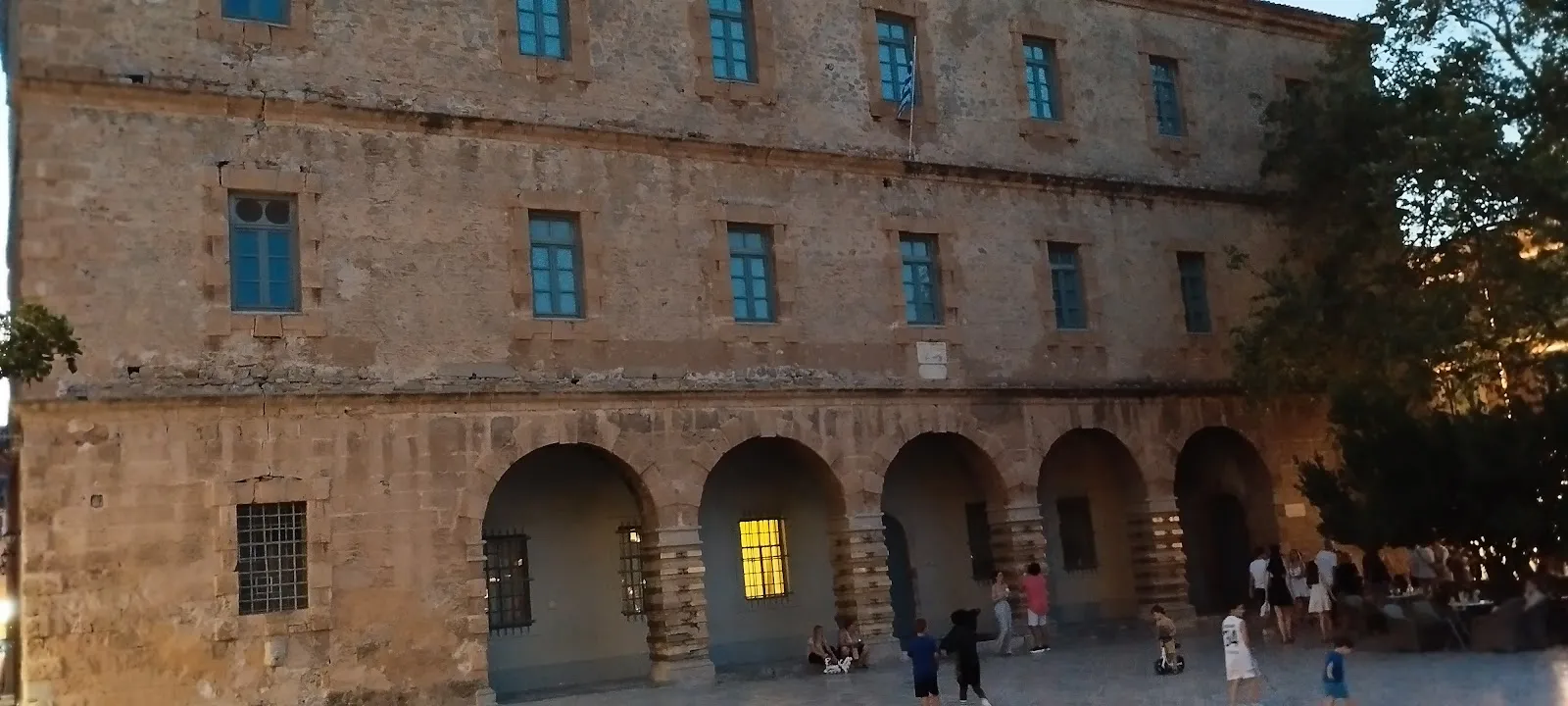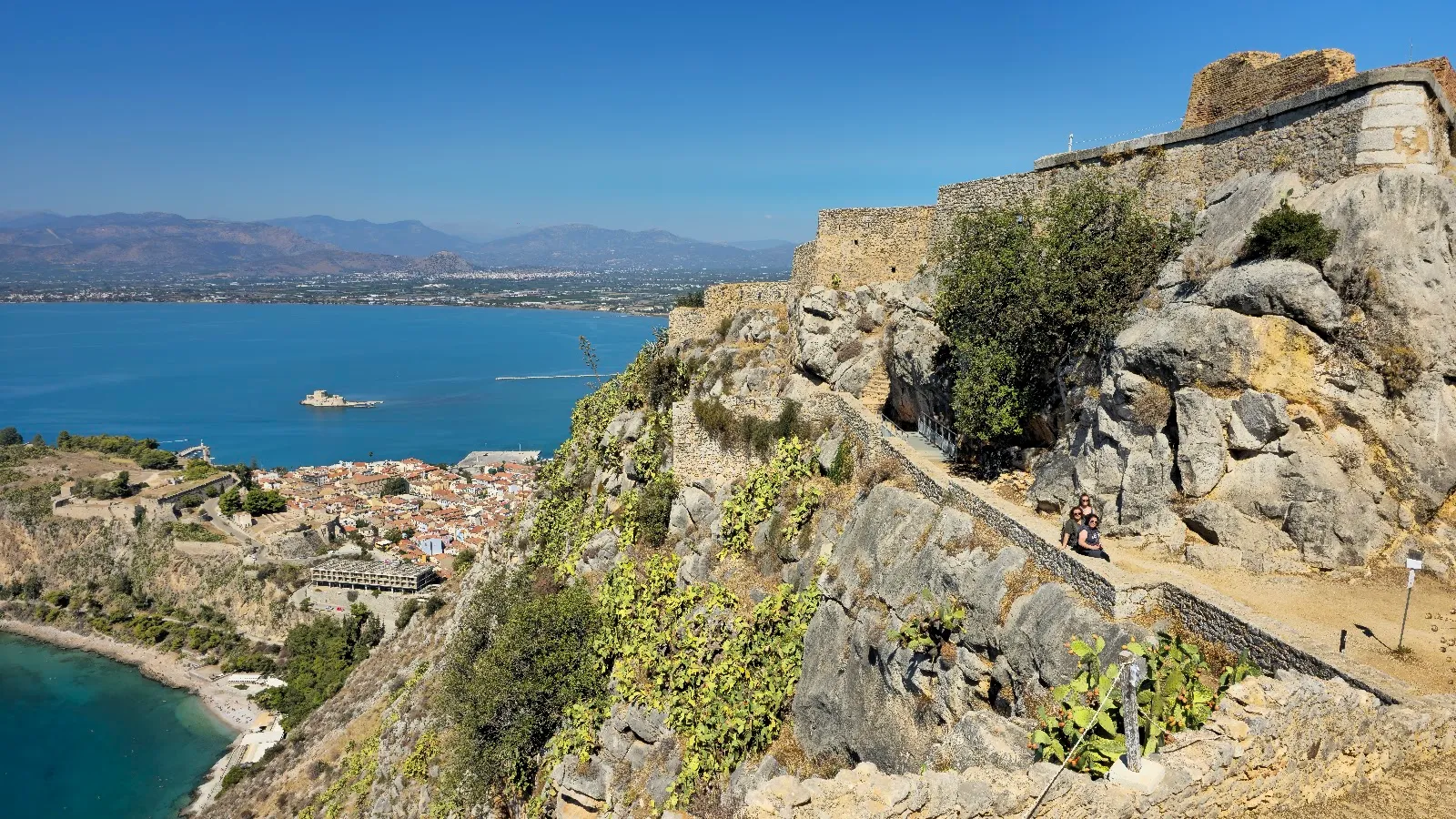
Palamidi Fortress rises 216 metres above Nafplio, with views across the town, harbour and Argolic Gulf. Built by the Venetians between 1711 and 1714, this extensive hilltop stronghold is made up of bastions, walls, courtyards and winding paths. Look for the chapel of Agios Andreas and the prison associated with Greek revolutionary Theodoros Kolokotronis as you explore. You can reach the entrance by road or take the steep staircase from town, traditionally counted as 999 steps. The exposed climb is strenuous in hot weather.
A Venetian fortress above Nafplio
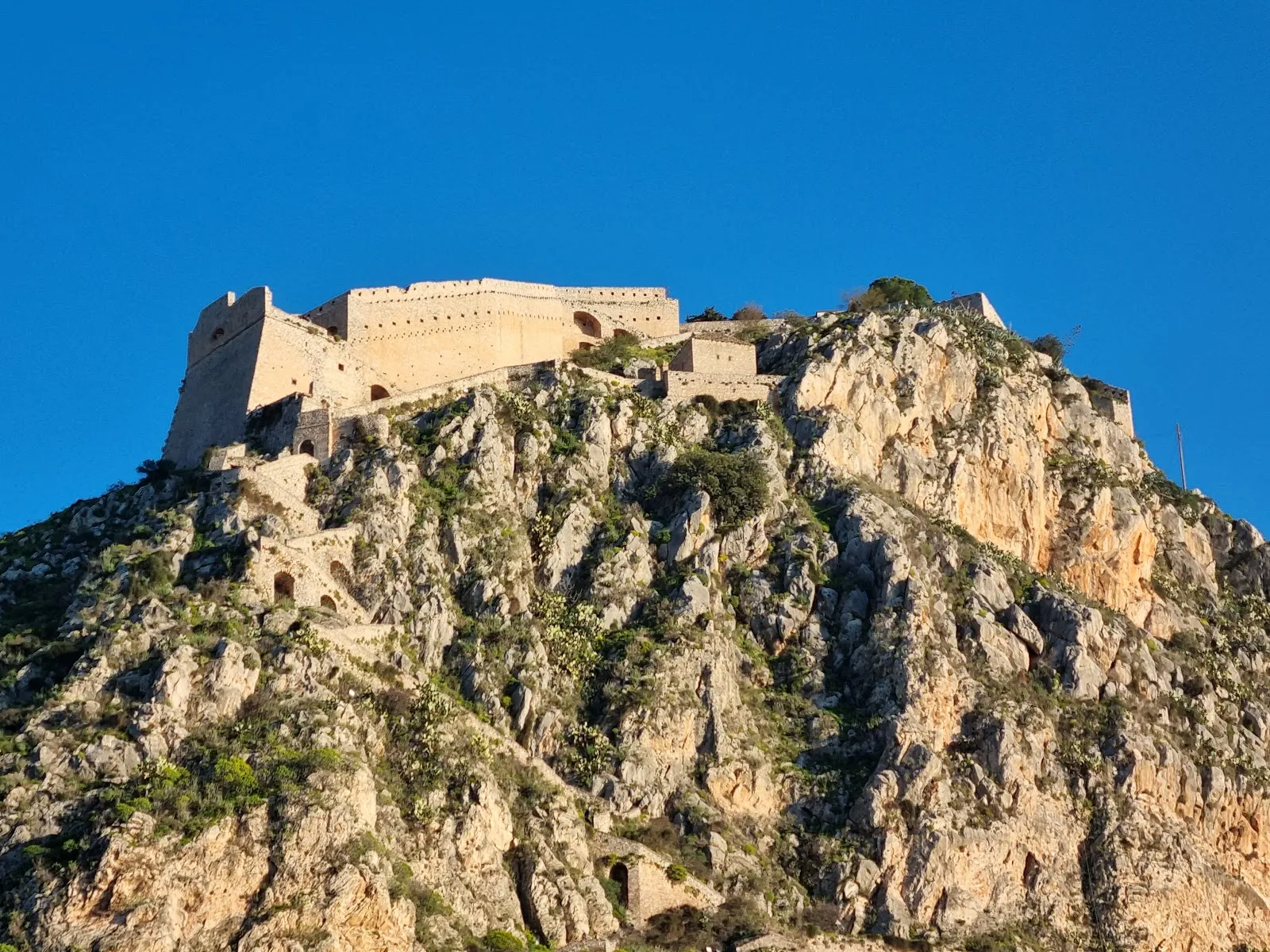
The fortress was built between 1711 and 1714 during the Venetians’ second period of rule in the region. Its scale and the speed of its construction made it a major military undertaking. The site sits on a 216-metre hill east of Acronafplia, and its walls follow the shape of the ground.
Palamidi is a system of eight bastions connected by walls. Each was designed to function as a separate defensive unit, so the loss of one would not automatically leave the others undefended. The complex is commonly described as a Venetian example of Baroque military architecture.
From Venetian rule to the Greek Revolution
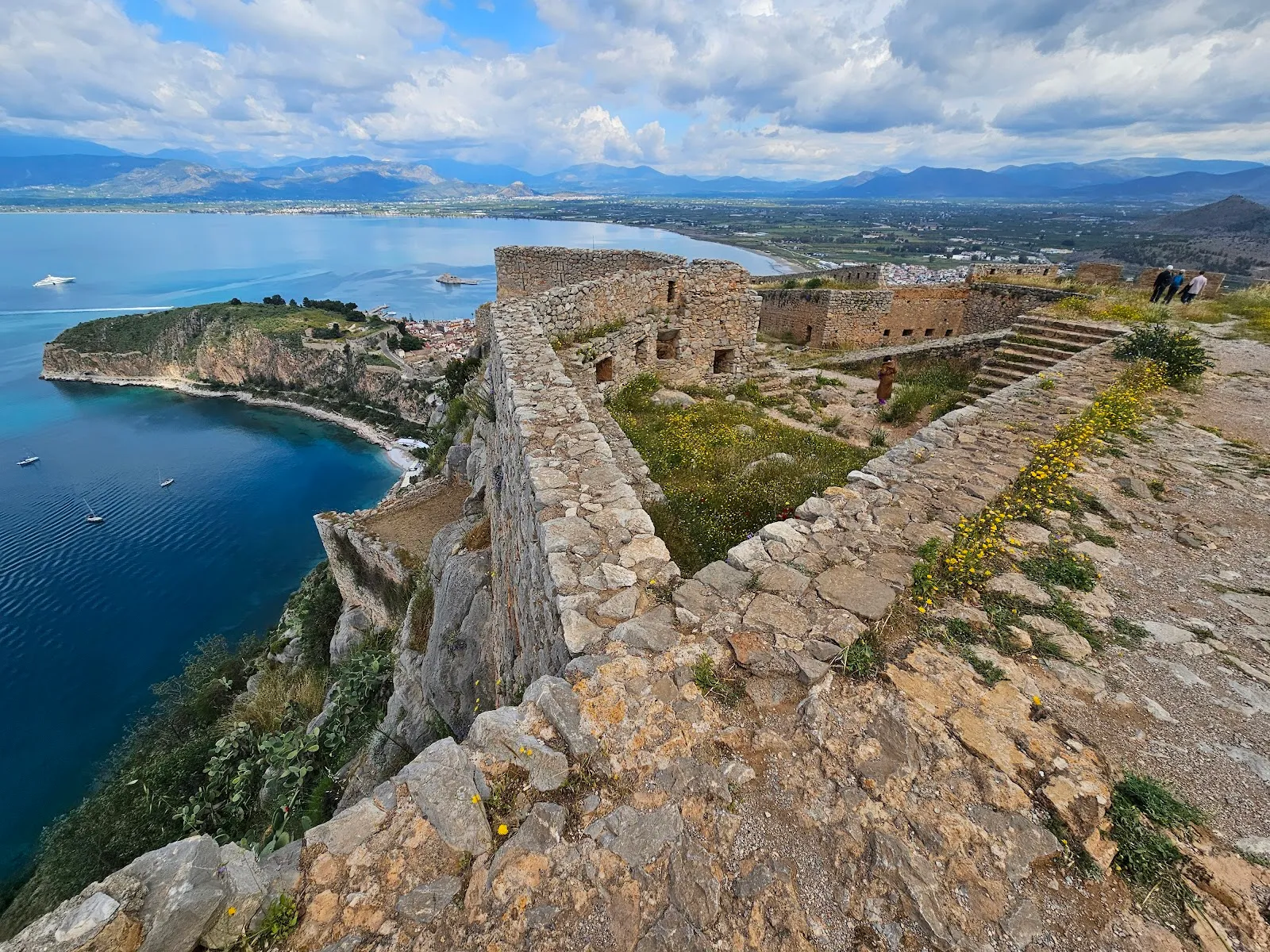
The Ottomans captured Palamidi in 1715, soon after its completion, and held it until Greek forces took the fortress in 1822 during the Greek War of Independence. The capture followed a long siege and a surprise assault. The fortress’s position above Nafplio and its harbour made it an important stronghold in the struggle for control of the town.
The bastions were first named for Venetian officials. Under Ottoman rule they were renamed, and after Greek independence several took the names of ancient Greek figures, including Achilles, Leonidas, Miltiades and Themistocles. Other bastions bear the names of Agios Andreas and Robert, a French philhellene who died in battle on the Acropolis of Athens.
The prison and chapel
One of the fortress’s bastions, Miltiades, was used as a prison. Theodoros Kolokotronis, a leading figure in the Greek Revolution, was held within its walls. The prison is one of the site’s most closely associated historical places, though access around the complex can vary when sections are closed.
The small chapel of Agios Andreas is another point of interest inside the fortress. As you walk between the bastions, look for the shifts in level and the connecting walls, which show how the separate defensive works formed one larger complex.
The staircase and the route up
The famous staircase is often called the 999 steps, though counts differ. The climb from town is steep and exposed, so it can be demanding in hot, humid weather. The road to the southeastern entrance is an alternative if you would rather save your energy for the paths inside.
The fortress grounds are extensive, and exploring them takes time. Some sections have been reported closed, so check current access conditions and ticket prices before your visit. If you are walking the stairs, bring water and sun protection; sturdy footwear is useful on the uneven paths.
Häufige Fragen
How do you get to Palamidi Fortress?
You can reach the southeastern entrance by road, or climb the steep staircase from Nafplio. The staircase is traditionally said to have 999 steps, though counts vary.
How long should you allow for Palamidi Fortress?
Allow about 2 to 3 hours to explore the fortress grounds and paths.
What should you see inside Palamidi Fortress?
Look for the chapel of Agios Andreas, the prison associated with Theodoros Kolokotronis, and the bastions connected by walls.
Is every part of the fortress open?
Access to some sections has been reported as closed. Check current opening conditions before your visit.