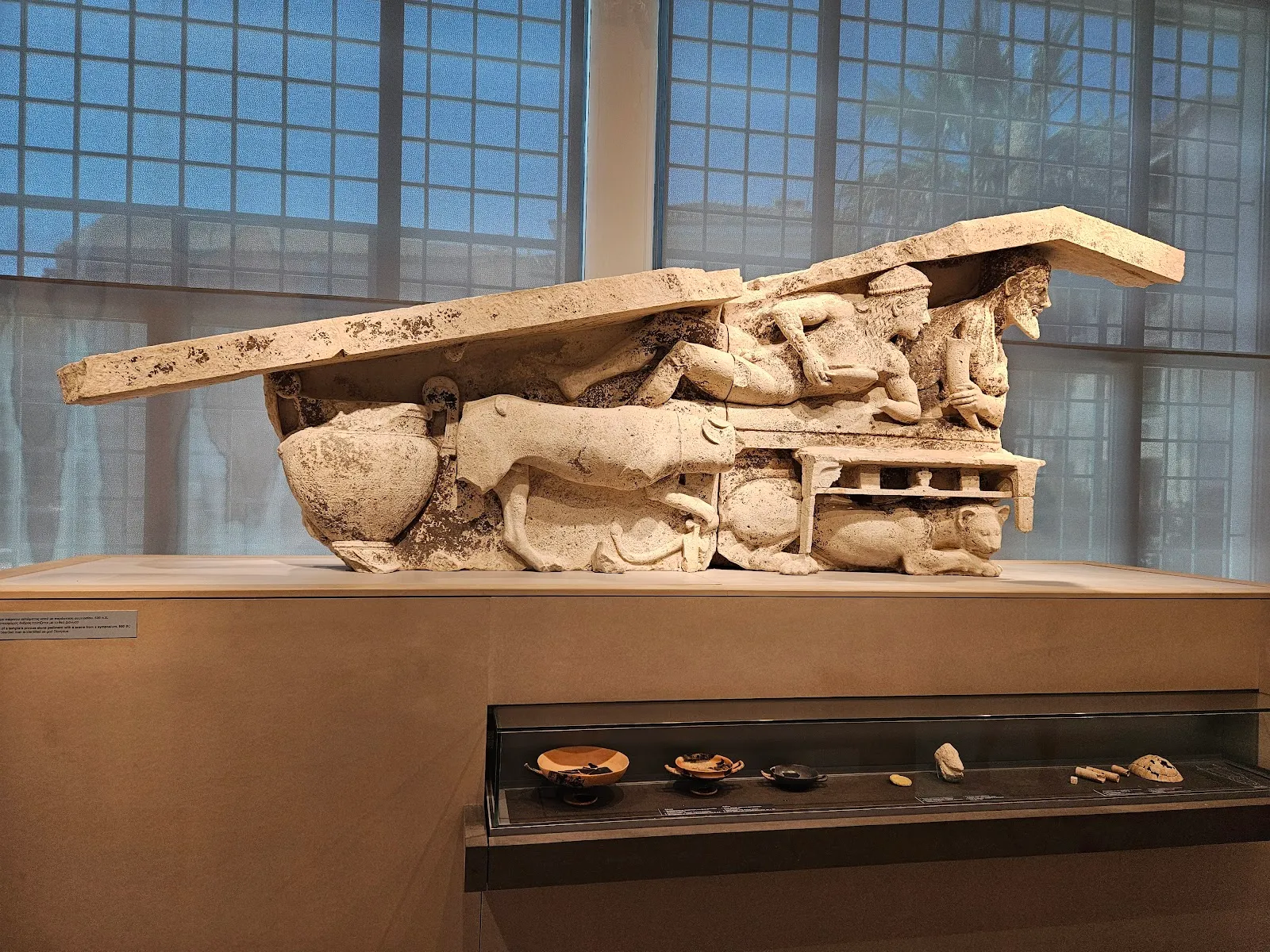
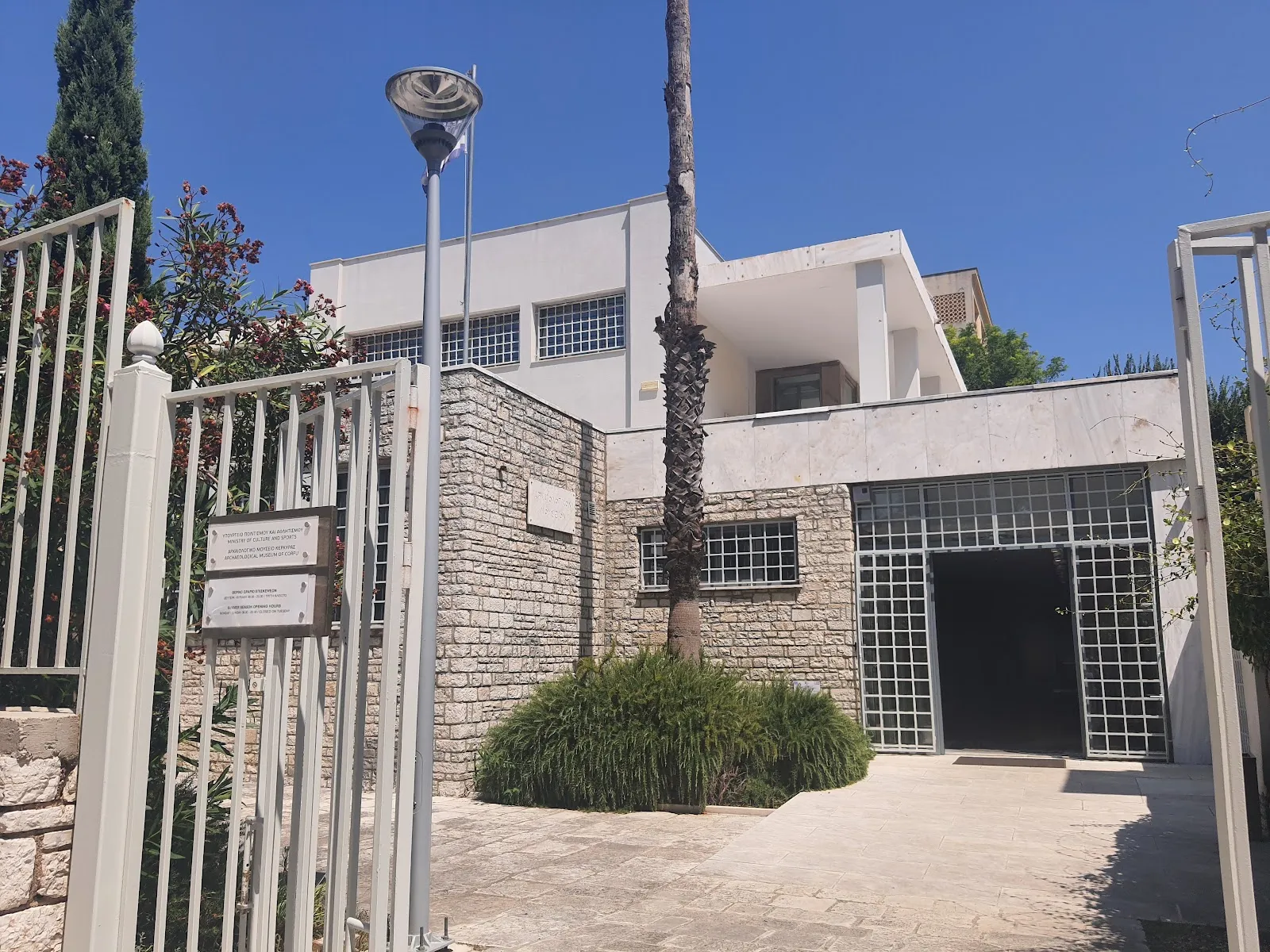
The Archaeological Museum of Corfu in Corfu Town traces the island’s past through finds from prehistoric times to the Roman period. Its central work is the Gorgon Pediment, a large temple sculpture of Medusa and two cats, found at the Temple of Artemis. Sculptures, ceramics and coins add context, while displays on the lower floor follow the island’s early history and archaeological discoveries. Come for the pediment, then take time to see how the smaller objects and excavation records broaden the story.
The Gorgon Pediment
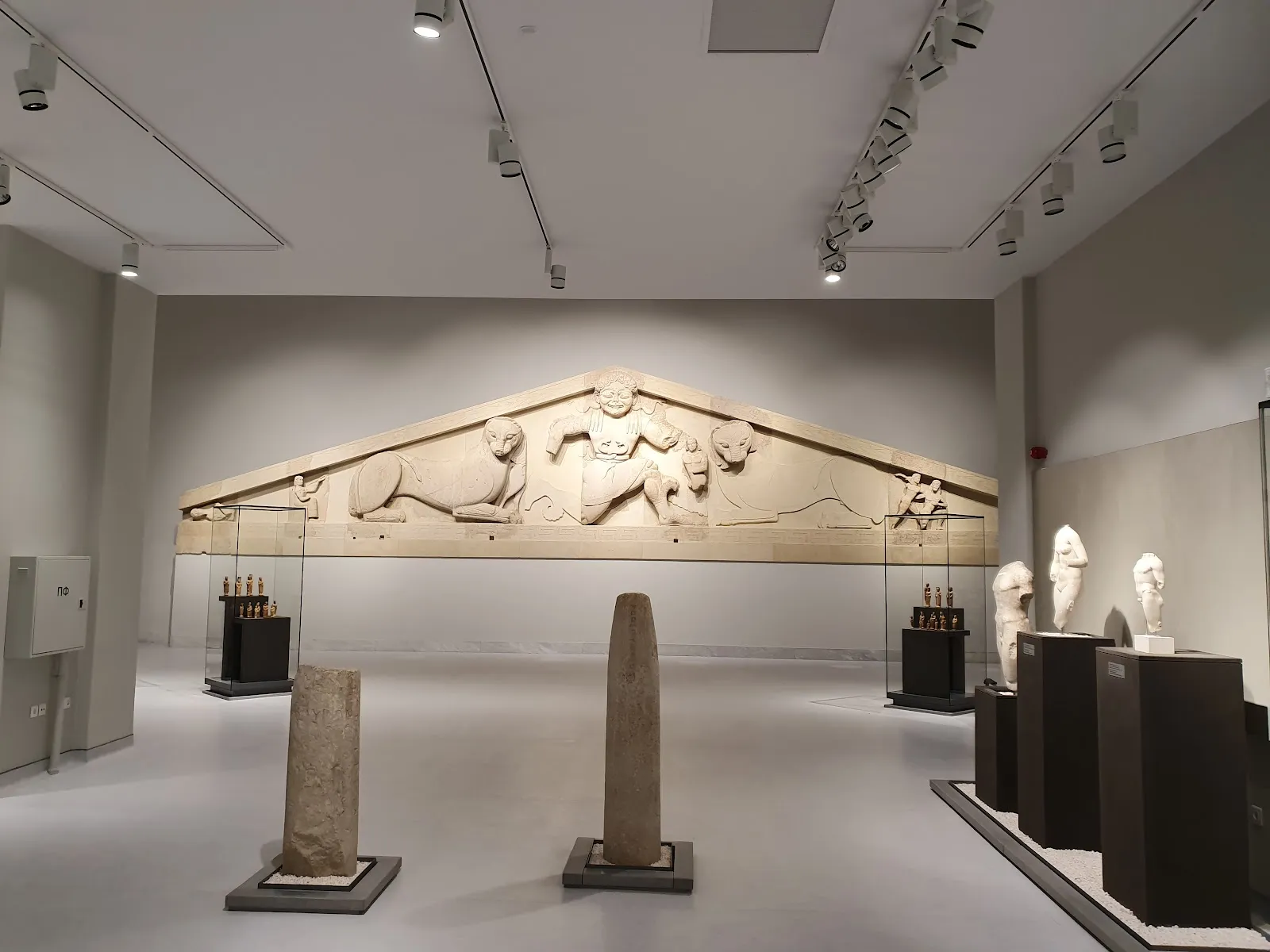
The museum was built to house the Gorgon Pediment from the Temple of Artemis, discovered in the Paleopolis area. This large relief shows Medusa with two cats and is displayed as the collection’s central work. Its scale and vivid carving make it a clear starting point for a visit.
The museum also presents finds from excavations across Corfu, including objects from the ancient town of Cassiopeia and pieces from private collections. Sculptures, ceramics and coins give a broader view of the island’s ancient material culture.
Following Corfu’s ancient history
Displays on the lower floor trace human history on Corfu from the Stone Age through the development of society and practical skills. Interpretive panels and video screens help explain how the objects relate to the island’s past.
The exhibition also covers archaeological discoveries, using photographs and documents from successive excavations. These records connect the objects on display with the work that brought them to light.
Häufige Fragen
What is the main highlight of the Archaeological Museum of Corfu?
The Gorgon Pediment, a large relief of Medusa and two cats from the Temple of Artemis, is the museum’s central work.
What periods does the collection cover?
The collection ranges from prehistoric times to the Roman period, with sculptures, ceramics, coins and other archaeological finds.
Is the Archaeological Museum of Corfu open on Tuesdays?
No. The museum is closed on Tuesdays.