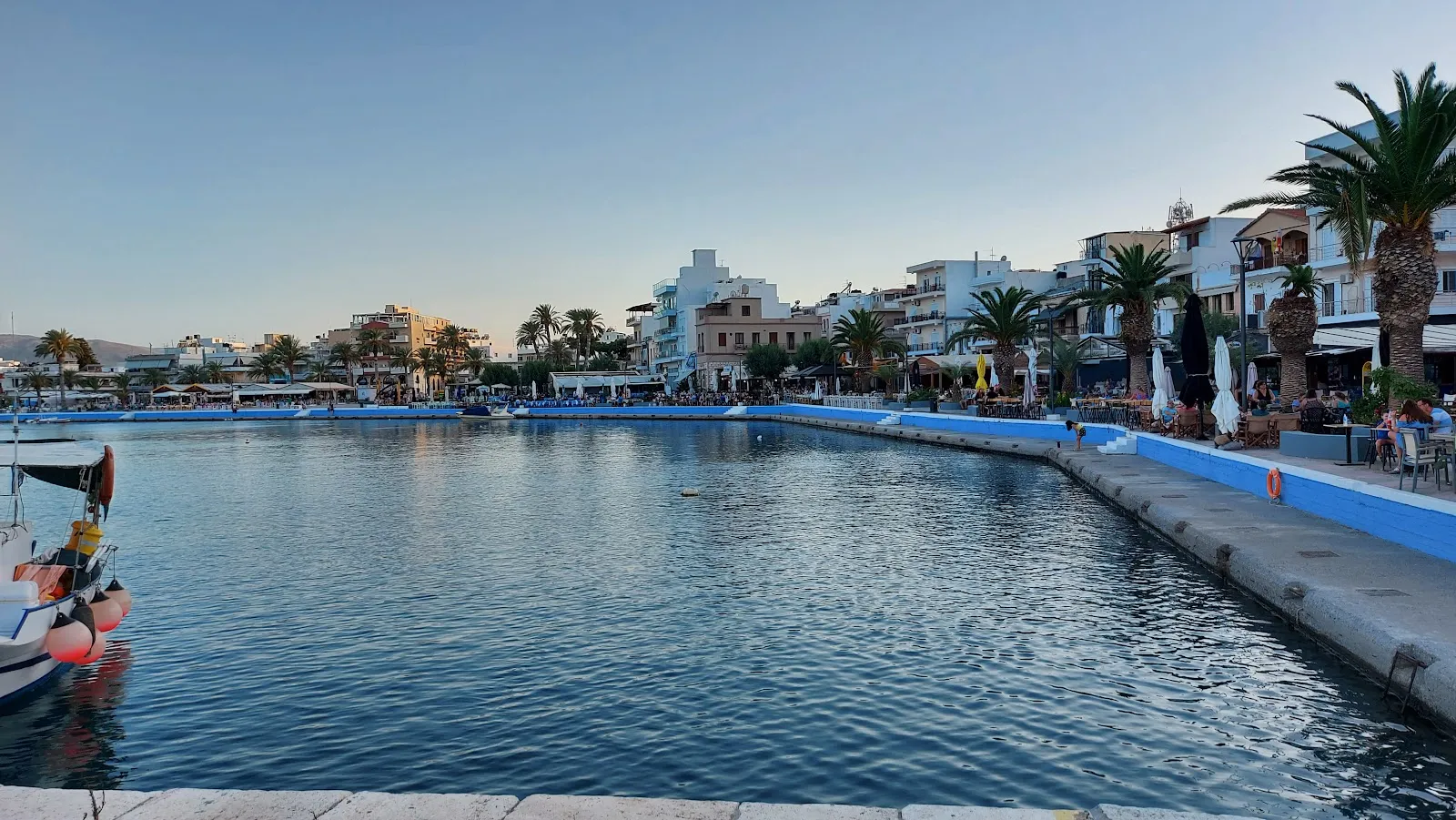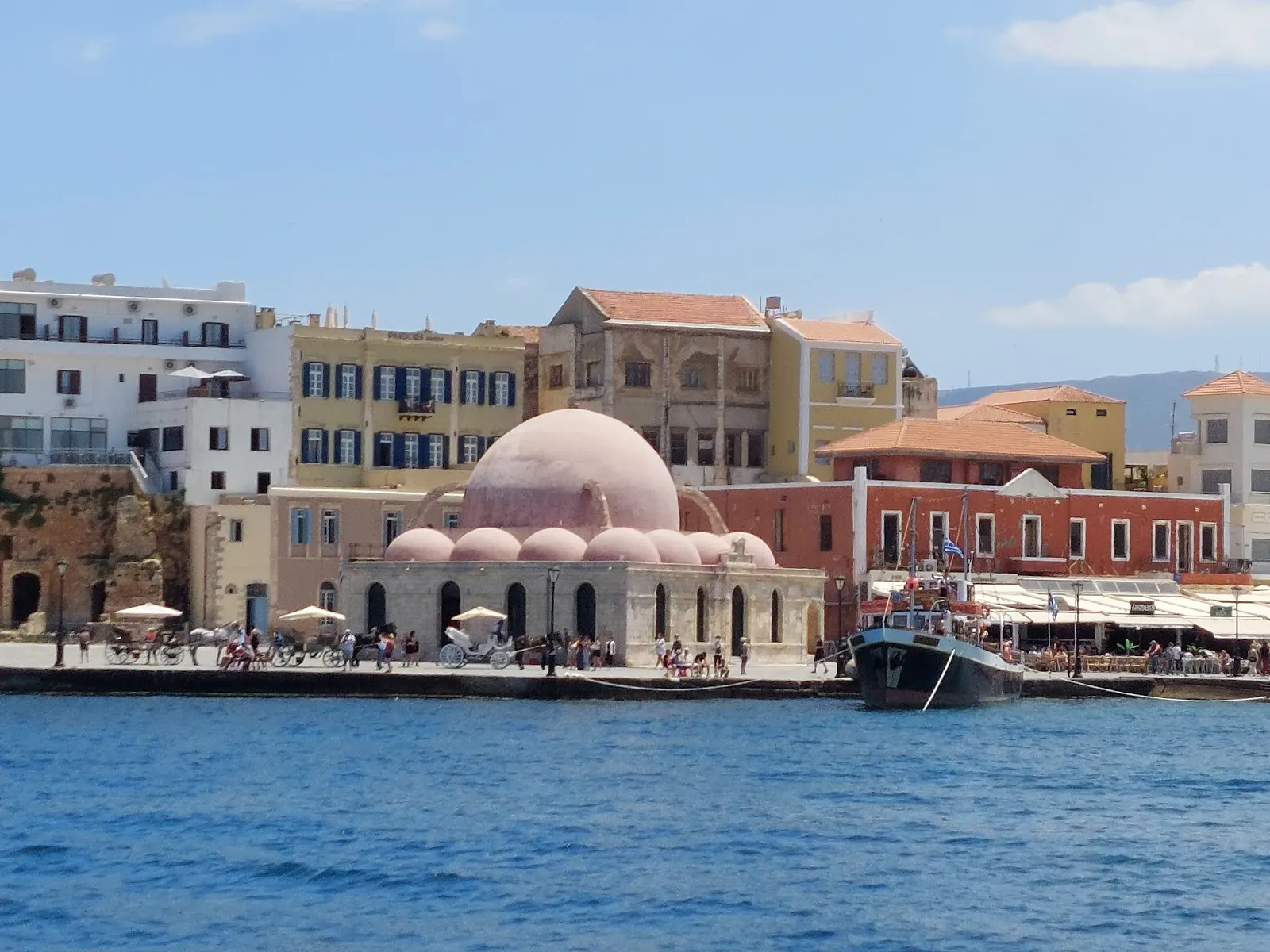
Chania’s Old Venetian Port is a historic waterfront in the city’s old town, with pastel-colored buildings, narrow lanes, small shops and cafés around the harbor. Walk the waterfront to see the lighthouse, the former Venetian shipyards known as the Neoria and the domed mosque by the water. The Maritime Museum is housed in Firkas Fortress at the western end. Come early for a calmer stroll, or walk the outer harbor wall for views back towards the old town. The area is especially busy around sunset and in the evening.
A harbor shaped by Venetian trade
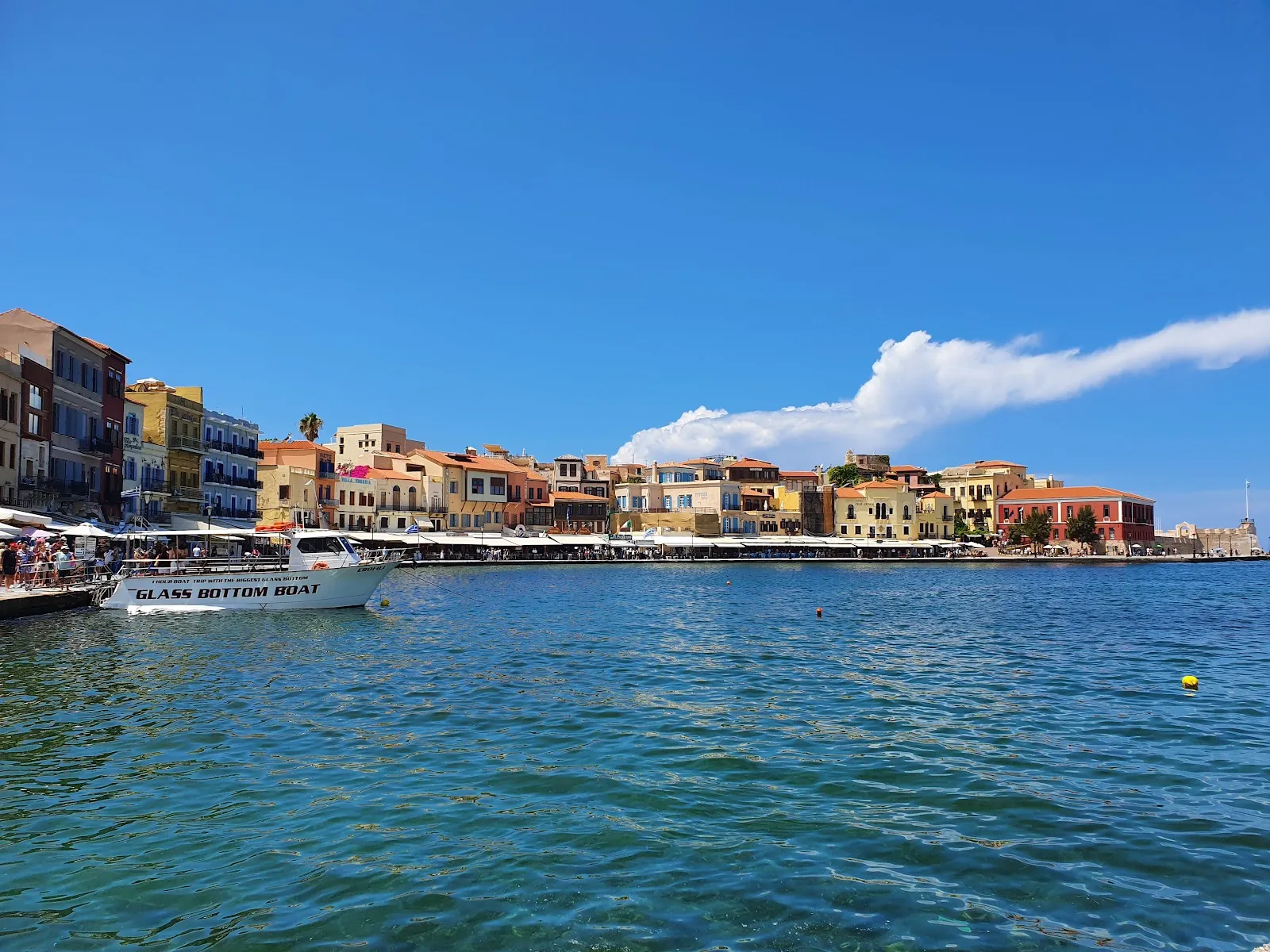
The port was built by the Venetians between 1320 and 1356 and became an important center for maritime trade. Its sheltered waters and waterfront buildings served a working harbor, not just a scenic setting. The port could not accommodate larger vessels, and by the early 20th century big ships had shifted to Souda. Smaller boats and yachts still use the old harbor.
The buildings around the water preserve layers of Chania’s past. Venetian structures sit alongside Ottoman-era landmarks and later architecture, giving the waterfront its distinctive mix. Look for the pastel-colored facades and the old shipyards, called the Neoria, as you make your way along the quay.
Landmarks along the waterfront
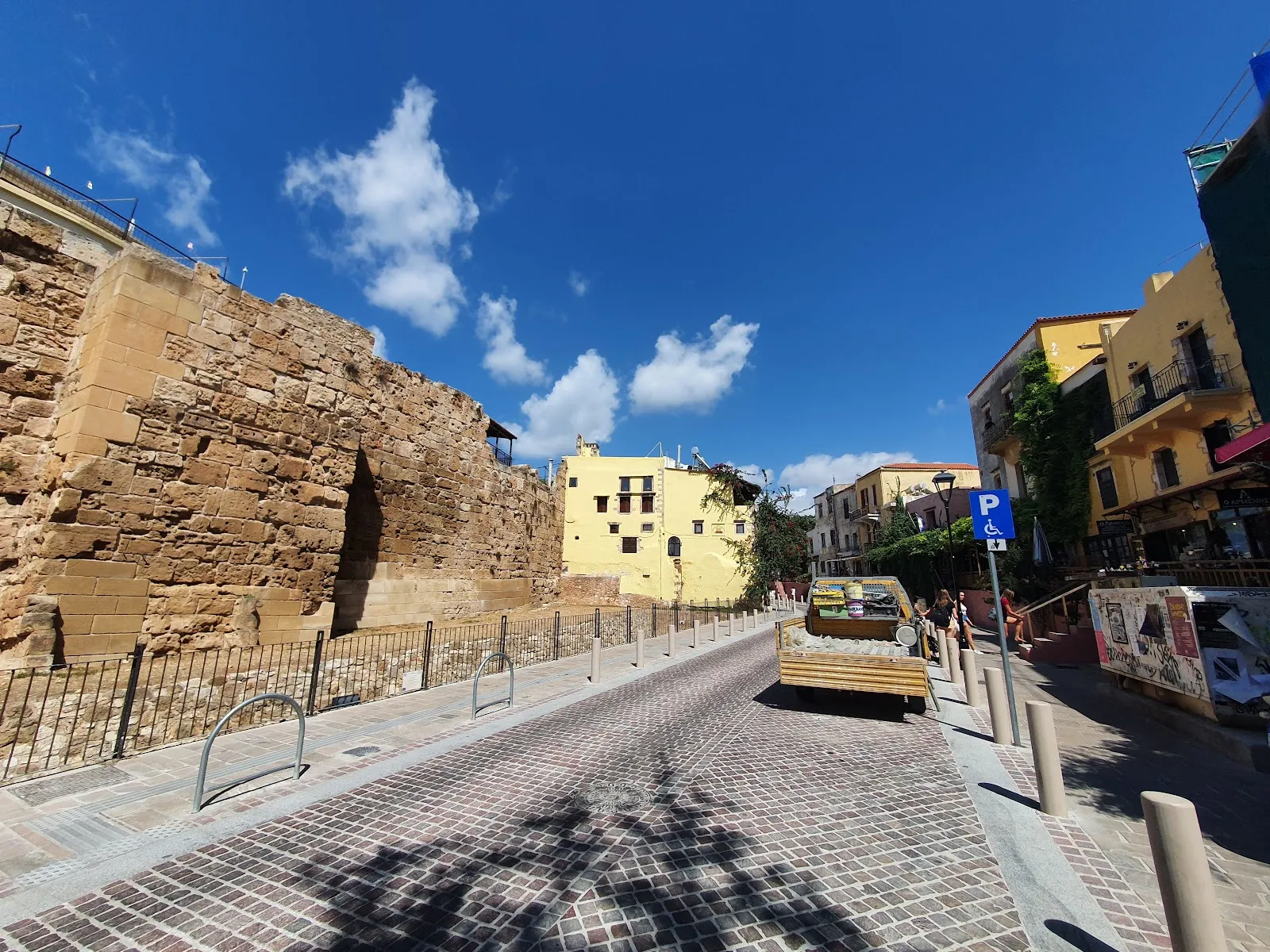
At the western end, Firkas Fortress now houses the Maritime Museum of Crete. The fortress has changed uses over time; its grounds include a cistern and arched spaces where cannons were positioned. It is a useful starting point for a walk along the harbor.
The lighthouse stands at the end of the harbor wall and is one of Chania’s best-known landmarks. From the path, you can turn back towards the town for views of the waterfront buildings and the sea. The walk along the wall gives a different perspective from the cafés and lanes beside the harbor, though it is exposed to wind and rain.
On the eastern side, the domed Mosque of Kioutsouk Hasan faces the water. It is now used as an exhibition hall. Further along, the restored Grand Arsenal was once the largest shipyard in the Venetian port; after renovation, it became a cultural center that houses the Centre for Mediterranean Architecture.
Exploring the old town
The harbor connects directly with the old town’s narrow pedestrian lanes. Browse small shops selling souvenirs, local goods, handmade crafts, jewelry and paintings, or take a break at a café by the water. The waterfront also has restaurants and bars, with boats passing through the harbor and views across the port.
The area has a different feel at different times of day. Early morning is quieter and more comfortable for walking, while the waterfront becomes crowded around sunset and later in the evening. October is one option for a visit with fewer tourists while the weather remains pleasant. If you want to see the harbor at night, check the weather before setting out to the lighthouse, since wind and rain can make the walk less comfortable.
Häufige Fragen
Where is the Old Venetian Port of Chania?
It is beside Chania’s old town, on the northwest coast of Crete.
What are the main sights at the harbor?
Look for the lighthouse, Firkas Fortress and the Maritime Museum, the Neoria shipyards, the domed Mosque of Kioutsouk Hasan and the Grand Arsenal.
When is the best time to visit?
Early morning is quieter and cooler. The waterfront gets busier around sunset and in the evening.
Can you visit a museum at the port?
Yes. The Maritime Museum of Crete is housed in Firkas Fortress at the western end of the harbor.