On the southern slope of the Acropolis in Athens, the Theatre of Dionysus is an ancient performance space closely tied to the beginnings of Greek drama. Plays by Aeschylus, Sophocles, Euripides and Aristophanes were staged here during festivals honouring Dionysus. The theatre began with wooden seating and was later rebuilt in stone; at its height, it could hold up to 17,000 spectators. Look across the curved tiers and performance area, then take in the views over Athens. It is part of a visit to the Acropolis archaeological site.
A theatre on the Acropolis slope
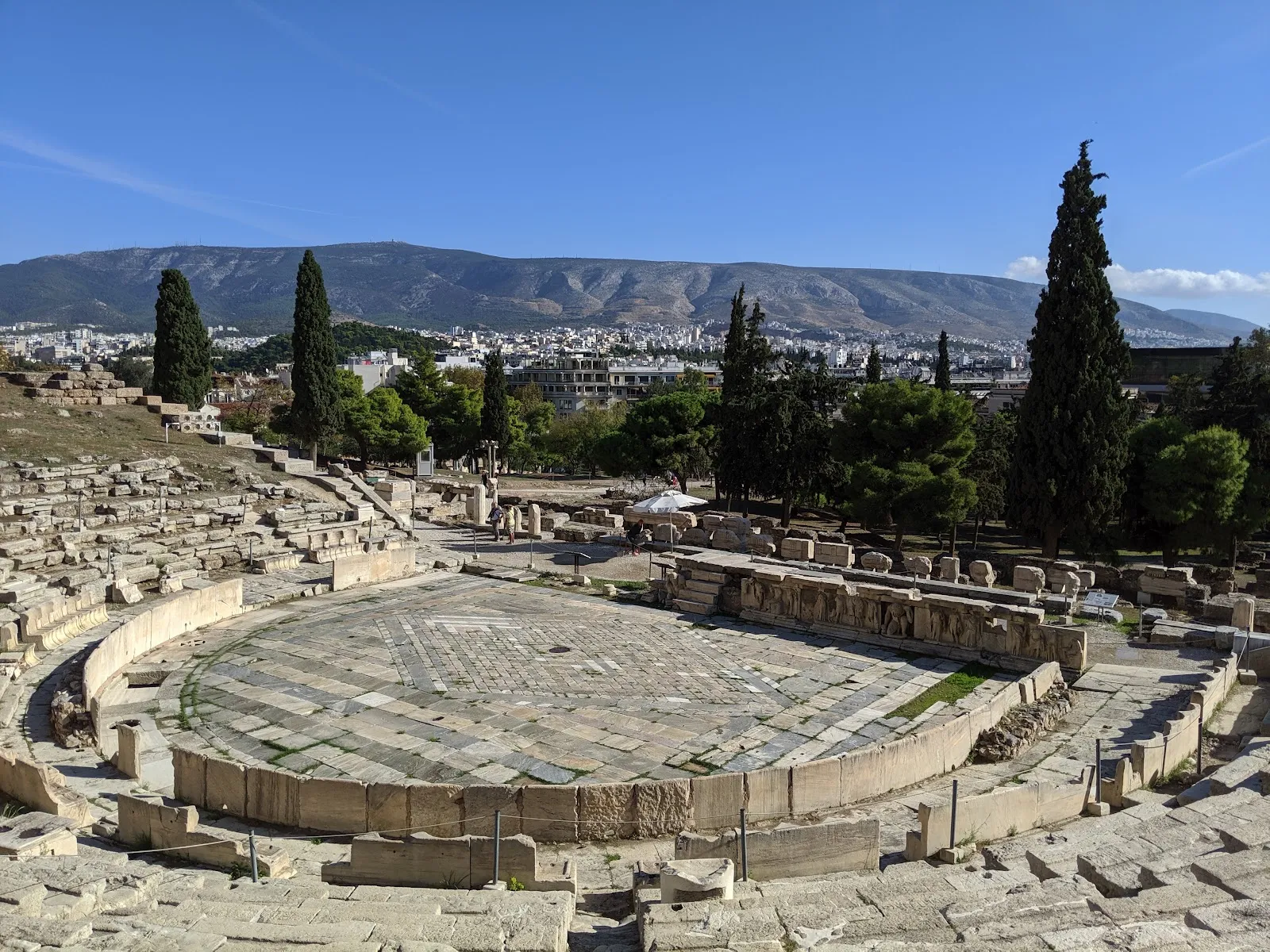
The Theatre of Dionysus Eleuthereus stands on the southern slope of the Acropolis in Athens. It was part of a sanctuary dedicated to Dionysus, the god associated with wine and theatre. Festivals in his honour included performances, and the theatre became a setting for plays and civic gatherings.
The site’s theatrical history reaches back to the sixth century BC, when performances took place in a theatre with wooden seating. The structure was later rebuilt in stone. Sources differ on the dates and stages of construction, so a single completion date does not tell the whole story. By the fourth century BC, the theatre could seat up to 17,000 people.
From festivals to famous plays
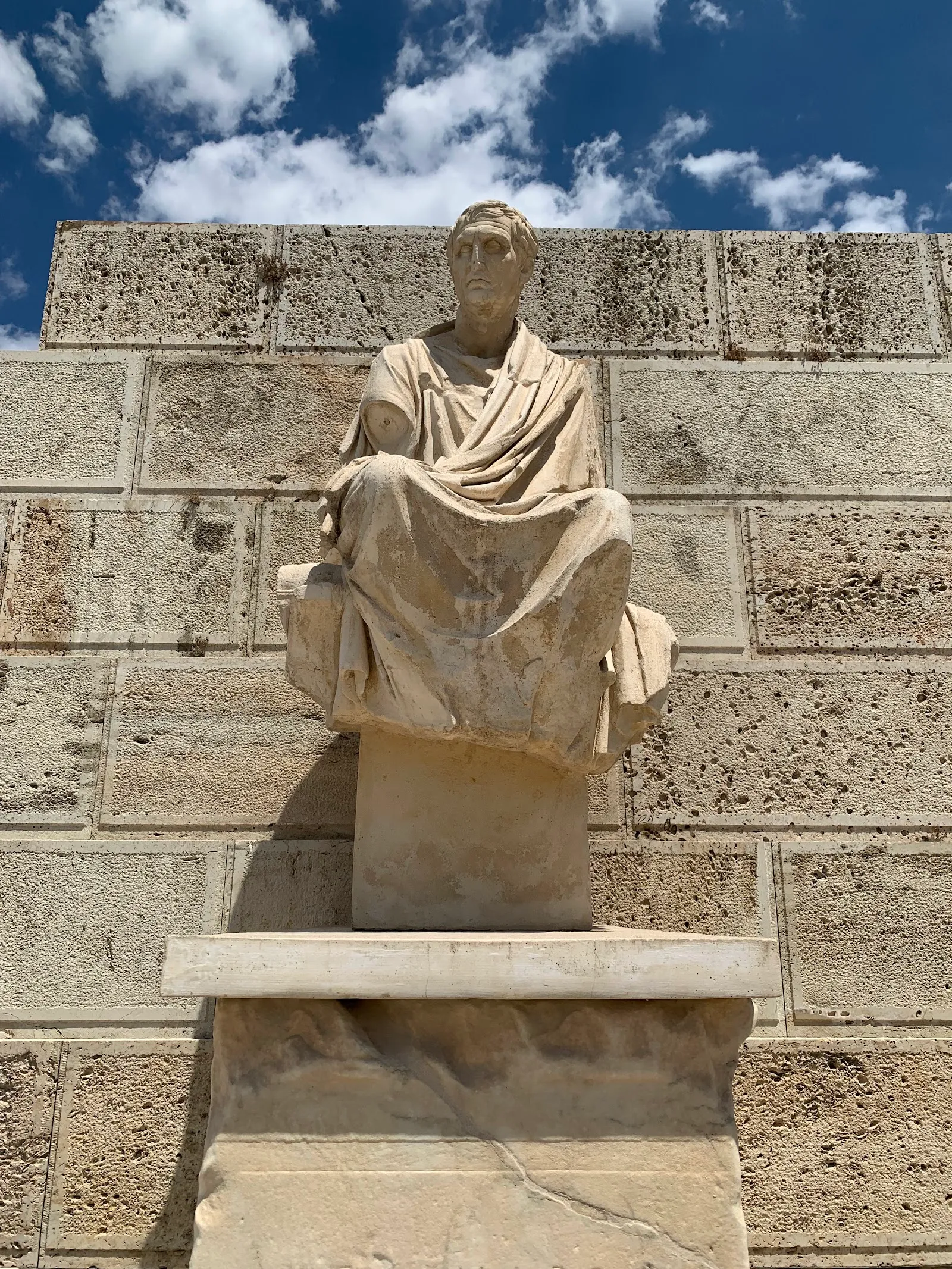
The City Dionysia was among the festivals held in honour of Dionysus. It was here that works by Aeschylus, Sophocles, Euripides and Aristophanes were performed. Tragedy and comedy shared this setting, linking the theatre not only to entertainment but also to religious observance and public life in ancient Athens.
The theatre’s scale gives a sense of the audience such performances could draw. Its seating follows a semicircular arrangement, with the performance space and stage area below. The layout, shaped to the slope, became an influential model for Greek and Roman theatres.
What to look for today
The theatre is partly ruined, but its form is still legible from the site: look across the curved seating tiers toward the orchestra and stage area. Around 20 rows of the original seats remain, along with a diamond-patterned mosaic on the stage floor. The surviving stonework offers a closer view of how the performance space was arranged.
The theatre lies on the route through the Acropolis archaeological site, so it is often one of the first major monuments encountered on the way uphill. Pause to look back across the city as well as at the remains. Uneven ground calls for comfortable footwear, and the exposed setting can feel very hot in summer. Water and sun protection are useful, especially if you are visiting during the warmest part of the day.
Häufige Fragen
Where is the Theatre of Dionysus?
It is on the southern slope of the Acropolis in Athens, within the archaeological site.
Which plays were performed at the theatre?
Works by Aeschylus, Sophocles, Euripides and Aristophanes were staged here during festivals honouring Dionysus.
How many people could the theatre hold?
At its height, it could accommodate up to 17,000 spectators.
Is the theatre part of the Acropolis visit?
Yes. It is on the route through the Acropolis archaeological site, and admission is tied to a ticket for the site.