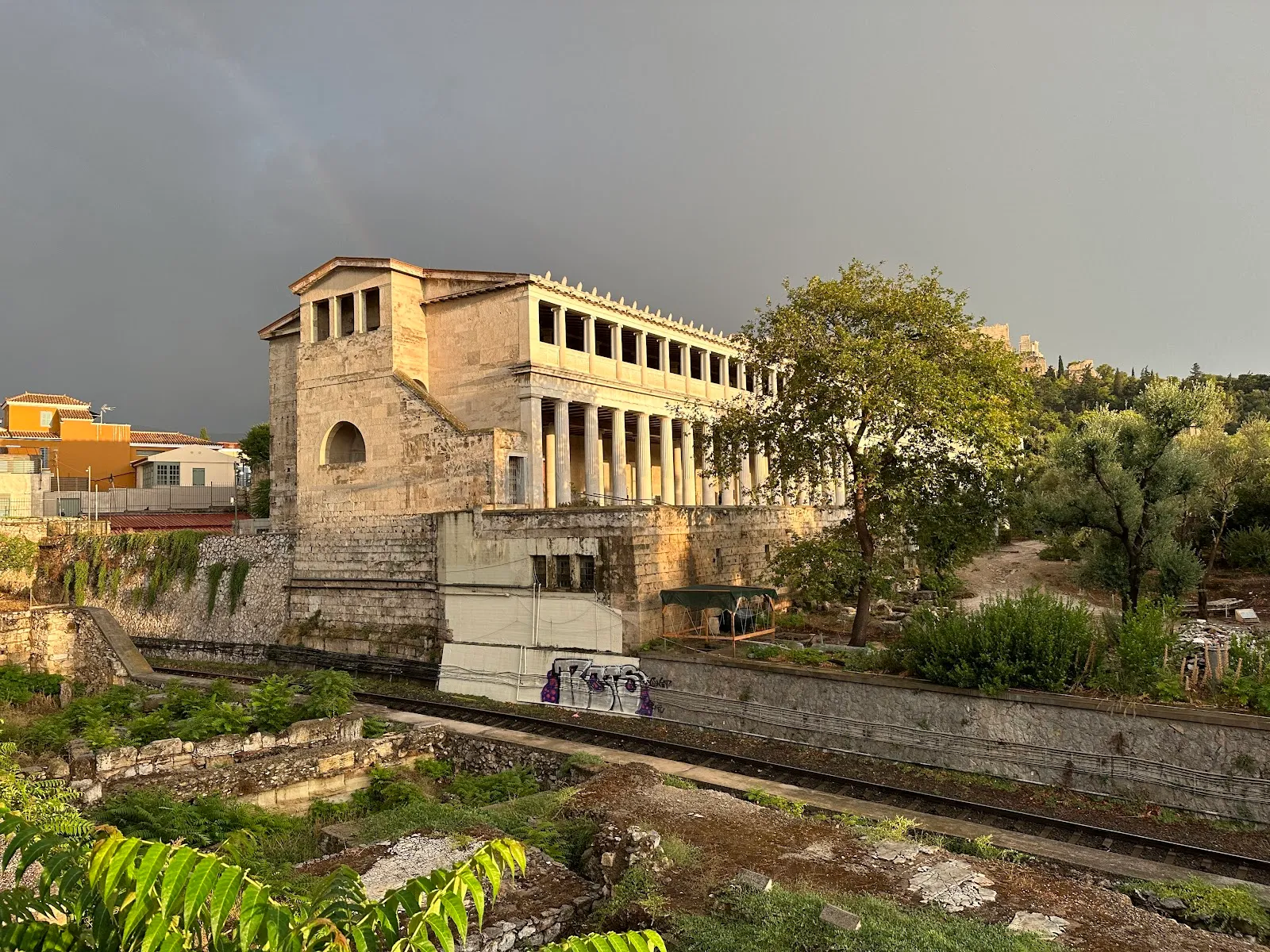
Inside the Ancient Agora of Athens, the Stoa of Attalos is a reconstructed, two-storey colonnade that gives shape to the open-air ruins around it. Built in the second century BC and rebuilt in the 1950s, it now houses the Museum of the Ancient Agora, with finds from the site including inscribed pottery used in Athenian voting. Walk through the columned halls, explore the exhibits on ancient civic life, and head upstairs for views across the Agora towards the Temple of Hephaestus.
A market building rebuilt for modern visitors
The Stoa of Attalos stands within the Ancient Agora, the former centre of public, political and commercial life in Athens. King Attalos II of Pergamon had the original building constructed in the second century BC. Its long, covered walkway gave people shelter and room to meet and trade. The stoa included shops on both floors, linking the building with the everyday business of the Agora.
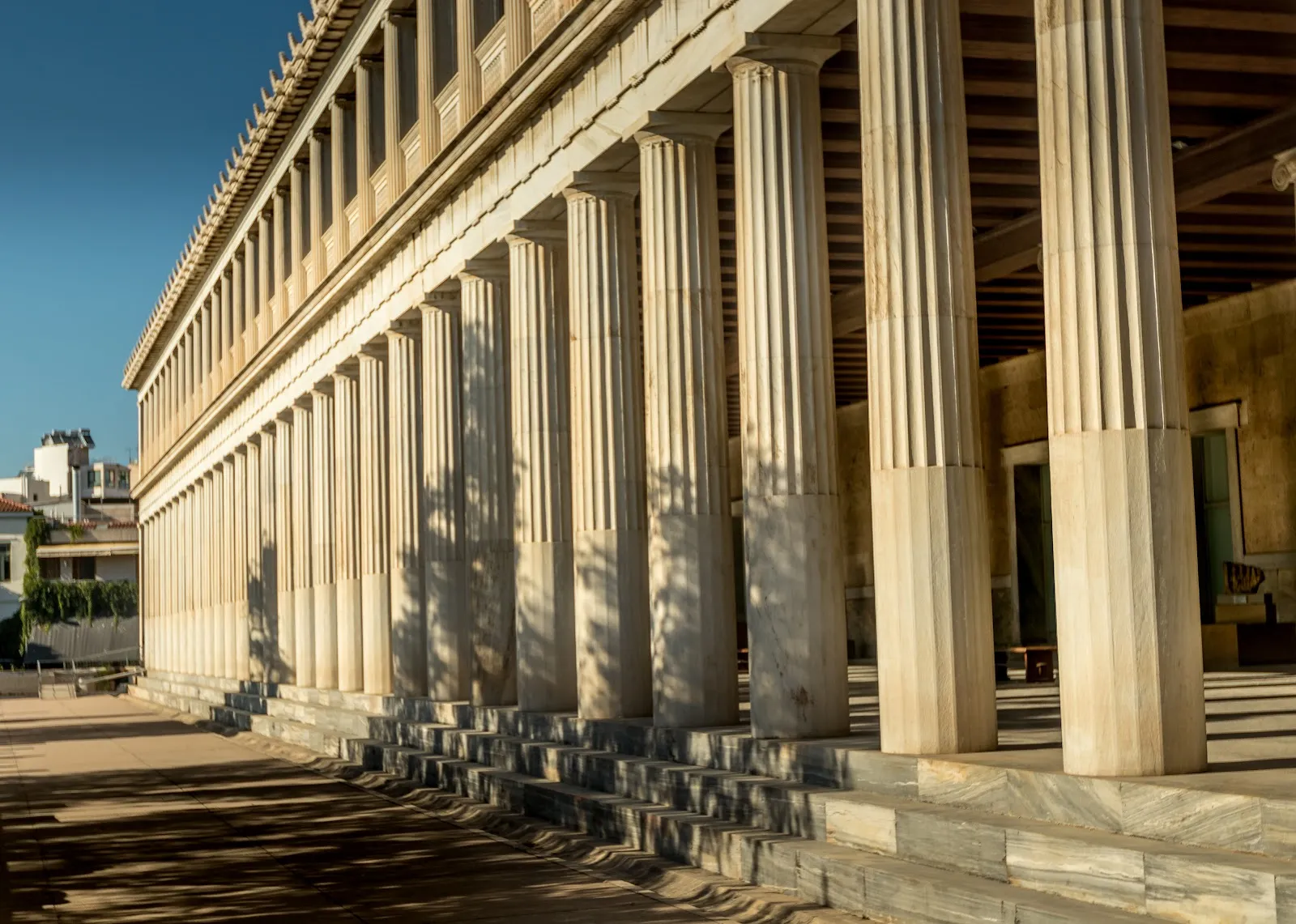
The structure now on site is a reconstruction made in the 1950s from the surviving ruins. Its scale and continuous rows of columns help visitors picture a complete public building, rather than only the scattered foundations visible elsewhere in the archaeological site. Walk along the portico and look at the different columns on the two levels: the ground floor has Doric columns, while the upper floor has Ionic ones.
Finds from the Ancient Agora
The Museum of the Ancient Agora occupies the stoa. Its collection brings together objects excavated from the surrounding area, with finds connected to different parts of ancient life. Inscribed pottery fragments, known as ostraca, were used in voting. They offer a direct link between the objects on display and the political activity associated with the Agora.
Exhibits also include discoveries from wells, burials, workshops, sanctuaries and deposits around the site. Take time to look at the displays before continuing through the open-air ruins: they help place the nearby remains in the context of civic, commercial and domestic activity. The museum is relatively compact, so its exhibits can be explored alongside a walk through the wider archaeological site.
Look across the Agora from upstairs
The upper level gives a different view of the Stoa and the Ancient Agora. From there, you can see towards the Temple of Hephaestus and look over the archaeological grounds. The view helps show how the reconstructed building sits within the larger site, while the colonnaded passages also provide a place to pause away from the open paths.
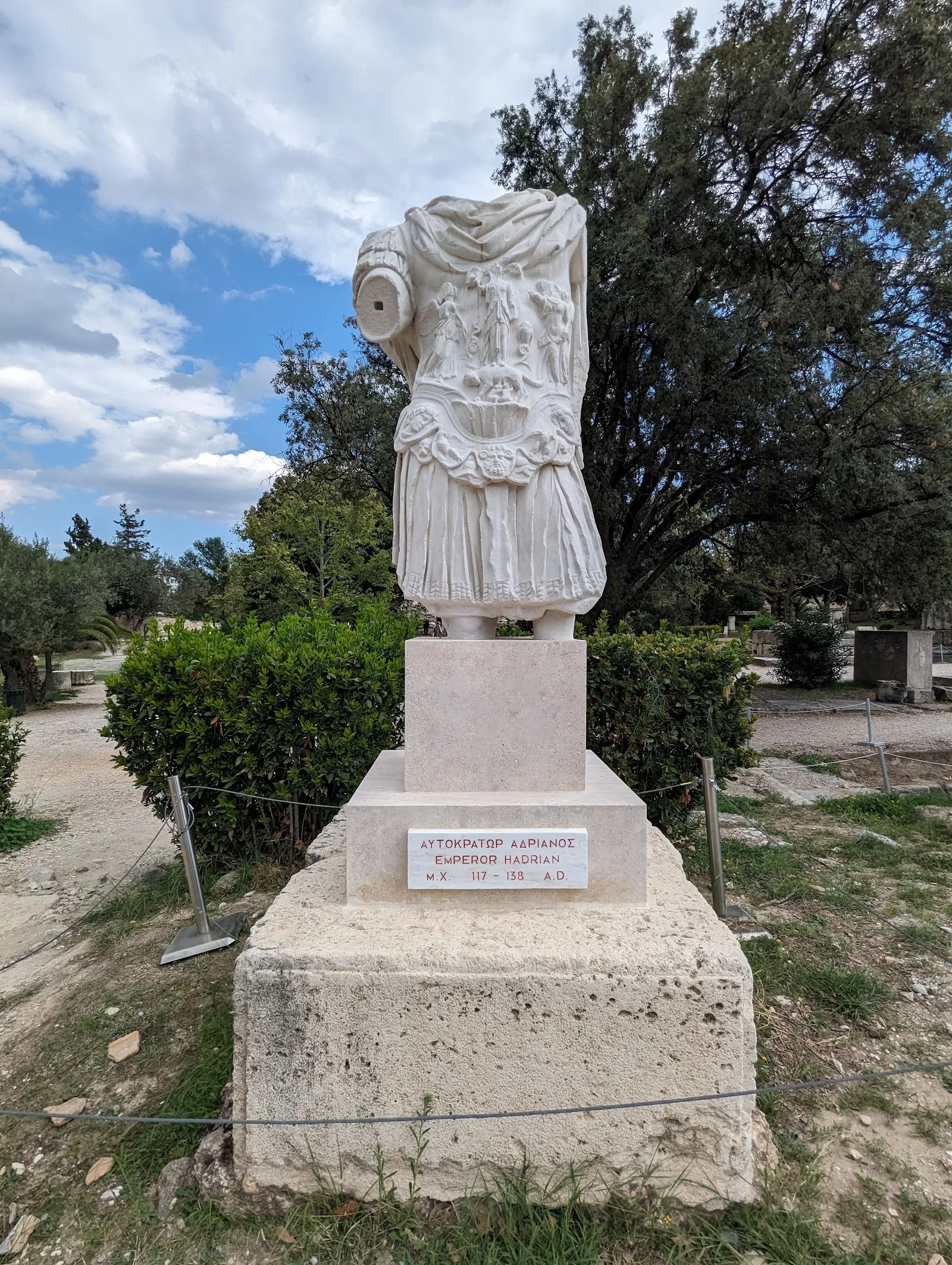
Conditions inside can be more comfortable than outside in hot weather, though the site itself can feel hot. Access to both levels is not guaranteed during temporary closures, so check what is open when you arrive. The museum sits within the Agora grounds, where shaded paths connect the stoa with ruins, statues and other historic remains.
Häufige Fragen
Is the museum included with an Ancient Agora ticket?
Yes. Admission to the Museum of the Ancient Agora is included with an Ancient Agora site ticket.
What can you see inside the museum?
The museum displays finds excavated from the Agora, including ostraca, inscribed pottery fragments used in voting, as well as objects from burials, workshops and sanctuaries.
Can you go upstairs in the Stoa of Attalos?
The upper floor has views across the Agora towards the Temple of Hephaestus. Temporary closures can affect access, so check whether both levels are open during your visit.
When is a good time to visit?
Go early in the day for a quieter visit and more time to explore at your own pace.