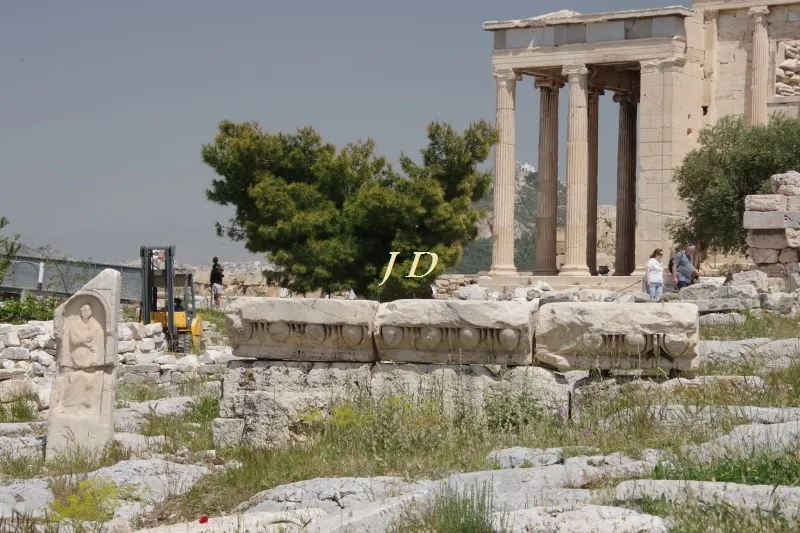
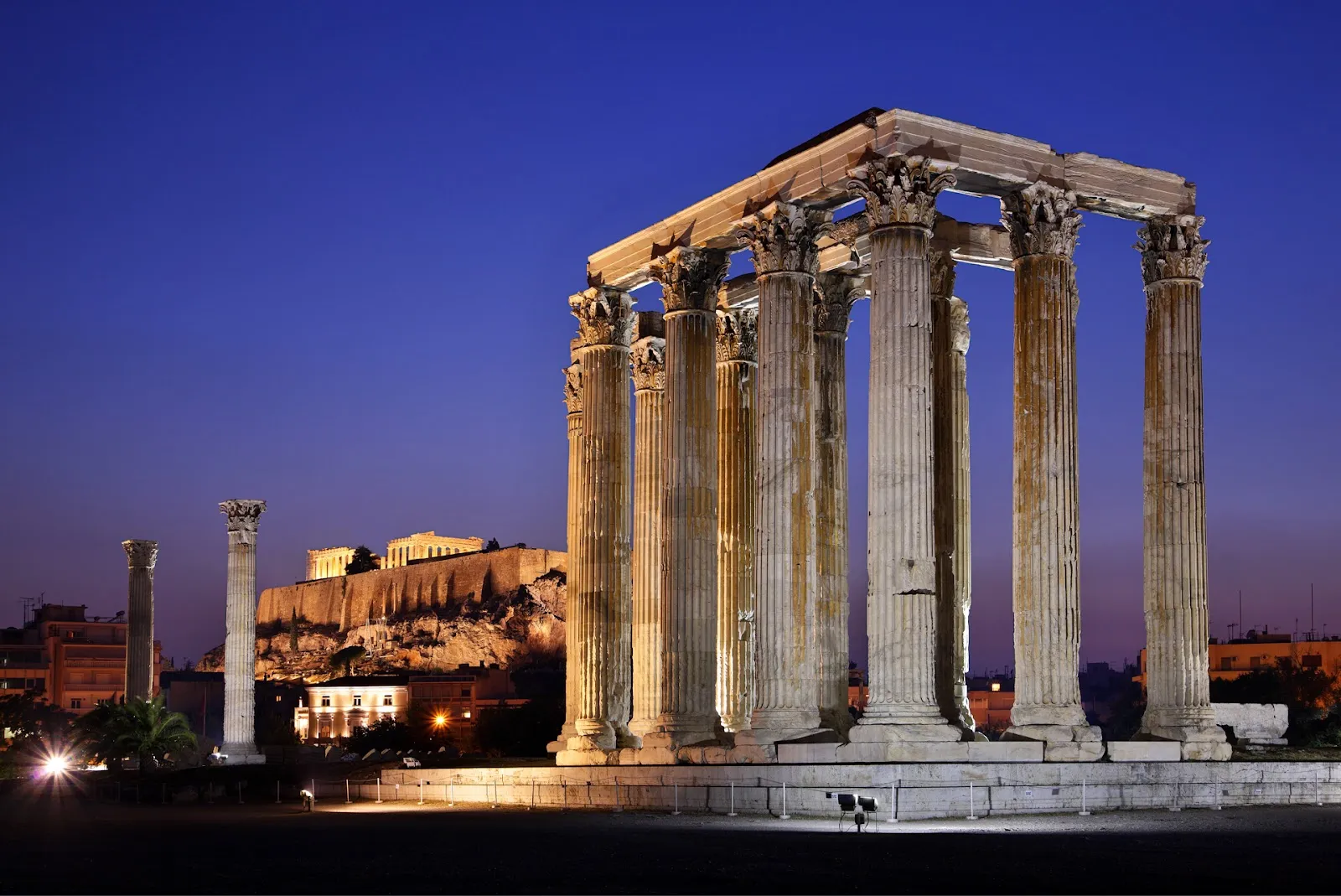
At the foot of the Acropolis in Athens, this museum brings together sculptures, architectural fragments and everyday objects found on the sacred hill and its slopes. Follow the collection from finds linked to the Acropolis’s slopes to the Archaic and Parthenon galleries, where the Caryatids and Parthenon sculptures give the ancient buildings a human scale. Glass sections in the floor reveal remains beneath the museum, while the upper level looks toward the hill. Pair the visit with the archaeological site to see the objects and monuments in context.
A museum built over ancient Athens
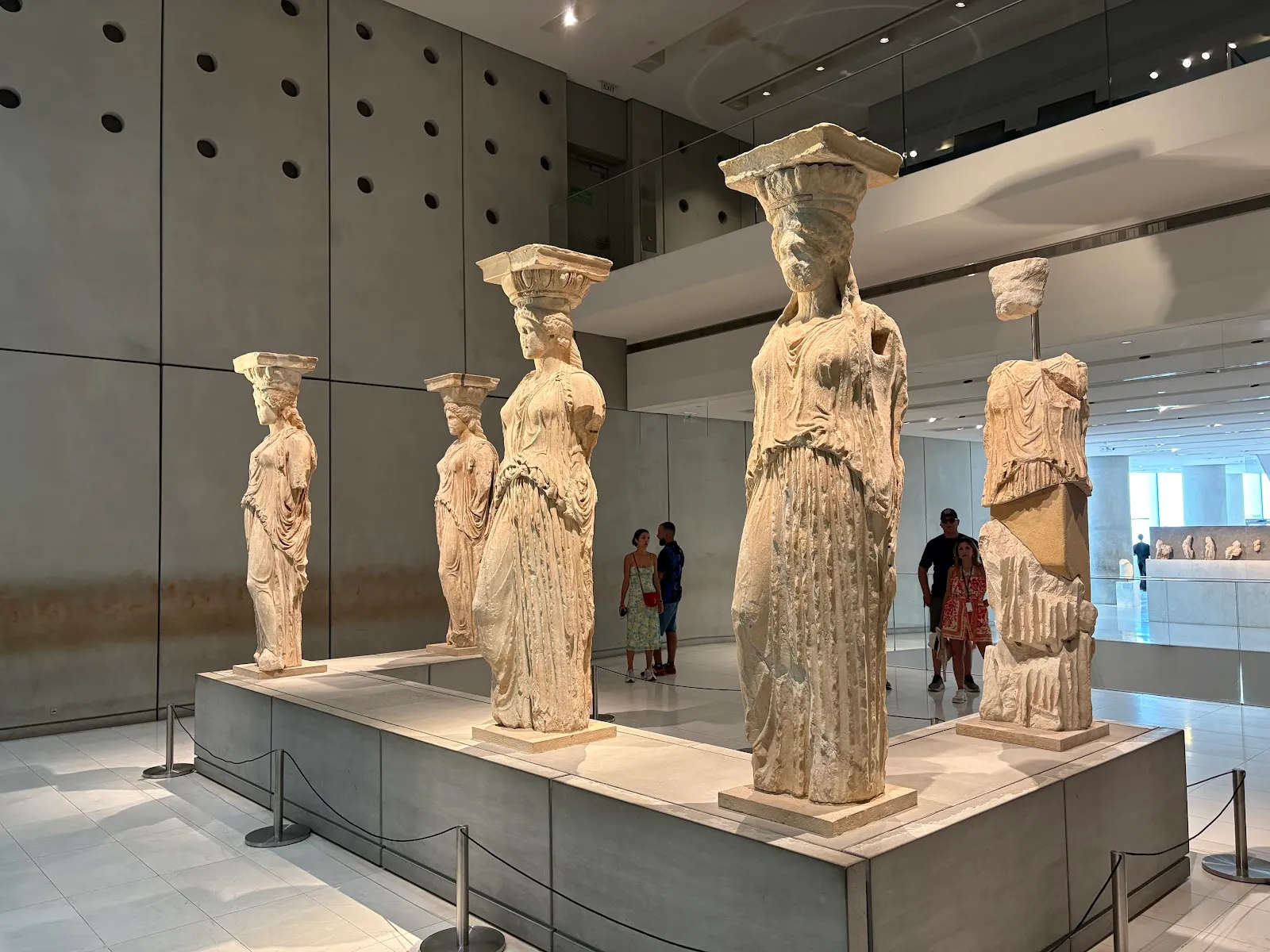
The museum stands on the southern slope of the Acropolis, in the Makryianni district. Its present building, designed by Bernard Tschumi with Athens-based architect Michael Photiadis, opened in 2009. It was created to house finds from the Acropolis and its surrounding area in a space large enough to display them together.
Excavations uncovered remains of an ancient neighbourhood where the building was planned. The museum now sits above these archaeological layers on concrete supports. Sections of glass flooring let you see the remains below, linking the galleries to the earlier city beneath them.
Following the collection through the galleries
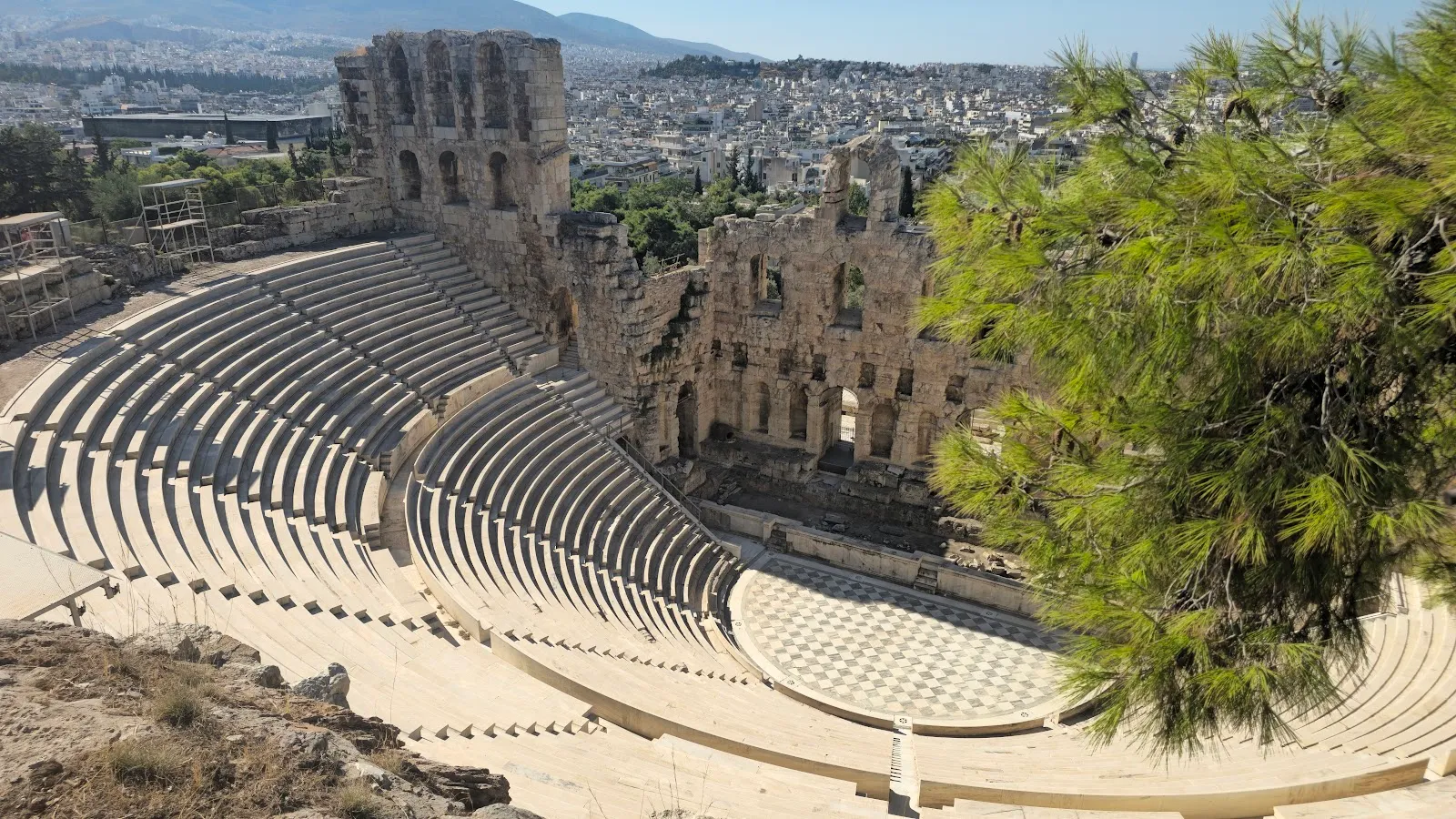
The displays bring together objects found on the Acropolis and its slopes, including sculptures, inscriptions, pottery and items from daily life. The route moves from finds connected with the slopes toward Archaic-period works and the Parthenon Gallery. This range gives the collection room for both monumental sculpture and smaller objects that help explain life around the ancient citadel.
Among the central works are the Caryatids, the sculpted female figures associated with the Erechtheion, and surviving sections of the Parthenon’s sculptural decoration. The museum displays original pieces alongside replicas where parts of the original ensemble are absent. In the Parthenon Gallery, the arrangement helps visitors follow the frieze and consider how the sculptures relate to the temple.
Light, glass and the view of the Acropolis
The building’s glass and concrete design uses natural light in its galleries. Its upper level is oriented toward the Parthenon, with large windows framing the Acropolis. The view helps connect the objects inside with the monuments for which they were made.
The museum’s architecture also responds to the shape and direction of the ancient site. A sloping gallery evokes the ascent toward the Acropolis, while the glass floors reveal the archaeological remains uncovered during construction. These elements make the building part of the visit, not simply a container for the collection.
The Parthenon sculptures and their wider story
The museum’s presentation of Parthenon sculptures is connected to the continuing dispute over the marbles held in the British Museum. The building was planned in part to display the surviving sculptures from the temple in a setting that shows their relationship to the Parthenon. The question of the sculptures’ return remains part of the museum’s wider story.
For a fuller picture, visit the museum alongside the Acropolis itself. The galleries introduce objects and architectural details from the hill; at the archaeological site, you can see the buildings that give those works their setting. The two visits are close enough to combine, though the museum requires its own admission.
Häufige Fragen
How long do you need at the Acropolis Museum?
Allow about three hours to explore the main collections and the archaeological remains beneath the building.
What are the main things to see?
Highlights include the Caryatids, surviving Parthenon sculptures, finds from the Acropolis slopes and the archaeological remains visible through the floor.
Can you see the Acropolis from inside the museum?
Yes. The upper level looks toward the Acropolis and the Parthenon through large windows.
Is the Acropolis Museum close to the Acropolis?
Yes. It stands at the foot of the Acropolis, and the museum and archaeological site can be visited together. They require separate admission.