The Mercedes-Benz Museum in Stuttgart traces the carmaker’s story alongside the events and changes that shaped everyday life. Its nine-level building curls around a central atrium, with two routes taking you through the company’s history and its varied vehicles. See early motor cars, racing machines, trucks, buses and experimental designs, as well as displays linking automotive progress to world history. Interactive areas and a free audio guide help make the visit engaging for families and people with little interest in cars.
A building shaped around the visit
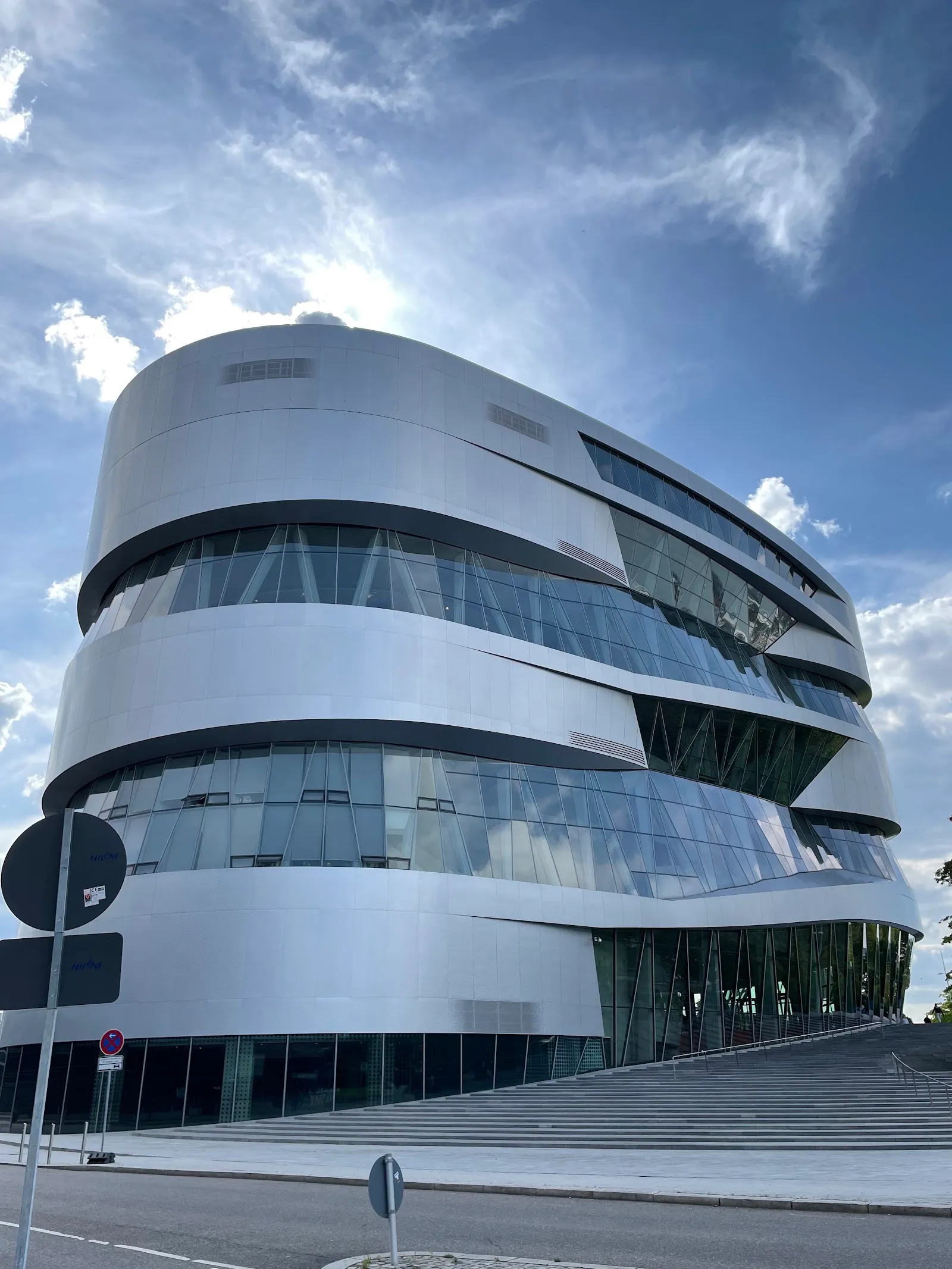
The museum stands at Mercedesstraße 100 in Stuttgart-Bad Cannstatt, beside the Mercedes-Benz factory site. Designed by UN Studio, the building opened in 2006. Its curved form wraps around a central atrium, with exhibition spaces arranged in a twisting, double-helix sequence.
The route begins on the upper level and leads down through the displays. The building’s ramps and open sightlines keep the different floors connected as you move through the collection. Its architecture is part of the experience, not simply a container for the cars: glass, metal and flowing curves echo the subject inside.
From early motor cars to future designs
The museum follows the development of the automobile from its beginnings in the late nineteenth century. Carl Benz patented a three-wheeled motor car in 1886, while Gottlieb Daimler and Wilhelm Maybach were developing motor vehicles in Stuttgart. Early examples help set the scene for the models and technologies that followed.
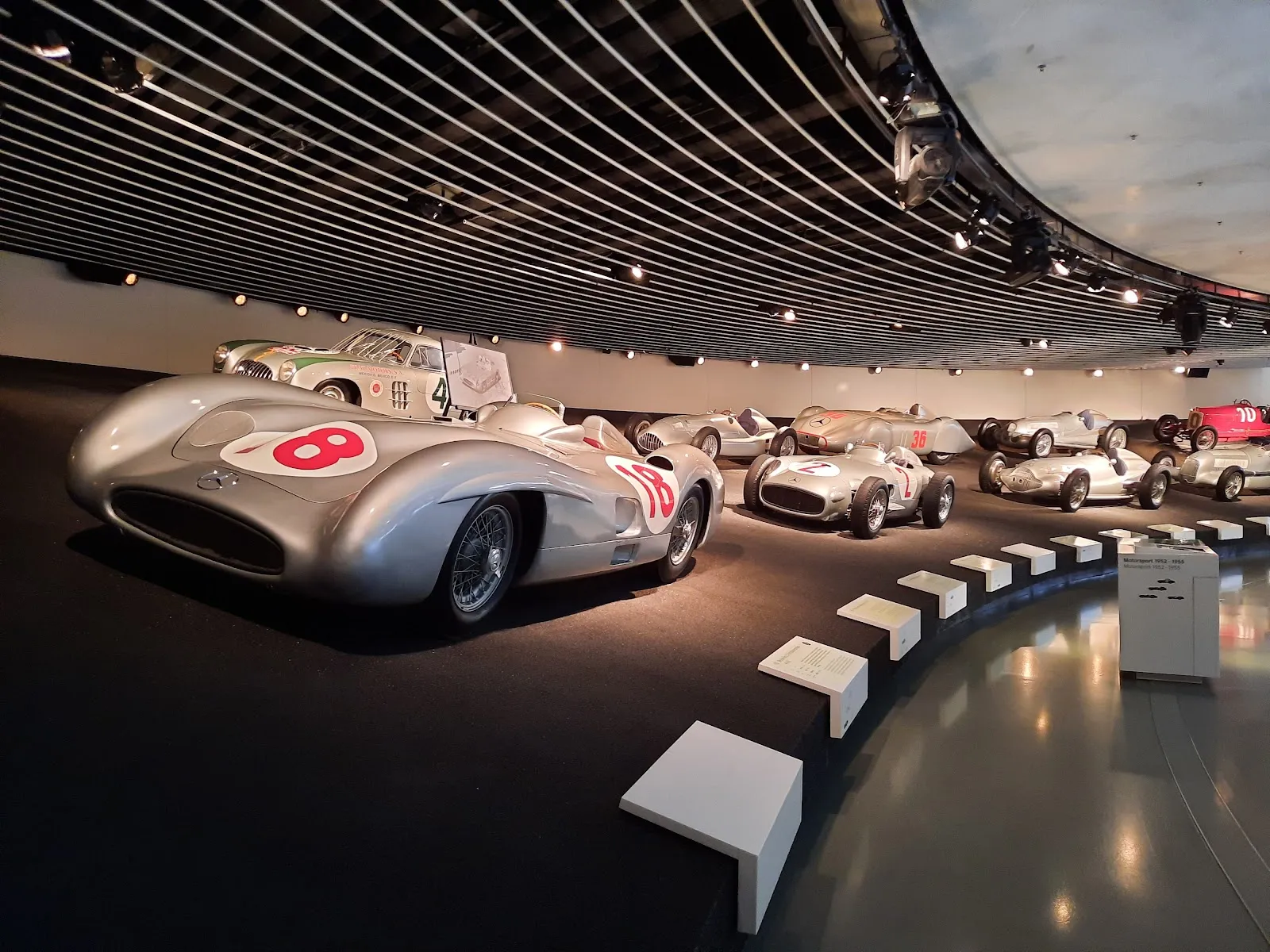
More than 160 vehicles are displayed across the museum’s nine levels, alongside a wider collection of objects. The vehicles span different forms and uses: historic cars, trucks, buses, racing cars and concept models. You can also see aircraft engines and distinctive vehicles such as the Popemobile. Later displays turn towards new technologies and ideas for mobility, including autonomous driving.
Rather than presenting the collection as a line of cars alone, the exhibition connects the vehicles to the company’s history and to the periods in which they were made. One of the museum’s two routes is organised around the brand’s story; the other focuses on the range of vehicles produced. Together, they give you different ways to understand the collection.
Cars in the context of history
The exhibits place automotive developments beside wider events and changes in society. Images and displays show how cars became part of everyday life, from leisure beside the motorway in the 1960s to car-free Sundays during the oil shortage of 1973. This historical context gives the vehicles a place in the world beyond design and engineering.
The museum also addresses the company’s involvement in the Third Reich, including an apology and an admission of its role. This part of the exhibition is important to the broader account of the company and the period. The displays connect industrial history to the people and events affected by it.
A free audio guide accompanies the visit and helps explain the collection as you go. Families can also make use of interactive areas, while lockers provide storage and charging points for devices. Allow several hours if you want time for both exhibition routes and the historical displays.
Häufige Fragen
How much time should you allow for the Mercedes-Benz Museum?
Allow several hours to explore the nine levels and both exhibition routes.
Is there an audio guide?
Yes. A free audio guide is available before you begin exploring.
Can you reach the museum by public transport?
Take the S1 or S11 S-Bahn from Stuttgart Hauptbahnhof to Neckarpark station. The museum is about a 15-minute walk from the station.
Are tickets available online?
Yes. Buying tickets online is recommended, and you can use the QR code at the entrance.