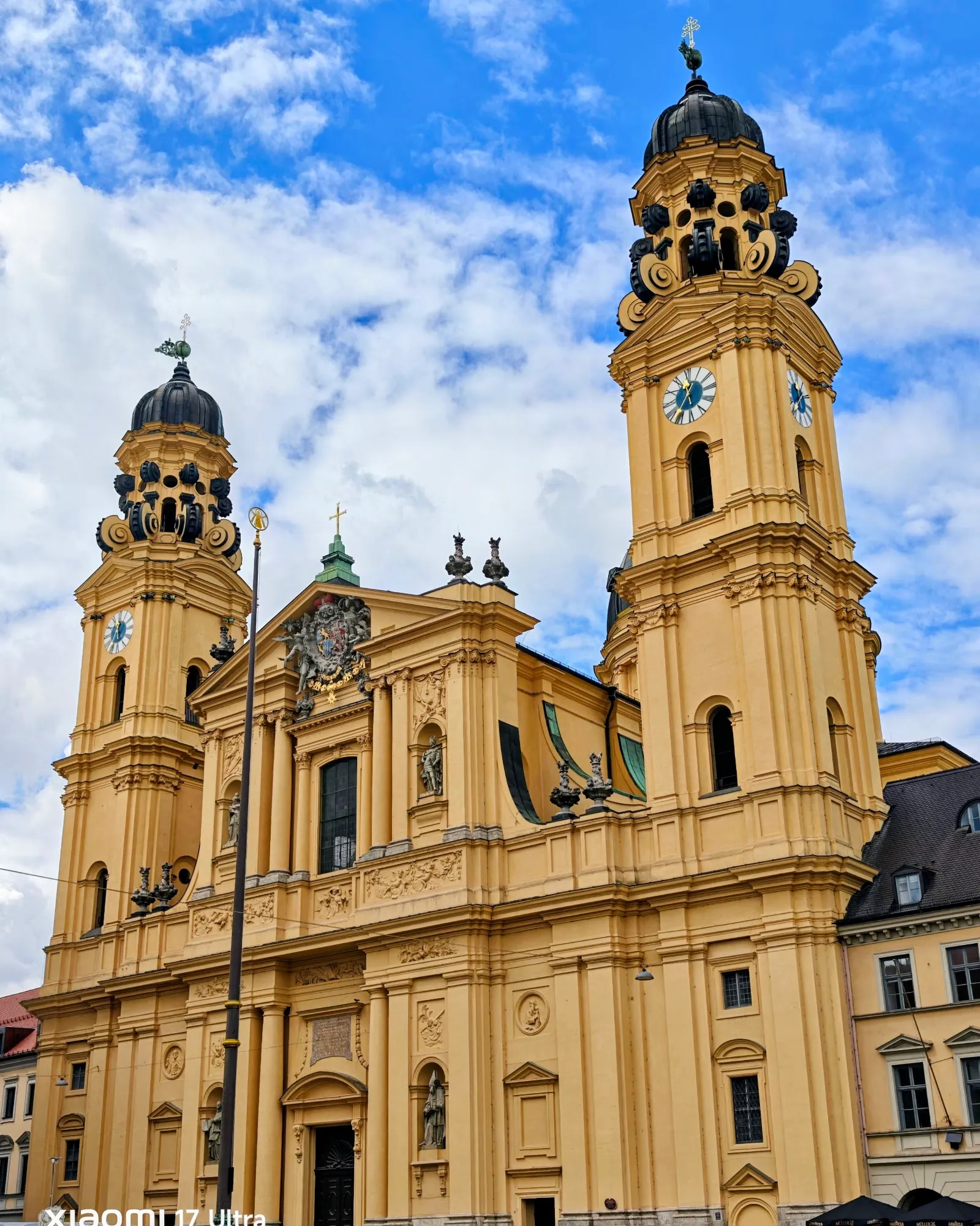
At Odeonsplatz in Munich, the Theatine Church of St. Cajetan stands out for its yellow exterior, twin towers and large dome. Step inside to see a striking change of mood: white stucco, tall columns, detailed sculpture and ornate altars fill the church’s bright interior. Built in the 17th century in the Italian High Baroque style, it was commissioned to mark the birth of the Bavarian heir. The church also holds the tombs of members of the Bavarian royal family, including King Maximilian II.
A church commissioned for an heir
The church was commissioned by Elector Ferdinand and his wife, Henriette Adelaide of Savoy, after the birth of their son and heir, Max Emanuel, in 1662. Its foundation was laid in 1663, and the first major phase of construction was completed in 1690. The project was intended as an expression of gratitude for the birth.
The Theatine Church was built for the Theatine order and also served as a court church. Its name refers to the order’s clergy. Italian architect Agostino Barelli designed the church; Enrico Zuccalli later took over the work. The building brought Italian Baroque design to Munich, where its style influenced churches in Bavaria.
The exterior and dome
The yellow façade is one of the church’s most recognisable features at Odeonsplatz. Twin towers rise above it, while the dome gives the building a distinctive place in the city’s skyline. The exterior also has marble figures of saints and an ornate lantern topped with a lion weather vane.
The church’s design is associated with the Italian High Baroque. Inside, rounded arches and the dome above the crossing draw the eye upward. The pale surfaces and detailed ornament make the interior feel very different from the warm-coloured exterior.
Inside the church
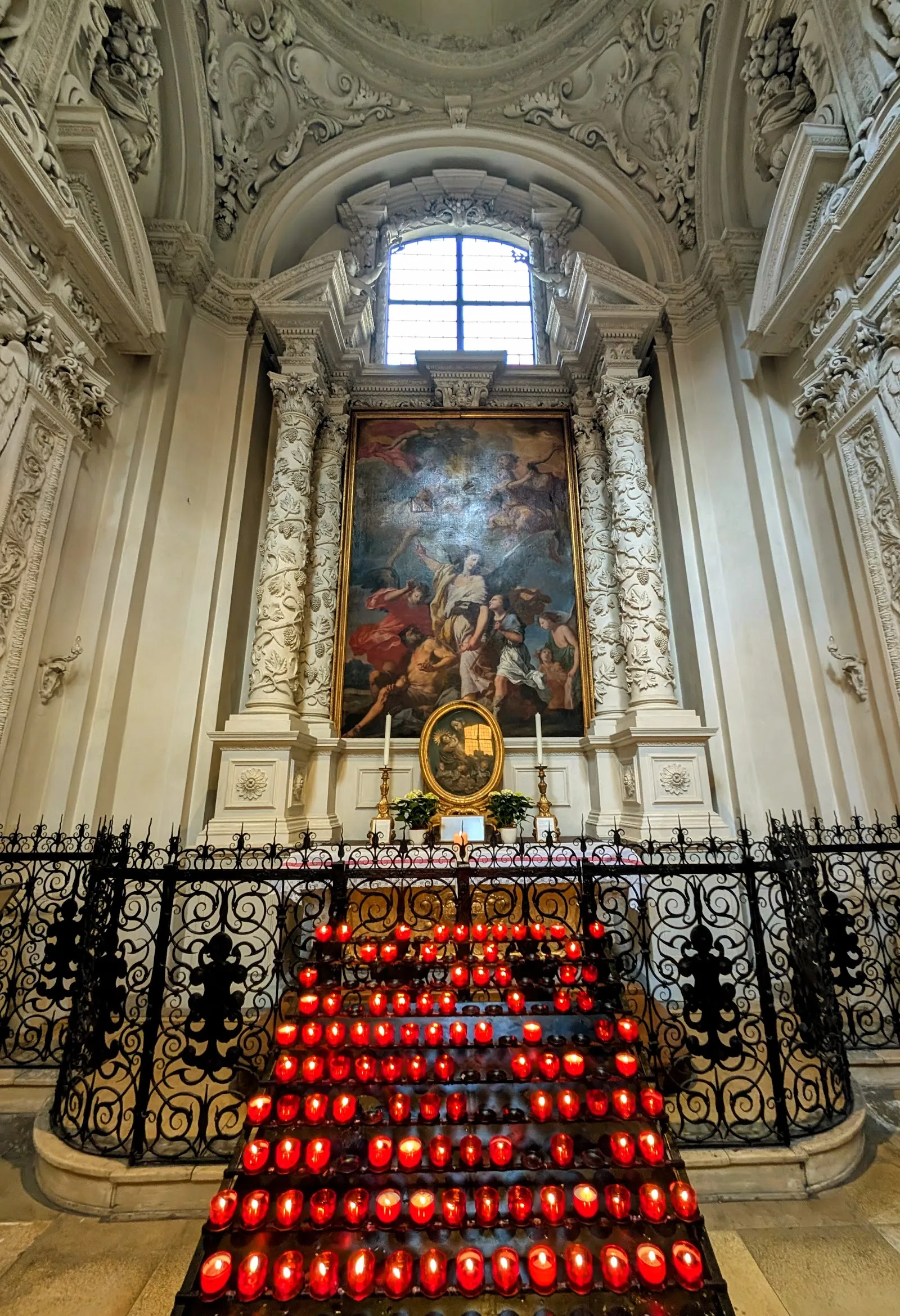
White stucco ornament covers much of the interior, set against tall columns and dark wooden benches. Look for the detailed work around the arches and dome, as well as the sculptures and high altar. The decoration is intricate, so a slow circuit through the church gives you time to notice details that are easy to miss at the entrance.
The church remains a place of worship as well as a sight to visit. Keep your visit quiet and allow space for people attending religious services. The calm interior is a marked change from the activity of Odeonsplatz outside.
The royal tombs
The Theatine Church contains the Wittelsbach family crypt and is the burial place of several Bavarian royals, including King Maximilian II. This gives the church a second point of interest beyond its architecture: it is both a working Catholic church and a place connected to Bavaria’s ruling family.
The church stands directly on Odeonsplatz, making it easy to include while exploring the square and Munich’s old town. Its exterior is especially clear to see from the plaza; inside, the pale stucco, dome and altars reward a closer look.
Häufige Fragen
Where is the Theatine Church?
It is at Theatinerstraße 22, beside Odeonsplatz in Munich.
Is the Theatine Church open to visitors?
It is a Catholic church used for worship and can also be visited. If one entrance is locked, try another; the door farthest to the right when facing the church is a suggested place to start.
What is there to see inside the Theatine Church?
Look for the white stucco decoration, tall columns, dome, sculptures and altars. The church also contains the tombs of Bavarian royals.
Why was the Theatine Church built?
Elector Ferdinand and Henriette Adelaide of Savoy commissioned it in gratitude for the birth of their son and heir, Max Emanuel, in 1662.


