
Königsplatz is a 19th-century public square in Munich’s Maxvorstadt, framed by the Propyläen gateway and two temple-like museums, the Glyptothek and Staatliche Antikensammlungen. King Ludwig I’s vision drew on ancient Greek architecture, giving the open space a distinctly classical character. Walk around the buildings, then take a break on the steps or grass. The square also carries a difficult history: the Nazi regime used it for rallies and ceremonies. Today, concerts and other events take place here, especially in summer.
A square shaped by Greek architecture
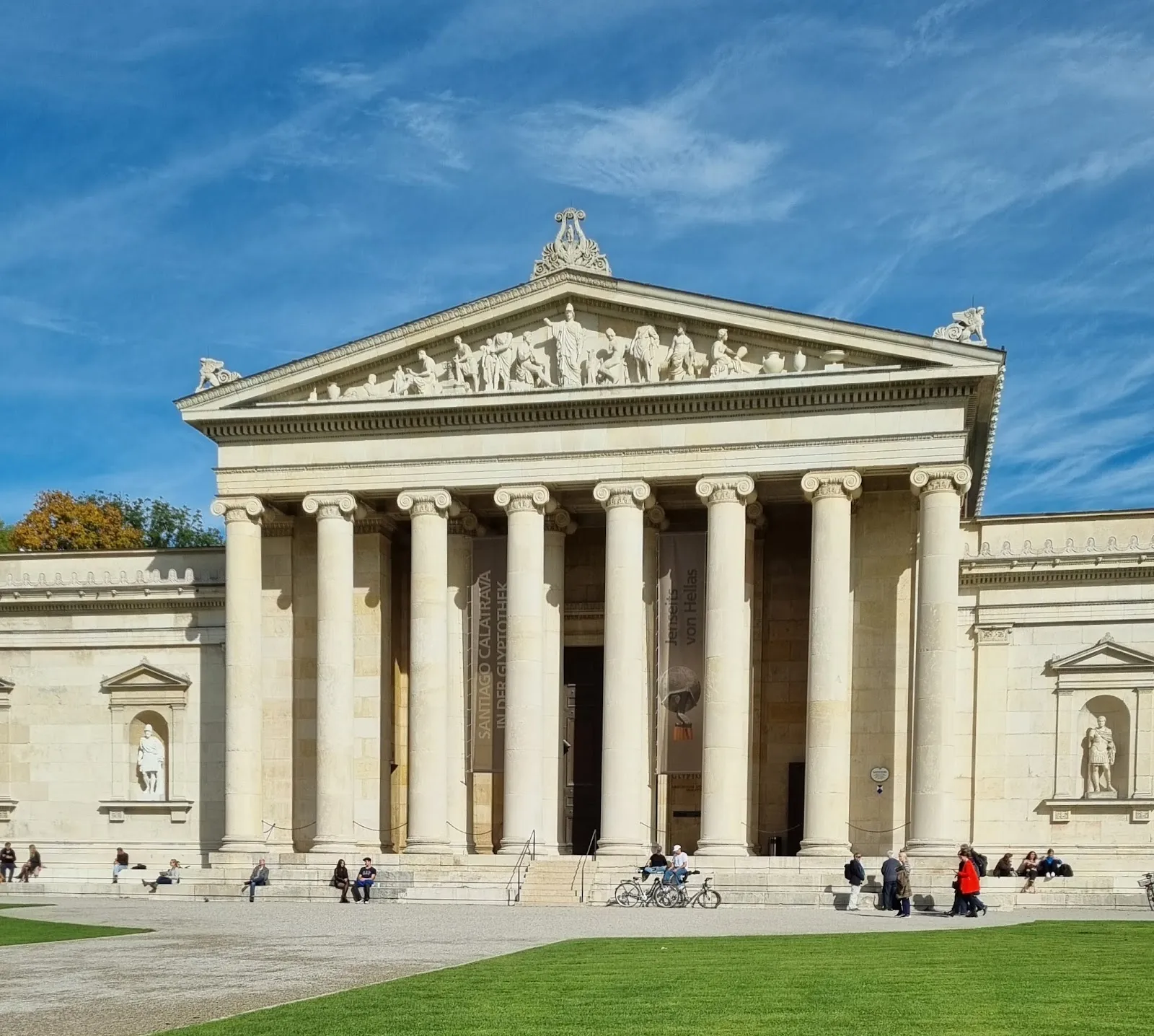
Königsplatz, or King’s Square, was built in the 19th century as part of King Ludwig I’s plans for Munich. The design drew on ancient Athens, with the square framed by the Propyläen and two temple-like museum buildings. The result is a broad public space where the architecture is part of the visit, even if you do not go inside.
The Propyläen, a gateway with Doric columns, anchors one side. The Glyptothek and Staatliche Antikensammlungen face the square. Together, the three buildings give Königsplatz its distinctive classical setting. Take time to walk around the open space and look at the buildings from different angles.
The museums around the square
The Glyptothek and Staatliche Antikensammlungen are the two museums directly associated with Königsplatz. They are among the square’s main reasons to stay longer than a quick walk-through. The Glyptothek has a particular appeal if sculpture is your interest; the museums around the square also include collections of Greek art and antiquities.
For a broader museum visit, Munich’s Alte Pinakothek, Neue Pinakothek and Pinakothek der Moderne are northeast of Königsplatz. They are separate stops, so allow for the extra walk and time if you plan to include them. Walking tours can also give context to the square’s architecture and history.
A place with a difficult history
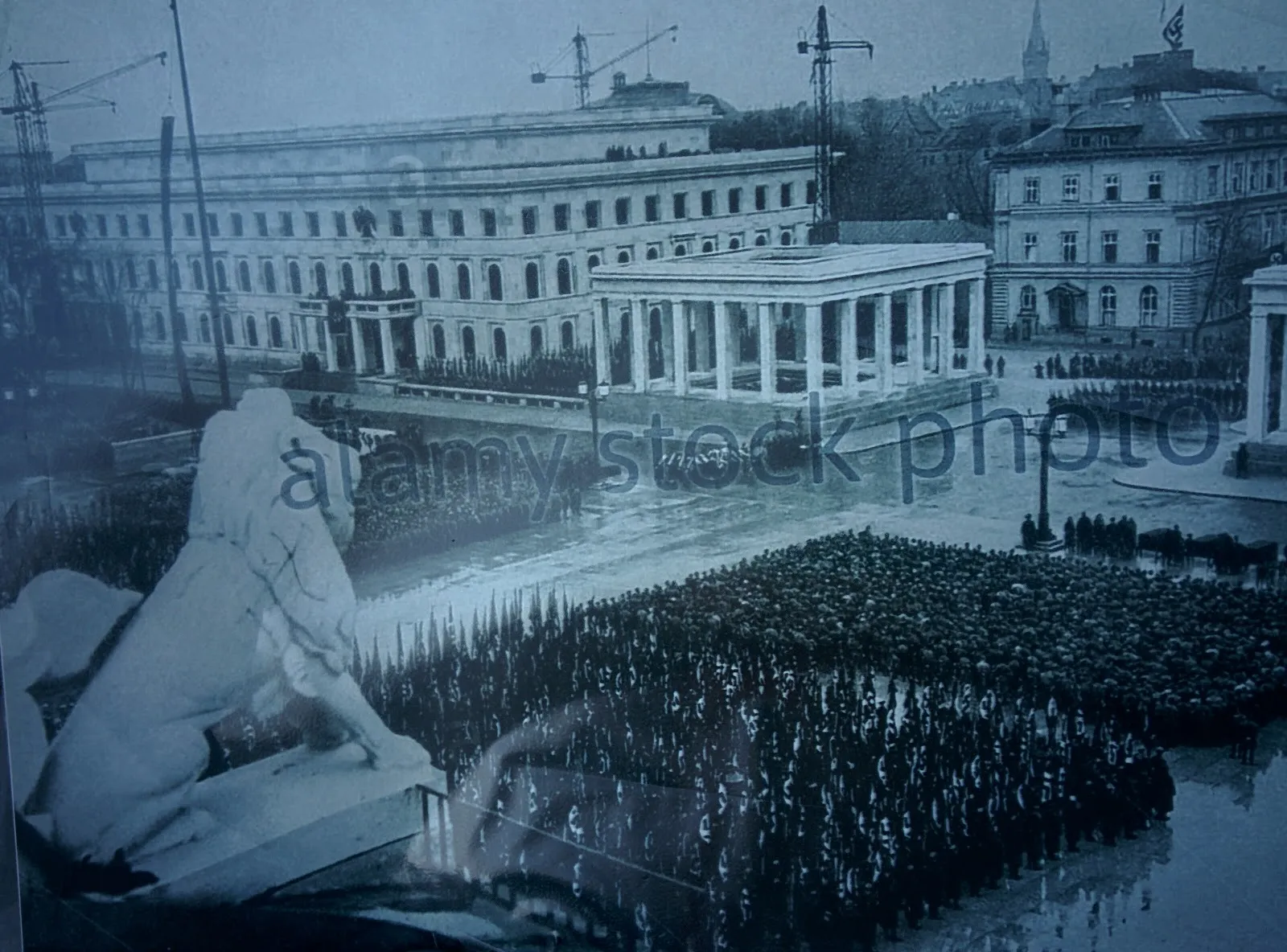
Königsplatz’s history is not limited to its architecture. The Nazi regime used the square for mass rallies and ceremonies, and buildings associated with that period once stood at its eastern end. Their foundations remain, though foliage has made them difficult to recognise.
Today, the square is a public space used for quiet breaks as well as cultural events. In summer, concerts and open-air cinema can bring activity to the grounds. Events may also involve stages or sections being fenced off, so the open layout can look different when a programme is underway.
Häufige Fragen
Which museums are on Königsplatz?
The square is framed by the Glyptothek and Staatliche Antikensammlungen, along with the Propyläen gateway.
Can you visit Königsplatz without paying?
Yes. The square is a public space, and you can walk around and view its architecture without entering a museum.
What is Königsplatz known for?
It is known for its 19th-century classical architecture, inspired by ancient Athens, and for its historical role as a site used for Nazi rallies and ceremonies.
Are there events at Königsplatz?
Concerts and open-air cinema take place there in summer. Stages or temporary fencing may affect parts of the square during events.


