
Kolumba, the art museum of the Archdiocese of Cologne, stands at Kolumbastraße 4, on the site of the former St. Kolumba church. Peter Zumthor’s building brings the church ruins and archaeological remains into a modern structure, where changing natural light shapes the visit. Inside, the collection ranges from late antiquity to contemporary art and includes religious works, paintings, sculpture and decorative arts. Take time to move through the galleries at an unhurried pace: the building, its remains and the displays are closely connected.
A museum built around a church’s remains
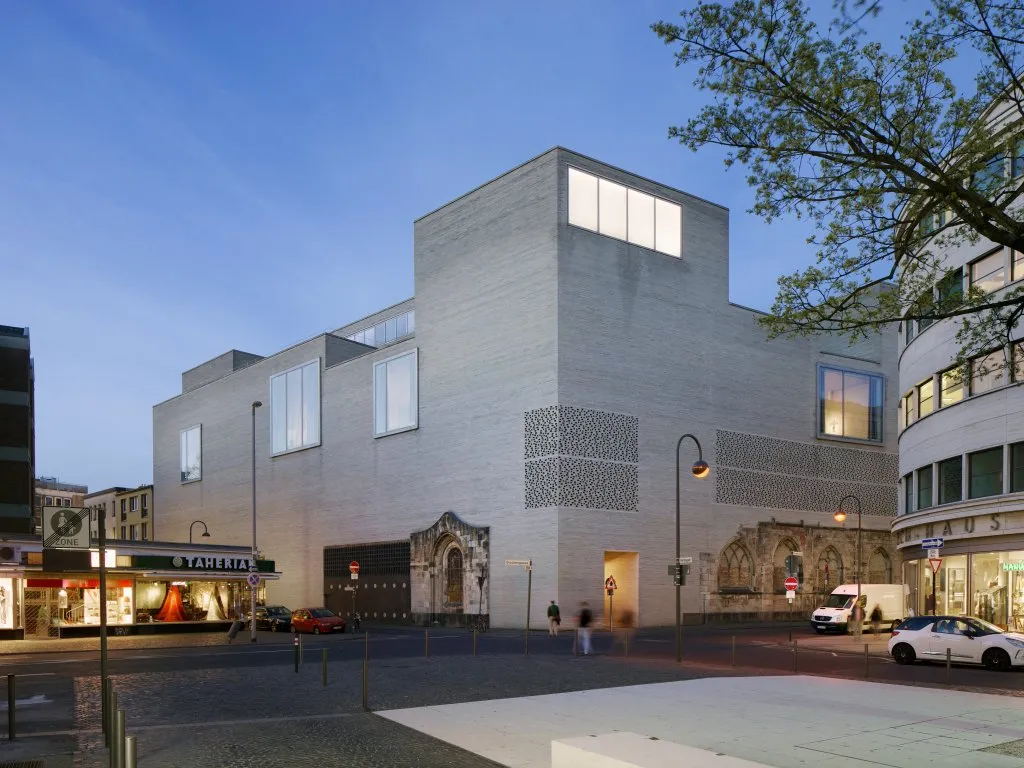
Kolumba is the art museum of the Archdiocese of Cologne, whose collection dates to the institution’s founding in 1853. The museum took its current name in 2004, after the site of the former St. Kolumba church. Its new building, designed by Swiss architect Peter Zumthor, opened in 2007.
The church was destroyed during the Second World War. Rather than removing the surviving remains, Zumthor’s design incorporates them into the museum. The structure surrounds the ruins of the late-Gothic church and also includes archaeological traces from earlier periods. The result connects the building’s present-day galleries with the history of the site.
Materials and changing light
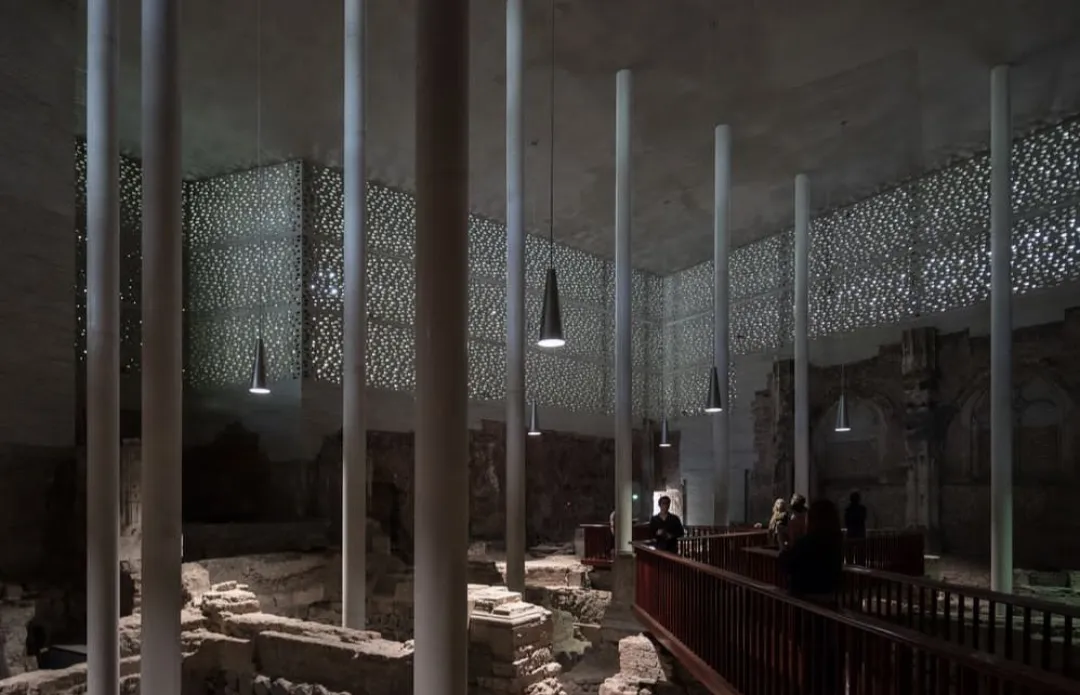
The building uses materials including clay plaster, Jura limestone, wood, and leather and silk textiles. Ocher-colored bricks connect new construction with the remaining church masonry. Their arrangement allows light to pass into the interior, where daylight changes across the galleries. Artificial lighting is absent from these spaces.
The museum’s route takes visitors through the remains before leading up to the art galleries. The contrast between older stonework and modern rooms is part of the experience: the architecture gives the archaeological site a place within the museum, rather than setting it apart from the collection. Benches in the galleries provide places to sit between displays.
Art across periods and forms
Kolumba’s collection spans late antiquity to contemporary work. It includes religious icons, paintings, drawings, prints, sculpture and decorative arts. The museum does not limit its displays to religious objects; its collection and exhibitions bring together different forms of artistic expression across periods and places.
Only a changing selection of the holdings is on view, so the displays can differ between visits. The archaeological remains and the collection share the same building, linking the history of the site with the works shown in the galleries. An English-language booklet explains both the archaeological area and the exhibitions. Reading it as you go can add context to the rooms and the remains.
Häufige Fragen
How long should I spend at Kolumba?
Allow around two to three hours to explore the archaeological remains and galleries at an unhurried pace.
What can you see at Kolumba?
The museum combines the remains of St. Kolumba church and archaeological traces with a changing selection of art from late antiquity to the present.
Does Kolumba accept card payments?
Card payments may not be accepted, so bring cash.
Are advance tickets recommended?
Yes. Advance tickets are recommended.


