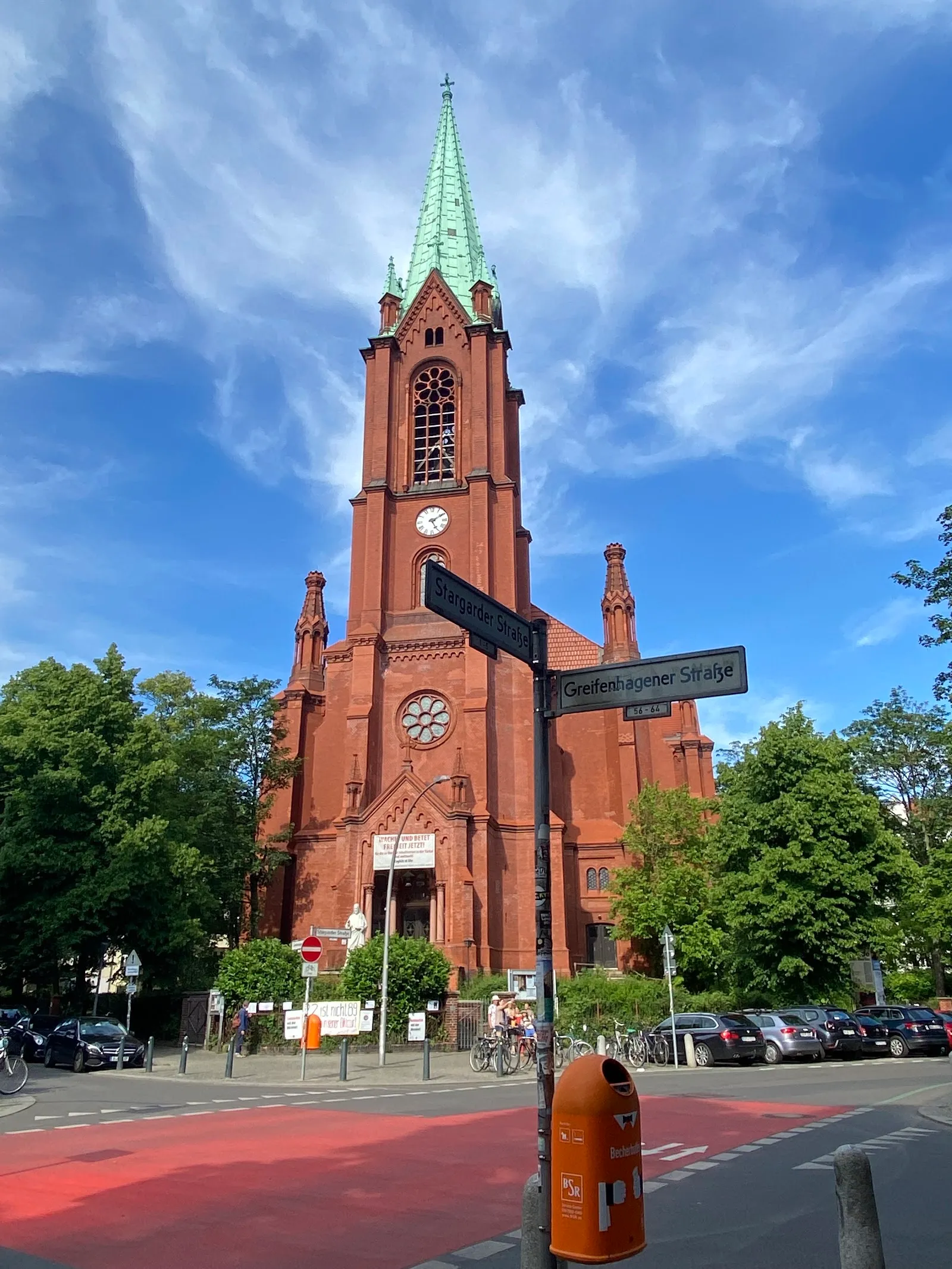
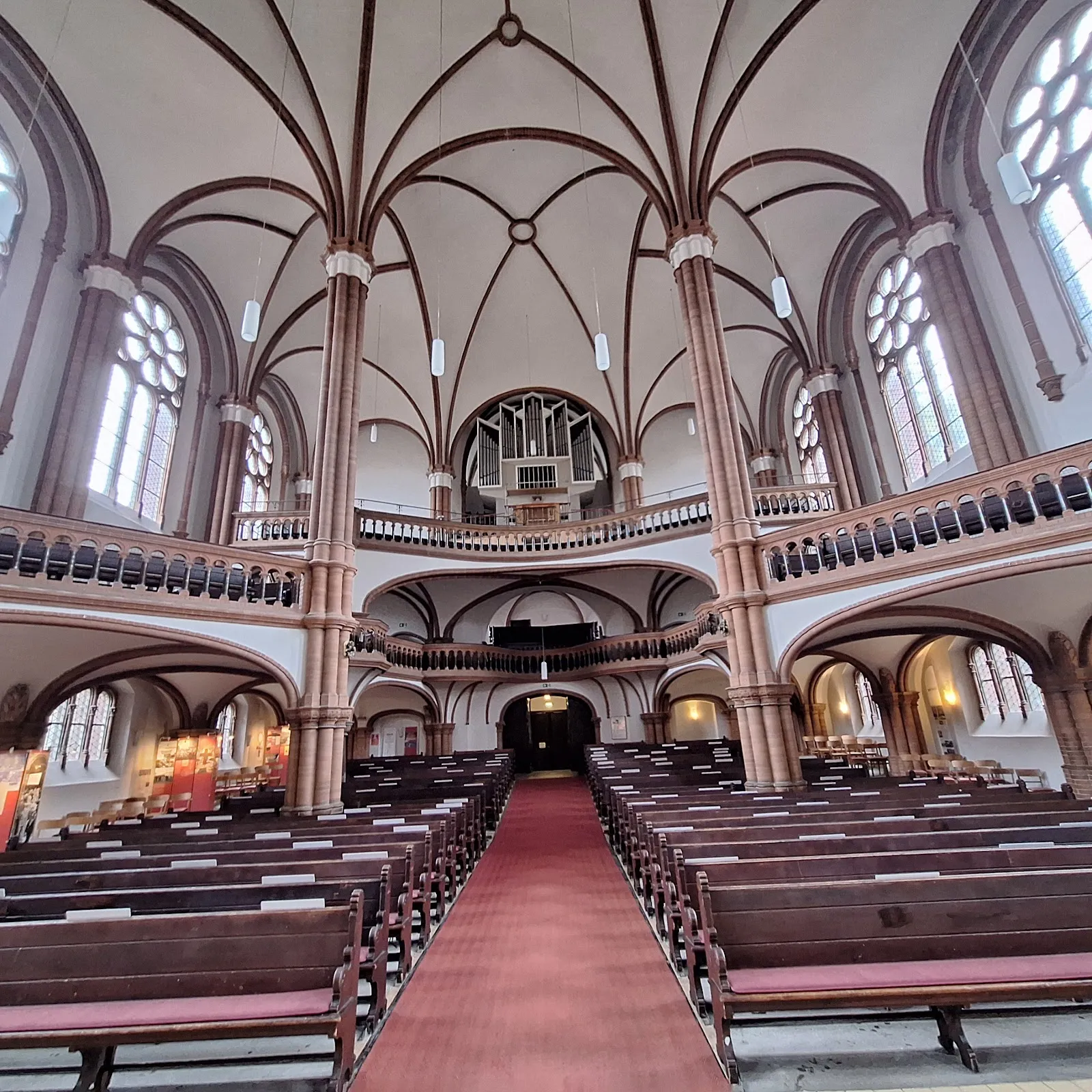
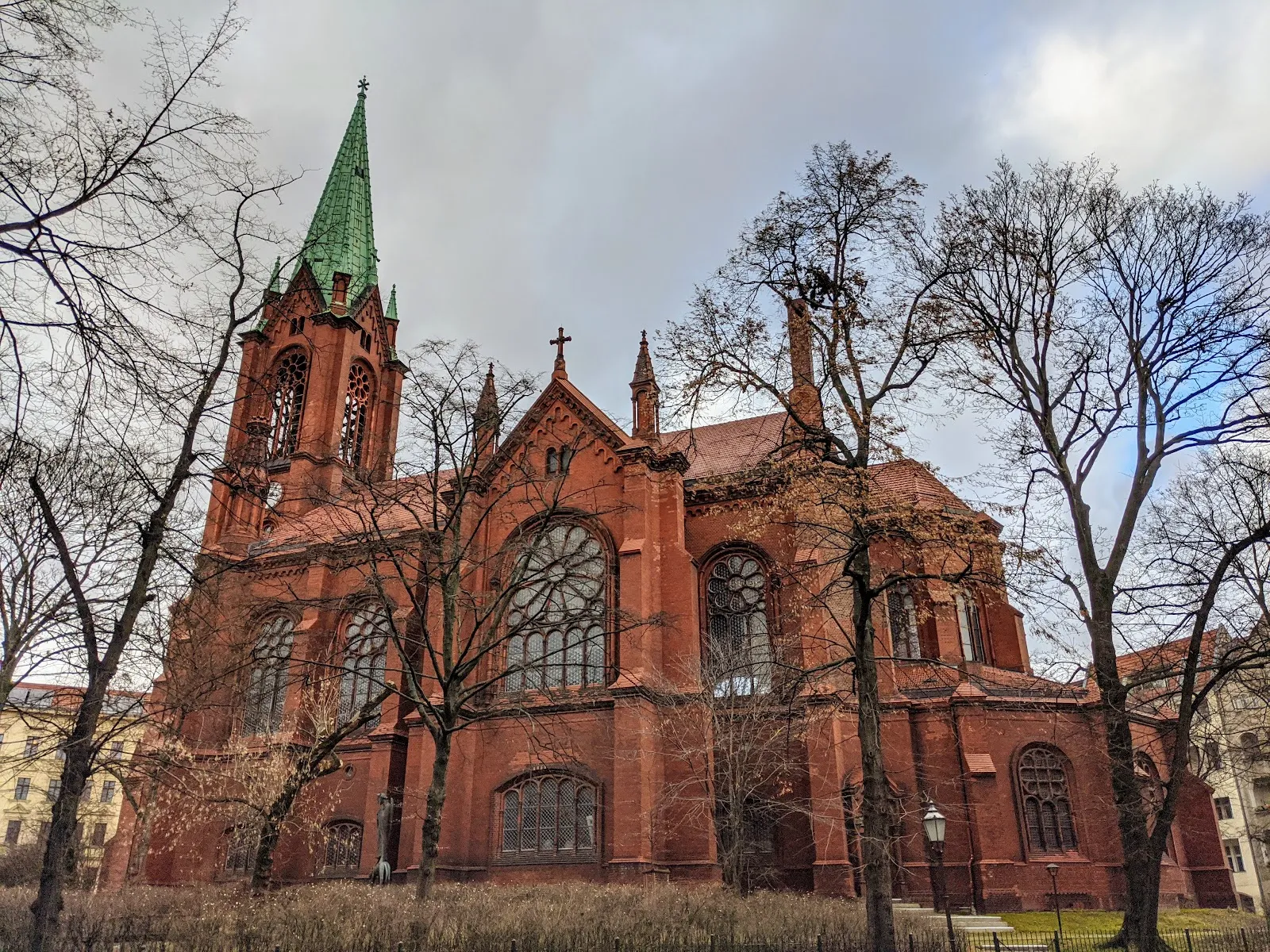
Gethsemanekirche is an Evangelical church on Stargarder Strasse in Prenzlauer Berg, northern Berlin. Its acoustics draw music lovers to concerts, including performances of Rachmaninoff’s All-Night Vigil. The church also has a place in East Berlin’s history as a symbol of freedom in the late 1980s. Inside, bullet holes recall wartime violence; an information cube outside gives context on the church’s past. Keep your voice low around the church, particularly on Sundays.
A church tied to East Berlin’s history
Gethsemanekirche became a symbol of freedom in East Berlin in the late 1980s. Its past was turbulent: a moment associated with the church was the sound heard from it on 5 November 1989. An information cube outside provides further insight into its history.
Bullet holes inside the church preserve a visible reminder of wartime violence. They give the building’s history a difficult, tangible dimension alongside its role in the events of the late 1980s.
Concerts and acoustics
Music is one way to experience the church beyond its historical setting. Concerts here include Feierabendkultur and performances of Rachmaninoff’s All-Night Vigil. The building’s acoustics are a draw for listeners, with the All-Night Vigil’s compositions and melodies filling the church.
If music is your main reason to visit, plan around a concert. The church’s acoustics are especially apparent during a performance.
Häufige Fragen
Where is Gethsemanekirche?
It is at Stargarder Str. 77 in Berlin’s Prenzlauer Berg area.
What is Gethsemanekirche known for?
The church is known for its role as a symbol of freedom in late-1980s East Berlin and for concerts held in its acoustically distinctive interior.
Can you see signs of the church’s history?
Yes. Bullet holes inside recall wartime violence, and an information cube outside provides historical context.
Is Gethsemanekirche a concert venue?
Concerts include Feierabendkultur and performances of Rachmaninoff’s All-Night Vigil.