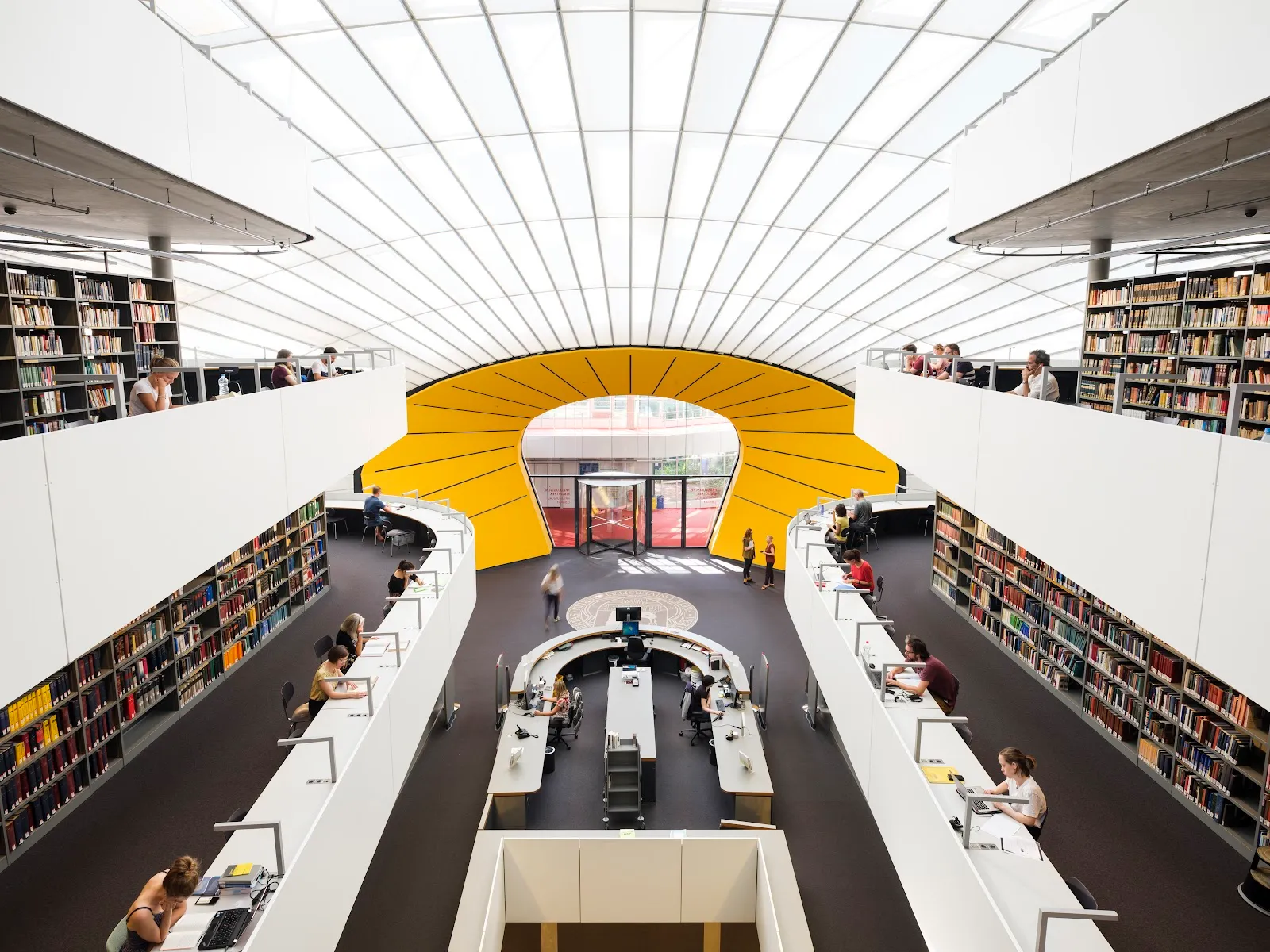
At Berlin’s Kulturforum, the Gemäldegalerie brings together European paintings from the 13th to the 18th century in light-filled galleries. Follow the collection from early Italian and German works to Dutch and Flemish masters, with paintings by Botticelli, Dürer, Rembrandt, Rubens, Vermeer and Caravaggio. The scale rewards a focused visit: choose a few rooms or periods instead of trying to see everything. Benches in many rooms make it easier to pause and look closely, and the collection can hold the attention of children as well as adults.
European painting across six centuries
The Gemäldegalerie is part of the Kulturforum, Berlin’s museum and concert-hall district near Potsdamer Platz. Its collection covers European painting from the 13th to the 18th century, with particular strengths in German and Italian works from the 13th to 16th centuries and Dutch painting from the 15th to 17th centuries.
The collection was assembled by the Prussian government from 1815 as a cross-section of European art. The gallery first opened in 1830 and now occupies a building completed in 1998. Its paintings include works by Jan van Eyck, Raphael, Titian, Lucas Cranach the Elder, Hans Holbein, Caravaggio, Rubens, Rembrandt and Vermeer.
A route through the galleries
The collection is displayed across 72 galleries, with a route that runs for almost two kilometres. The number of rooms and paintings makes it easy to spend hours here, but a complete visit can be tiring. Pick a period or a group of rooms before you start, then leave time to pause rather than rushing through the whole collection.
The paintings span very different styles and subjects. Early Italian works include paintings by Giotto and Botticelli; German galleries bring together artists such as Dürer, Cranach and Holbein. Dutch and Flemish rooms include Rembrandt, Vermeer, Rubens and van Eyck, while later Italian and Spanish painting includes Caravaggio. The collection’s breadth makes it possible to compare artists and traditions within one visit.
Paintings to look for
Among the named highlights are Caravaggio’s *Amor Vincit Omnia* and Vermeer’s *Woman with a Pearl Necklace*. Botticelli’s *Mary with the Child and John the Baptist and John the Apostle* is another work to seek out. The collection also includes paintings by Mantegna, Bellini, Bruegel and Titian.
The Rembrandt Room, identified as Room X, is a useful destination if you want to focus your visit. The gallery holds a substantial group of his paintings, alongside works by other Dutch masters. An audio guide has entries for more than 200 paintings, which can add context as you move through the collection.
Planning a comfortable visit
Give yourself time to walk between rooms and take breaks. Benches are available in many galleries, including the Dutch painting rooms. The scale of the collection means that seeing every room in one visit is not essential; selecting a smaller section can leave more time to study individual paintings.
The museum is suitable for children as well as adults, though the long route may call for a shorter, selective visit with younger visitors. Food choices inside are limited, so plan a meal elsewhere before or after the gallery. A yearly pass covering many Berlin museums is another option to consider if you expect to visit several institutions.
Häufige Fragen
How long should I plan for the Gemäldegalerie?
Allow around two to three hours for a focused visit. The gallery route is almost two kilometres, so seeing the full collection takes longer.
What can I see at the Gemäldegalerie?
The collection covers European painting from the 13th to the 18th century, with works by artists including Botticelli, Dürer, Rembrandt, Rubens, Vermeer and Caravaggio.
Where is the Gemäldegalerie?
It is in Berlin’s Kulturforum, near Potsdamer Platz.
Is there food at the Gemäldegalerie?
Food options inside are limited. Plan to eat before or after your visit.