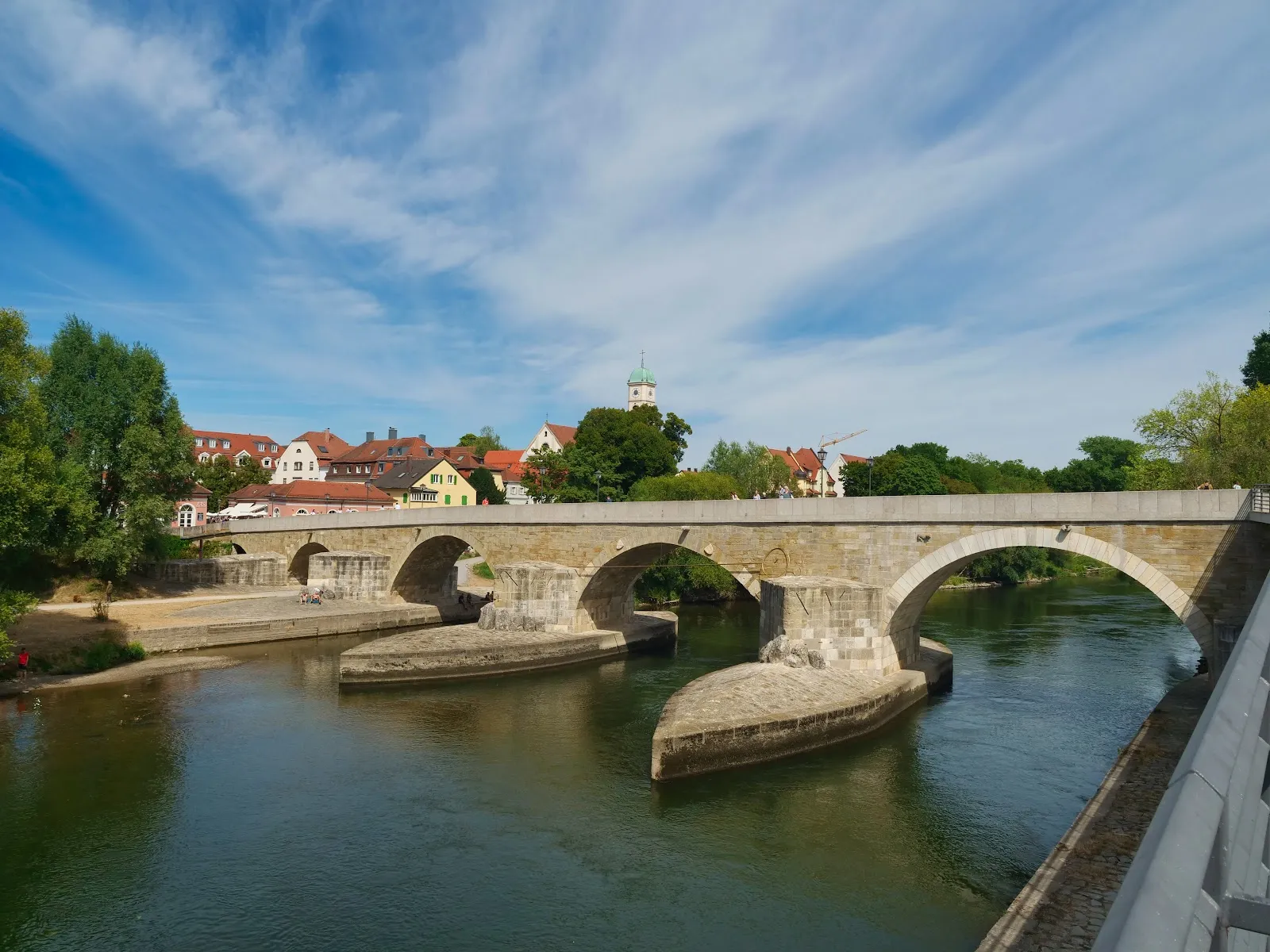
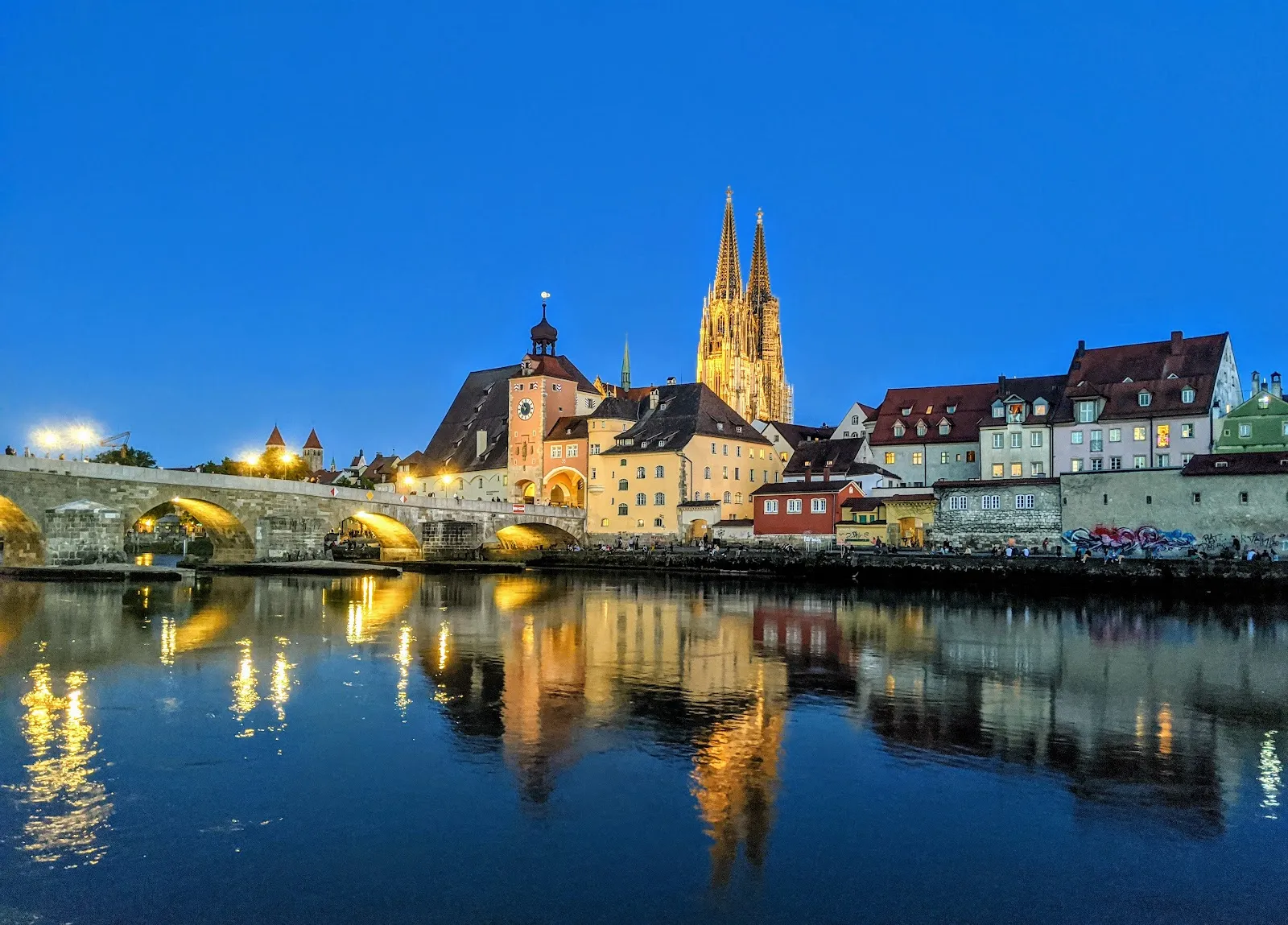
The Steinerne Brücke crosses the Danube in Regensburg and links the old town with the Stadtamhof district. Building began in 1135 and finished in 1146, and the bridge is considered the oldest stone bridge in Germany. It is about 300 metres long and has 16 arches. Walk it slowly and look up and down the river at the roofs and spires of the old town. The area is busy, with terraces, souvenir shops and river walks, and it is especially pleasant in summer.
From 1135 to 1146
Work on the bridge began in 1135 and was completed in 1146. The builder is not known by name. Regensburg was then one of the most prosperous and populous cities in Germany, and it needed a safe and quick way across the river. Wealthy merchants of the city and the Duke of Bavaria commissioned the work.
When it opened, the bridge was the only fixed crossing of the Danube between Ulm and Vienna. Wooden bridges along the river were often destroyed by high water. The stone bridge opened land routes between northern Europe and Venice and helped make Regensburg a trading centre. It remained the only permanent crossing over the Danube in the Regensburg area until 1935.
Arches and the Bruckmandl
The bridge has 16 arches and runs for about 300 metres. Its rounded stone arches show the medieval building methods of the period, and the piers that carry them are massive stone structures.
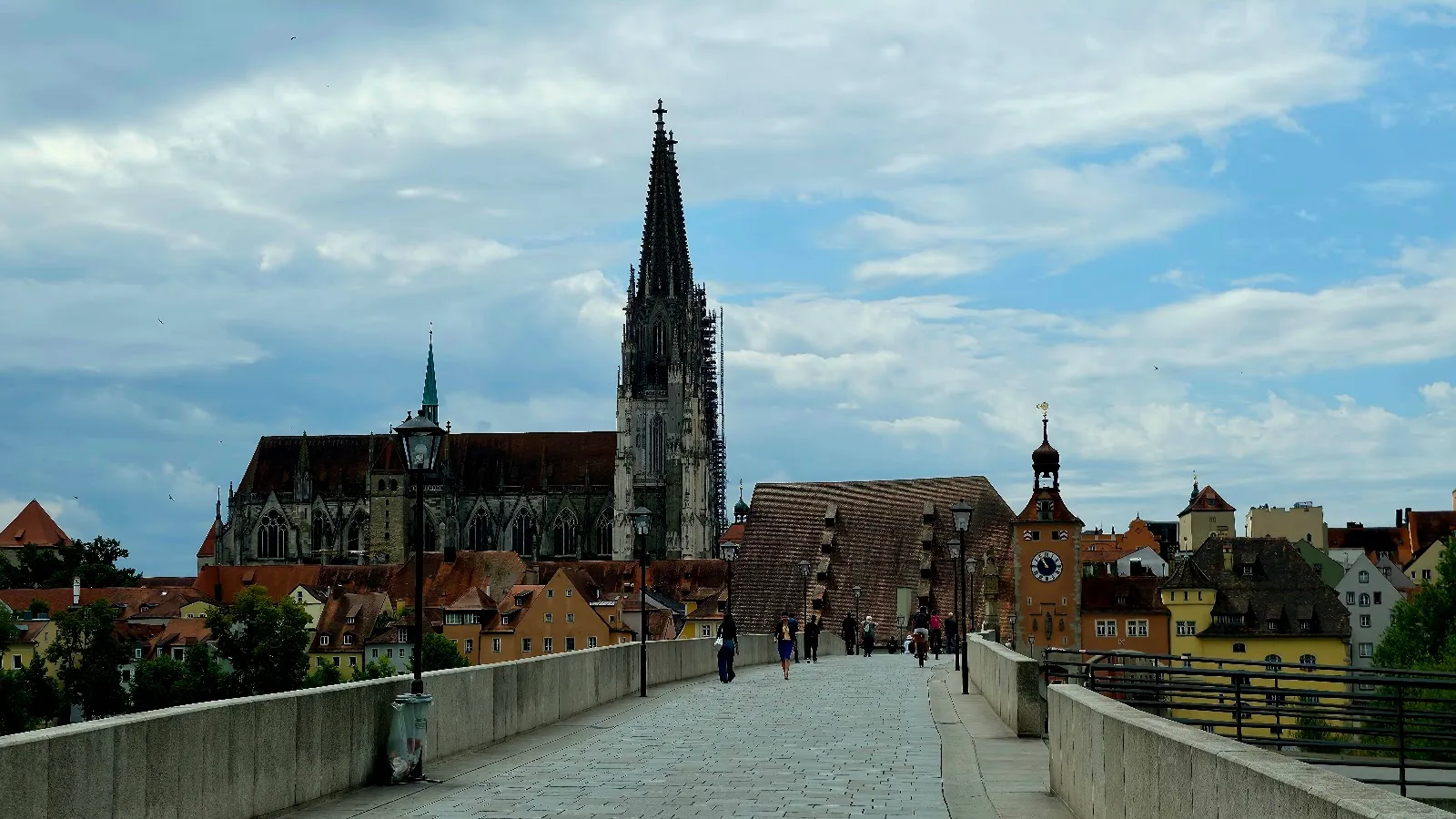
At the highest point of the hump stands a statue called the Bruckmandl, which was installed in the mid-1500s. The top of the span is a popular place to take photographs of the old town and the river.
The story of the bet
The story goes that the master builder of the bridge and the master builder of the cathedral made a bet over which building would be finished first. When work on the bridge slowed, the bridge's builder made a pact with the devil. The devil would help in exchange for the first three souls to cross.
The builder then sent a rooster, a hen and a dog across the bridge at the opening. These were three living beings, not three souls. The devil is said to have been furious and failed to destroy the bridge. The bridge was finished well before the cathedral.
Walking the bridge and nearby sights
The bridge is open to pedestrians and cyclists, and it is open at all hours. From the old town, the Brücktor, one of the old town's gates, leads straight onto the bridge.
On the far side, walk south along the Danube to Villa Park, which has grassy areas, benches and stone ramparts to look out over the water. Continue to the Ostentor, a 14th-century stone gateway with two eight-sided towers. The narrow alley Hinter der Grieb is lined with 15th-century houses with tall towers. In the old town, the Goliathhaus and St. Peter Cathedral are both within easy reach, along with Porta Praetoria, a Roman gate from 179 AD.
Häufige Fragen
Is the Steinerne Brücke open at night?
Yes. The bridge is open 24 hours a day, every day of the week.
Can you drive across the Steinerne Brücke?
No. The bridge is for pedestrians and cyclists only.
How long do you need at the Steinerne Brücke?
Plan 30 to 60 minutes to cross, look around and take photographs.
Is the Steinerne Brücke wheelchair accessible?
Yes. The entrance is wheelchair accessible.


