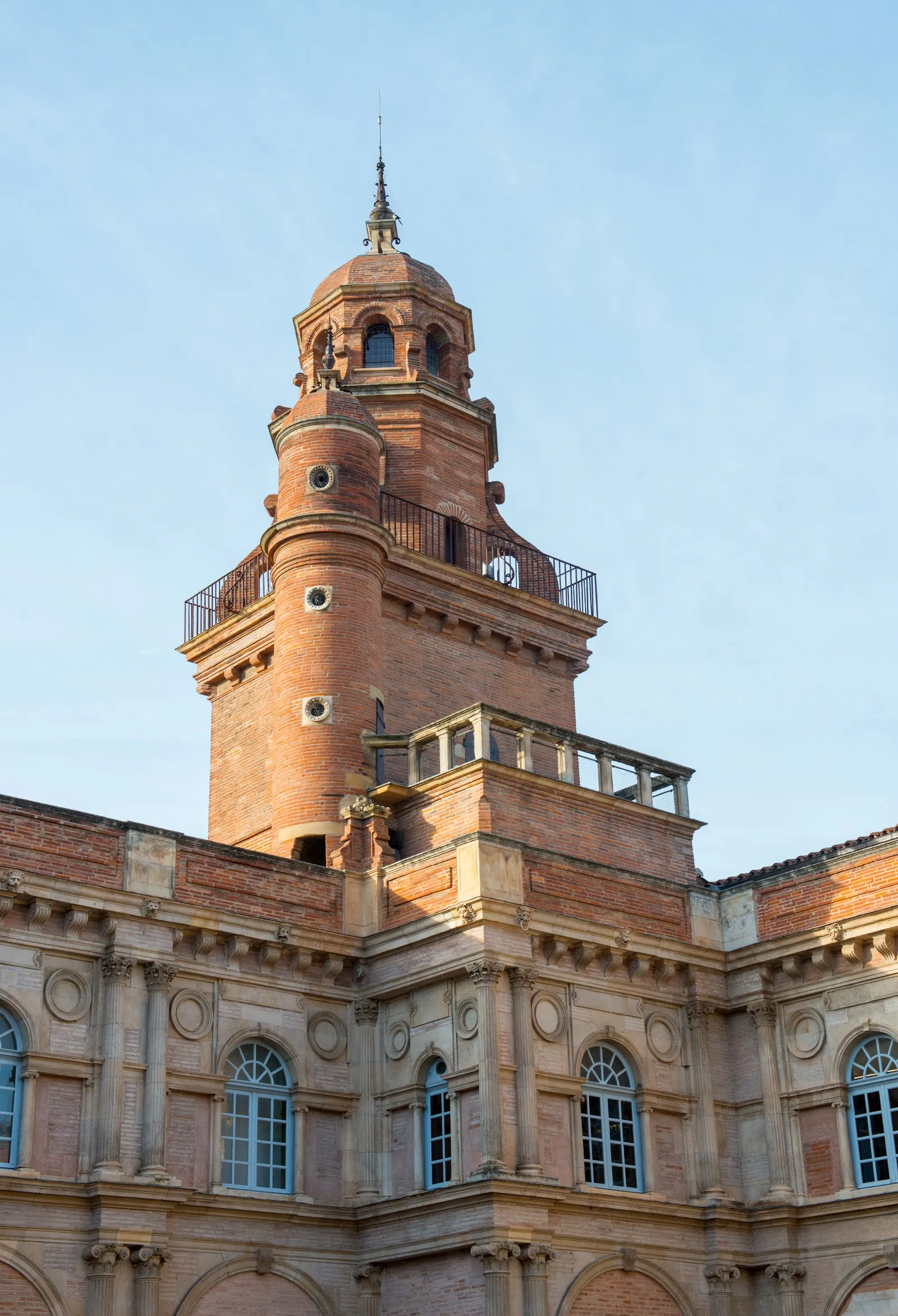
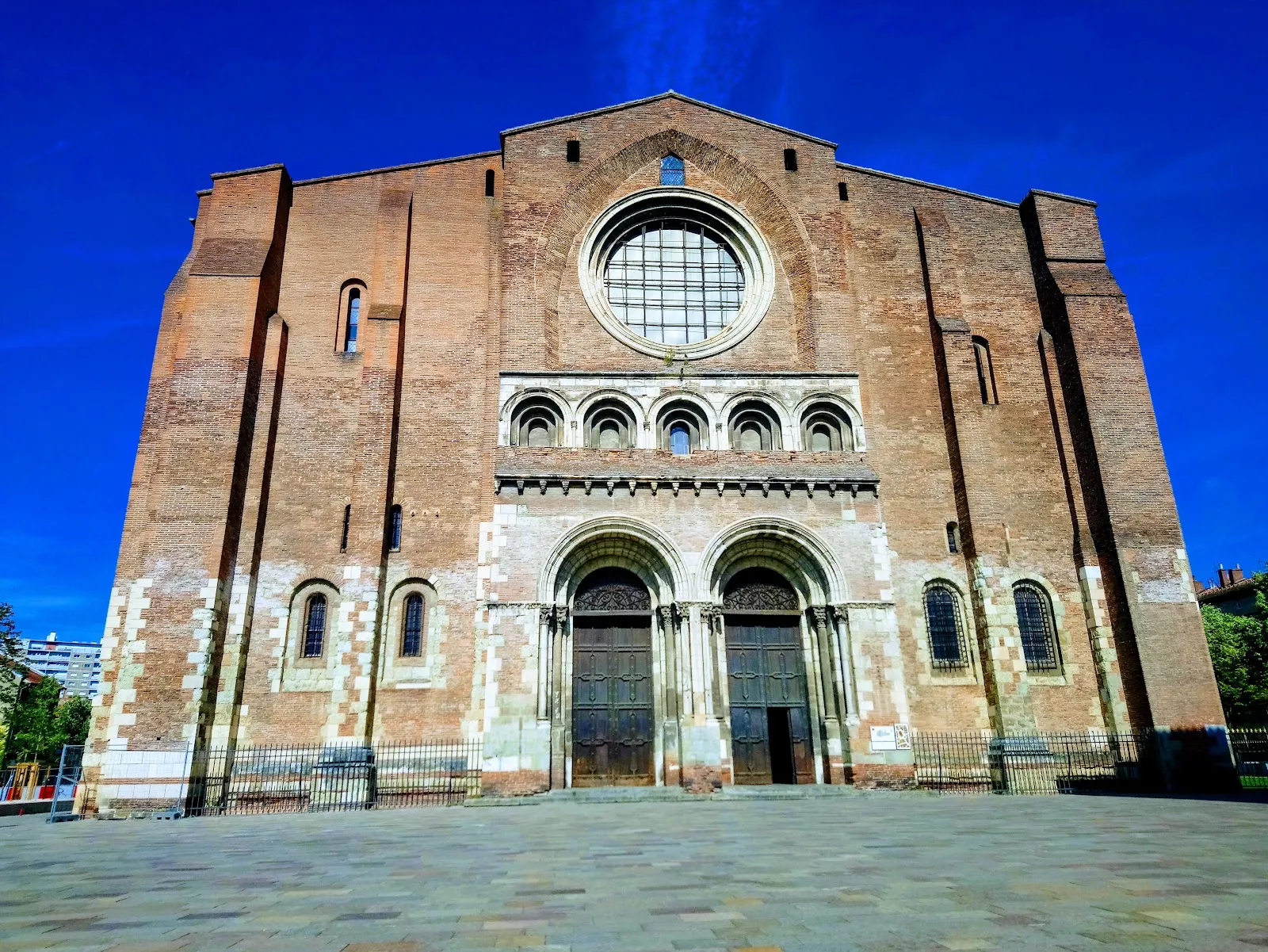
The Couvent des Jacobins is a 13th-century Dominican monastery in central Toulouse, between Place du Capitole and Saint-Pierre. Its brick church looks restrained from outside; inside, a central row of columns branches into a palm-shaped vaulted ceiling. Look for the stained glass, the relics of Saint Thomas Aquinas and the chapels, then continue to the cloister and its garden. The complex also includes a chapter house and former refectory. Plan time to explore the rooms and displays, or pause in the garden for a quieter moment.
A Gothic church built in brick
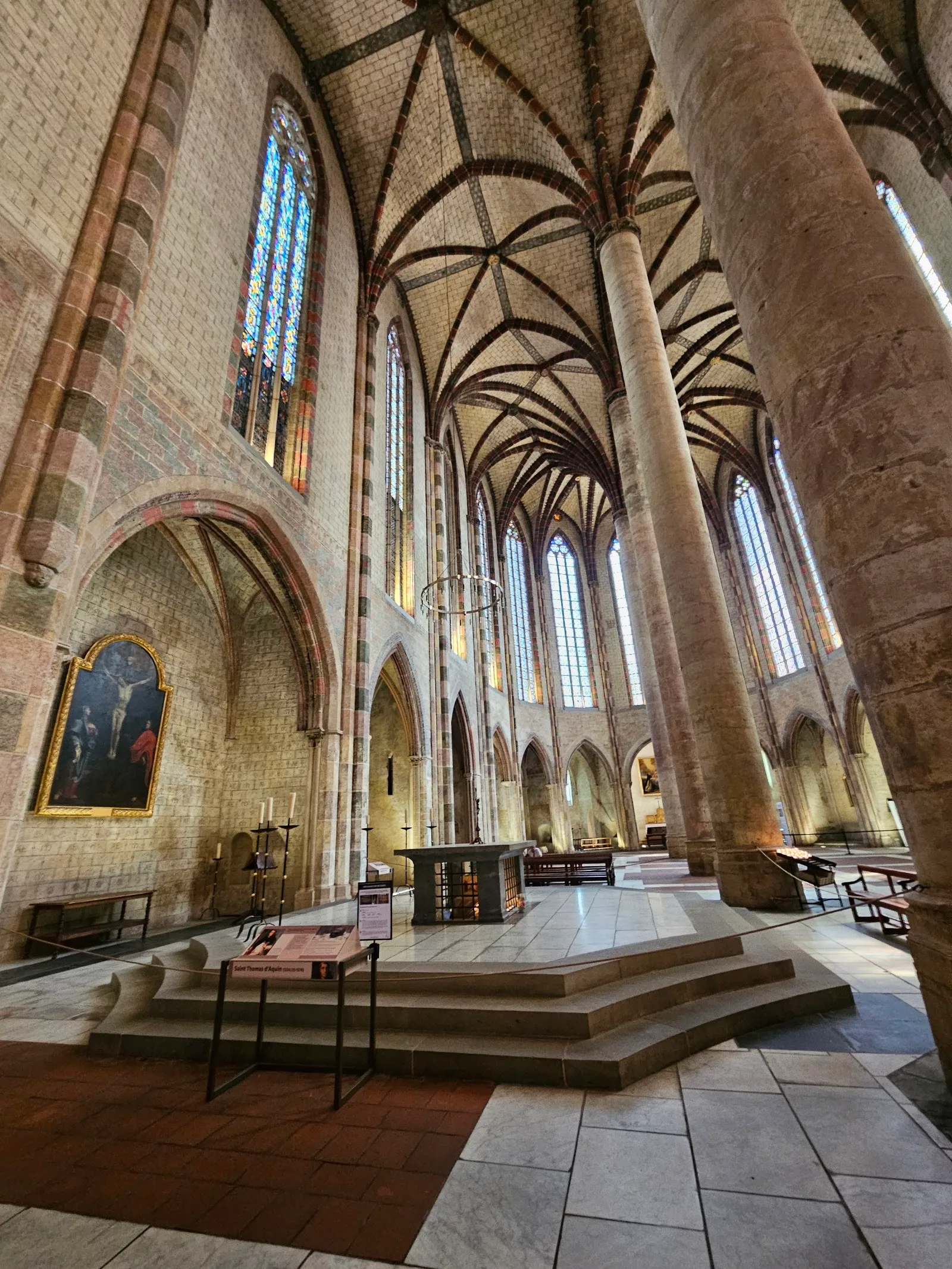
The Couvent des Jacobins was founded by the Dominican order in the 13th century. Its church is a notable work of Southern Gothic architecture, built from the brick associated with Toulouse. The exterior is comparatively plain, so the interior brings the architectural surprise: a central line of tall columns supports the vault and divides the church into two naves.
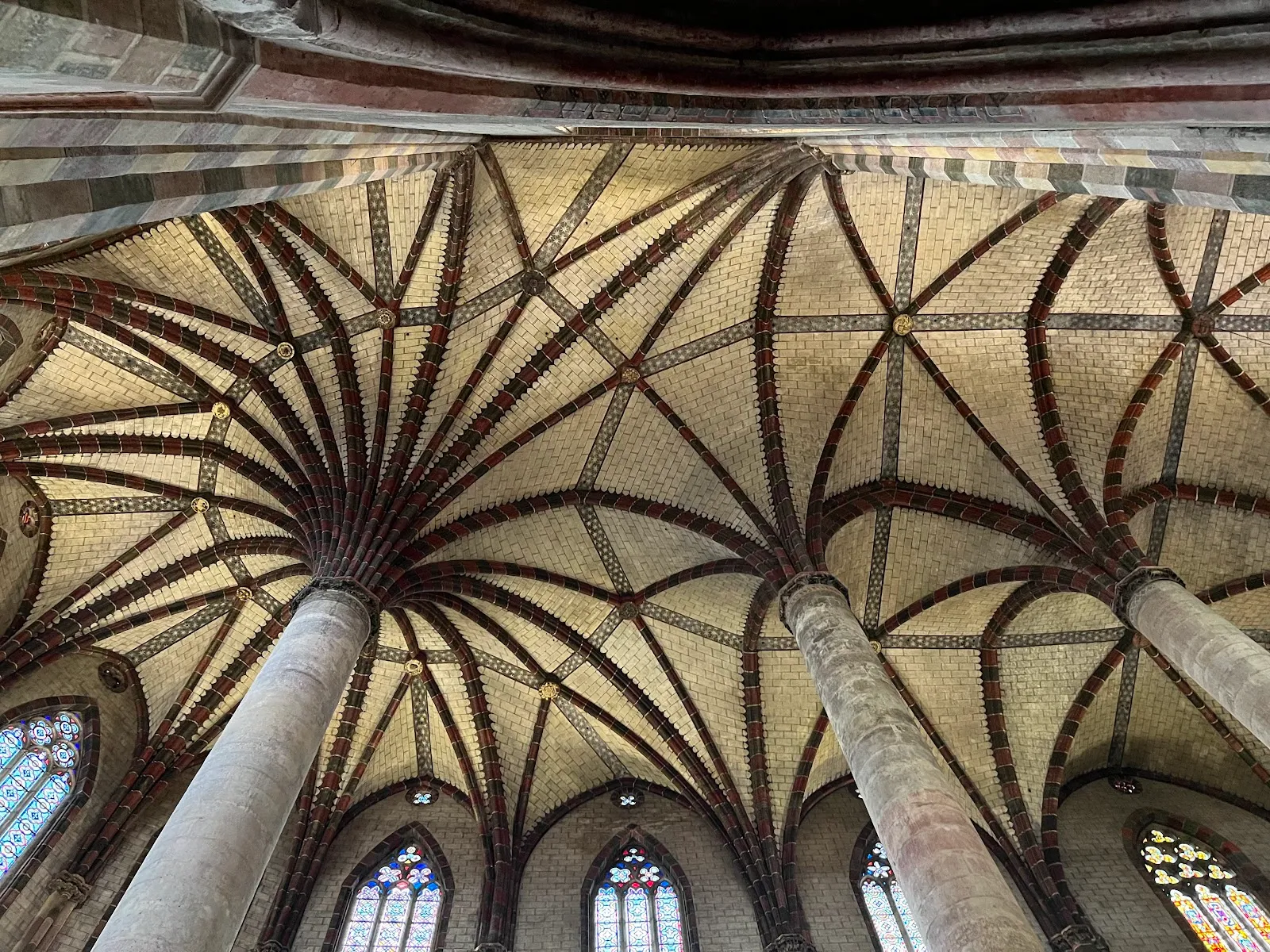
Look up at the column known as the palm. Its ribs spread into a vaulted ceiling like branches. The church’s stained glass spans several periods, from the 14th century to the 1960s. Together, the brick structure, branching vault and coloured windows make the interior worth taking time over rather than treating it as a brief stop.
The cloister and monastic rooms
The cloister encloses a green garden with arcades, offering a quieter contrast to the scale of the church. The wider complex also includes chapels, a chapter house and a former refectory. Allow time to move through these spaces as well as the main church; they give a sense of the monastery’s layout beyond its most recognisable architectural feature.
The 14th-century Salle Capitulaire, or chapter house, has decorative details including a haloed lamb and grisaille portraits of Dominican saints. In the Saint-Antonin chapel, look for 14th-century ceiling frescoes depicting apocalyptic scenes. Displays and audiovisual guides provide further context on the building and its history.
Saint Thomas Aquinas and the visit
The church has housed the relics of Saint Thomas Aquinas since 1369. They are kept beneath the palm-shaped vault, linking one of the site’s defining architectural features with its religious significance. The complex remains a place of worship as well as a historic monument, so a quiet, respectful manner is appropriate.
You can visit the church separately from the adjacent cloister, which has a separate entrance fee. Check the site’s current visitor information before setting out, as access arrangements and restoration work can affect what is open. Guided visits, exhibitions and musical events are also part of the Couvent’s programme; check the official website for current details.
Häufige Fragen
Is the Couvent des Jacobins free to visit?
The church is free to enter. The adjacent cloister has a separate entrance fee.
How long should I spend at the Couvent des Jacobins?
Allow about 1 to 2 hours to see the church, cloister, chapels and other rooms.
What should I see inside the Couvent des Jacobins?
Look for the palm-shaped vault, stained glass and relics of Saint Thomas Aquinas. The chapter house and Saint-Antonin chapel are also worth visiting.
Are audiovisual guides available?
Yes. Audiovisual guides are available on site.