
The Parc national des Calanques covers the limestone coast between Marseille, Cassis and La Ciotat, on land and at sea. White cliffs drop into narrow inlets called calanques, with turquoise water and pebble beaches at their foot. Walking access is free, and trails run from short routes out of Marseille to long coastal crossings to Cassis. You can also see the coast from a boat leaving the Vieux Port, or swim, snorkel, kayak and climb. The terrain is rugged and exposed, so bring water and sturdy shoes, and check trail access before you set out.
Land, sea and a city next door
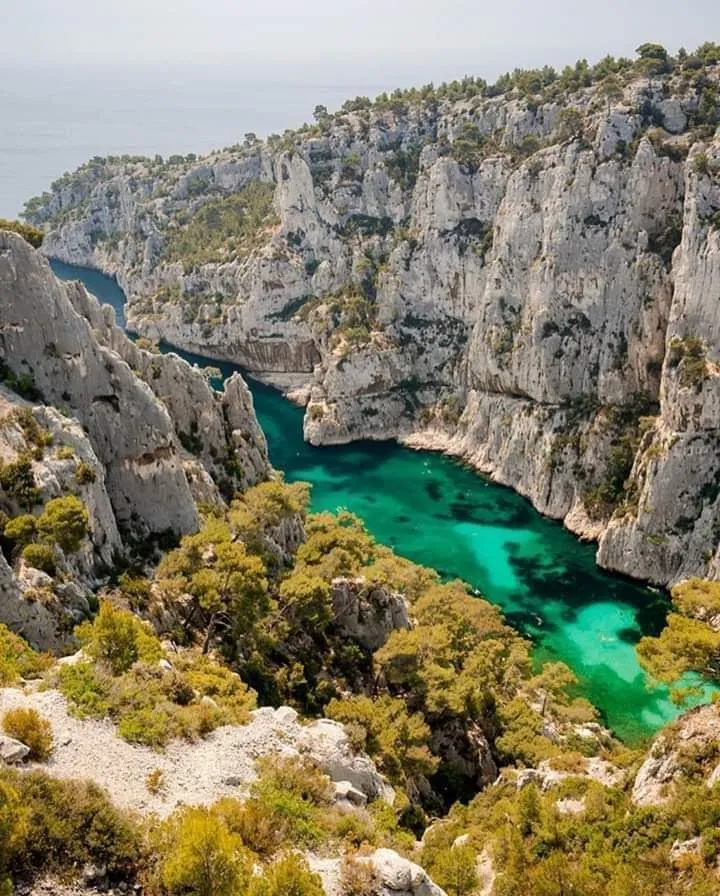
The park was created in 2012 and is France's tenth national park. Its land part covers about 8,500 hectares across three municipalities: Marseille, Cassis and La Ciotat. The sea part is far larger, at about 43,500 hectares. It is the only national park in Europe that combines land, sea and peri-urban areas, and the trailheads are only a few kilometres from central Marseille.
The protected area takes in more than the famous inlets. On land it includes the Massif de Saint-Cyr and the Soubeyrane cliffs. Offshore there are the Frioul archipelago and the Cassidaigne canyon, an underwater canyon known for its marine life. Several of the islands are biodiversity reserves.
Limestone, plants and wildlife
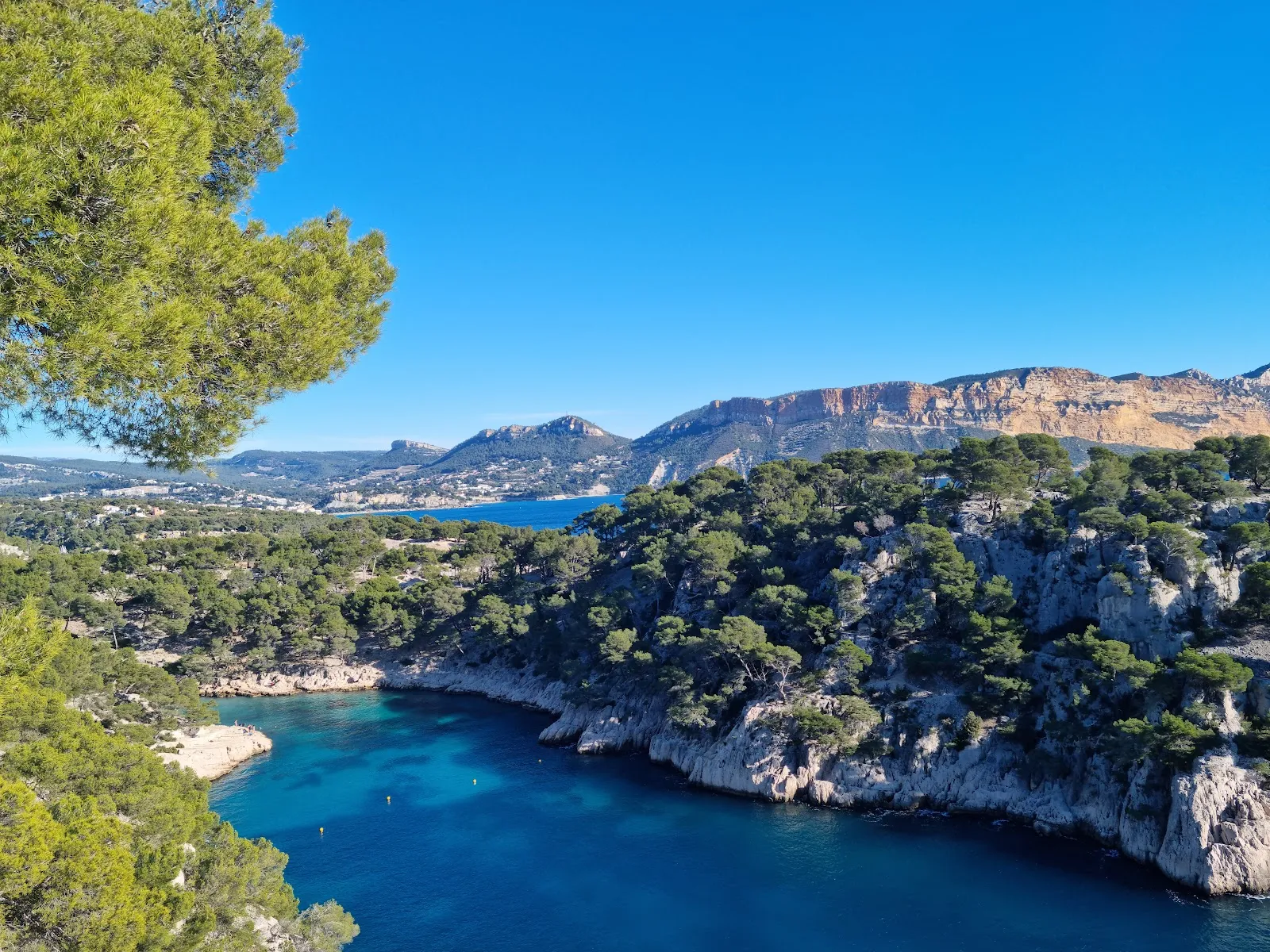
Near Cassis, the massif is a layer of white limestone about 400 metres thick, formed some 120 million years ago. Ancient rivers cut canyons through this rock on their way to the sea, and those canyons became the calanques. The result is a set of steep-walled inlets, often compared to small fjords, with pebble beaches at the end of many of them.
The park protects about 900 plant species. Wild olive and pine grow on the low hills above the coast. Among the animals are Bonelli's eagle, the eyed lizard, which reaches 60 cm and is Europe's largest, and the Montpellier snake, which reaches 2 m and is Europe's longest. Staying on marked paths helps protect this habitat.
Walking routes
Trails cross the whole massif and mostly follow the ups and downs of the coast towards Cassis. The terrain is not easy, and the park authorities' advice should be followed. Paths can be steep and exposed, and missing a waymark can leave you far from the route.
A popular day route starts at the Luminy campus, reached by bus or scooter from the city, and goes down to the calanque de Sugiton. A longer route from Luminy passes the Col de Sugiton, the Mestralet valley and Mont Puget at 563 m. It continues over the Col de la Candelle and the Grande Candelle at 454 m, then the Col des Charbonniers and the Col du Devenson, and ends at the Col de l'Oule, west of Cassis. The first third of the Calanques crossing runs from Marseille to Luminy.
Fit walkers who start early can do Cassis to Callelongue on the GR98 in one day. The red and white marked route from Les Baumettes to Cassis is about 25 km. Mobile reception is patchy on the trails, so download a map first. The Mes Calanques app has trail maps. Calanque d'En-Vau, Sugiton and Morgiou are among the best-known inlets.
From the water
Boats leave the Vieux Port for the calanques, a trip of about 40 minutes. Smaller eco boats sail from the Quai d'Honneur, with a captain who talks about the places you pass. A 5-hour catamaran cruise covers the coast between La Madrague and Cassis, via Les Goudes and Callelongue.
On the water you can also kayak, snorkel or dive. Guided snorkelling sessions for children provide the equipment and training. Divers go to the waters near Riou, where Mediterranean fish live. Climbers use routes such as the Arête de Marseille.
The park also holds a piece of prehistory. Diver Henri Cosquer found a cave in one of its creeks in 1985, and a full-scale replica stands in the Villa Méditerranée near the MUCEM in Marseille.
Seasons and where to stay
March to May brings moderate temperatures for walking. Summer is hot, which suits swimming but not long climbs. In winter the trails are quiet and there is no swimming to supervise.
There are no hotels inside the park. Visitors stay in Cassis or Marseille and come in for the day. Les Goudes sits at the park's edge, which makes it easier to reach the shore early without searching for parking, though it gets busy in summer.
Häufige Fragen
Is there an entry fee for Calanques National Park?
No. Walking access is free, from the easiest path to the hardest crossing. In summer, a free reservation is required for certain popular areas.
How long do you need at the Calanques?
Plan on half a day at least, and a full day for the longer hikes. Starting early avoids the midday heat.
When is the best time to visit?
March to May has moderate temperatures for hiking. Summer is hot and good for swimming, but access to some areas needs a reservation. Winter is quiet, with no swimming.
How do you get to the Calanques from Marseille?
Take a bus or scooter to the Luminy campus and walk to Sugiton. Or take a boat from the Vieux Port, about 40 minutes.
Can trails be closed?
Yes. Access to some massifs can be restricted in dry, windy weather because of wildfire risk. Check the park's website before you go.


