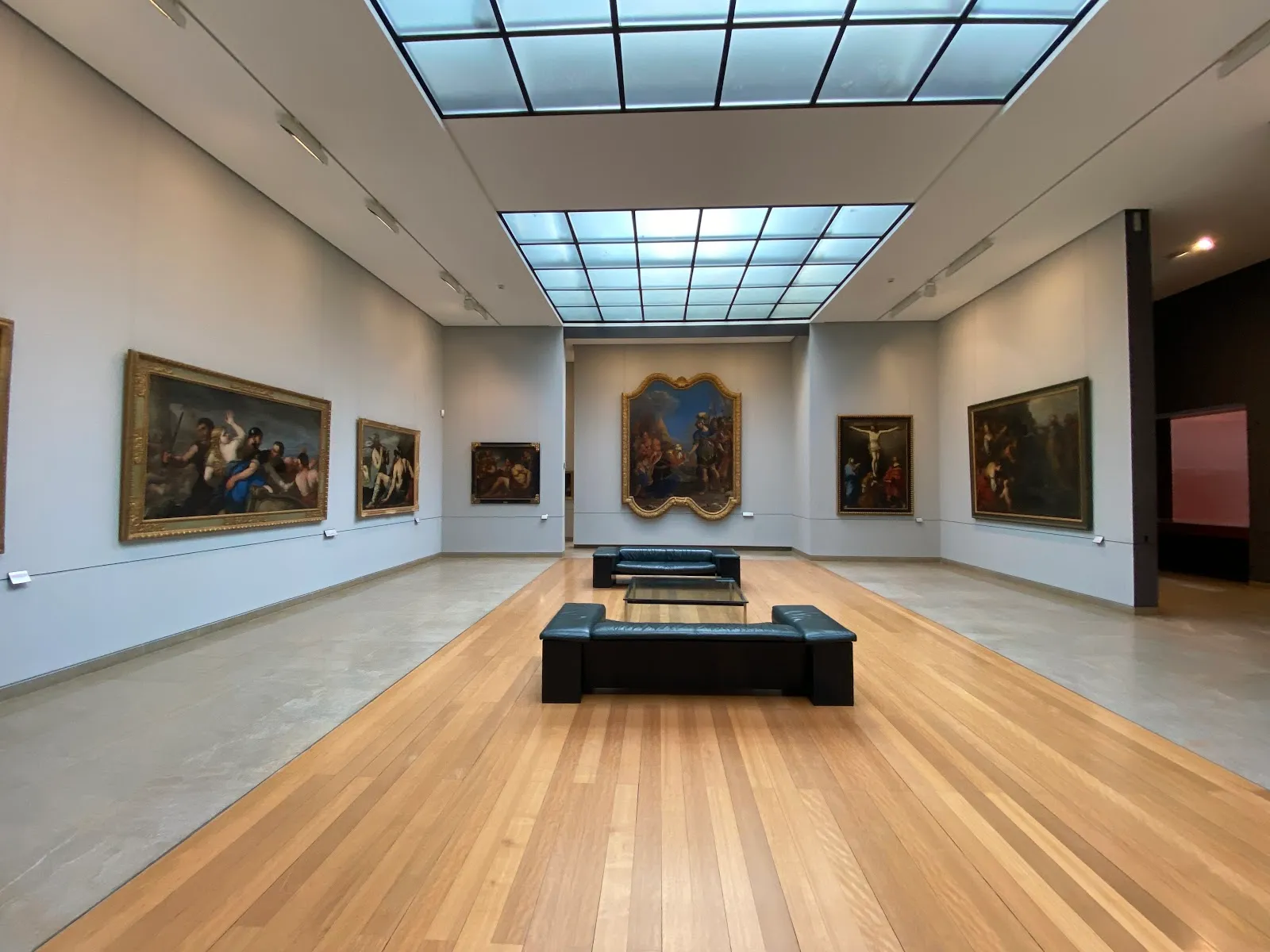
The Mémorial de Caen is a museum of the 20th century on Esplanade Général Eisenhower, on the northern edge of Caen. The route starts in 1918 and runs through the Second World War, the Battle of Normandy and the Cold War. It covers the civilian cost of the war as well as the military story. The D-Day film shows the landings from the Allied and German sides at once. Below the building is a German bunker you can visit, and outside are three memorial gardens. A cafe on site serves food and drinks.
Why Caen has a museum of the 20th century
The Mémorial was built by the city and inaugurated on 6 June 1988 by President François Mitterrand. Jean-Marie Girault is named as its founder. Caen had paid a heavy price in the summer of 1944, when nearly three quarters of the city was destroyed in the fighting that followed the landings.
The museum was first dedicated to the Battle of Normandy. Over the years its theme widened, and it is now a centre for history and peace. It covers the period from 1918 to the present day across 5,600 m² of permanent exhibitions. It stands on ground where part of the fighting for Caen took place in 1944.
The descent from 1918
The front of the building is a plain, flat wall with a narrow doorway. The doorway is meant to recall the Allied breach in the Atlantic Wall. Inside is a large foyer with British Typhoon aircraft hanging overhead.
The exhibition itself lies down a spiral ramp. The walls are lined with photographs and documents that trace how Europe slid toward war and how the Nazis rose to power in the 1930s. As you go down, the space grows darker, and the sound of Hitler's voice and marching boots fills the passage. The rooms that follow are arranged in order of time, with sections on the Second World War, the D-Day landings and the Cold War.
The objects are real: tanks, uniforms, newspapers and medical kits, along with vehicles, aircraft, artwork and sound recordings. The Cold War section includes a piece of the Berlin Wall and an East German Trabant. A gallery of Nobel Peace Prize winners brings the story round to the museum's message about peace.
D-Day on a split screen, and the civilian story
The D-Day presentation is the part most visitors remember. A large split screen shows the landings simultaneously from the Allied and the German point of view. A tabletop map shows where the landings took place and helps you place what you see on screen.
A 17-minute film, Europe Our History, plays in a 360-degree theatre and is included in the ticket. It draws on real footage from the war.
Many museums on this subject stay with the military story. Here the civilians have a place too. About 20,000 inhabitants of Normandy lost their lives in the battle as the liberation of France began, a third of all French civilians killed in the Second World War. The museum also covers the occupation and the joy of liberation.
The bunker and the grounds
The museum was built over the bunker of General Wilhelm Richter, who coordinated the German defence of the Normandy beaches on D-Day. The bunker is in the lower part of the museum and can be visited as part of the tour. It is a good counterpart to the film, because it puts you inside the place where one side planned its response.
Outside, two statues stand before the front of the building: the Knotted Gun and the American GI. Both are well known, and the GI has drawn debate. Three memorial gardens, the American, the British and the Canadian, lie in the grounds, along with a German bunker entrance and other remains. The park is a calm place to pause between the exhibition and the rest of your day.
Getting there and what to plan around
The museum is about 3 km northwest of the city centre. Bus 2 runs from place Courtonne. There is visitor parking on site for those who come by car.
The building has a cafe with a range of food and drinks, so you can eat on site rather than leave mid-visit. The material suits older children and teenagers studying the period, as well as adults. Plan for emotional weight as well as time: the story is told plainly, and some of it is uncomfortable.
Häufige Fragen
How long do you need at the Mémorial de Caen?
Plan at least 3 hours. The museum is large, and a full afternoon or half a day suits a thorough visit.
How do you get to the Mémorial de Caen from the city centre?
The museum is about 3 km northwest of the centre. Bus 2 runs there from place Courtonne.
Is there parking at the museum?
Yes, there is dedicated visitor parking on site.
Is there a reduced price for students?
Yes. A student rate of €6 has been available, so bring student ID.
Can you visit the German bunker?
Yes. The bunker where General Wilhelm Richter coordinated German defence on D-Day is in the lower part of the museum and can be visited.
Can you eat at the Mémorial de Caen?
Yes. A cafe on site serves food and drinks.