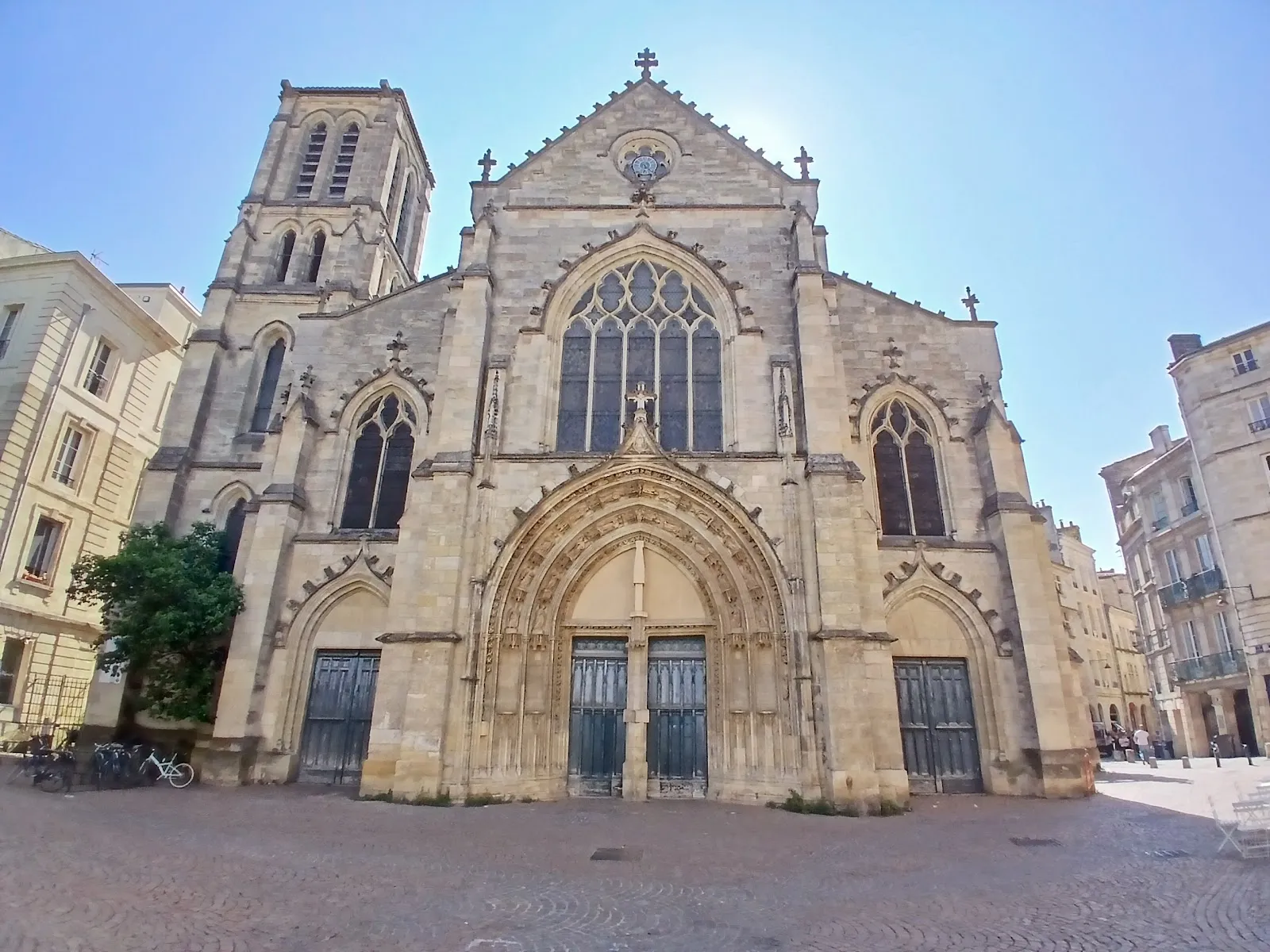
Basilique Saint-Seurin stands on Place des Martyrs de la Résistance in Bordeaux and is one of the city’s oldest churches. Its present building dates mainly from the 11th century, with Romanesque forms and later Gothic additions. Inside, look for the ribbed vaults, chapels and choir; below, the crypt preserves traces of an ancient cemetery. The basilica is part of the UNESCO-listed Routes of Santiago de Compostela, giving it a place in the history of pilgrimage as well as Bordeaux’s Christian past.
A church above an ancient cemetery
The site’s history reaches back to a Christian community in Bordeaux in the early 6th century. A church and an underground sanctuary were established beside a large burial ground, where people believed the remains of Saint Severinus, Bordeaux’s fourth bishop, had been laid. The cemetery was used for many centuries, and its traces remain beneath the basilica.
The building visitors see today dates chiefly from the 11th century, when it was constructed in the Romanesque style. It was expanded over time, with further work continuing into the 18th century. The crypt preserves evidence of the earlier necropolis, including sarcophagi associated with Merovingian burials.
Romanesque forms and later additions
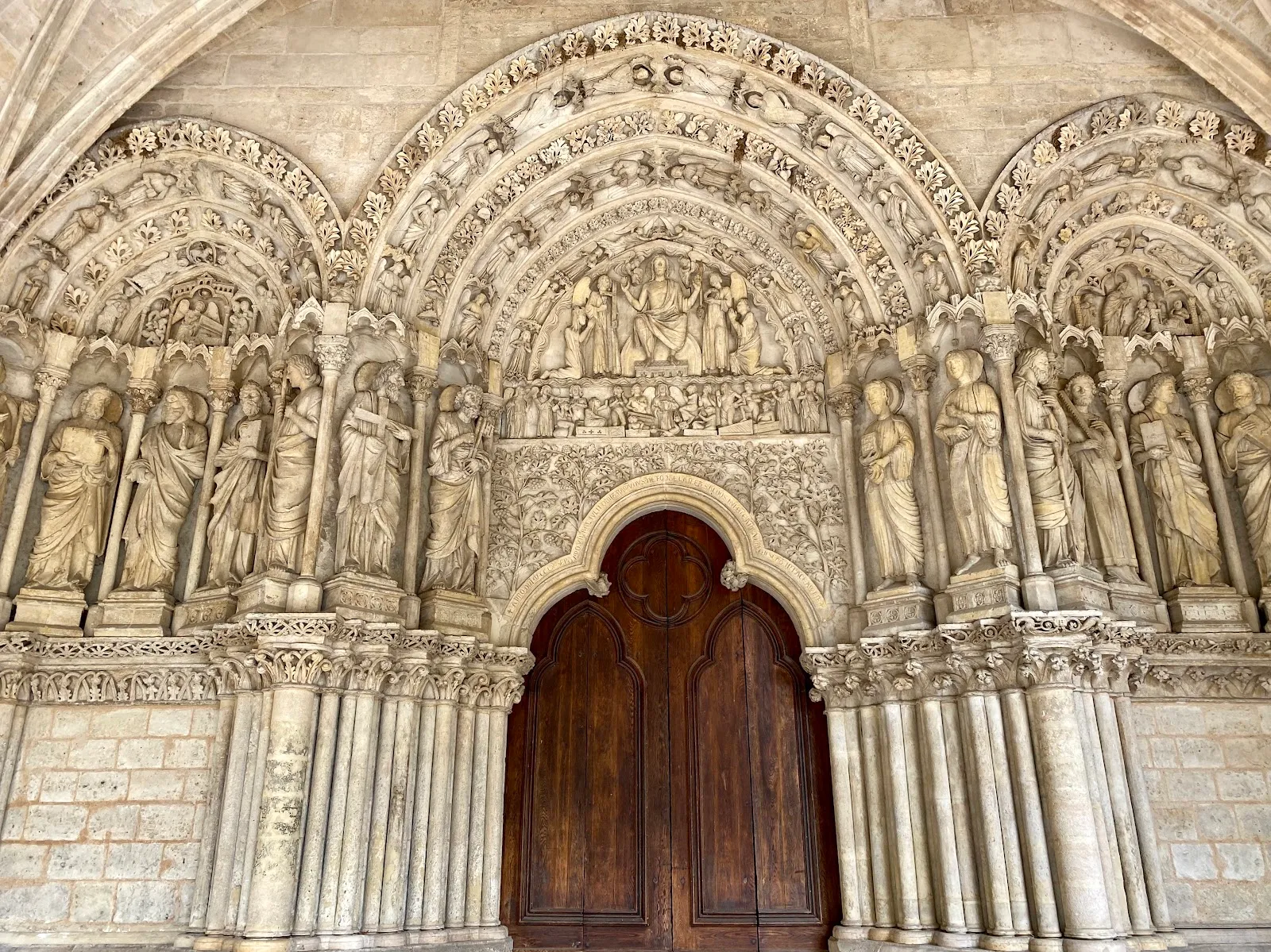
The basilica’s Romanesque character is joined by Gothic details added in later periods. A south-side entrance was built in the 13th century, followed by several chapels in the 14th and 15th centuries. Among them is the Notre-Dame de la Rose chapel, dedicated to the Virgin Mary.
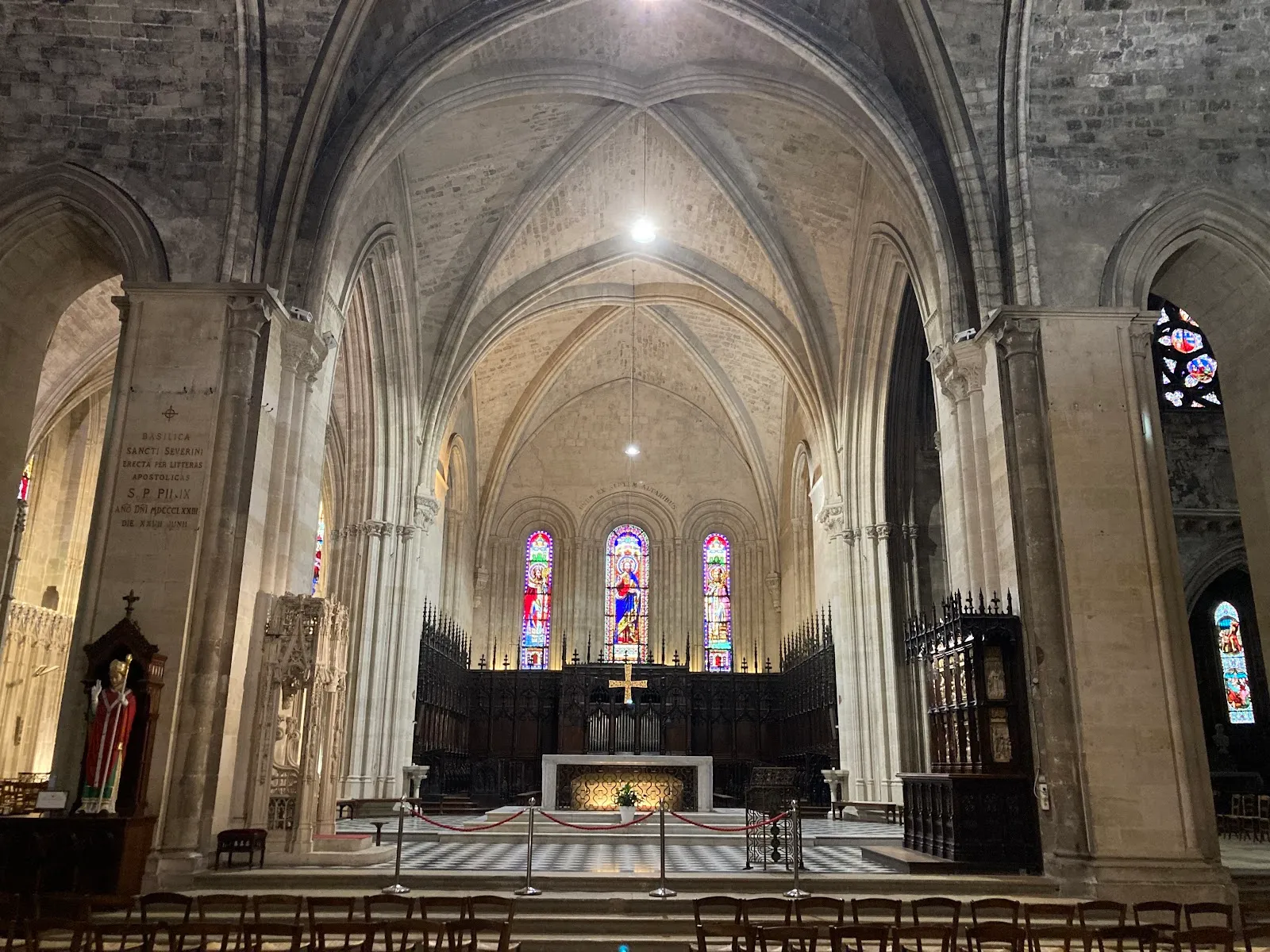
Inside, look up at the ribbed vaults and the substantial pillars rising through the nave. The choir includes a stone abbot’s throne and carved stalls. An organ was added in the 18th century. Together, these changes show how the church’s interior developed across the centuries without replacing its earlier Romanesque structure.
The crypt and the pilgrimage route
The underground space connects the basilica with the cemetery beneath it. Its remains help explain why the site is associated with the beginnings of Christianity in Bordeaux. The crypt also holds the sarcophagus of Saint Fort, which was the focus of a long-standing local cult.
Saint-Seurin is included on the UNESCO-listed Routes of Santiago de Compostela. Its Romanesque architecture is characteristic of churches connected with the pilgrimage route, and the basilica continues to be a point of interest for people following the Way of Saint James. The crypt is a separate part of the visit, so allow time to see it as well as the church above.
Häufige Fragen
How old is Basilique Saint-Seurin?
The church’s foundations date to the 6th century, while the present building was constructed mainly in the 11th century and altered over subsequent centuries.
What can you see in the crypt?
The crypt contains traces of the ancient cemetery beneath the basilica, including burial remains and the sarcophagus of Saint Fort.
Is Basilique Saint-Seurin on the Santiago de Compostela route?
Yes. It is part of the UNESCO-listed Routes of Santiago de Compostela and is associated with the Way of Saint James.