Helsinki’s Natural History Museum explores Finnish wildlife, world ecosystems and the history of life through animal displays, fossils and dinosaur skeletons. Look for the moose statue outside, then explore five permanent exhibitions across the museum’s spacious rooms. The animal dioramas show species in settings from Finnish landscapes to habitats around the world, while the bones displays include large skeletons and ancient fossils. Interactive elements make the collections accessible to children, and the building’s grand staircase is worth a pause between floors.
A former school turned museum
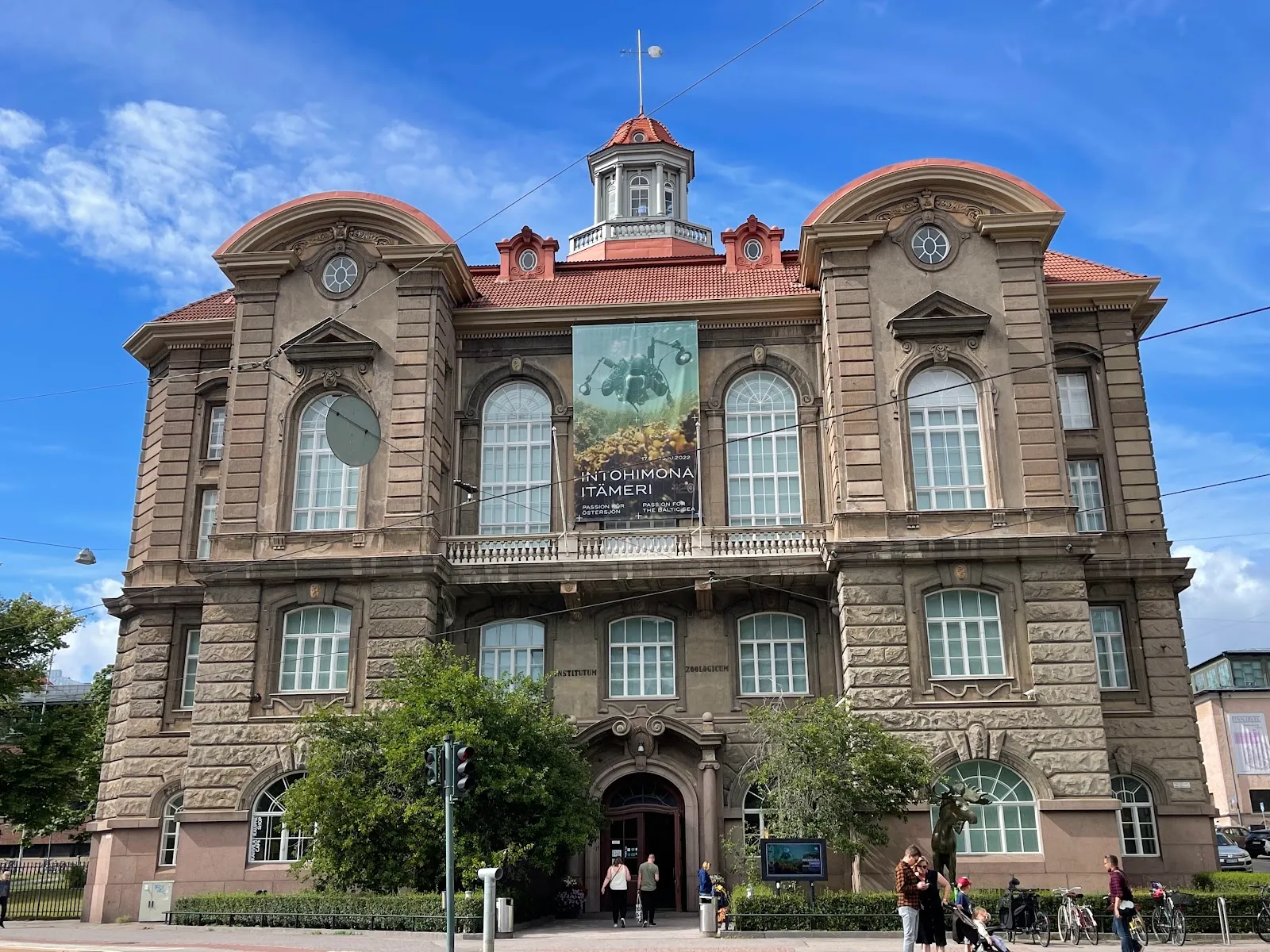
The Natural History Museum is at Pohjoinen Rautatiekatu 13 in Helsinki. Its building dates to 1913, when it was constructed for the Alexander Lyceum, a Russian cadet school. The University of Helsinki later converted it into a museum, which opened in the building in 1923.
Before heading inside, look for the large moose statue by the entrance. Two giraffe figures on the balcony are another distinctive detail. Inside, the staircase and spacious halls give the collections an impressive setting.
Five exhibitions on nature and life
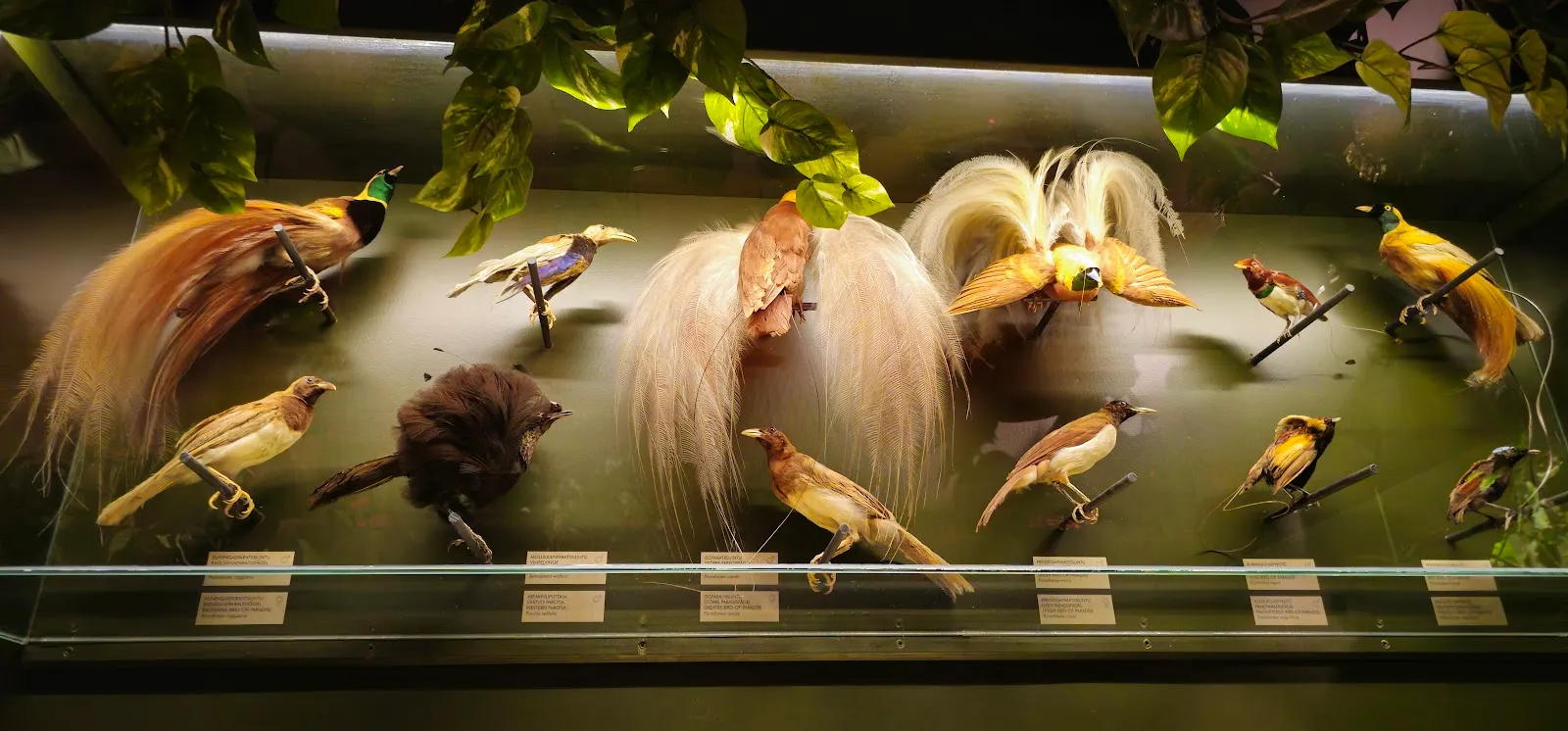
The museum has five permanent exhibitions: Finnish Nature, World Nature, The History of Life, The Story of the Bones and Change in the Air. Together, they cover Finland’s natural environment, wildlife from around the world, fossils and the development of life.
Finnish Nature takes visitors through the country’s landscapes from the southern coast to the northern fells. In World Nature, dioramas depict different environments, including coniferous forests, mountain ranges, savannas and tropical regions. The displays arrange animals within these settings, giving you a close look at species and their habitats.
The History of Life follows changes in living organisms, from early life to dinosaurs and large Ice Age mammals. The Story of the Bones brings together animal skeletons and ancient fossils. Large dinosaur displays are among the museum’s most dramatic exhibits.
A visit for different ages
Children can encounter interactive displays alongside the specimens, including hands-on elements described in the exhibitions. The animal displays include mammals from around the world, and the collections give younger visitors a way to connect what they see with Finland’s wildlife and wider ecosystems.
The museum has a café, restrooms and free lockers. The entrance, seating and restrooms are listed as wheelchair accessible. Information is available in Finnish, Swedish and English, though some less prominent descriptions may appear only in the local languages. For a comfortable visit through all the floors, set aside around 1.5 to 2 hours.
Häufige Fragen
How long do you need at Helsinki’s Natural History Museum?
Allow about 1.5 to 2 hours to explore the exhibitions across the floors.
What can you see at the Natural History Museum?
The five permanent exhibitions cover Finnish nature, world ecosystems, the history of life, bones and fossils, and change in the air.
Is the museum suitable for children?
Yes. Interactive elements accompany the exhibits, and the collections include animal displays, fossils and dinosaur skeletons.
Does the museum have lockers?
Yes. Free lockers are available for storing belongings.