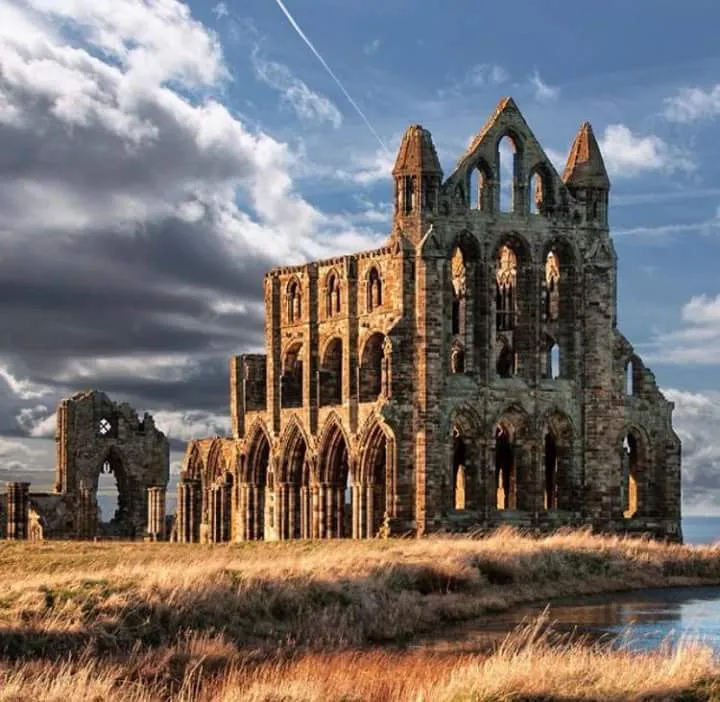
Whitby Abbey is a ruined monastery on the East Cliff above Whitby, with views over the harbour, town and North Sea. Founded in the 7th century, the site later became a Benedictine abbey; its Gothic remains are closely linked with Bram Stoker’s Dracula. Walk among the ruins, then visit the museum in the visitor centre to explore the abbey’s history and the objects found here. The 199 Steps connect the town to the clifftop, though a road also leads to the site.
The abbey’s early history
The first monastery at Whitby was founded in 657, during the Anglo-Saxon kingdom of Northumbria. St Hilda is associated with its foundation, and the community included both monks and nuns. In 664, the Synod of Whitby took place here. Church leaders gathered to settle differences between Celtic and Roman Christian traditions, including how to calculate the date of Easter.
Viking raids damaged the monastery in the 9th century. A Benedictine abbey was established at the site in 1078, and the ruins visible today belong to the later medieval complex. The abbey was suppressed during Henry VIII’s Dissolution of the Monasteries in the 16th century. Its remains have since stood above the town, exposed to the weather on the headland.
Ruins, museum and views
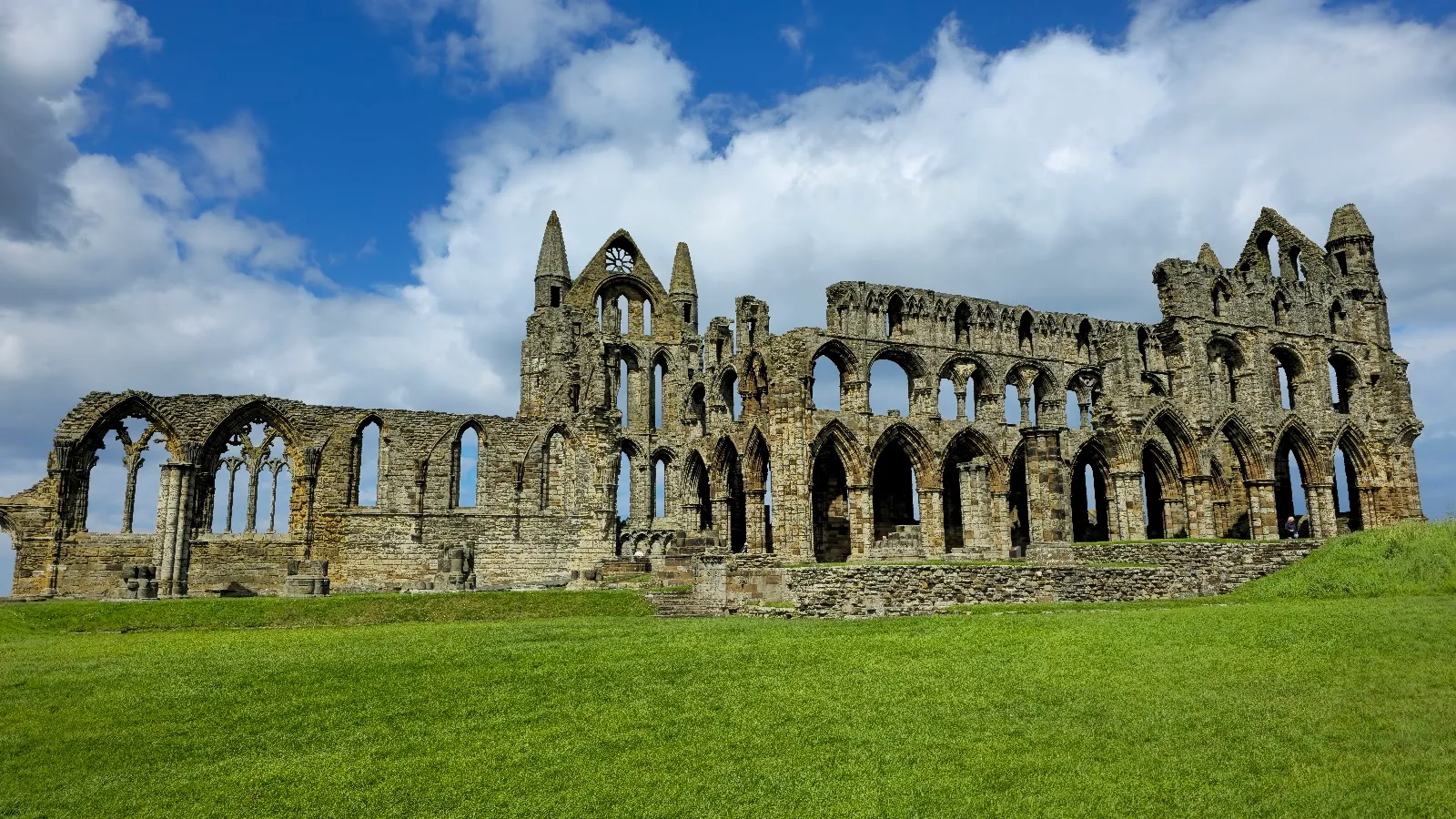
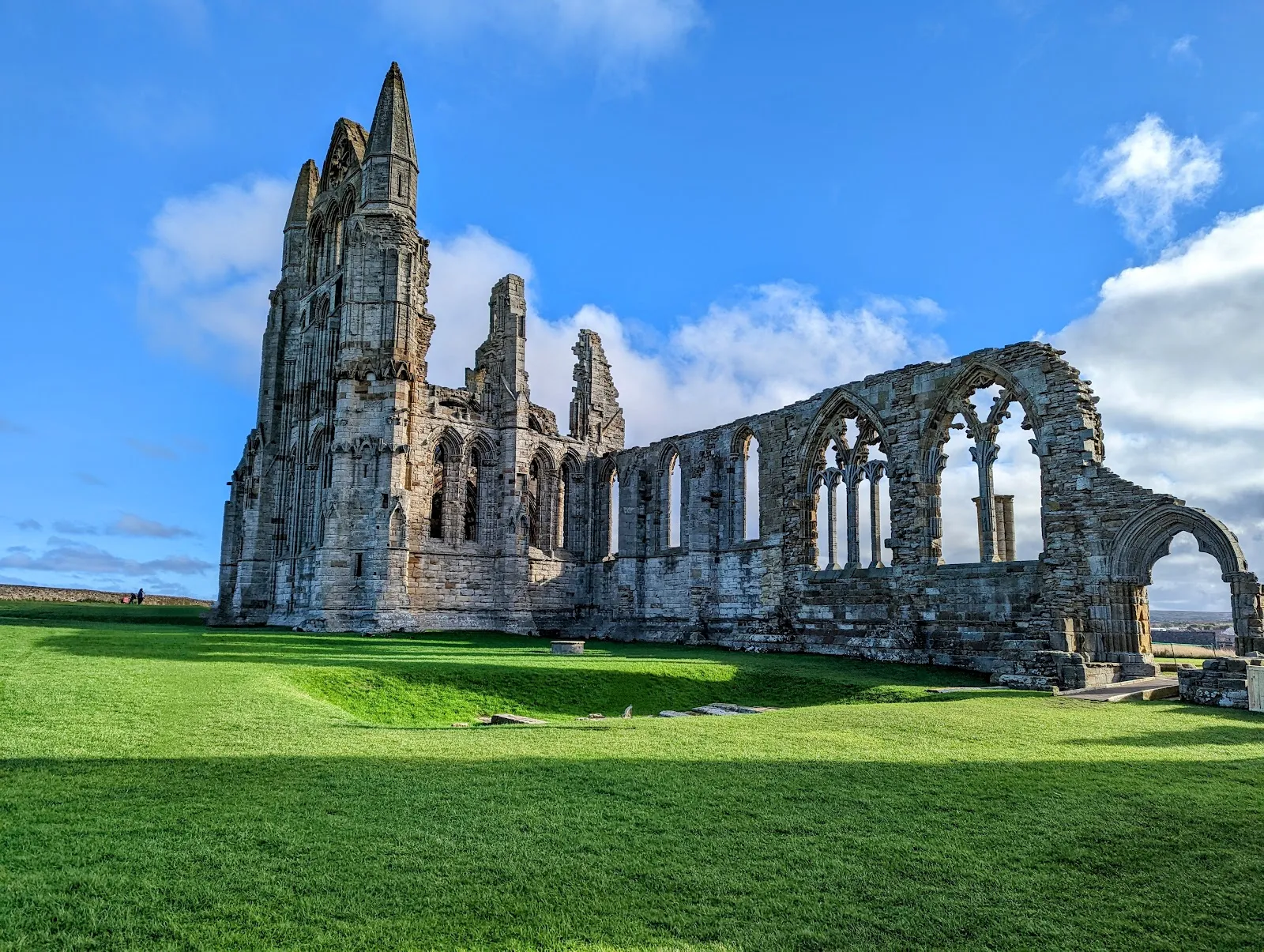
The abbey occupies a clifftop site overlooking Whitby Harbour on one side and the North Sea on the other. Its surviving Gothic stonework gives a sense of the scale of the medieval church, even though much of the original building is gone. Paths run around the grounds, and the visitor centre provides another way to explore the site’s history.
The museum is housed in a 17th-century mansion. Its displays cover the abbey’s Saxon, Viking and later history, with objects including pottery, jewellery, religious items and finds from the site. Models and interactive displays help explain the building and the lives of the monks who lived here. The visitor centre also has a shop.
The ruins and their setting have a literary connection: Bram Stoker visited Whitby, and the abbey is associated with his novel Dracula. The town’s 199 Steps, the harbour and the abbey all appear in the story’s Whitby setting. You can see the exterior from viewpoints around town without entering the grounds; access to the ruins requires a ticket.
Getting up to the site
From town, the 199 Steps climb to St Mary’s Church and the abbey on the East Cliff. The steps have been recorded in documents since the 14th century, and small numbered markers help climbers keep count. They are a steep route, so allow for the climb and take care on the way up or down.
A road also leads to the clifftop site, giving visitors an alternative to the steps. The abbey grounds have level paths and accessible routes, and the entrance is accessible. The site has paid parking. The ruins are open to the elements, so watch your footing in wet or wintry conditions.
For a photograph with the sea behind the ruins, walk towards the back of the site. The abbey can also be framed from Whitby’s west pier, looking back across the water towards the hill.
Häufige Fragen
How do you get to Whitby Abbey from town?
You can climb the 199 Steps from town to the East Cliff. A road also leads to the site if you prefer not to use the steps.
What can you see inside the visitor centre?
The museum covers the abbey’s history through exhibits that include pottery, jewellery, religious objects and finds from the site, along with models and interactive displays.
Is Whitby Abbey connected to Dracula?
Yes. Bram Stoker visited Whitby, and the abbey is linked with the setting and inspiration for his novel Dracula.