
Hardwick Hall is an Elizabethan house near Chesterfield in Derbyshire, built by Bess of Hardwick, one of the richest and most powerful women in 16th-century England. The National Trust looks after the house and its estate. Inside, you can see Elizabethan tapestries, portraits and rooms furnished in period style, including a Long Gallery and a kitchen set out as it would have been. The ticket also covers the ruined Old Hall nearby, and the surrounding parkland has lakes, walks and gardens. Allow about two hours for the house alone.
Bess of Hardwick and the building of the house
Bess of Hardwick came from a family of yeoman farmers. Several marriages brought her wealth, and she became one of the most powerful women in England. After her final marriage broke down in 1584, she returned to the family estate and began to build the Old Hall.
The New Hall, the house visitors see today, was designed by the architect Robert Smythson and built between 1590 and 1597. Its design draws on Italian Renaissance architecture, and it is among the earliest English houses to do so. The very large windows were a clear display of wealth, and the initials E.S. appear on the balustrades of the towers.
Inside the house
The visit begins with a downstairs exhibition about Bess, her family and her life. A grand staircase leads up to the state rooms on the second floor. It is a long climb, but there are seats at intervals for anyone who needs a rest.
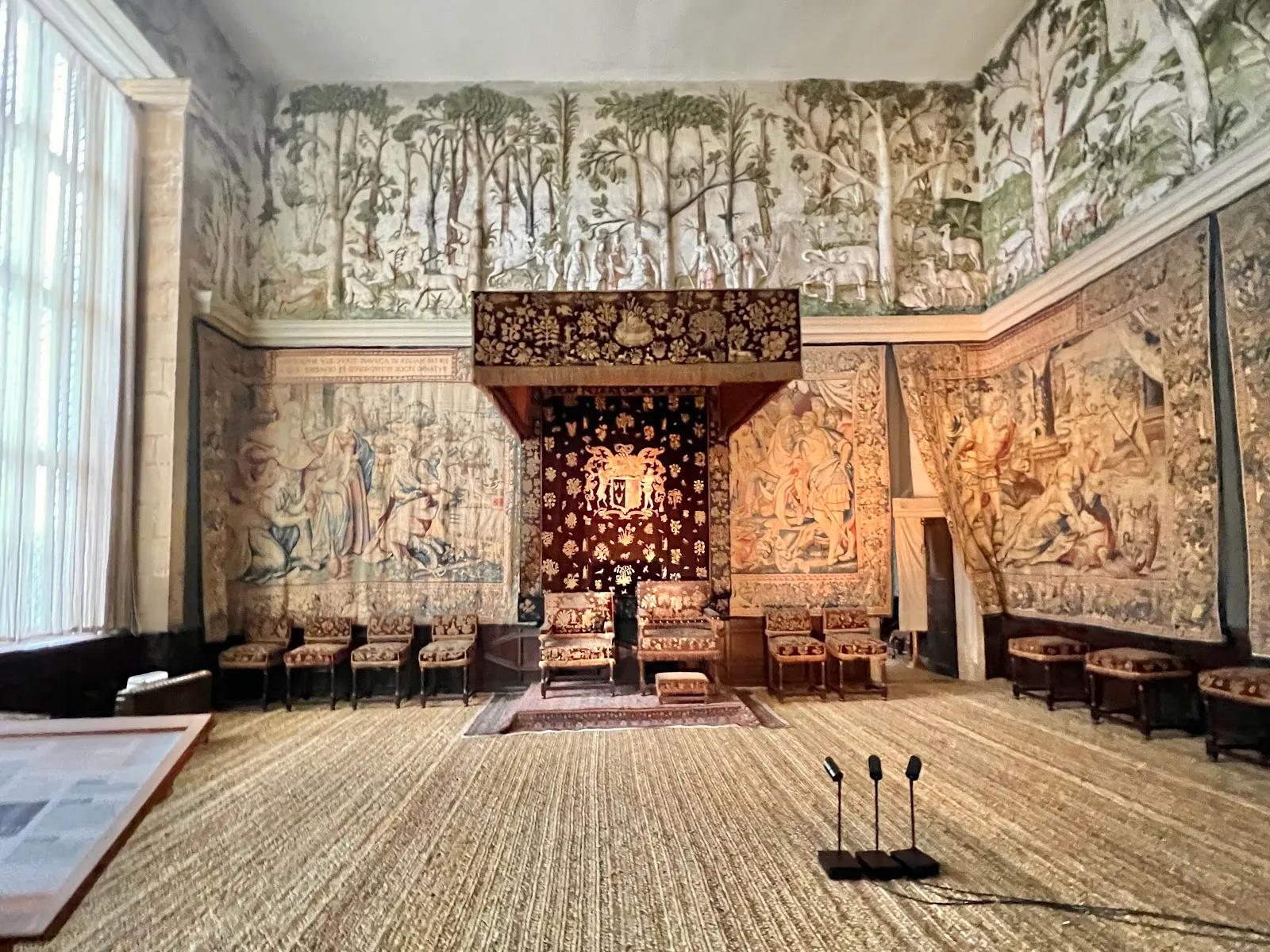
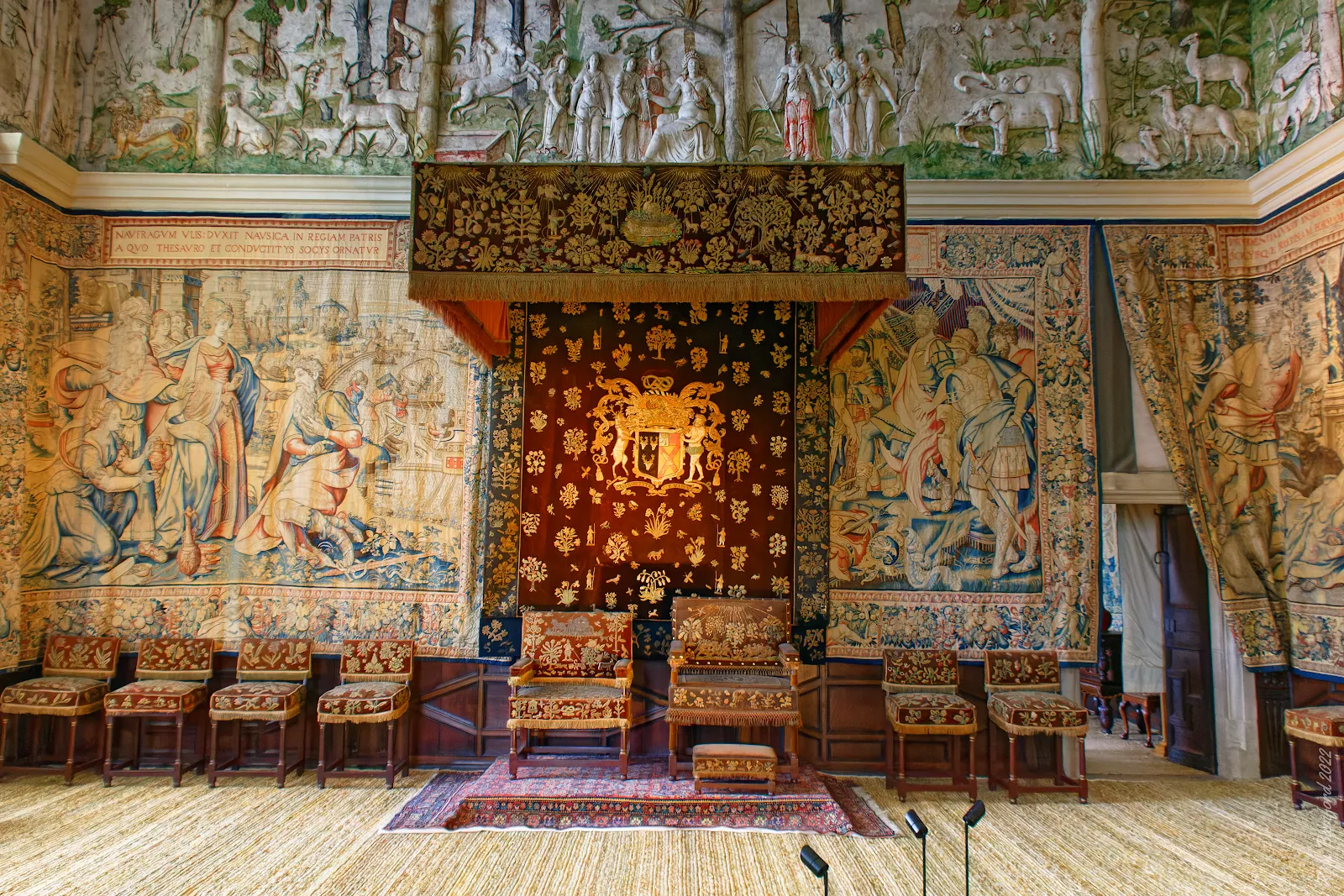
The rooms hold Elizabethan tapestries, portraits, detailed plasterwork, and carved tables, chests and four-poster beds. Bess's portrait hangs in the Long Gallery. The kitchen is set out in period style, with a cast-iron range and copper pans. Volunteers and guides are in the rooms and can answer questions about the history and individual pieces.
The grounds and gardens
The estate covers a large area of parkland, around 900 acres. Cattle and sheep graze the park, and two lakes lie along the approach. The walled garden, the herb garden and the orchards are close to the house. Woodland walks and family play trails run through the trees, and historic ponds sit along the routes.
The gardens are especially pretty in summer. Shaded seats are placed around them, and there are picnic spaces across the grounds. Dogs can walk the parkland on a lead.
The Old Hall
The ruined Old Hall stands a short walk from the New Hall, and the admission ticket covers it. Bess began building it after 1584. It is now an empty shell and is under conservation work. Walking around its walls gives a clear sense of how large and splendid it once was, and it helps explain the house beside it.
Access to the Old Hall has been closed at times while the conservation work continues, so check before you set out.
Food, parking and getting there
The restaurant is in the former Great Barn and serves hot meals, sandwiches and cream teas. A van sells snacks, drinks and ice cream, and the caravan and cafe serve coffee and cake. Tables on the green are a good place to eat outside. There is a shop and a second-hand bookshop on site.
From the M1, leave at Junction 29. The house sits on a hill, and the approach is a long, narrow lane through parkland. Parking is free but can fill on busy days, and there is accessible parking near the entrance. Wheelchairs and mobility scooters are available to use, and a golf buggy takes visitors with mobility needs up to the hall.
On screen
The hall and grounds were used for exterior shots of Hampton Court Palace in the film Mary Queen of Scots. The house's exterior is also recognised by fans of the Harry Potter films as Malfoy Manor in Deathly Hallows.
Häufige Fragen
Is there an entry fee?
Yes, there is an admission fee. Members of the National Trust or English Heritage get in free.
How long do you need?
Allow about two hours for the house alone. Plan a full day if you also want to walk the grounds and see the Old Hall.
Is Hardwick Hall accessible?
The entrance, restrooms, seating and parking are wheelchair accessible. Wheelchairs and mobility scooters are available to use, and a golf buggy can take visitors with mobility needs up to the hall.
Can you bring a dog?
Dogs are welcome on a lead in the courtyard and on the parkland paths, but they are not allowed inside the house. Water bowls are at the Visitor Centre and the Gatehouse.


