On Broad Street in central Oxford, the History of Science Museum traces scientific work through instruments, objects and displays spanning different fields and periods. It occupies the 17th-century building first used for the Ashmolean Museum, the oldest surviving purpose-built museum building in the world. Look for Einstein’s original blackboard, astrolabes, sundials and antique telescopes, alongside exhibits on medicine, chemistry and early computing. Interactive displays add context to the collection. Admission is free, and the compact galleries can still take two to three hours to explore in depth.
A museum inside the original Ashmolean building
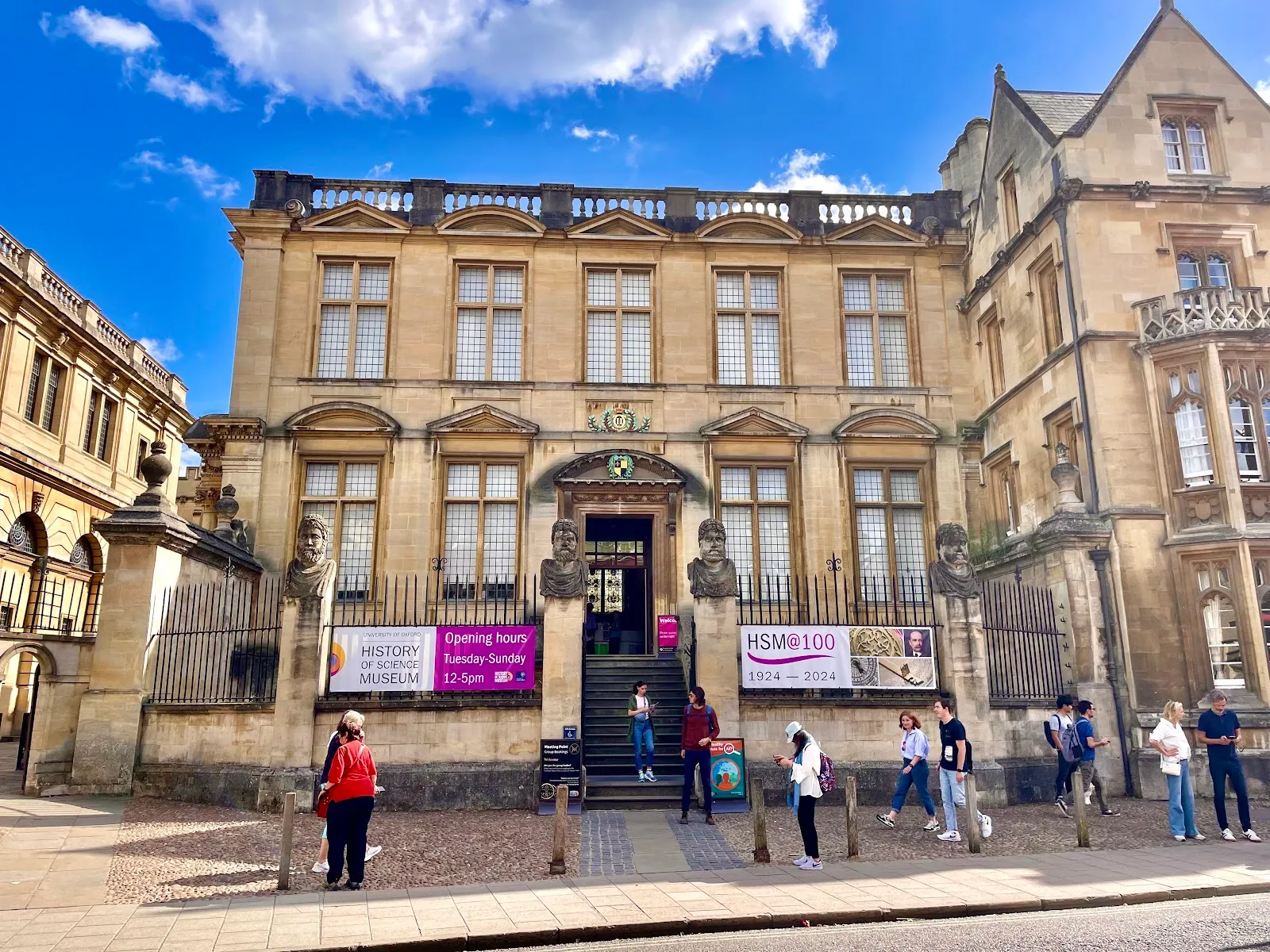
The History of Science Museum is on Broad Street in the building made for the original Ashmolean Museum in 1683. It is the oldest surviving purpose-built museum building in the world. The Ashmolean collection later outgrew the building, which now houses scientific instruments and objects from across the history of science.
The building was first intended to support the study of nature. Experiments took place in a chemical laboratory in the basement, while lectures and demonstrations were held in the School of Natural History. The museum was founded in 1924.
Instruments from many branches of science
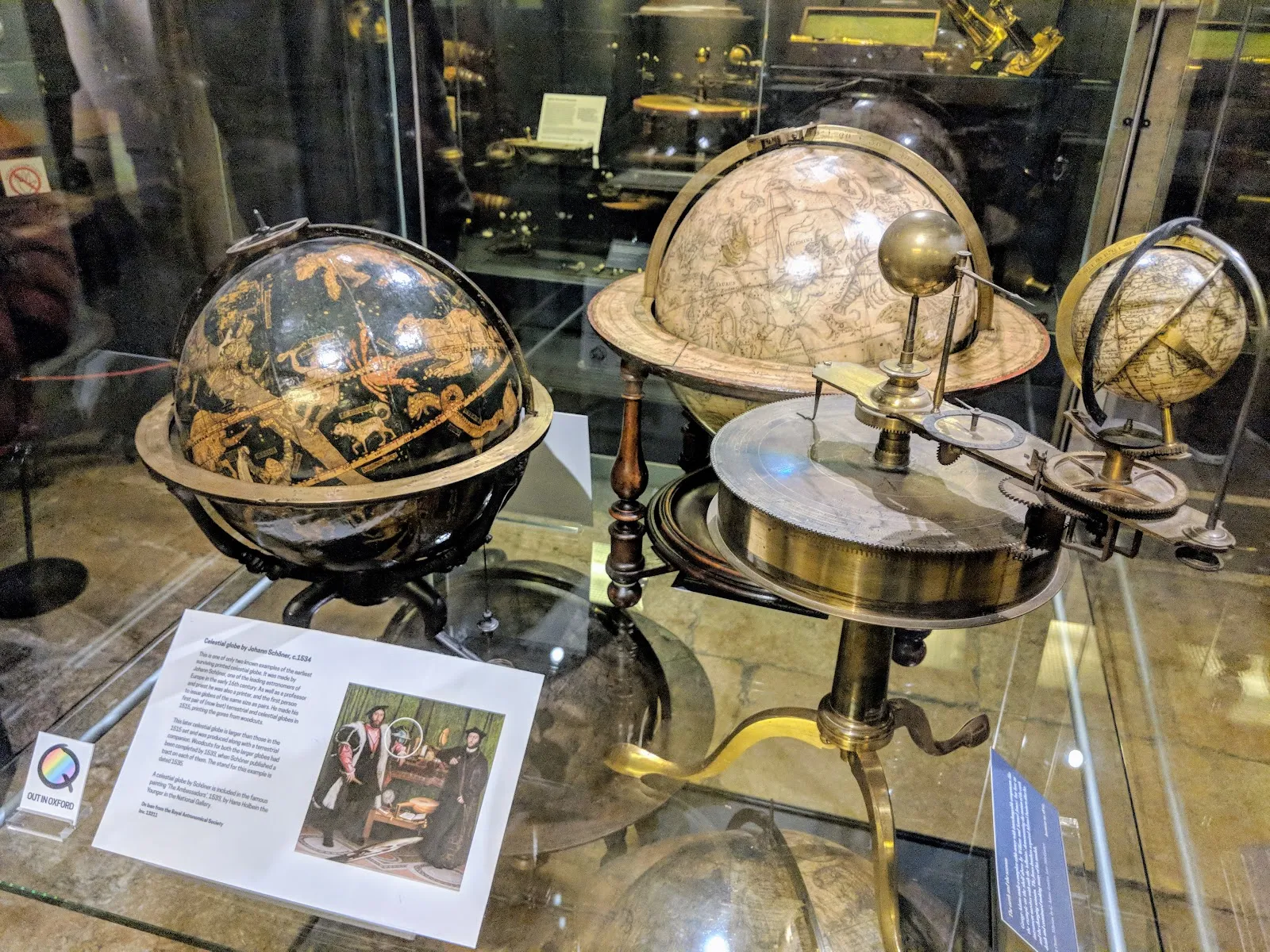
The collection covers subjects including mathematics, astronomy, navigation, chemistry, medicine and surveying. Among its objects are astrolabes, sundials, early mathematical instruments and apparatus associated with communications. Displays show how scientific instruments were used and how knowledge developed across different periods.
Look for the Roman pocket sundial and the collection of astrolabes. Other objects include antique telescopes, early scientific instruments and equipment connected with early computing. The displays also cover penicillin and the development of measurement. Interactive exhibits give visitors another way to engage with scientific ideas.
Einstein’s blackboard and the galleries
One of the museum’s best-known objects is the blackboard used by Albert Einstein during a lecture at Oxford in 1931. It preserves the equations he wrote while discussing the theory of relativity. The museum also holds instruments associated with scientists from different periods, as well as objects that help tell the story of astronomy and navigation.
The permanent collection is arranged across three galleries on the building’s floors. The Entrance Gallery includes introductory displays and four corner collections. The Top Gallery focuses on mathematical instruments, including astrolabes and spheres, and explores measurement and calculation across medieval and Renaissance traditions in both East and West. Check for floor closures before setting out, since access to parts of the building can change what you are able to see.
Häufige Fragen
Is admission to the History of Science Museum free?
Yes. Admission is free, and donations are welcome.
How long should I spend at the museum?
Allow two to three hours to explore the exhibits in depth.
What are the main highlights?
Look for Einstein’s original blackboard, astrolabes, sundials, antique telescopes and instruments connected with medicine, chemistry and early computing.
Should I check anything before visiting?
Check ahead for floor or gallery closures, as these can affect which parts of the collection are accessible.