St Oswald’s Church stands beside the River Rothay in the centre of Grasmere, in the Lake District. The medieval church is associated with the village’s early history and is best known as the burial place of William Wordsworth and members of his family. Inside, look for the timber-framed nave roof, stained glass and memorials; outside, the churchyard offers a quiet place to visit their graves. Information panels explain the local rushbearing tradition, held here each July.
A church with Saxon-era associations
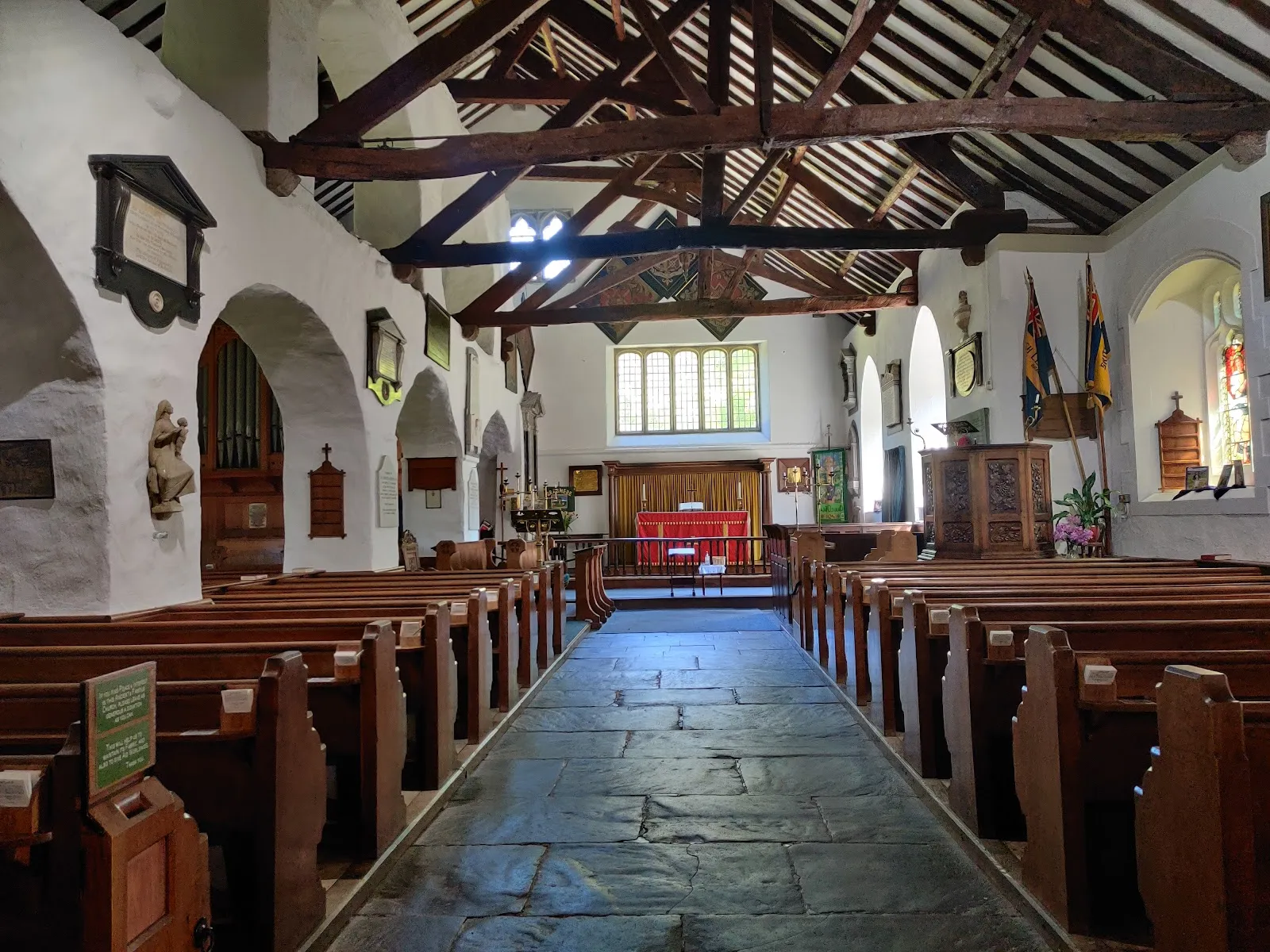
The church is dedicated to Oswald of Northumbria, a king associated with the spread of Christianity. Local tradition holds that he preached at this site before his death in battle in 642. The building standing here today is medieval, with its oldest parts dating to around 1300. It is thought to be the third church on this riverside site.
The parish priest register begins in 1254. The church is Grade I listed, and its position beside the River Rothay connects it closely to the village. The tower is said to have been built with boulders from the riverbed. St Oswald’s has also been described as two churches brought together beneath one roof, a history that helps explain its unusual structure.
The nave and its details
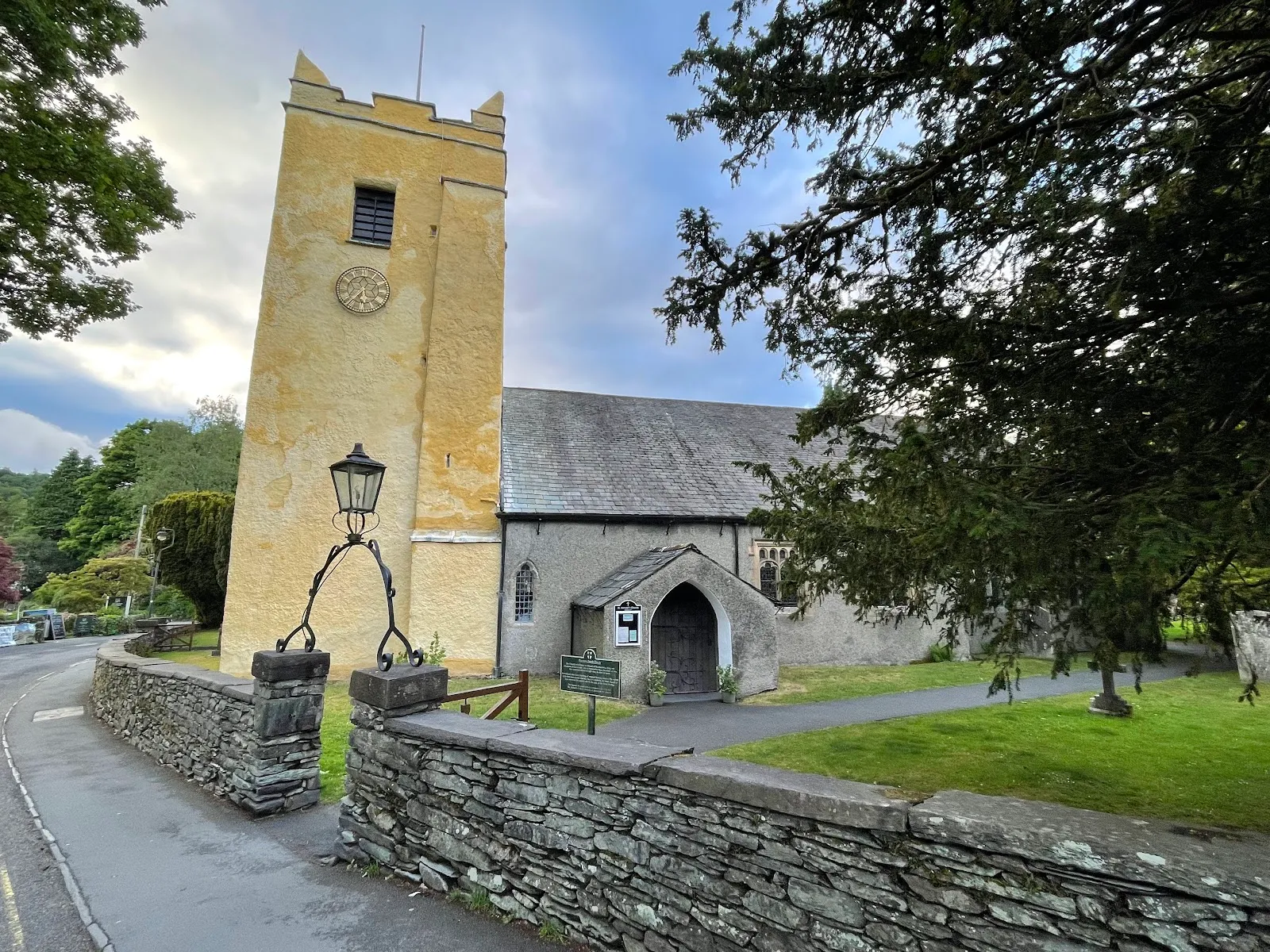
Inside, look up at the timber-framed roof over the nave. The exposed beams give the space much of its distinctive character. Other details include stained glass, some of it medieval, and memorials to members of the Wordsworth family. The font is also identified as medieval. Oak pews date from the 19th century.
Information panels provide context on the church’s history and local traditions. They are useful if you want to understand more than the building’s connection to the poet. The church is a place of worship as well as a historic site, so take a quiet, considerate approach during your visit.
The Wordsworth family churchyard
William Wordsworth, his wife Mary, his sister Dorothy and other members of the family are buried in the churchyard. Their burial plot is behind the church; Wordsworth’s grave is a simple, flat stone near the yew trees. The churchyard also includes a daffodil garden associated with the poet. The garden lies between the church and the River Rothay, and spring is the season to see its daffodils.
The annual rushbearing ceremony takes place at St Oswald’s in July. Rushbearing is a local tradition explained in the church’s information panels. If you visit at another time, those panels still offer a way to learn about the custom and its place in village life.
Häufige Fragen
Where is William Wordsworth buried?
Wordsworth is buried in the churchyard behind St Oswald’s Church, near the yew trees. His wife Mary, sister Dorothy and other family members are buried there too.
What should I look for inside St Oswald’s Church?
Look for the timber-framed roof over the nave, stained glass, the medieval font and memorials to the Wordsworth family.
When is the rushbearing ceremony?
The annual ceremony is held at the church in July. Information panels inside explain the tradition.
Is there a daffodil garden at the church?
Yes. The Wordsworth daffodil garden is between the church and the River Rothay, with daffodils in spring.