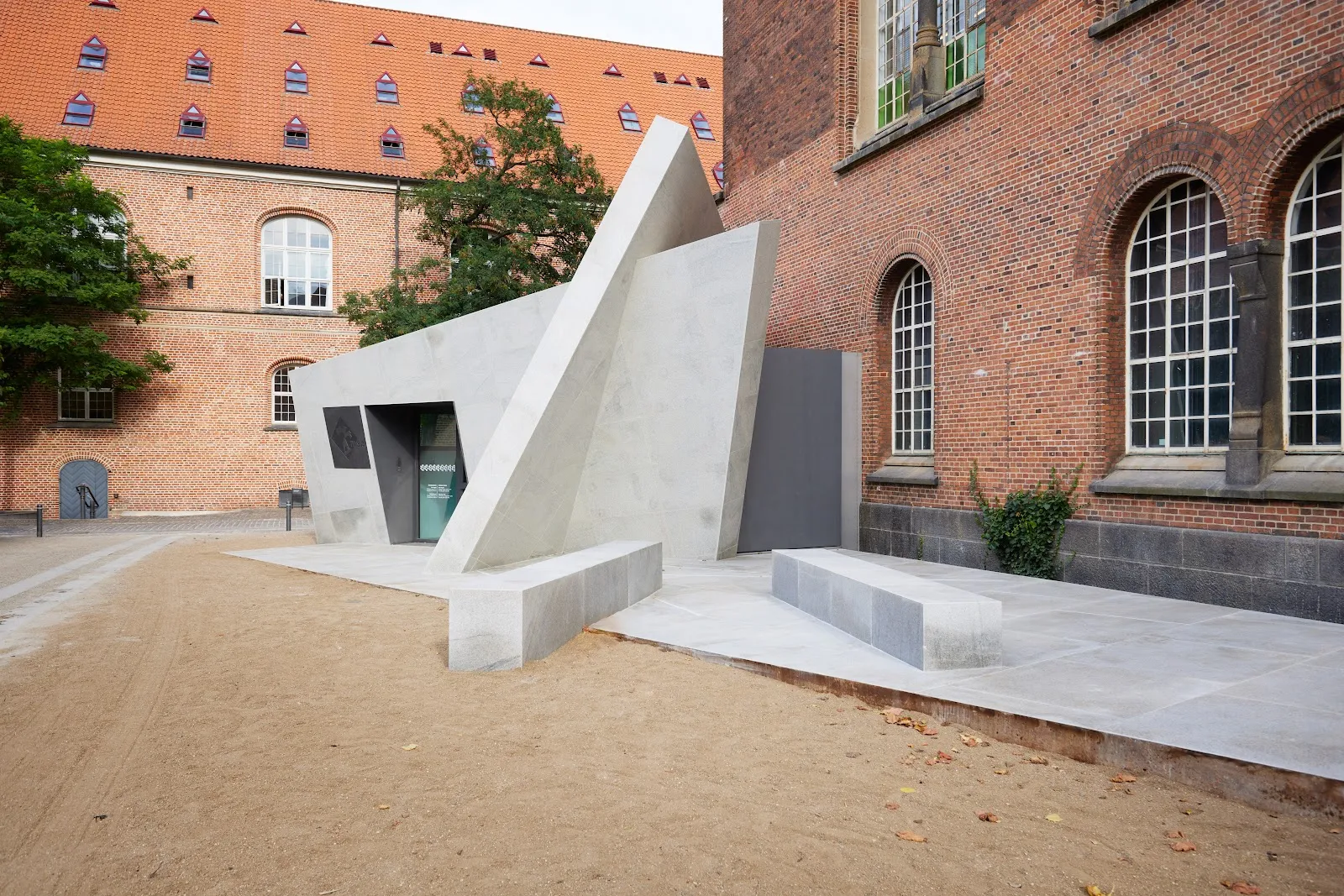
The Danish Jewish Museum sits in the Royal Danish Library complex on Slotsholmen, Copenhagen, and traces more than 400 years of Jewish life in Denmark. Daniel Libeskind designed its distinctive interior, where art, objects and interactive displays tell the community’s story. A central theme is the 1943 rescue, when most Danish Jews were evacuated to Sweden. Audio talks are available in English and Danish. After the galleries, take a quiet pause in the adjacent garden, with flower beds and a small fountain.
A history spanning four centuries
The museum tells the story of Denmark’s Jewish community from the arrival of the first Jewish families in the 17th century. Art and artifacts in the galleries give visitors a way to explore more than 400 years of community life.
One focus is the rescue of Danish Jews in 1943. During the Nazi occupation, 7,220 of Denmark’s 7,800 Jews were evacuated to Sweden. The museum addresses this history through the concept of “Mitzvah.”
Inside the Royal Danish Library complex
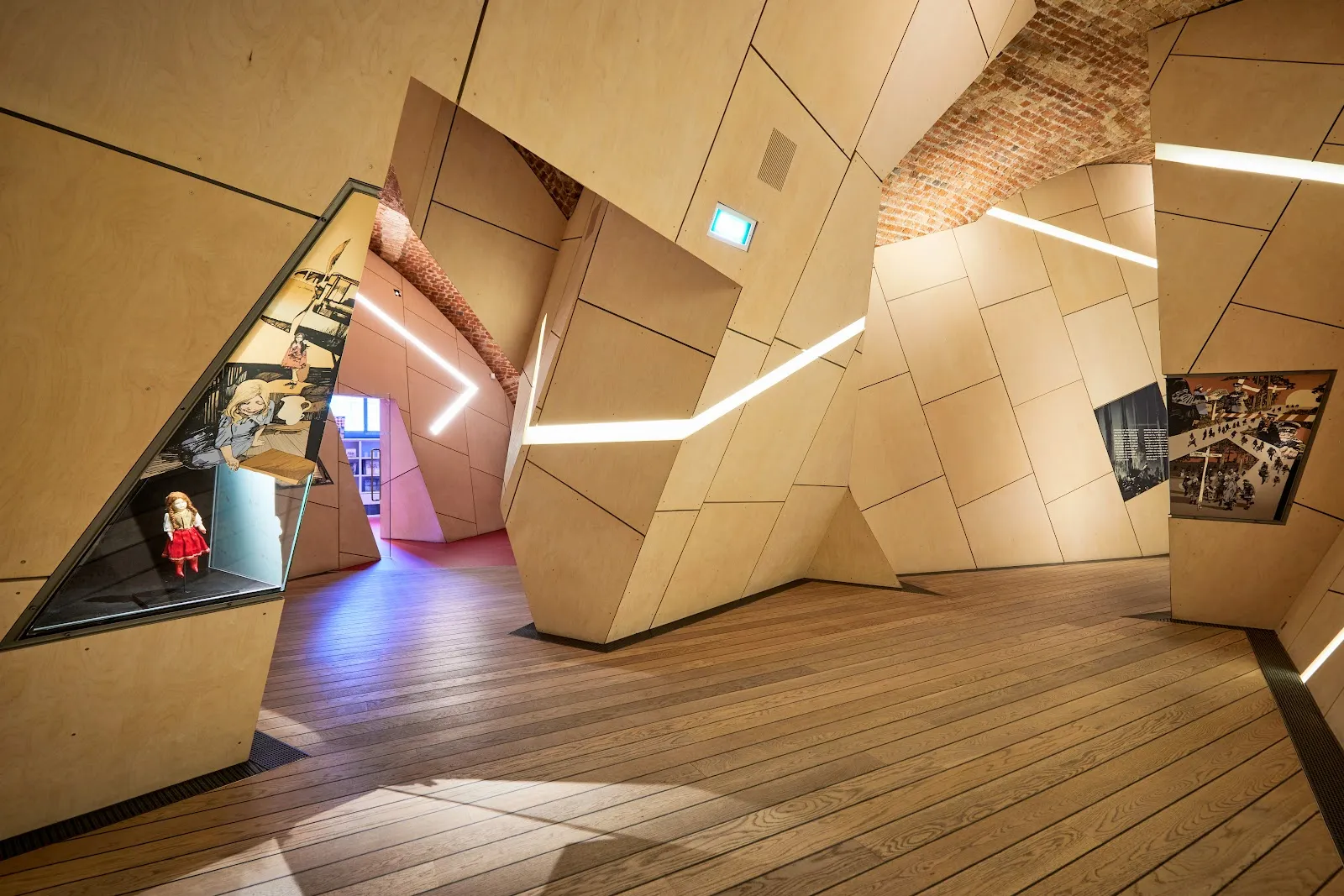
The museum is housed in a former boathouse, in a small wing of the Royal Danish Library complex on Slotsholmen. Polish-American architect Daniel Libeskind designed the museum, which opened in 2004. Its interior design reflects the story of Danish Jews, with visual displays and interactive exhibits.
Audio talks are available in English and Danish. The adjacent garden has flower beds and a small fountain, offering a calm place to pause before or after the galleries.
Häufige Fragen
What does the Danish Jewish Museum cover?
It documents more than 400 years of Jewish life in Denmark, including the community’s history from its arrival in the 17th century and the 1943 rescue.
Who designed the Danish Jewish Museum?
Architect Daniel Libeskind designed the museum.
Are audio talks available in English?
Yes. Audio talks are available in English and Danish.
Where is the Danish Jewish Museum?
It is at Proviantpassagen 6, in the Royal Danish Library complex on Slotsholmen, Copenhagen.