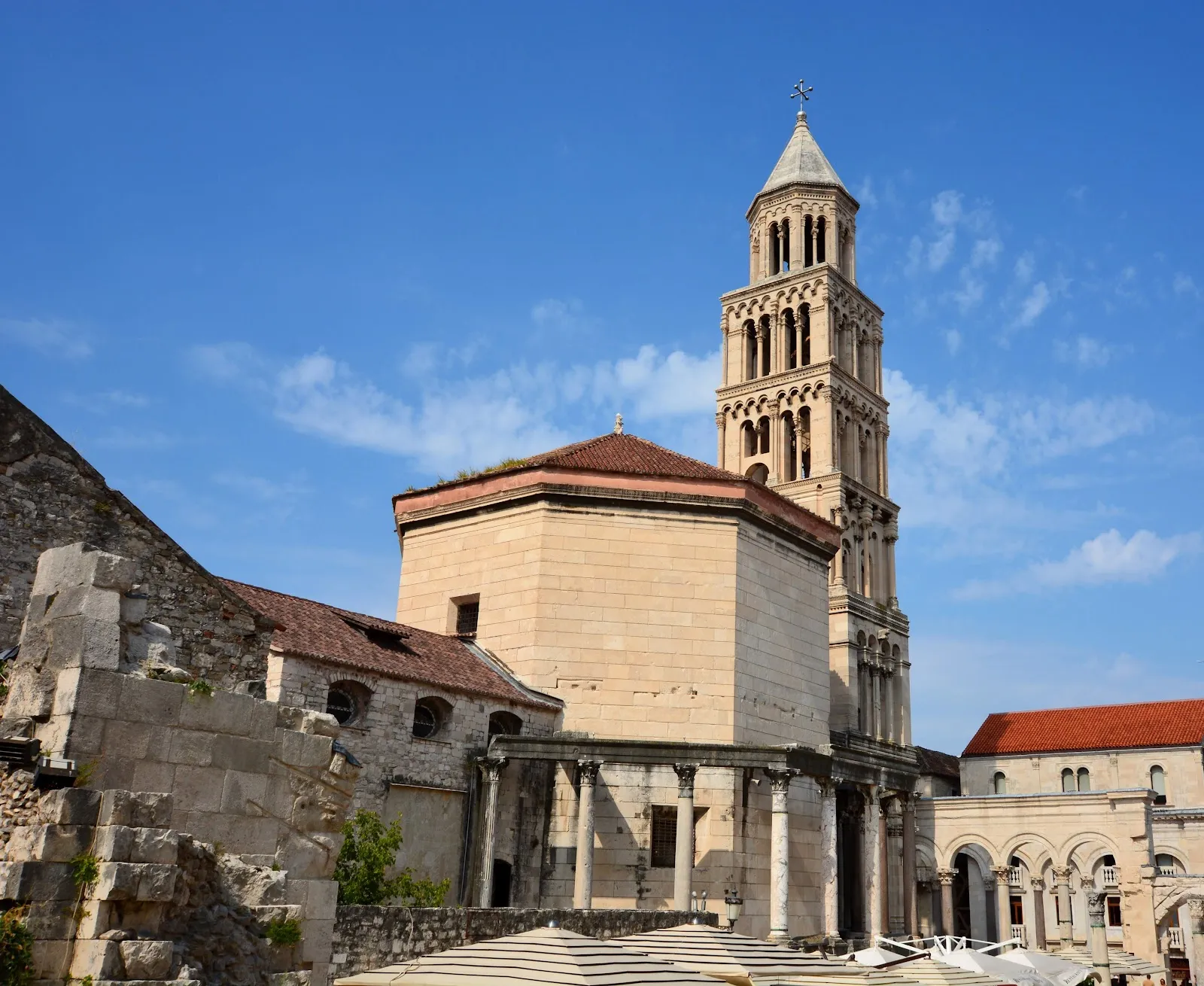
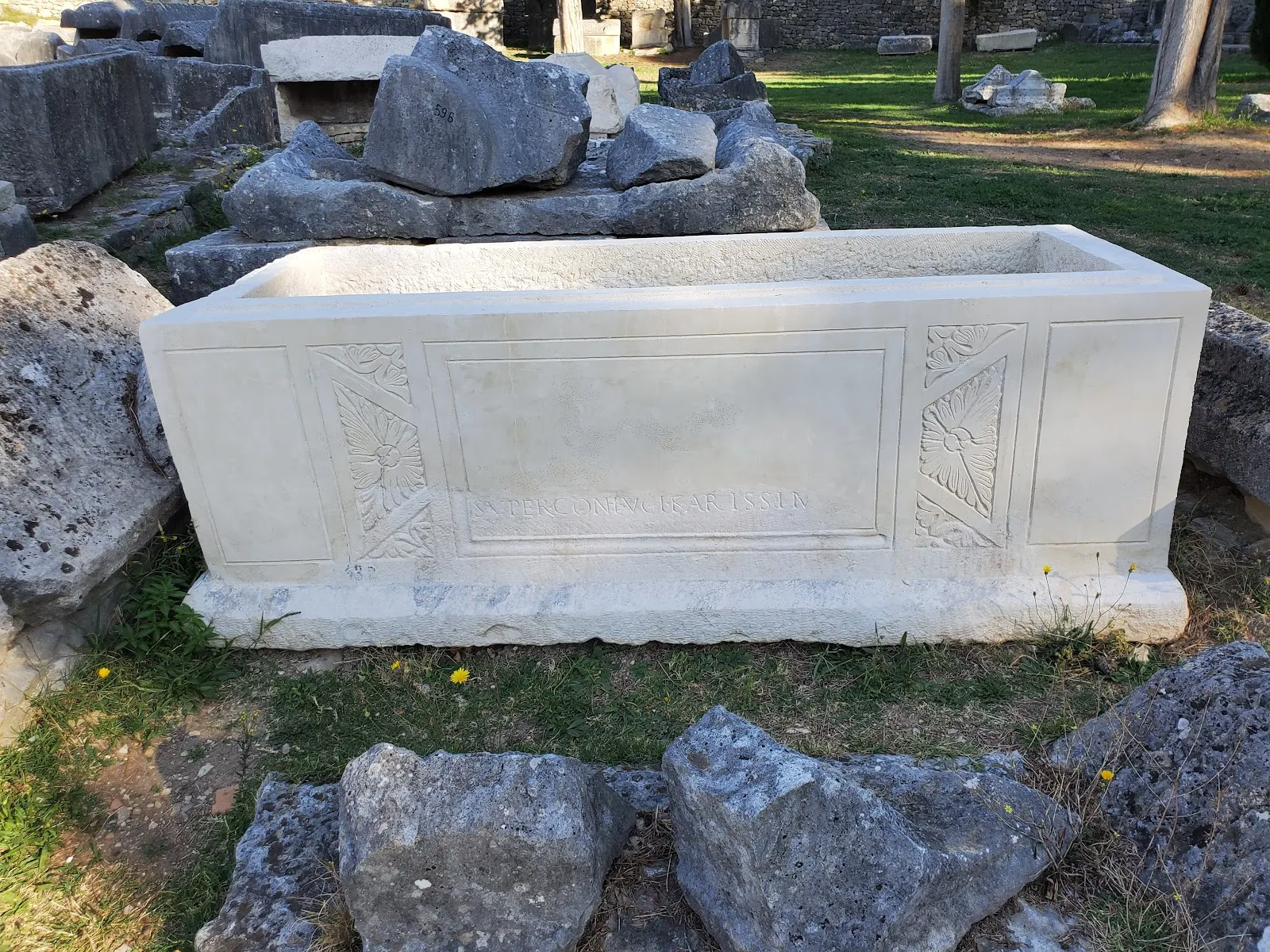
Split’s Golden Gate is the northern entrance to Diocletian’s Palace and once served as the emperor’s main way into the complex. Its heavy stone arch and surviving decorative details give you a close look at the palace’s Roman-era design. Pause to spot the sculpted figures and look across the street to Ivan Meštrović’s bronze statue of Bishop Gregory of Nin. The gate opens directly onto the old town’s narrow streets, so it is an easy starting point for exploring the palace on foot.
The emperor’s northern entrance
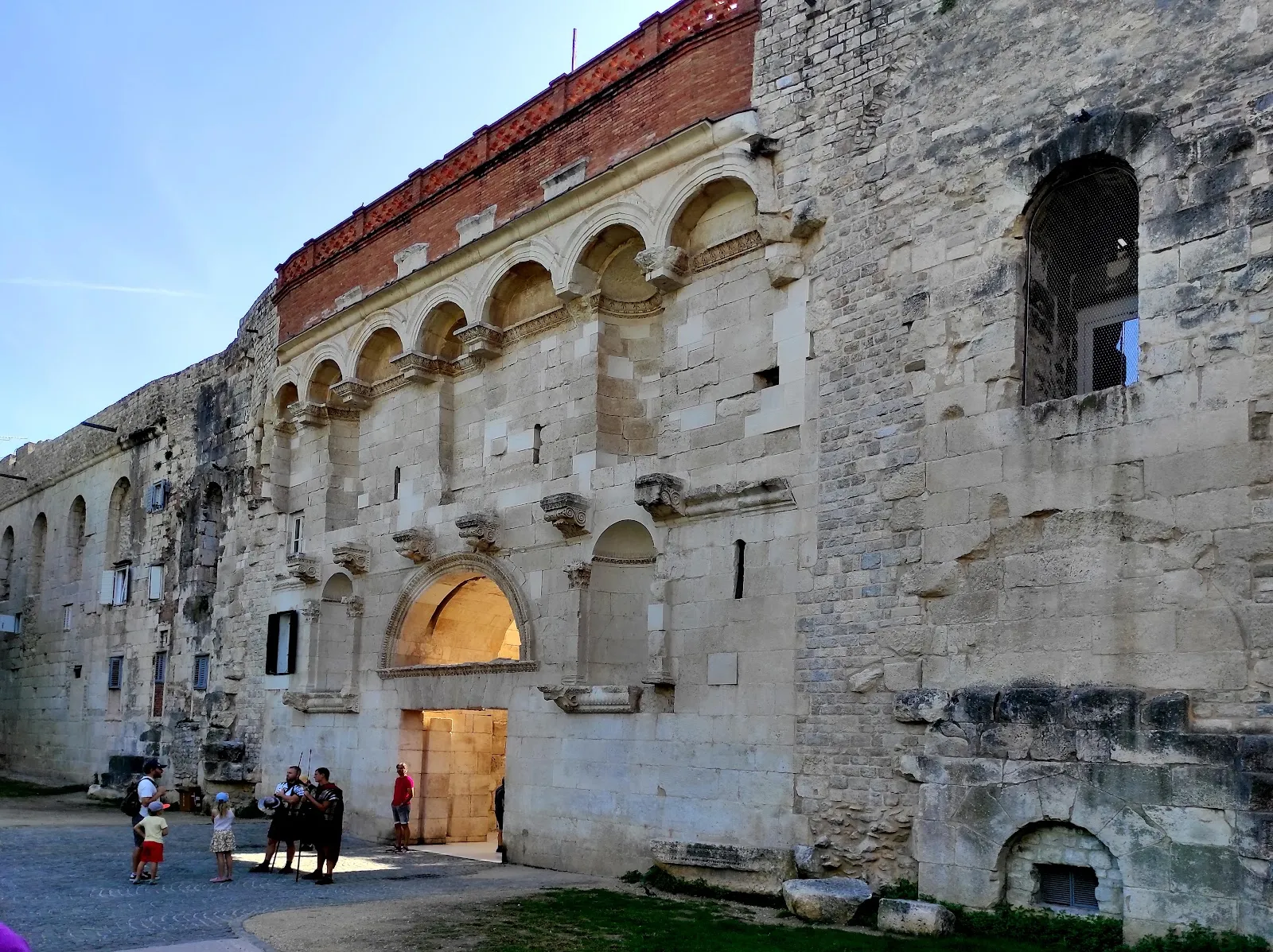
The Golden Gate, also known as Porta Aurea, stands in the northern wall of Diocletian’s Palace. In Roman times it was the principal entrance to the complex, and the emperor and his family used it to enter and leave. The route through the gate connected the palace with Salona, the Roman capital of Dalmatia.
The gate was part of the palace’s defensive layout. Its double-door arrangement formed an entry passage within the walls, rather than a simple opening through them. Four principal gates marked the palace walls, each associated with a metal: the Golden Gate to the north, the Silver Gate to the east, the Iron Gate to the west and the Bronze Gate to the south. The Bronze Gate gave access from the sea to the palace cellars; the Golden Gate held the more prominent position as the main northern approach.
The name Porta Aurea, meaning Golden Gate, came into use during Venetian rule. In Roman times, it was known as Porta Septemtrionalis, or the northern gate. Its present name has stayed with it, even though the old town can now be entered by many routes.
Stonework and surviving details
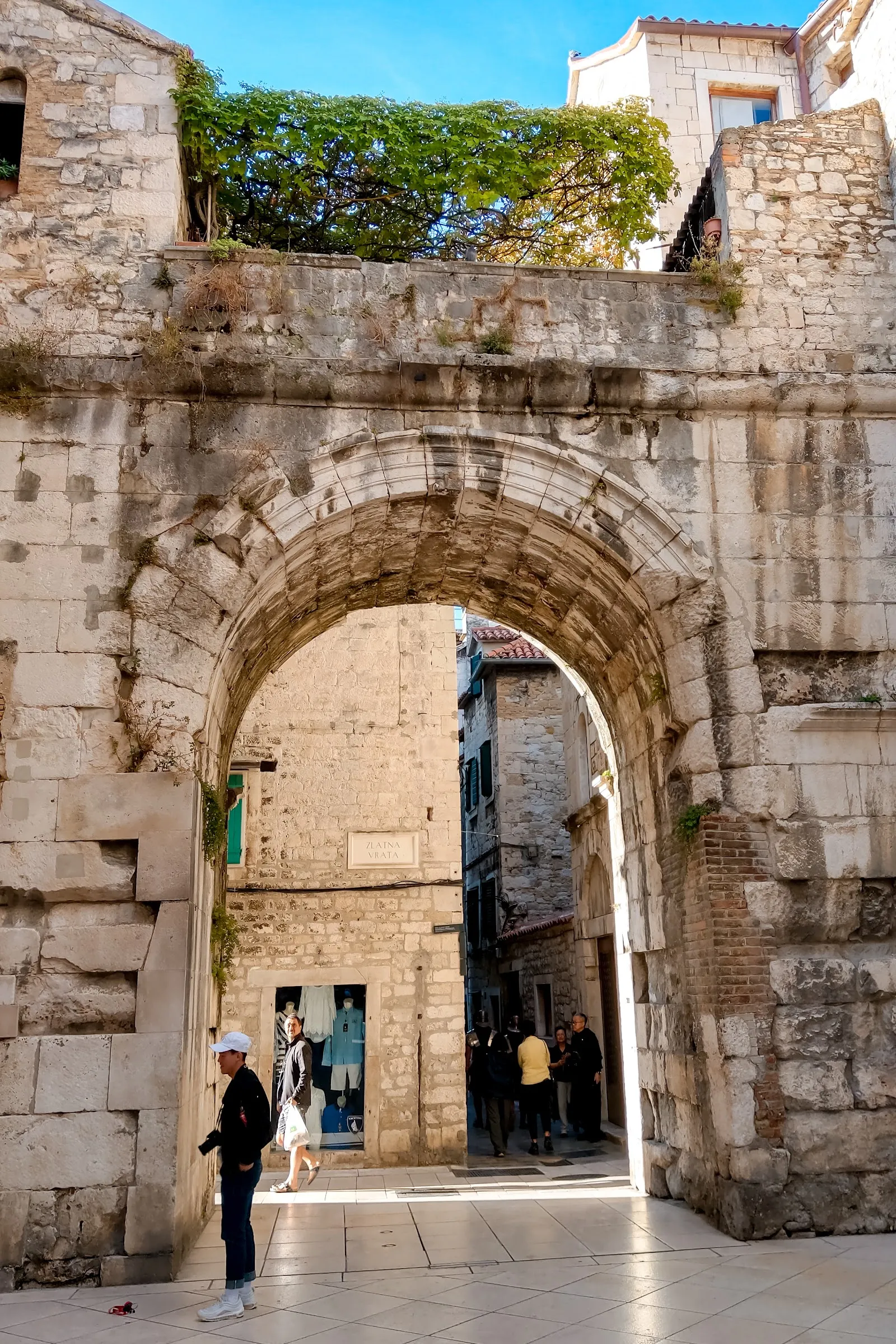
The Golden Gate is among the best-preserved parts of Diocletian’s Palace. Its substantial arch and carefully worked stone make the entrance easy to read as part of a fortified palace, while the remaining decoration hints at how elaborate it once was. The façade had niches containing figures of the four rulers of the Tetrarchy: Diocletian, Maximian, Galerius and Constantius Chlorus.
The gate’s appearance changed over the centuries. During the Middle Ages it was closed, and its columns and statuary were lost. Look closely at the stonework and surviving architectural details rather than treating the arch as only a passageway. The small features are easy to miss when people are moving through, particularly during busy daytime periods.
Within the gate’s inner defensive courtyard, a tiny chapel dedicated to Saint Martin is built into the wall above the entrance. It dates to the ninth century and is associated with the former Roman guardhouse. Its position high over the passage makes it less immediately visible than the arch itself.
Gregory of Nin outside the gate
Just beyond the Golden Gate stands a large bronze statue of Gregory of Nin, or Grgur Ninski, made by Croatian sculptor Ivan Meštrović. Gregory was a tenth-century bishop who supported the use of the Slavic language in the Croatian Church, a position that brought him into conflict with Rome.
Meštrović created the statue in 1929. It was first placed near the Peristyle before being moved to its present location by the Golden Gate in 1954. The sculpture is one of the first landmarks you encounter when approaching the northern entrance. Its scale contrasts with the close-set stonework of the gate behind it.
A local good-luck gesture is to rub the statue’s toe. The statue and gate together make a natural place to pause before walking into the old town. From there, follow the narrow streets toward the Peristyle and the Cathedral of Saint Domnius.
Häufige Fragen
Where is Split’s Golden Gate?
It is the northern entrance to Diocletian’s Palace, at Dioklecijanova 7 in Split. The statue of Gregory of Nin stands outside it.
Was the Golden Gate the main entrance to Diocletian’s Palace?
Yes. It was the palace’s principal northern entrance and was used by the emperor and his family.
Is there an entry fee to see the Golden Gate?
The gate can be viewed for free.
When is the best time to visit the Golden Gate?
Go just after sunrise for fewer people and morning light on the stonework. Evening is another option for cooler conditions and easier photos.