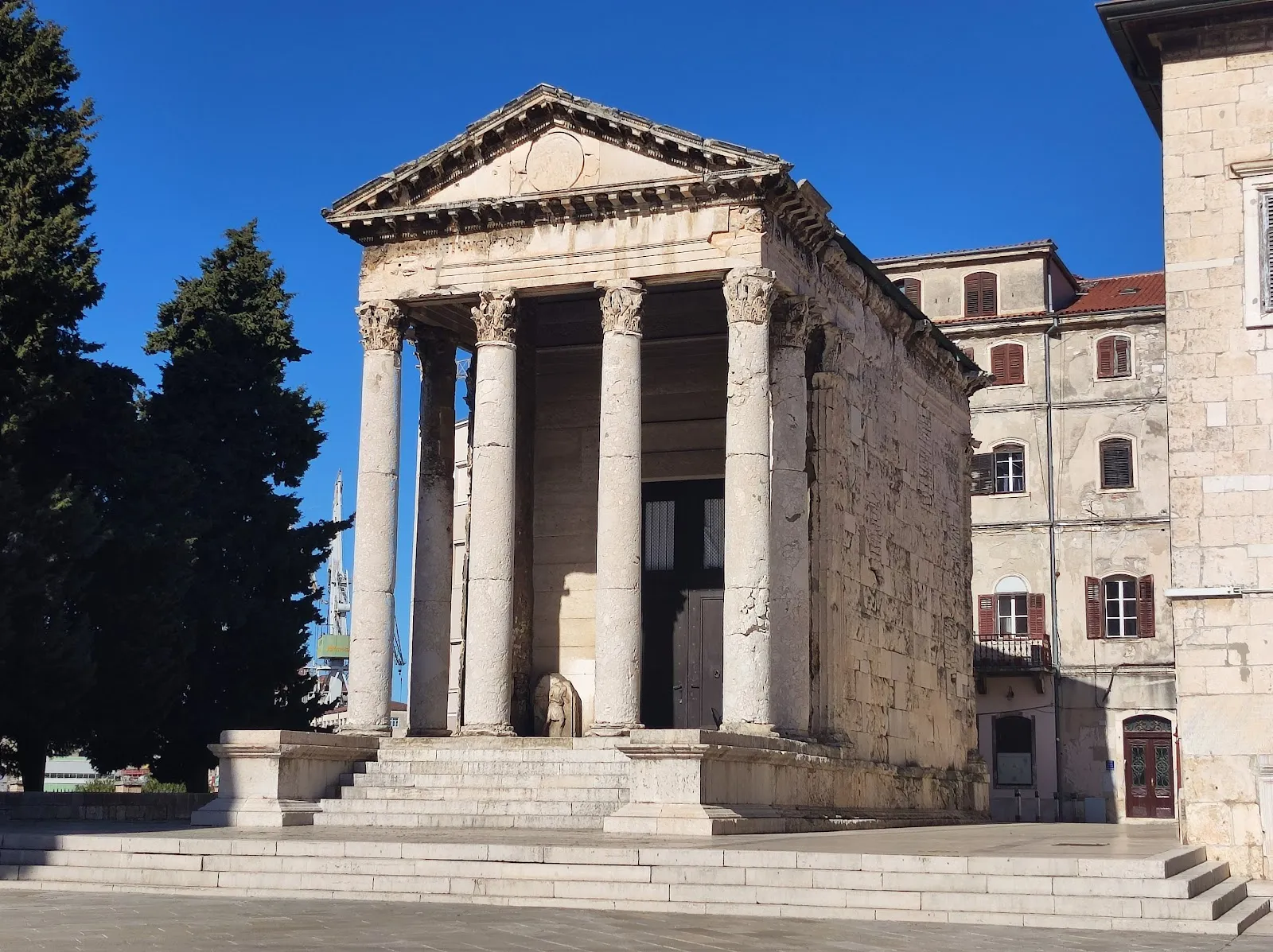
The Temple of Augustus is a Roman temple on Pula's Forum Square, in the old town. It was built in the lifetime of Augustus, the first Roman emperor, and is believed to date from between 27 BC and AD 14. Its front has Corinthian columns, and the building rises about 14 metres (46 ft). It is considered one of the most complete Roman monuments outside Italy. Inside, a small museum shows Roman stone and bronze statues. Spend time on the square too: it has been the city's hub since Roman times and is one of the pleasant places to sit in the evening.
Why Augustus has a temple here
The temple honours Augustus, the first Roman emperor, and the goddess Roma, who stood for Rome itself. Building probably began during Augustus's lifetime, which is why the dates given are a range from about 27 BC to his death in AD 14. Pula was a Roman town, and the temple was raised on its forum, the open square where public life took place.
An inscription once fixed to the walls named Rome and Augustus, son of the deified Caesar, as those the temple was dedicated to. Augustus was treated as a divine figure in the building's dedication.
From temple to church, granary and museum
The building did not keep its first use. In Byzantine times it was turned into a church. Later it served as a granary. From the beginning of the 19th century it was a museum of stone monuments, and it still holds that role.
It is the only one of the three temples that once stood on the square that survived. The central temple is gone. The back wall of another structure, the Temple of Diana, survived and was built into the Communal Palace, a 13th century building beside it.
Damage in the Second World War and the rebuild
Bombing during the Second World War badly damaged the temple. The building visitors see today is a faithful reconstruction, rebuilt stone by stone with original fragments. The work brought it back to something close to its former appearance.
The columns and the front porch give the best sense of how the temple looked in Roman times, and the rebuilt walls show where the original stones were used again.
Inside the temple
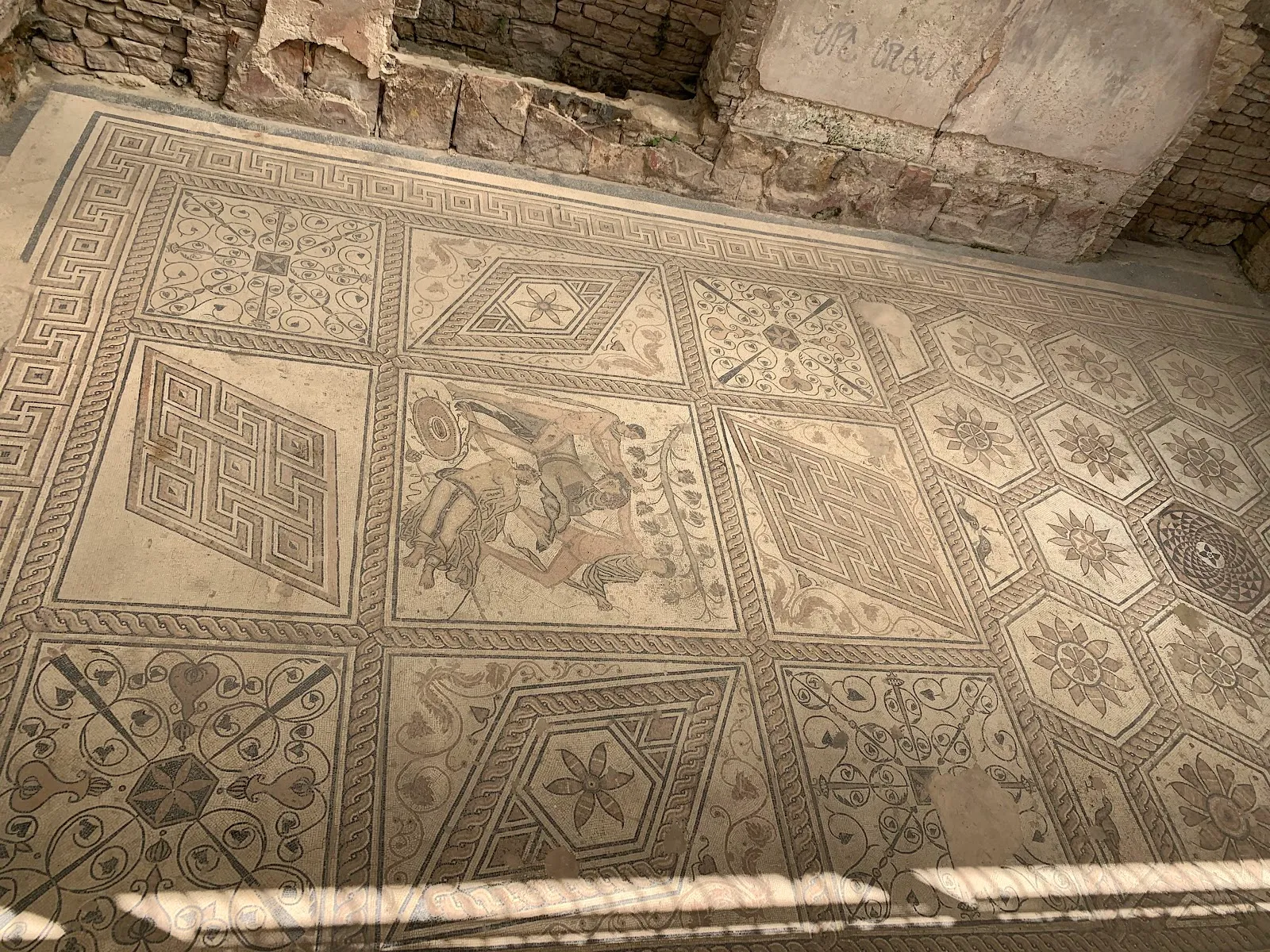
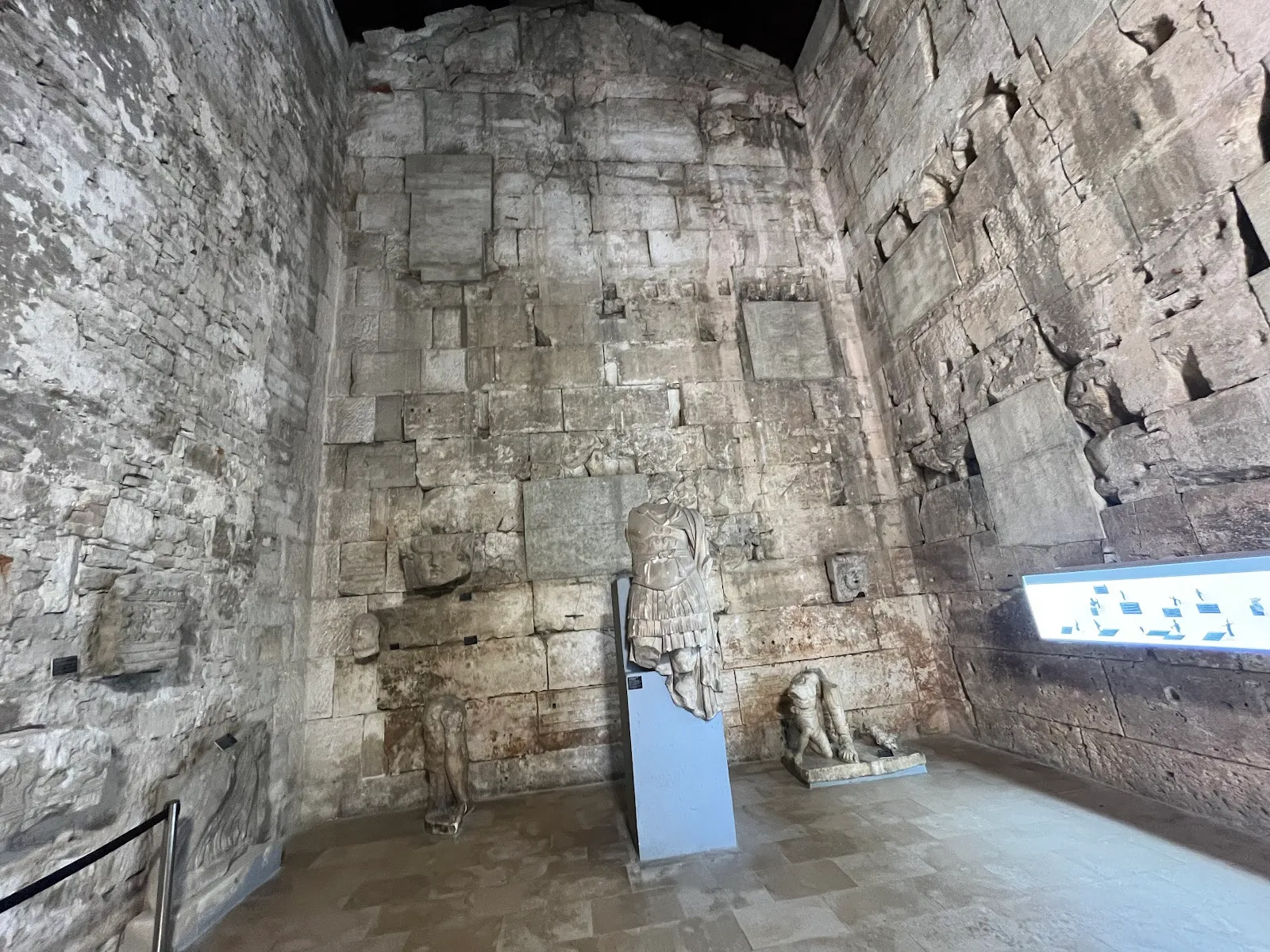
Inside, a small museum shows Roman sculptures and artifacts, including stone and bronze statues. Some displays are archaeological, showing pieces found in and around the city. The collection suits visitors who want to see ancient art up close.
The museum is small, so a short visit covers it. Plan the rest of your time for the square and the other sites nearby.
The Forum around the temple
The square has been the city's main hub since Roman times. Today the city's administration sits here, and locals meet for coffee on sunny days. In summer, musicians or theatre performances often take place on the square. In the evening, teenagers and families gather there.
Many visitors buy a gelato from a nearby shop and sit on the temple steps to watch the square. The Arch of the Sergii, which marks the old city limit, is free to see and is close by.
Visiting the temple
The entrance is wheelchair accessible, and the site is listed as good for children. Parents can explain the stories behind the structures to older children, which makes the ruins easier to connect with.
Tickets in advance are recommended. Check the hours on the day of your visit, since information centres may show different times from the temple itself.
Häufige Fragen
Do I need tickets in advance?
Tickets in advance are recommended for the temple.
Is the temple wheelchair accessible?
Yes, the entrance is wheelchair accessible.
What can you see inside?
A small museum with Roman stone and bronze statues and archaeological displays.
Is the temple suitable for children?
The site is listed as good for children, and parents can explain the stories behind the structures to older kids.
What was the temple used for over time?
It was a Roman temple, then a church, then a granary, and from the 19th century a museum of stone monuments.