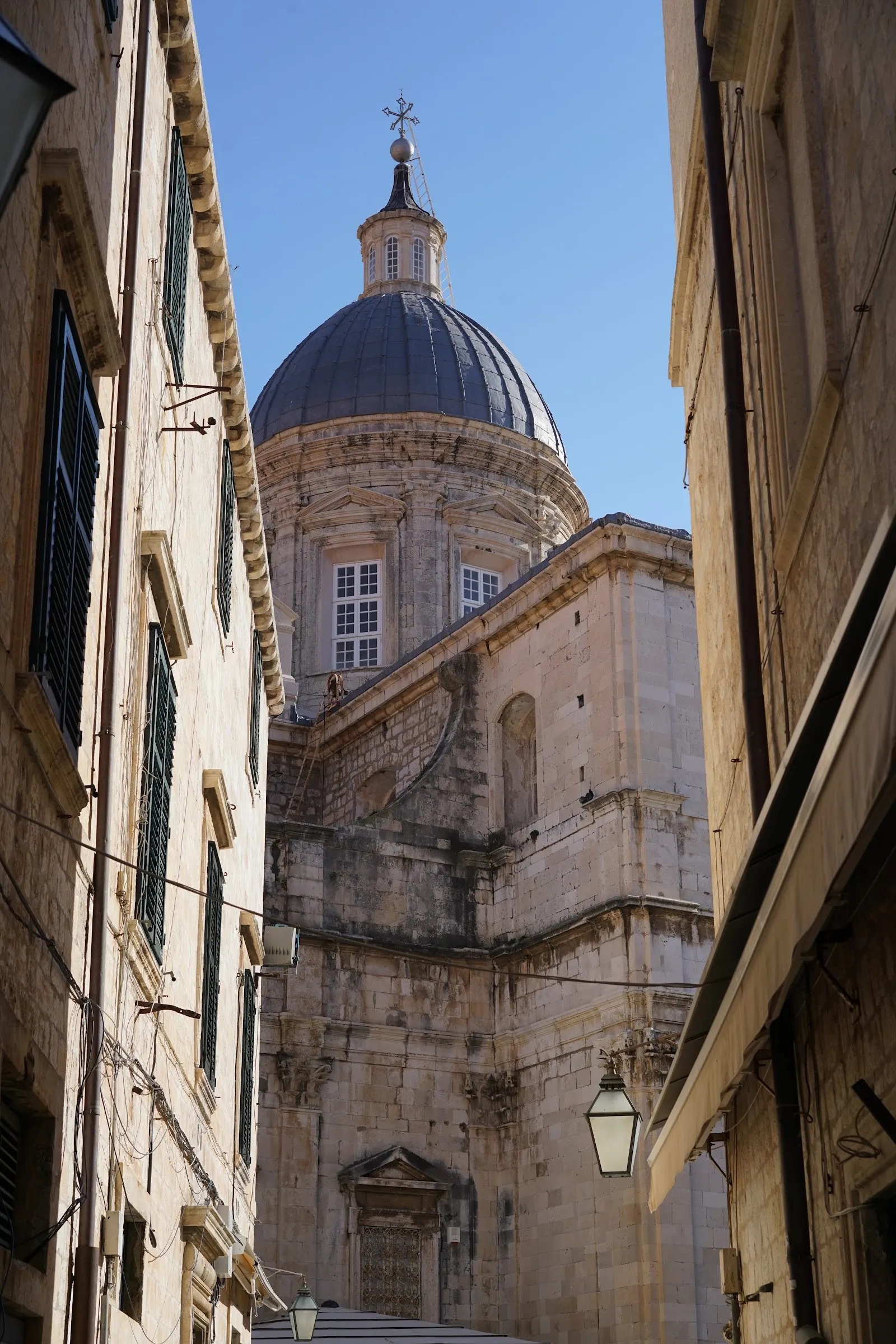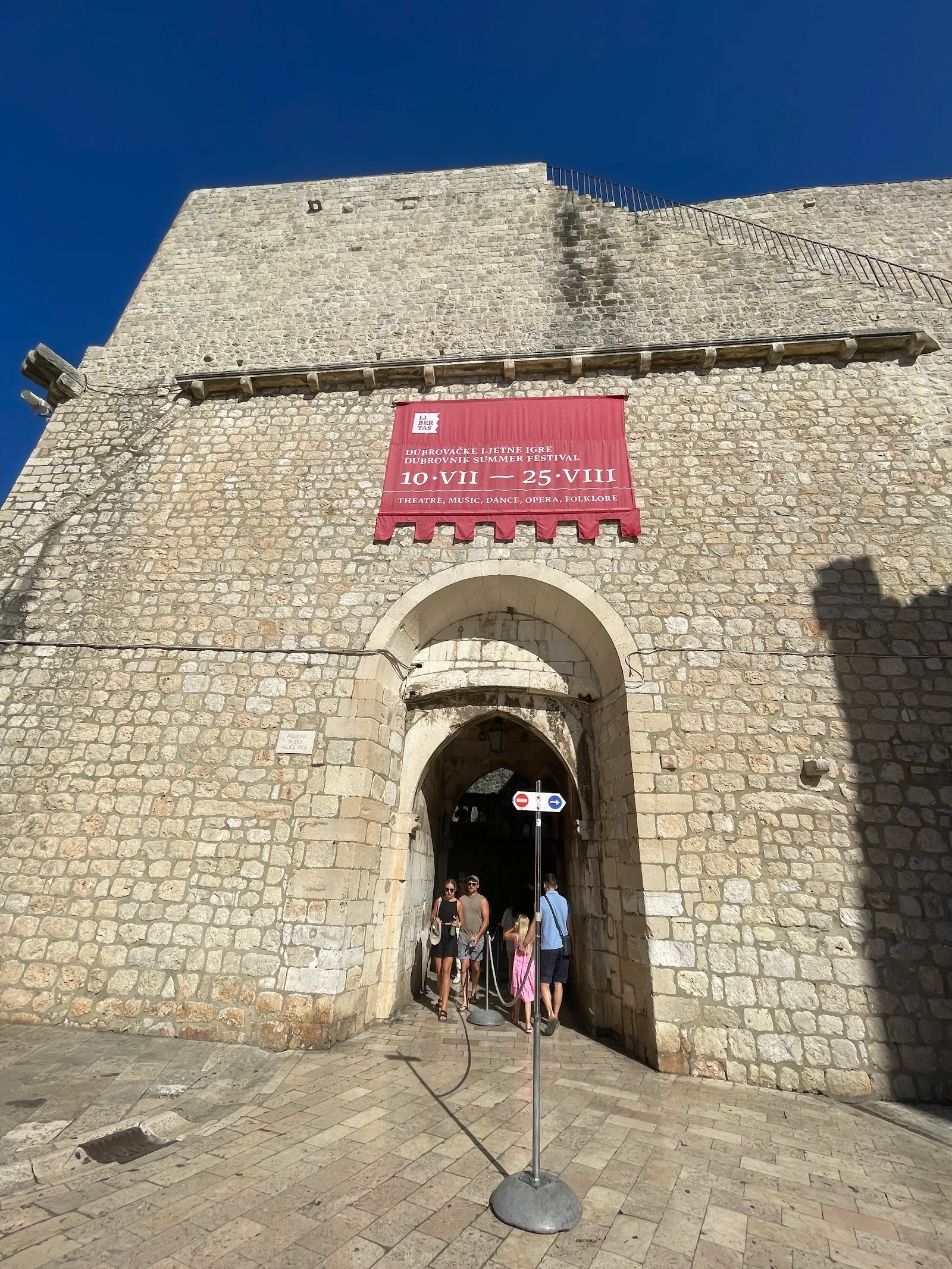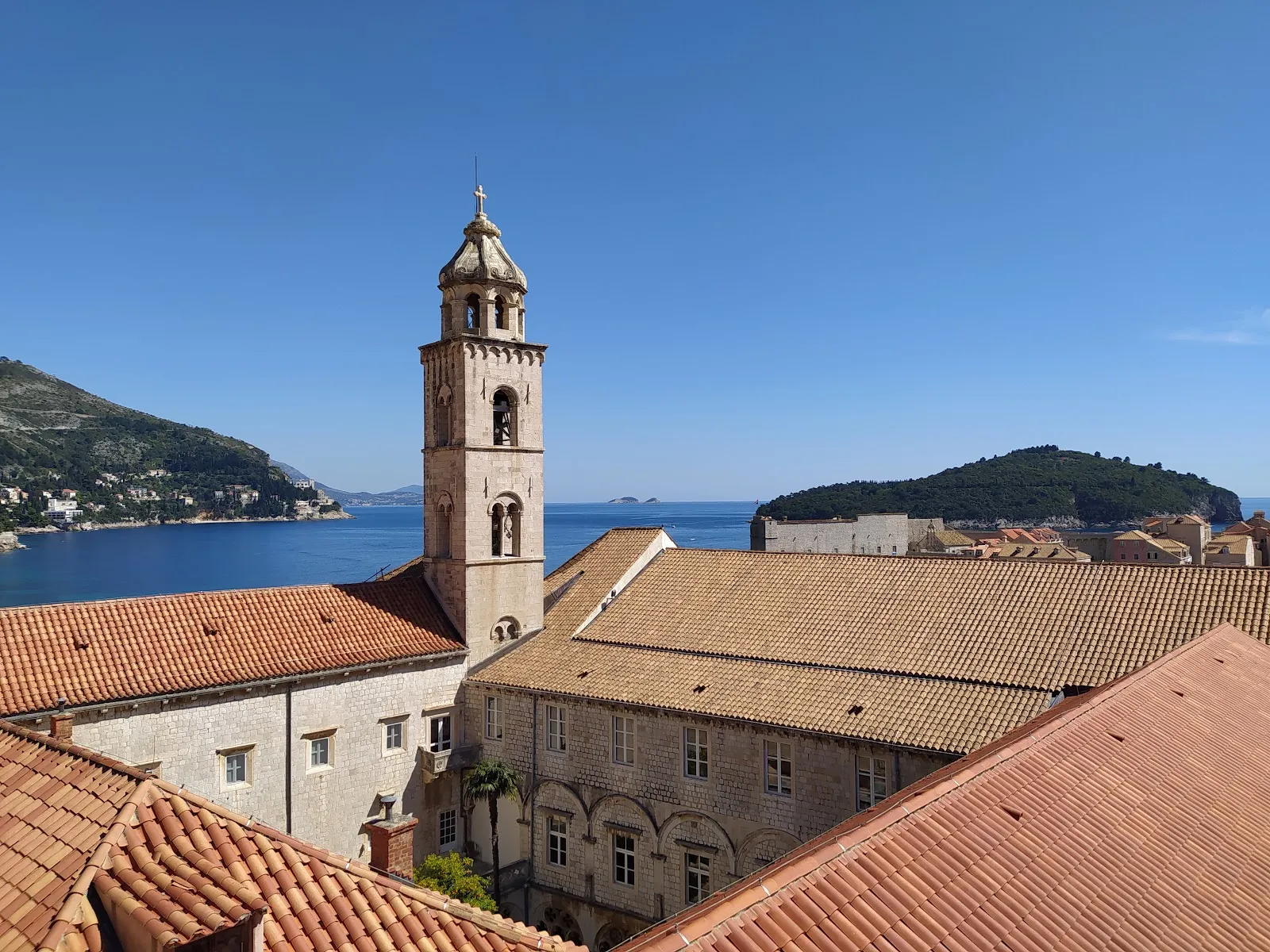
Near Ploče Gate on Dubrovnik’s eastern Old Town edge, the Dominican Monastery brings a quiet pause to the busy streets. Its late Gothic cloister has carved stone arches and a courtyard well; the small museum displays religious objects, manuscripts, jewellery and paintings by Dubrovnik artists, including Nikola Božidarević and Lovro Dobričević. Look for Titian’s painting of St Blaise and Mary Magdalene among the collection. The monastery’s church has sometimes been affected by renovation work, so check access before you go if seeing inside is important to you.
A monastery beside Ploče Gate
The Dominican Monastery stands on Dubrovnik’s eastern side, close to Ploče Gate and between the city’s streets and defensive walls. The Dominican Order established a presence here in 1225. The complex took shape over the following centuries and was completed in the 14th century.
Its position reflects the monastery’s place within the fortified city. The stone complex meets the eastern walls, and its restrained exterior has a defensive character. Inside, the cloister offers a calmer space, with arched galleries and detailed stonework.
The cloister and courtyard
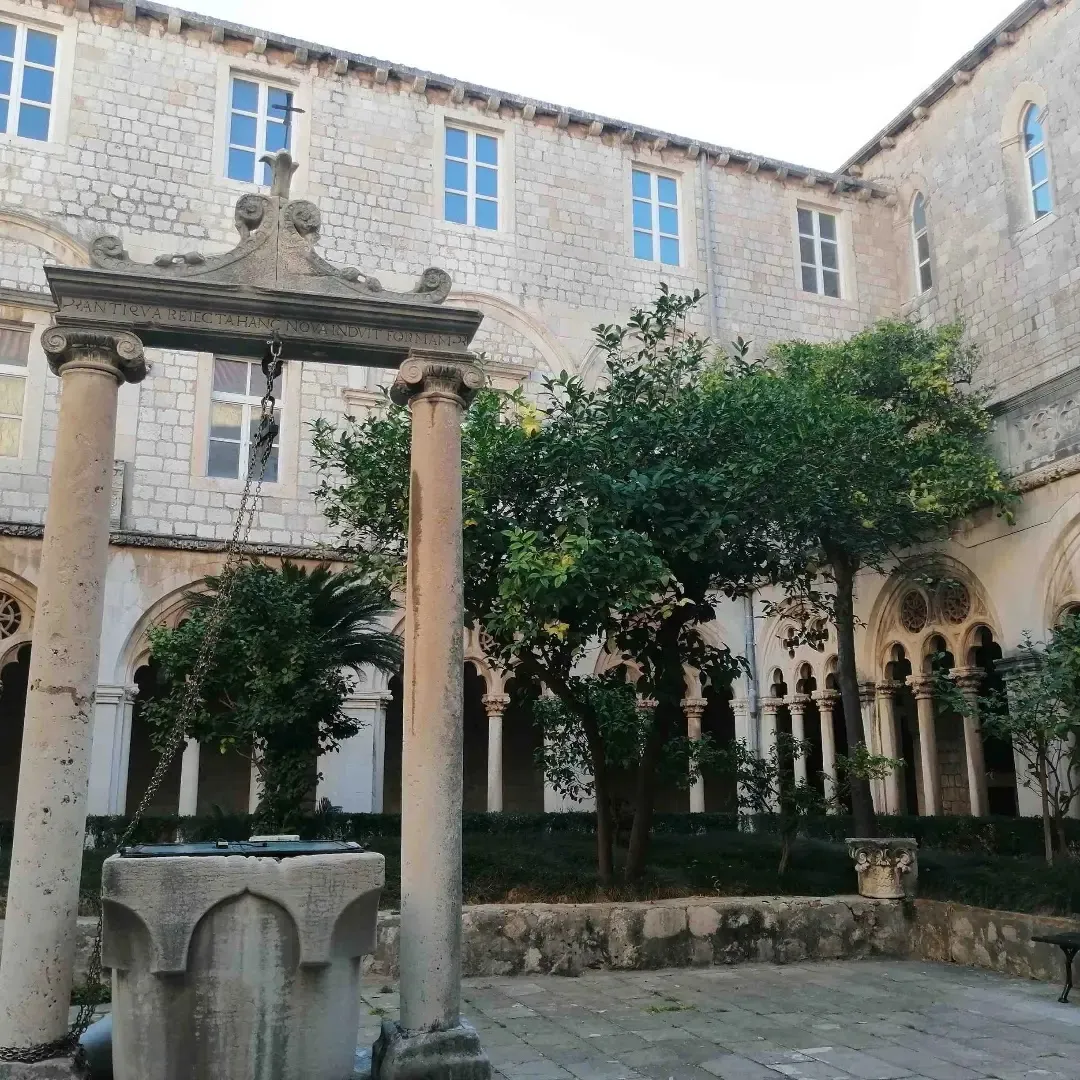
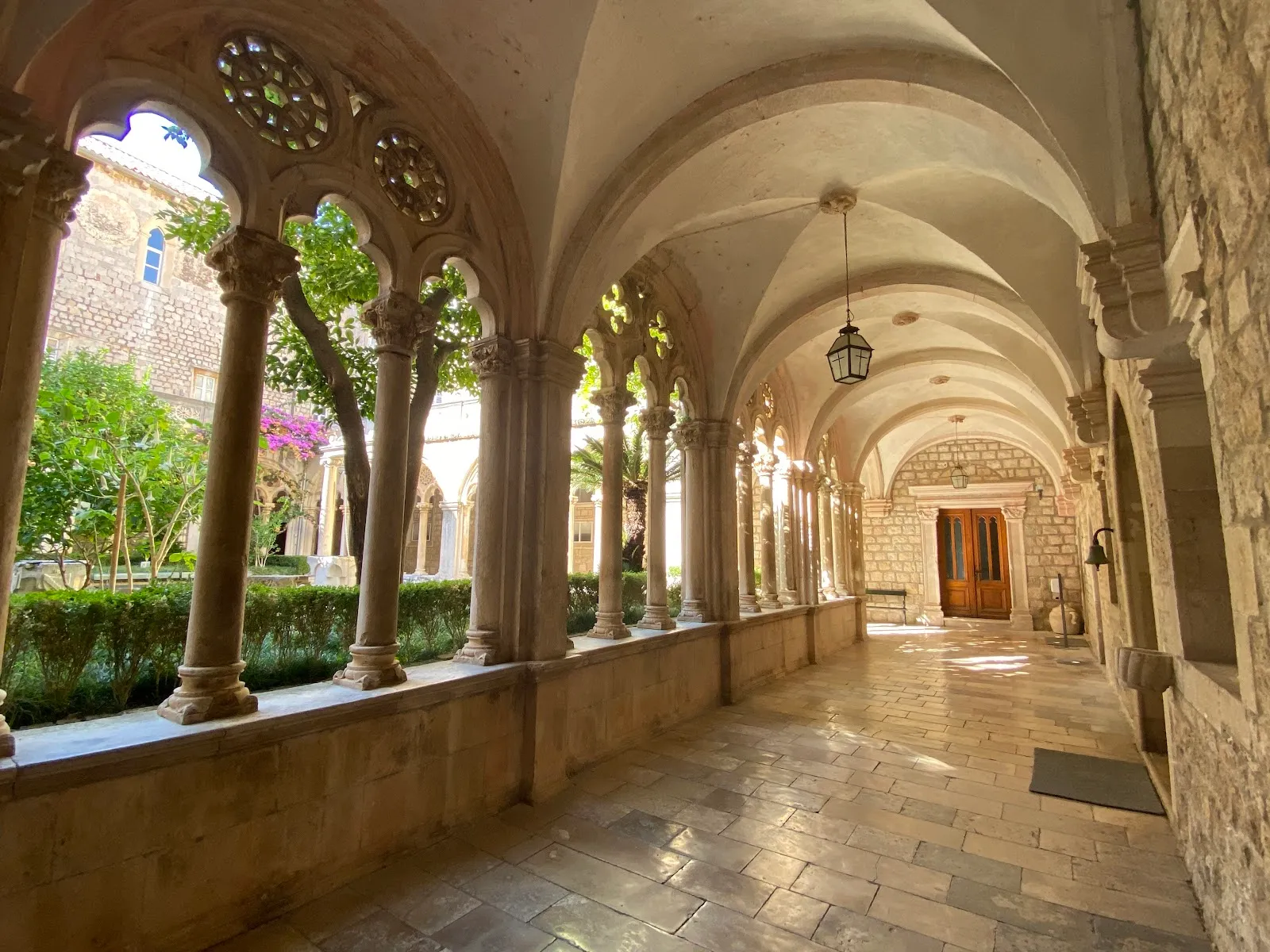
The late Gothic cloister is one of the monastery’s central sights. Look at the arches and carved stonework, as well as the tomb slabs set into the walls. A stone well stands in the courtyard; it once supplied water to the city during the Siege of Dubrovnik.
The cloister and small inner courtyard are compact, so the visit does not require a long stretch of your day. The contrast between the solid exterior and the quiet space within is part of what makes the monastery a useful pause while exploring the Old Town.
Paintings and objects in the museum
The museum is housed within the monastery cloister. Its collection includes paintings by members of the Dubrovnik School, among them Nikola Božidarević, Lovro Dobričević and Hamzić. One painting attributed to Titian depicts St Blaise and Mary Magdalene, alongside the Archangel Raphael and Tobias. The collection also includes religious sculptures, Byzantine icons, votive jewellery and relics.
Manuscripts, incunabula, old books and historic documents give the museum a second thread beyond paintings. Ancient musical scores are also part of the collection. The exhibits are displayed in a small space, so allow time to look closely rather than expecting a large museum circuit.
Church and access
A staircase at the entrance leads towards the monastery church, and the steps are also a familiar sight on St Dominic Street. The church and sacristy contain further works, including a wooden crucifix by Paolo Veneziano and historic tombs. Access to the church has been affected by renovation work at times, so check current conditions if it is a priority for your visit.
The entrance is at Ul. Svetog Dominika 4. Wheelchair-accessible entrance and parking are listed, though the prominent staircase may affect how you navigate the site. Advance tickets are recommended. English explanations inside may be limited, so a little preparation or a guide can help put the artworks in context.
Häufige Fragen
Where is the Dominican Monastery in Dubrovnik?
It is on Ul. Svetog Dominika 4, near Ploče Gate on the eastern side of the Old Town.
What can you see inside the monastery?
The visit includes a late Gothic cloister, a courtyard and a small museum with paintings, religious objects, manuscripts, jewellery and relics.
How long should I allow for a visit?
Allow about 30 to 60 minutes to see the cloister and museum.
Is the monastery church open to visitors?
Church access has been affected by renovation work at times. Check current access if visiting the church is important to you.