
Manuel Antonio National Park protects coastal rainforest and a stretch of Pacific beaches about 7 kilometers south of Quepos, on Costa Rica's central Pacific coast. It was established in 1972 and is the country's smallest national park, yet its trails pass monkeys, sloths, toucans, iguanas and agoutis within a short walk. The walking is mostly easy, with stairs on some sections. Playa Espadilla Sur, Playa Manuel Antonio and the split cove of Playa Gemelas make a natural place to stop and swim. Tickets are sold online and a daily visitor limit applies, so book before you travel.
A small park with a long coastline
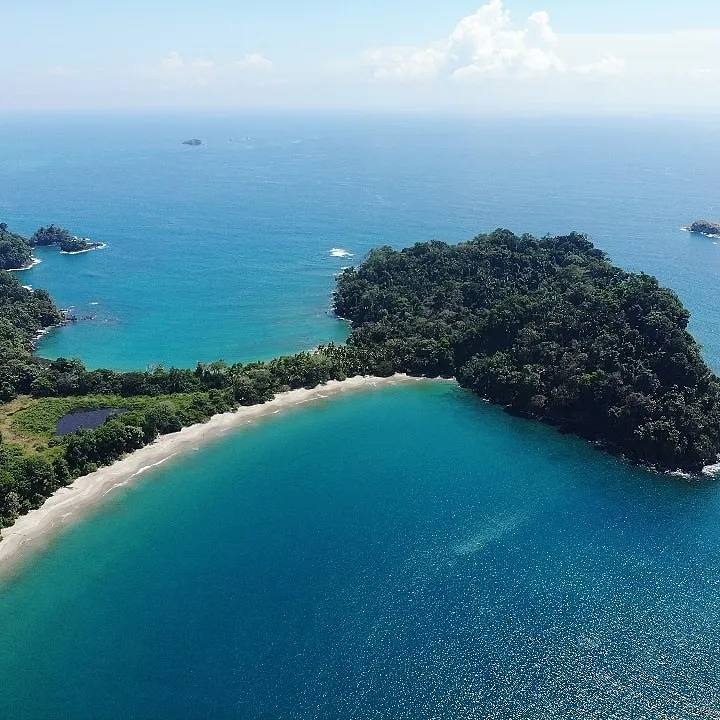
Costa Rica created Manuel Antonio National Park in 1972 to protect the forest and the undeveloped beaches along this part of the Pacific. It is the smallest national park in the country. It covers about 683 hectares of land and a marine area of roughly 55,000 hectares. The rainforest here meets the ocean directly, and the park also takes in mangrove swamps, marshy woodland and coral reefs.
The park lies in Puntarenas Province, 7.6 km south of Quepos and about 132 km south of San José. The drive from the capital takes roughly 2.5 to 3 hours. Between Quepos and the entrance, a winding road (Route 618) of about 6 km passes through the town of Manuel Antonio, where most hotels and restaurants are. Quepos has the banks, ATMs, supermarkets, hospital and bus terminal.
Wildlife you can expect
The animals are the main reason people come. Capuchin, howler and squirrel monkeys move through the trees. The squirrel monkey, known locally as mono titi, is highly endangered. Both two-toed and three-toed sloths live in the canopy, and the park is also home to scarlet macaws, toucans, iguanas, basilisks, agoutis, raccoons, coatis and armadillos. Leaf-cutter ants and blue crabs are easy to spot on the ground.
Many animals sit high in the trees and are hard to find unaided. A guide with a spotting scope picks them out quickly, and binoculars help if you walk alone. On hot, humid days the animals can be less active, which is another reason to start early.
Trails and beaches
A full circuit follows the Playa Espadilla Sur, Punta Catedral, Playa Gemelas, Puerto Escondido, Miradores and Perezoso trails in turn. Most paths are fairly level, but some sections have many steps and inclines, especially the way to the waterfall, so take your time in the heat.
The Mangrove Trail leads to Playa Espadilla Sur, and the Sloth Trail leads to the cafe. Both are stroller friendly. The path to Playa Manuel Antonio is a little harder but still passable with a stroller.
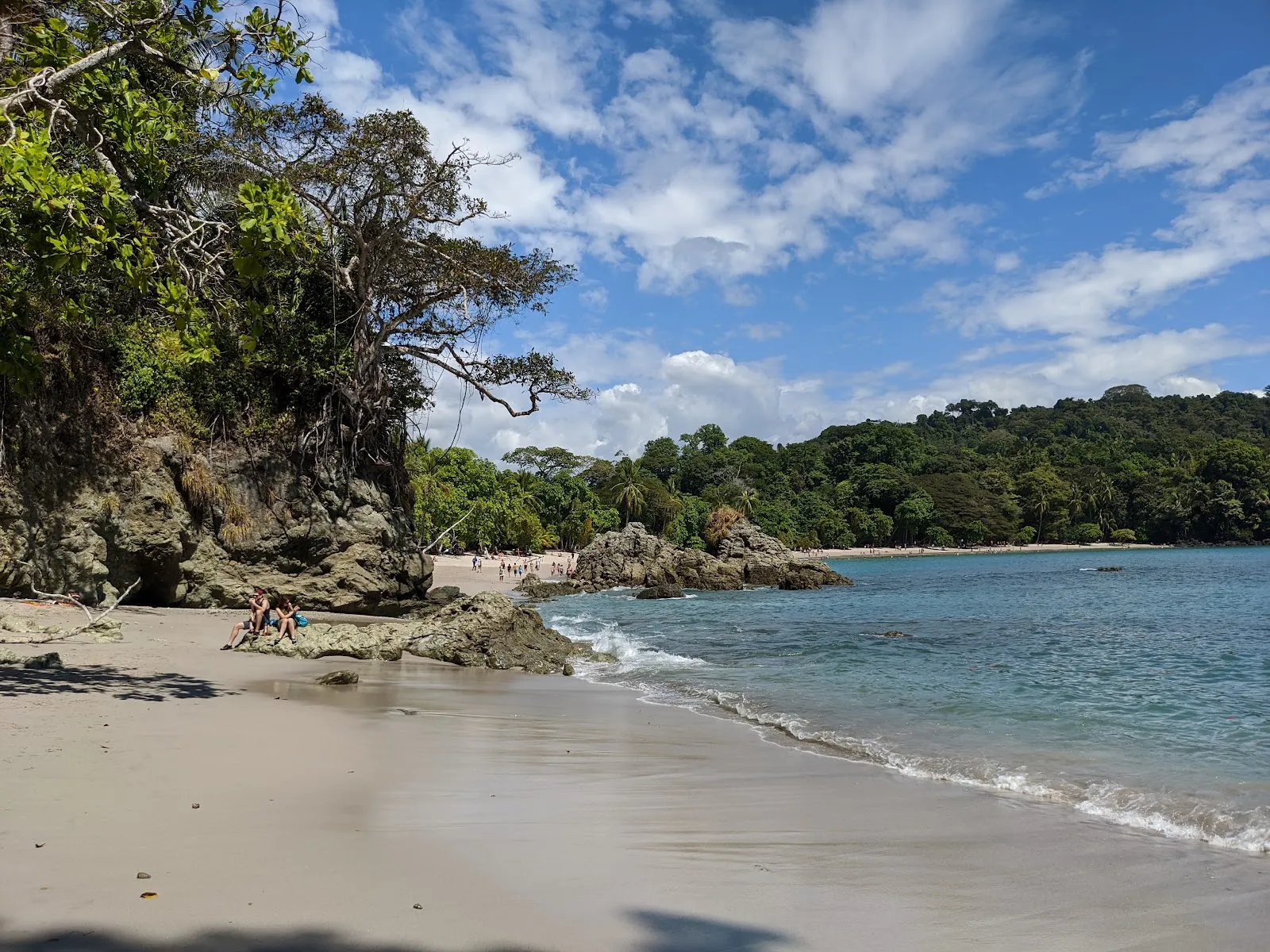
Playa Gemelas, the Twin Beach, is divided by a large boulder that reaches into the sea, and its shoreline keeps changing with the currents. Playa Manuel Antonio is considered the most beautiful beach in the conservation area. Part of Espadilla Sur is a free public beach outside the park. The rocks between it and the park beach are watched by guards, so enter through the gate with a ticket.
Tickets, guides and arriving by car
The entrance fee is $16 USD plus tax per adult, and tickets must be bought online in advance through the park's official site. The government limits daily visitors to roughly 1,200 people, which is why slots sell out in the dry season.
The approach road is narrow and busy. Near the entrance, people will offer parking and guide services as you pull up. They are not rude, but a firm, polite no is enough if you have not decided. Parking arrangements vary, and some drivers use street spaces in the nearby area rather than the first spot offered. If you want a guide, you can book a tour ahead or hire one near the gate. One group paid around $60 for four people at the entrance. A typical guided walk lasts about two hours.
Häufige Fragen
How much does it cost to enter Manuel Antonio National Park?
The entrance fee is $16 USD plus tax per adult. Tickets must be bought online in advance, and a guide costs extra.
Do I need to book tickets in advance?
Yes. Tickets are sold online before arrival and the park has a daily visitor limit. Between December and April it can sell out weeks ahead.
How long do you need at Manuel Antonio National Park?
A guided walk takes about two hours. Allow 2 to 4 hours if you also want to swim, or split the visit over two days if you want to explore at a leisurely pace.
When is the best time to visit?
Go early in the day for quieter trails and more active animals. December to April is the driest period. From May to November there are afternoon showers, and the mornings are usually good for walking.
Can I bring food and drinks into the park?
Outside food is not allowed, and neither are single-use plastic bottles. Bring a reusable water bottle and eat before you go in.
Do I need a guide?
It is not required, and many people walk alone. A guide helps you spot sloths and other animals sitting high in the trees.